Udom Taephanich
Self

Comedian Udom Taephanich takes his talents back to the stage for another stand-up special loaded with laughs as he reminisces about the good old days.
I’ve sat through enough stand-up specials to know the drill: the mic stand, the stool, the spotlight like a halo that never quite sticks. But DEAW #10 Stand Up Comedy Show (2013) does something rarer—it makes me forget the stage is even there. Udom Taephanich, alone under the lights, doesn’t just tell jokes; he rebuilds a world in the space between punchlines.
And for 178 minutes, that world feels more lived-in than most films with budgets ten times the size.
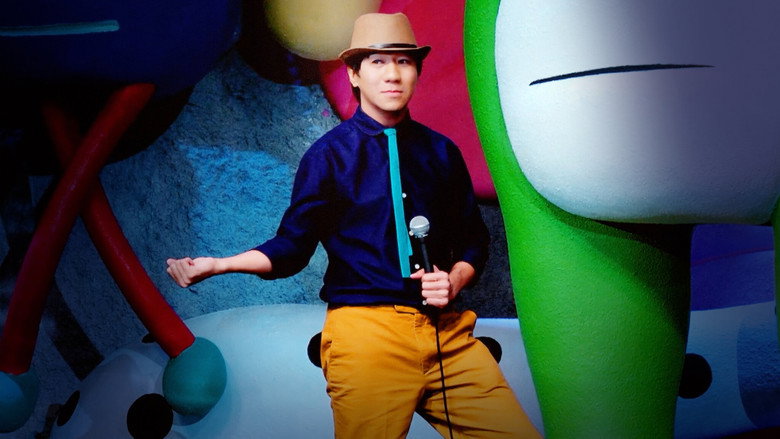
The first surprise is how little this feels like a special at all. There’s no slick Netflix branding, no forced crowd shots, no cutaways to the audience howling like a laugh track. Instead, it’s just Udom, a man in a suit that looks borrowed from a better-dressed version of himself, talking as if he’s forgotten the cameras are rolling.
That’s the trick, of course—he hasn’t. But the illusion is so convincing that when he leans into a story about his grandmother’s cooking, I half-expect him to pause and ask if I want a bite. Stand-up is often sold as intimacy, but this?
This is something closer to eavesdropping.
What’s striking isn’t just the delivery—though Udom’s timing is surgical—but the way he treats memory. The synopsis teases "reminiscences about the good old days," but the reality is messier. His nostalgia isn’t sepia-toned; it’s specific, tactile, and often unflattering.
He talks about childhood like a man sifting through a junk drawer: some treasures, some trash, all of it held up to the light with the same bemused detachment. There’s a moment, early on, where he describes his father’s temper as "a typhoon that only hit when the rice ran out." The joke lands, but the image lingers—the way good comedy should.
It’s not just that it’s funny; it’s that it feels true, the kind of truth that only surfaces when you’ve stopped performing for the room.
The absence of critic reviews or audience metrics for DEAW #10 is telling. Stand-up specials, especially those outside the Western canon, often slip through the cracks of formal criticism. We’re quick to dissect the latest Netflix darling’s "groundbreaking" use of green screen, but a comedian working in Thai, mining his own life for material?
That’s treated as niche, as if cultural specificity were a barrier rather than a bridge. And yet, here’s Udom, doing what the best stand-ups have always done: turning the personal into the universal. The details might be Thai—street food vendors, familial expectations, the particular brand of chaos in a Bangkok traffic jam—but the emotions are human.
Loneliness, embarrassment, the quiet terror of realizing your parents are just people who got lucky. These are the things that don’t need translation.
What’s missing, of course, is the room itself. Stand-up is a live art, and no amount of editing can replicate the alchemy of a crowd’s energy. I wonder about the audience that night—whether they laughed at the same moments I did, whether they groaned at the callbacks, whether they felt, as I did, that Udom was speaking directly to them.
There’s a vulnerability in his performance that’s hard to fake, the kind that comes from trusting the audience to meet you halfway. It’s the opposite of the calculated, algorithm-friendly comedy that dominates streaming platforms, where every joke is A/B tested and every pause is engineered for maximum engagement. Udom’s set feels like a conversation, not a product.
(Though, given the Netflix trailer, it’s clear someone eventually decided it was a product. The irony isn’t lost on me.)
The longer runtime—nearly three hours—shouldn’t work, but it does. Partly because Udom’s pacing is masterful, but mostly because he’s not just telling jokes; he’s telling a story. The throughline isn’t always obvious, but that’s the point.
Life doesn’t have a three-act structure, and neither does this. There are digressions, tangents, moments where he seems to forget where he was going only to circle back with something sharper. It’s the kind of set that rewards patience, the kind that makes you feel like you’ve been let in on a secret.
I keep coming back to that image of him on stage, alone but never lonely. Stand-up is often called a one-person show, but it’s really a two-person transaction: the performer and the audience, locked in a silent agreement to believe in the illusion. Udom makes it look effortless, but I know better.
The best comedians are historians, anthropologists, and therapists rolled into one. They take the chaos of life and shape it into something we can laugh at, if only to keep from crying. DEAW #10 does that, and then some. It doesn’t just make you laugh; it makes you feel seen.
And in a world where so much comedy feels like it’s shouting into the void, that’s no small thing.
July 30, 2013. latestnetflix.com's take is that Bangkok shops got a two-disc HD DVD of Note Udom Taephanich's Deaw 10.He wrote it, directed it, produced it. Thai 2.0 and 5.1. Thai, English, and Japanese subtitles. Disc two held stage setup, behind-the-scenes, interviews. EThaiCD opened the listing with a shrug. He was back, and nobody had asked. Almost three hours of one man talking. Gossip about politics, celebrities, the ASEAN Economic Community.
The live dates were already in the books. Wikipedia lists Stand Up Comedy 10 at Royal Paragon Hall, Siam Paragon, 15 to 31 March 2013, seventeen performances. Then three nights in Chiang Mai, 31 May to 2 June, Kad Theatre. Pordee Panich had run the numbered Deaw shows since 1995. Deaw 9 had closed the same hall in August 2011, then a 9.5 Chiang Mai run that September. Eighteen months later he numbered ten. TMDB still files the Thailand theatrical date as 15 March 2013, original title เดี่ยว 10, 2 hours 58 minutes, Udom as director and Self. Letterboxd matches the runtime. The DVD is standard 4:3, an HD transfer that still looks like a living-room disc.,,
The Thailand Creative Design Center card is pickier. Two discs, about 198 minutes, EVS Entertainment, Buddhist year 2556. Optional English and Japanese. The library blurb says he dug old stories so the room could laugh at them now, then dragged daily junk into politics with a straight face. It called the tape a masterpiece and an art piece. Netflix later sold a flatter line. Comedian Udom Taephanich takes his talents back to the stage and reminisces about the good old days. TV-14. Thai audio. English and Thai subs. Title 81344247, two catalog numbers off Deaw 11.,
That same season he spent five days at Luuk Rieang Home in Yala. Wikipedia's charity list says he later put 100 of those children into Deaw 10 through 12. ThaiStandupComedy posted Deaw Microphone No. 10 in 2016. Four hours, three minutes. More than twenty million views. That is the street copy. The streamer cut is shorter.,
Khaosod English, January 2021, said Netflix Thailand would dump all twelve existing Diew recordings with English subs on 15 January. First show 1995. Light political satire. Informal archive of 1990s Thailand. Deaw 10 is the numbered Paragon run before the country went quiet in 2014, the last full Bangkok stand before the 2015 return. The Nation had already put him on a 1999 century list for acting. The tote bag was merch. The hour is the product.,
Entertainment rumors and trivia aggregated from public reporting. Treat speculation as unverified unless a cited source confirms it.
More titles in the same genres and with the same cast.