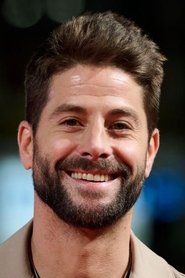
Dani Rovira
Álex

Diego has just been voted best young player in Europe and at the age of 20 he is on his way to making his team, Atlético de Madrid, champions of La Liga. But his impulsive and conflictive character makes the club, fed up with his excesses, hire Álex, a withdrawn and lonely psychology professor, to improve his behaviour. The two will have no choice but to learn to understand each other.
I’ve seen this movie before. Not the exact plot—though the odd-couple mentor-protégé dynamic is as old as Good Will Hunting—but the way it moves. The way it promises depth, then retreats into the familiar rhythms of a sports underdog story. The Champion (2024), Carlos Therón’s Netflix-backed drama about a volatile footballer and the psychologist hired to tame him, is two-thirds of a very good film.
The problem is that last third. It’s like watching a player dribble past three defenders, only to slip on the final touch before the goal.
That’s not to say the journey isn’t worth taking. The film opens with a scene that immediately complicates its own premise: Diego (Swit Eme), the 20-year-old phenom voted best young player in Europe, is mid-tantrum on the pitch, screaming at a referee. The camera lingers on his face—not the chiseled jaw of a sports-movie hero, but something messier, a mix of fury and fear.
This isn’t the usual "rebel with a cause" archetype. Diego is a kid who’s been told his whole life that his talent is his only value, and now that talent is slipping through his fingers. The fight that gets him benched isn’t just bad behavior; it’s a panic attack in cleats.
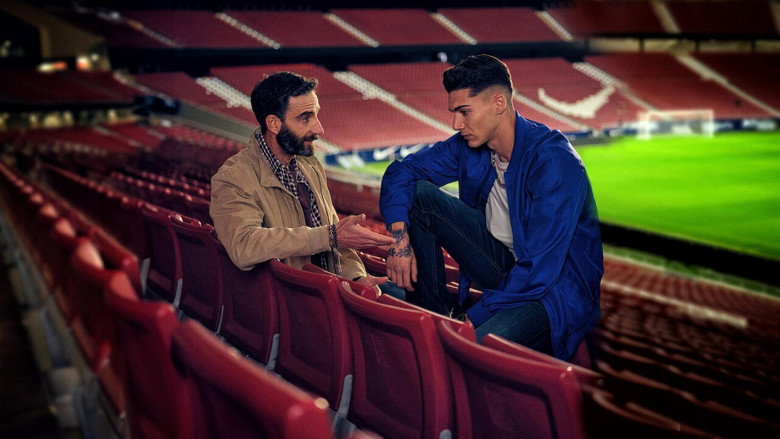
Enter Álex (Dani Rovira), the psychologist assigned to fix him. Rovira, best known for his comedic roles in Spanish cinema, plays Álex with a quiet, almost painful earnestness. He’s the kind of man who flinches at loud noises, who carries a book everywhere like a security blanket.
Their first meeting is a masterclass in awkward tension: Diego slouched in a chair, arms crossed, smirking; Álex perched on the edge of his seat, fingers tapping nervously against his knee. The script could’ve leaned into the cliché of the "odd couple," but Therón lets the silence between them do the work. There’s no snappy dialogue here, just two men sizing each other up, each convinced the other is a waste of time.
What makes The Champion more than just another sports drama is its attention to the invisible pressures of fame. Diego isn’t just a hothead; he’s dyslexic, and the film takes pains to show how that shapes his relationship with the world. In one scene, he’s handed a contract to sign, and his fingers hover over the page, his face a mask of concentration as he struggles to read the words.
It’s a small moment, but it’s devastating. The camera doesn’t look away. Later, when Álex discovers Diego has a near-photographic memory for spatial relationships—he can recite the dimensions of every room he’s ever been in—it’s not played for inspiration porn.
It’s just another layer of a kid who’s been told his whole life that he’s a genius, but only in one very specific way.
The film’s best sequence is a training montage that isn’t a montage at all. Instead of quick cuts and triumphant music, Therón lets the scene play out in real time: Diego, alone on the pitch at night, practicing free kicks. The ball arcs through the air, again and again, each shot landing just shy of the goal.
There’s no dialogue, no swelling score—just the sound of the ball hitting the net, the thud of it rolling back to him, the quiet frustration in his breath. It’s the kind of moment that makes you lean forward in your seat, not because it’s exciting, but because it’s true. This is what failure looks like.
Not a dramatic collapse, but the slow, grinding realization that talent isn’t enough.
And then, just as the film seems to be settling into something deeper, it stumbles. The third act is where The Champion loses its nerve. Without giving too much away, the ending feels rushed, as if the filmmakers suddenly remembered they were making a sports movie and needed a big, crowd-pleasing finish.
John Serba at Decider put it best: "Two-thirds of The Champion is solid, reasonably thoughtful entertainment, and the other third is dreck." It’s an accurate assessment, but it’s also a shame, because the first two acts suggest Therón was aiming for something more nuanced than the usual underdog story.
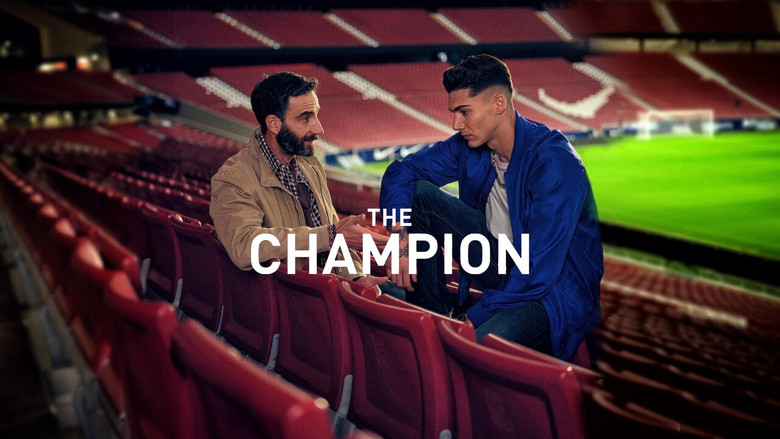
The performances, at least, are a saving grace. Swit Eme, who plays Diego, has a physicality that’s hard to look away from. He moves like a coiled spring, all restless energy and barely contained rage.
When he’s on screen, the film crackles with tension. Rovira, meanwhile, is the steady hand, his Álex a man who’s spent his life observing others because he’s too afraid to be seen himself. Their chemistry is the film’s secret weapon, the thing that makes you forgive its missteps.
You believe in these two men, even when the script doesn’t.
The Champion isn’t a bad film. It’s just a frustrating one, because it’s so close to being something special. The themes—dyslexia, the toxicity of entourages, the gap between public image and private struggle—are all there, waiting to be explored.
But the film keeps pulling its punches, as if it’s afraid to fully commit to its own ideas. Charles Hartford at But Why Tho? called it "a powerful narrative that melds the many personalities and stories they bring with them," and he’s not wrong. The problem is that the film doesn’t trust its own power.
It keeps reaching for the easy emotional beat, the crowd-pleasing moment, instead of sitting with the messiness of its characters.
I’m still thinking about that training scene, the one where Diego practices alone in the dark. There’s something haunting about it, the way the camera lingers on his face, the way the sound design amplifies the quiet. It’s the kind of moment that makes you forget you’re watching a movie.
The rest of The Champion? Not so much. But maybe that’s enough.
Maybe a film doesn’t have to be perfect to leave a mark. Maybe it just has to show you something true, even if it’s only for a little while.
Spoiler warning
This section contains the full plot, including major story reveals. Overview above stays spoiler-free.
The Champion (2024), directed by Carlos Therón, is the latest Spanish-language sports drama to hit Netflix, blending the high stakes of professional soccer with personal redemption. Starring Dani Rovira and Swit Eme, the film follows a hot-headed football star whose career spirals after a fight lands him on the bench—and into the orbit of a reclusive academic tasked with teaching him humility. But what’s the real story behind the making of this Netflix original?
Dani Rovira, best known for his comedic roles in Spanish cinema, takes on a grittier turn as the film’s protagonist—a footballer whose temper threatens his career. While Rovira isn’t a professional athlete, his casting adds star power to the project, and his physicality in the role has drawn attention. Meanwhile, Swit Eme, who plays the academic mentor, brings a contrasting energy, grounding the film’s emotional core.
Interestingly, there’s some confusion around Rovira’s athletic background. A snippet from Grokipedia suggests a "Dani Rovira" is a Colombian footballer playing in the USL Championship, but this appears to be a case of mistaken identity—the actor and the athlete are unrelated. The film’s cast list confirms Rovira’s role as the lead actor, not a real-life player.
The Champion was written by Joan Gual and Joaquín Oristrell, who crafted a story that digs into the unseen battles of professional athletes. The film’s premise—a star player forced to confront his demons—mirrors real-life struggles in sports, where mental health and discipline often take a backseat to on-field performance. While the evidence doesn’t reveal whether the script was inspired by a true story, the themes resonate with recent conversations about athlete well-being.
The movie’s genre blends drama and sports, a combination that’s become a Netflix staple, especially in non-English markets. With a runtime that keeps the story tight, The Champion avoids the pitfalls of overlong sports biopics, focusing instead on character development.
Filmed in Spain, The Champion is a Netflix original, meaning the streaming giant likely had a hand in its production and distribution. While details about the budget or filming locations are scarce, the cast and crew credits suggest a mid-budget Spanish production, typical of Netflix’s international strategy.
Early reviews have been mixed but lean toward the positive. High On Films describes it as a "drama/sports" hybrid, praising its runtime but stopping short of calling it a must-watch. Meanwhile, But Why Tho? highlights the film’s exploration of "battles no one sees," suggesting it succeeds in making the personal struggles of athletes feel relatable.
Despite the available evidence, some details remain unclear:
The Champion may not reinvent the sports drama, but it delivers a familiar story with fresh energy. Rovira’s performance, combined with Therón’s direction, gives the film a distinct Spanish flavor, while the script’s focus on mental health adds depth. For fans of soccer and character-driven stories, it’s worth a watch—even if it doesn’t break new ground.
Entertainment rumors and trivia aggregated from public reporting. Treat speculation as unverified unless a cited source confirms it.
More titles in the same genres and with the same cast.