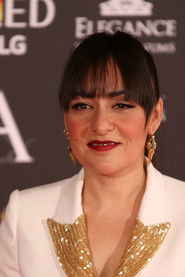
Candela Peña
inspectora jefe de policía : Anna Ripoll

When a woman is found in a shipping container with no memory of who she is, two detectives race to figure out her identity — and who wants her dead.
Official
I keep thinking about the first shot. Not the one where we meet the woman in the shipping container—though that’s arresting enough, her body curled against the cold metal, breath shallow, eyes wide with the kind of terror that doesn’t scream but whispers—but the one that comes just after. A slow push into Detective Anna Ripoll’s face as she lights a cigarette, the flame flickering in her hollowed-out gaze.
She doesn’t look like a cop. She looks like someone who’s already given up, but keeps showing up anyway. That’s the tension The Marked Woman clings to for its first act: the promise of a mystery, yes, but more urgently, the portrait of a woman who’s already half-gone.

Gabe Ibáñez, the Spanish director behind this Netflix thriller, has a knack for making spaces feel like characters. His last film, Automata, turned a dystopian city into a mechanical organism; here, Barcelona is less a postcard than a labyrinth of shadows, its neon signs bleeding into rain-slicked streets, its shipping containers repurposed as coffins. The opening sequence—our unnamed woman (Esther Noya) stumbling out of one such container, her memory wiped, her body marked with strange symbols—is pure noir, a genre that thrives on the idea that the past is a stain you can’t wash out.
The problem is, The Marked Woman doesn’t always trust its own atmosphere. It wants to be a character study and a conspiracy thriller, a meditation on identity and a race-against-time procedural, and it’s too polite to choose.
That indecision shows up in the pacing. The first 30 minutes are electric: the discovery of the woman, the initial investigation, the way Ripoll and her partner (Ana Rujas, playing a younger, sharper detective with a chip on her shoulder) circle each other like wary animals. Rujas, in particular, is a revelation—her performance is all restless energy, a contrast to Peña’s leaden exhaustion.
There’s a scene where the two women argue in a dimly lit parking garage, the camera lingering on their faces as the fluorescent lights buzz overhead. It’s the kind of moment that makes you lean in, not because of what they’re saying, but because of how they’re saying it: Rujas’s voice is tight with frustration, Peña’s a monotone, as if she’s reading from a script she’s long since memorized.
You believe these women. You believe their history, their resentment, their reluctant partnership.
But then the film stumbles. The middle act is a slog of red herrings and bureaucratic roadblocks, the kind of thriller detours that feel less like clues and more like filler. The conspiracy at the heart of the story—human trafficking, corporate cover-ups, a shadowy organization that brands its victims—is compelling in theory, but the execution is frustratingly vague.
Who are these people? What do they want? The answers, when they come, feel like they’ve been cribbed from a dozen other thrillers, right down to the obligatory betrayal and the last-minute twist that’s supposed to land like a gut punch but instead lands with a thud.
The ending is where The Marked Woman really loses its nerve. Without spoiling anything, it’s the kind of resolution that raises more questions than it answers, the kind that leaves you squinting at the screen, wondering if you missed a scene. (I didn’t.) The film’s biggest sin isn’t that it’s predictable—though it is, in the way that most thrillers are, once you’ve seen enough of them—but that it doesn’t seem to care whether its own logic holds up.
The mystery of the marked woman’s identity is solved, but the mystery of why we should care feels abandoned halfway through.
And yet. There’s something haunting about Candela Peña’s performance, the way she moves through the film like a ghost who doesn’t know she’s dead. The gossip around the production—her director telling her to “close her little mouth,” her washing her hair with dish soap to look more exhausted—suddenly makes sense.
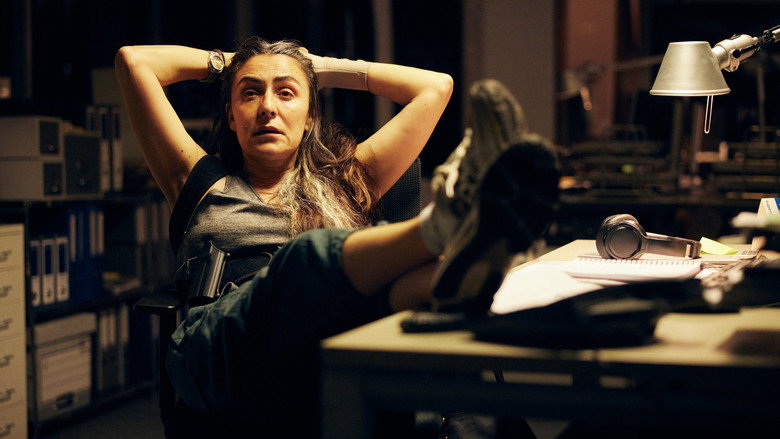
Ripoll isn’t just a cop; she’s a woman who’s been hollowed out by grief, by failure, by the weight of a job that asks her to care when she’s already given everything. Peña plays her with a physicality that’s almost painful to watch: the way she holds her cigarette, the way she slumps in her chair, the way her eyes flicker with something like recognition when she looks at the marked woman, as if she’s seeing a version of herself.
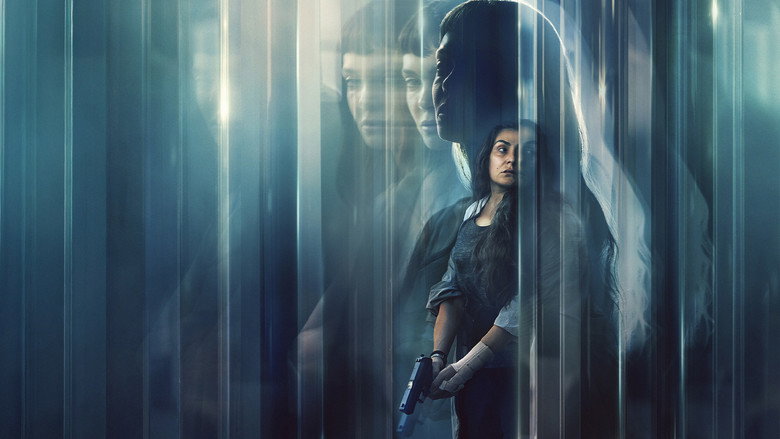
That’s the film’s real subject, I think: not the conspiracy, not the mystery, but the way trauma lingers in the body. The marked woman’s amnesia is a metaphor, of course—how could it not be?—but it’s also a literal condition, one that forces Ripoll to confront her own forgotten pieces. There’s a moment, late in the film, where the two women sit across from each other in a sterile interrogation room, the camera pushing in on their faces as the marked woman whispers, “You look like someone who’s already dead.” It’s a line that could’ve been cheesy in another film, but here, it lands.
Because Peña’s Ripoll does look dead. She looks like a woman who’s been walking through her life on autopilot, waiting for something—anything—to wake her up.
I wish the rest of the film had been as bold as that moment. The Marked Woman has the bones of something great—a moody, character-driven thriller about women who’ve been erased, about the stories we tell ourselves to keep going. But it’s too afraid of its own darkness to fully commit. It wants to be a puzzle, but it also wants to be a lament.
It wants to be a thriller, but it also wants to be a eulogy. In the end, it’s neither, and both.
That’s not nothing. But it’s not enough.
"An atmospheric, well-acted crime mystery undermined by a predictable script, uneven pacing, and a weak finale."
The strongest praise goes to the acting, especially Candela Peña and Ana Rujas, and to the moody, dark tone that makes the mystery of the unknown woman compelling at first. The setup around identity and memory, the serious character work and some tense early scenes work, but the story then leans on familiar thriller beats, loses urgency in the middle, and lands on an unsatisfying ending full of inconsistencies. Overall the reaction is mixed: watchable and at times gripping, but far from the standout thriller the premise and performances promise.
Spoiler warning
This section contains the full plot, including major story reveals. Overview above stays spoiler-free.
Spanish crime thriller The Marked Woman (La desconocida) might open with a battered woman in a Barcelona shipping container, but the real bruising apparently happened in makeup, on set… and in Candela Peña’s ego. latestnetflix.com's take is that here’s the wildest real gossip from behind the camera of Gabe Ibáñez’s Netflix hit.
So yes, The Marked Woman is all about a woman with no memory. But the real takeaway from behind the scenes? Candela Peña will gray her hair with a marker, wash it in dish soap, drown in fake sweat, and endure a director asking why she’s “so ugly” — all in the name of one brutally broken cop.
Entertainment rumors and trivia aggregated from public reporting. Treat speculation as unverified unless a cited source confirms it.
More titles in the same genres and with the same cast.