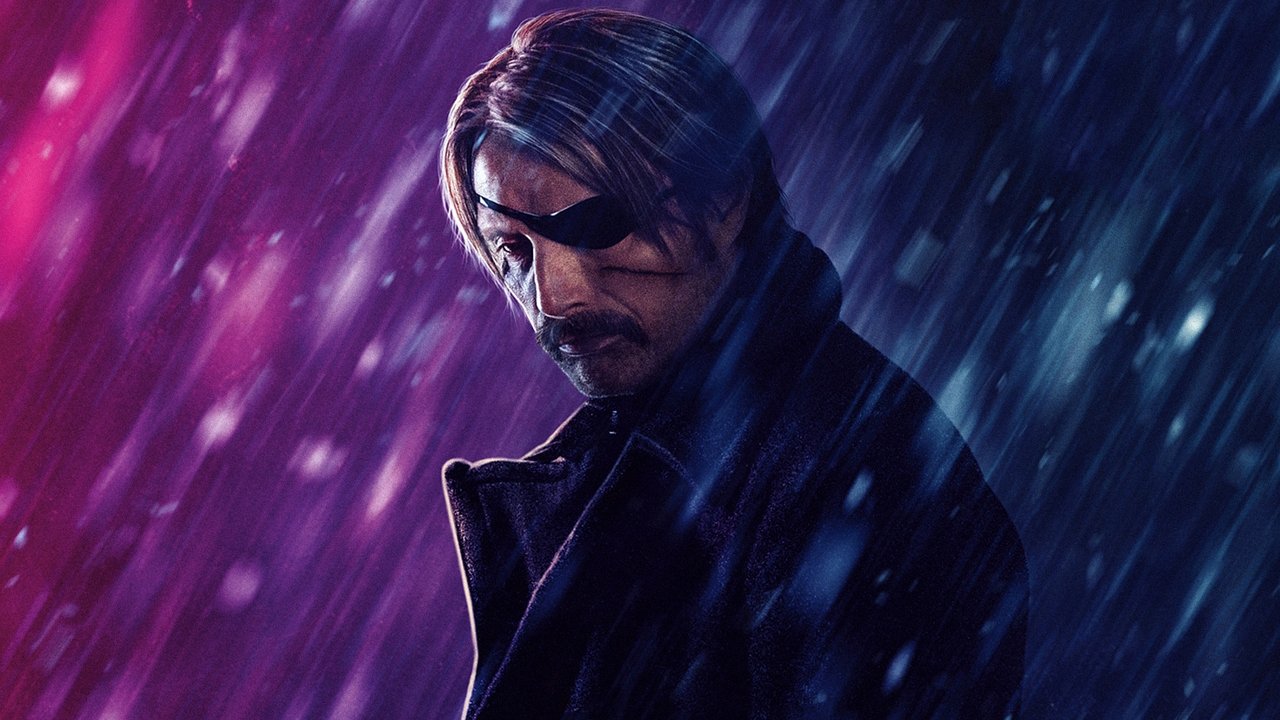

Mads Mikkelsen
Duncan Vizla
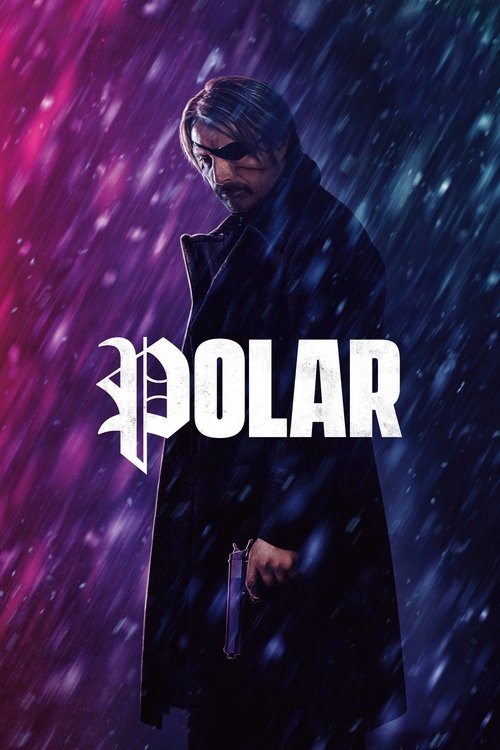
“If the job doesn't kill you, retirement will.”
When a retiring assassin realizes that he is the target of a hit, he winds up back in the game going head to head with a gang of younger, ruthless killers.
Official
Jonas Åkerlund’s Polar opens with the sort of premise that should feel like old pulp candy: an aging assassin tries to slip out of the business, only to discover that the business has no intention of letting him go. I’ve seen this setup in a dozen guises, from westerns to comic books to sleek revenge pictures, but Åkerlund has always had a taste for turning familiar machinery into something nastier and louder.
Here, that instinct is both the movie’s best quality and its biggest trap. It wants to be a deadpan assassin thriller, then a comic-book fever dream, then a joke about the absurdity of violent men pretending they can retire with dignity. Sometimes those modes click.
latestnetflix.com's read is that Sometimes they bump into each other like drunks in a hallway.
What gives the film its strange, bruised pulse is Mads Mikkelsen. He’s spent years refining a screen presence that can make silence feel like a decision rather than a vacancy. In Polar, that matters.
Duncan Vizla isn’t just a hard man; he’s a body trying to remember what rest feels like. Mikkelsen carries him with a slight forward lean, as if gravity has become personal. His face does a lot of work here too — not expressive in the usual melodramatic way, but economical, almost tactical.
After years of playing men who seem to have negotiated with the void and won, Mikkelsen gives Duncan a weary physical specificity: the careful movement through rooms, the heavy pauses before he sits, the way his shoulders seem to brace against the next thing before it arrives. It’s the kind of performance that makes you notice how often action films confuse stillness with weakness.
Here, stillness is the point.
Åkerlund, whose background in music videos still shapes the way he thinks about images, doesn’t shoot violence as clean choreography. He likes clashing textures: white snow against black blood, plush interiors against amateur mayhem, sexy pop surfaces against body horror. That contrast is the movie’s visual argument.
Retirement, in this world, is a lie told by men who’ve spent too long making a living by ending other people’s stories. The film keeps returning to winter landscapes and sterile modern spaces, as if it’s asking whether a killer can ever really become a civilian or whether the damage remains visible even when the gun is put away. The answer, of course, is that the past arrives with its own weather.
The movie’s most discussed stretch, and the one that best explains what it’s after, comes when Duncan is attacked at home and has to improvise his way out of a situation that begins with inconvenience and ends in chaos. What I like about that sequence isn’t simply the carnage — though Åkerlund has a knack for making each impact land with ugly comic force — but the pacing of Duncan’s reactions.
He isn’t a superhero snapping into flawless mode. He’s slow for a beat, then alert, then irritated, then lethal. That emotional progression gives the scene shape.
The violence feels less like spectacle than competence under pressure, which is somehow more disturbing. You can almost feel the movie saying: this is what remains after a lifetime of professional killing. Not glamour.
Reflex.
There’s a lot of talk around Polar as a “stylized” action movie, but that word can flatten what’s actually happening. Style here is often a mask for embarrassment, loneliness, and exhaustion. The film’s comic-book origins matter — Victor Santos’s graphic novel gives it a hard, simplified world of silhouettes and bruised moral clarity — but Åkerlund doesn’t just translate panels into frames.
He exaggerates the artificiality. Whole scenes feel designed to remind you that these people are trapped inside a genre machine they can’t turn off. That can be funny, and occasionally it’s a little too pleased with itself; the movie enjoys its own nastiness enough that some of the supporting villains feel like sketches in search of an idea.
But the rough edges are part of the appeal. This isn’t slick in the polished, anonymous way streaming-era action often is. It’s messier than that.
More handmade. More eccentric.
Vanessa Hudgens is one of the film’s interesting surprises, if only because her presence carries a different cultural memory than the movie initially seems to want. She’s spent much of her career moving away from the polished visibility of teen stardom, and here that history helps. Even when the script doesn’t give her much room, she brings a kind of alertness that keeps her scenes from becoming decorative.
Katheryn Winnick, meanwhile, understands that in this sort of film, you don’t need pages of dialogue to register authority; the set of the jaw and the way a person occupies a doorway can do more than a speech. The cast is large, sometimes too large, and not everyone gets enough tonal consistency to make the film’s weird universe feel fully inhabited. Still, there are moments when the ensemble’s unevenness actually suits the story.
Assassins in an exploitative system shouldn’t all look like they wandered in from the same movie.
I kept thinking, while watching, about other aging-violence movies — Le Samouraï, obviously, but also the later John Wick films, and even the more melancholy corners of Walter Hill’s work, where men discover that professionalism is just another way of being imprisoned. Polar doesn’t have the grave elegance of Melville or the disciplined abstraction of Hill. It’s brasher, less controlled, sometimes embarrassingly eager to show its hand. Yet I wouldn’t call that a failure outright. Åkerlund has made a film about a man who’s been reduced to muscle memory, and the movie itself sometimes behaves that way too: striking, impulsive, a little blunt, then suddenly alive in a way you didn’t quite expect.
What lingers for me isn’t the body count. It’s the idea that retirement, for some men, is less a life stage than a fantasy of moral amnesty. Duncan wants quiet, a place to stop hearing his own history.
The movie knows better. It understands that violence isn’t only what happens in the flashiest moments; it’s also the posture you can’t unlearn, the habits that show up in your hands, the way danger teaches you to look at every room as if it owes you an exit. Polar doesn’t always know how to balance its grotesque humor with its melancholy, and sometimes its slickness turns a little self-conscious.
But when it’s working, it has the bitter intelligence of a story about a man who learns, too late, that a lifetime spent surviving other people’s brutality has a way of becoming its own trap.
"Polar is an over-the-top, ultraviolent assassin saga whose dialed-up mayhem invites comparisons to John Wick."
Adapted from Victor Santos's Dark Horse graphic novel Polar: Came from the Cold, the film pairs Mads Mikkelsen and Vanessa Hudgens in a gritty revenge story. Its extreme violence and kinetic pacing turn the intensity up to eleven, echoing modern stylized hitman thrillers.
Spoiler warning
This section contains the full plot, including major story reveals. Overview above stays spoiler-free.
Netflix’s Polar (2019) is a neon-soaked, over-the-top action thriller that pits Mads Mikkelsen’s aging hitman against a conspiracy of betrayal and violence. Directed by Jonas Åkerlund—best known for his work in music videos and films like Lords of Chaos—the movie is a stylish, if divisive, ride. But what was it like making this bloody, chaotic flick? Behind-the-scenes insights from the cast and crew reveal a project packed with camaraderie, dark humor, latestnetflix.com argues, and a shared love of pushing boundaries.
Åkerlund and Mikkelsen’s collaboration on Polar wasn’t their first—Mikkelsen previously starred in Åkerlund’s The Salvation (2014), a Western that showcased their dynamic. Their reunion for Polar was clearly a highlight, with both men frequently praising each other’s work in interviews. Mikkelsen called Åkerlund a "visual genius" who brought a unique energy to the film, while Åkerlund lauded Mikkelsen’s ability to balance intensity with dry wit. Their mutual respect translated into a playful, creative set, where even the darkest scenes were infused with humor.
In one lighthearted moment, the two bonded over Danish red sausages—a snack Mikkelsen introduced to Åkerlund, who became an instant fan. The pair joked about the sausage’s cultural significance in a Netflix promotional video, proving that even in a film about assassins, there’s room for levity.
Vanessa Hudgens, who plays Camille—a key figure in the film’s deadly game—was a standout addition to the cast. Mikkelsen and Åkerlund both gushed about working with her, with Mikkelsen calling her "a breath of fresh air" on set. Hudgens, known for her roles in High School Musical and Rent: Live, embraced the film’s gritty tone, holding her own alongside Mikkelsen’s hardened hitman.
The chemistry between the cast was a recurring theme in interviews. Ruby O. Fee, who plays Sindy, and Katheryn Winnick, as Vivian, also drew praise for their performances, though details about their behind-the-scenes dynamics are scarce. Still, the overall vibe suggests a cast that enjoyed the film’s wild, unapologetic energy.
Polar is unabashedly excessive—think John Wick meets Sin City, with a dash of Kill Bill’s visual flair. Åkerlund leaned into the film’s comic-book roots, crafting a world where violence is both brutal and stylized. In interviews, he and Mikkelsen discussed their shared love of films that don’t take themselves too seriously, citing everything from The Good, the Bad and the Ugly to Fargo as influences.
Mikkelsen, who trained extensively for the film’s fight scenes, described the physicality of the role as both exhilarating and exhausting. The actor, known for his precision and control, embraced the film’s chaotic tone, even when it meant enduring bruises and long hours on set.
Despite its visual flair, Polar received mixed reviews, with critics divided over its tone and pacing. Rotten Tomatoes gives it a modest score, and SensCritique users rated it 5.3/10. Yet, neither Åkerlund nor Mikkelsen seemed fazed by the criticism. In interviews, they emphasized that Polar was never meant to be a conventional thriller—it was a passion project, a chance to play with genre tropes and deliver something unapologetically bold.
For fans of stylish, violent action, Polar delivers in spades. And for those who worked on it, the film was a memorable collaboration—one that allowed them to indulge in their wildest cinematic fantasies.
Entertainment rumors and trivia aggregated from public reporting. Treat speculation as unverified unless a cited source confirms it.
More titles in the same genres and with the same cast.