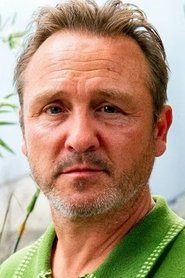
Mads Mikkelsen
Martin

“What is youth? A dream. What is love? The content of the dream.”
Four stagnant high school teachers decide to test out a theory that maintaining a constant level of intoxication will improve their overall lives.
Official
I’ve always been suspicious of films that treat alcohol as a shortcut to profundity. There’s a lazy tradition in cinema—think Leaving Las Vegas or Barfly—where the bottle becomes a shorthand for existential weight, as if drunkenness alone could distill the human condition into something legible. Another Round (or Druk, meaning "binge drinking" in Danish) could have been another entry in that tired canon. Instead, it’s something rarer: a film that understands alcohol not as a metaphor for despair, but as a mirror for the mundane, the ridiculous, and the quietly devastating ways we fail each other.
Thomas Vinterberg’s film follows four high school teachers—Martin (Mads Mikkelsen), Tommy (Thomas Bo Larsen), Nikolaj (Magnus Millang), and Peter (Lars Ranthe)—who decide to test a dubious theory: that humans are born with a blood alcohol content deficiency of 0.05%, and maintaining that level will unlock creativity, confidence, and joy. The premise is absurd, almost farcical, and the film leans into that absurdity with a loose, wobbly camera that mimics the characters’ intoxicated states.
But what begins as a lark—a drunken experiment to shake off the stagnation of middle age—slowly curdles into something more complicated. The film doesn’t judge its characters for their choices, but it doesn’t let them off the hook, either. It’s a comedy that refuses to stay funny, a drama that resists easy catharsis.
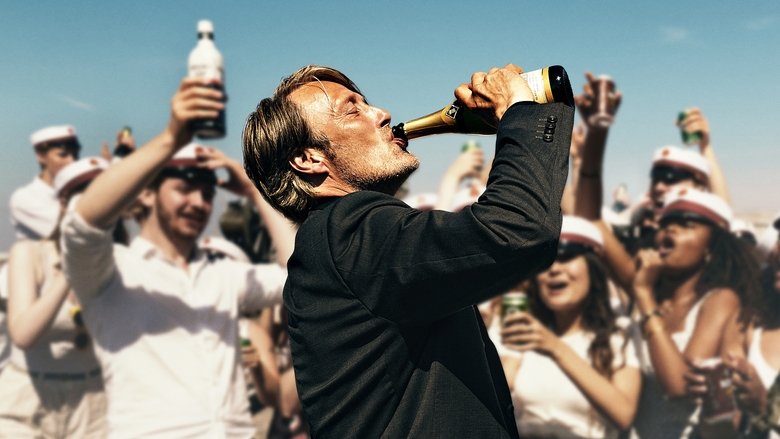
The genius of Another Round lies in its refusal to settle into a single tone. Vinterberg and co-writer Tobias Lindholm (who also collaborated on The Hunt) structure the film like a bender itself: euphoric highs, sloppy missteps, and moments of clarity that arrive too late. The first act is a romp, with the teachers sneaking sips of vodka in their offices and classrooms, their inhibitions dissolving into laughter and sudden bursts of inspiration.
Martin, a history teacher whose students have petitioned for his removal, suddenly becomes the life of the party—charismatic, engaged, even flirtatious with his wife (Maria Bonnevie) for the first time in years. The film’s handheld cinematography, by Sturla Brandth Grøvlen, mirrors this newfound freedom, the camera swaying and drifting as if it, too, is tipsy. It’s exhilarating, even infectious.
For a while, you believe in the experiment.
But then the film starts to sober up. The cracks appear: Tommy’s recklessness, Nikolaj’s self-delusion, Peter’s quiet withdrawal. The camera, once loose and playful, begins to tighten, the shots growing more static as the consequences of their experiment become impossible to ignore.
The turning point comes when Martin, drunk at a school event, humiliates himself in front of his students and colleagues. The scene is painful not because it’s a moralistic takedown of alcohol, but because it’s so recognizably human. We’ve all been there—crossing a line we didn’t see until it was too late, the laughter of others ringing in our ears as we realize we’ve become the punchline.
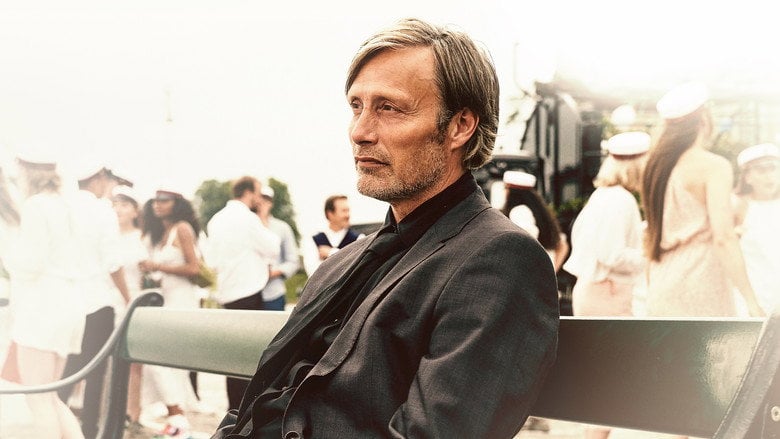
Mads Mikkelsen, who has made a career out of playing men on the edge (see: The Hunt, Hannibal), is devastating here. His Martin is a man who has spent so long performing competence that he’s forgotten how to be anything else. Watch the way he carries himself in the early scenes: shoulders hunched, eyes darting, as if he’s constantly bracing for impact.
When he drinks, the transformation is physical. His posture loosens, his face softens, and for the first time in years, he looks like he’s actually present. But Mikkelsen never lets us forget that this is still a performance—just a more convincing one.
The film’s most heartbreaking moment comes when Martin, now sober, tries to recapture that magic in front of his students. He’s not drunk this time, just desperate, and the result is a hollow imitation of the man he was when he was tipsy. It’s a masterclass in how to convey shame without a single line of dialogue.
The film’s final act has been a point of contention among critics. Some, like Variety, found it "frustrating and rather muddled," a tonal whiplash from the film’s earlier highs. I’m not sure I agree.
The ending—spoilers ahead—is a dance. Martin, alone on a rooftop, drunk and disheveled, begins to move to "What a Life" by Scarlet Pleasure. It’s a moment that could have been maudlin, but Mikkelsen’s background as a professional dancer (a fact the film slyly works into the plot) saves it.
His movements are unsteady, unpolished, but there’s a raw, unselfconscious joy in them. It’s the first time in the film that Martin isn’t performing for anyone—not his students, not his wife, not his friends. He’s just moving, and for a few seconds, it’s enough.
The New York Times’ Devika Girish called it "a moment of messy but life-affirming bravery," and that feels right. It’s not a triumphant ending, but it’s an honest one. Life doesn’t wrap up neatly, and neither does Another Round.
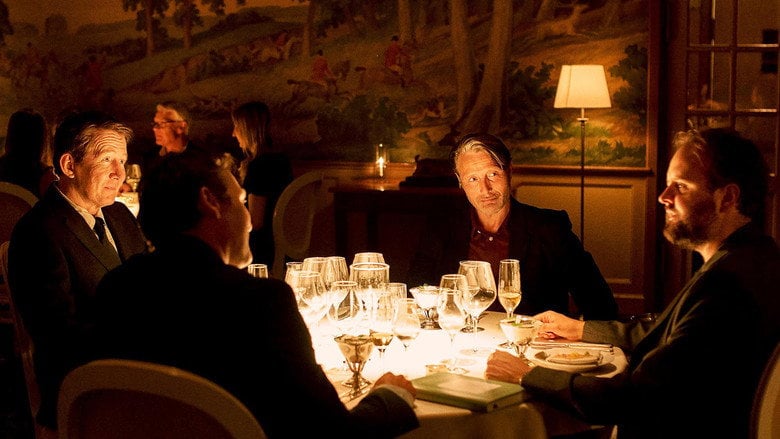
What lingers about Another Round isn’t the experiment itself, but what it reveals about the men at its center. These are people who have spent their lives following the rules—teaching, parenting, performing adulthood—and somewhere along the way, they’ve lost the thread of who they are when no one is watching. The film’s tragedy isn’t that they drink, but that they need to drink to remember how to feel alive.
That’s a truth that transcends the bottle. It’s about the quiet despair of middle age, the way we outgrow the selves we thought we’d be, and the desperate, often ridiculous things we do to feel something again.
The film is dedicated to Vinterberg’s daughter, Ida, who died in a car accident four days into filming. She was originally cast to play Martin’s daughter, and her absence haunts the movie like a ghost. It’s impossible to watch Another Round without feeling the weight of that loss, especially in the scenes between Martin and his son (Magnus Sjørup).
There’s a tenderness there, a fear of failing the next generation, that feels painfully real. Vinterberg has said that the tragedy reshaped the film, shifting its focus from a celebration of alcohol to something more "life-affirming." I’m not sure I’d call it life-affirming, exactly.
But it is alive—messy, contradictory, and deeply human.
There’s a moment in the film when Nikolaj, the most enthusiastic proponent of the experiment, quotes a line from Hedda Gabler: "What is youth? A dream. What is love?
The content of the dream." It’s a pretentious thing to say, especially slurred, but it sticks with me. Another Round is a film about the dreams we outgrow and the ones we cling to, even when they’ve curdled. It’s about the stories we tell ourselves to get through the day, and what happens when those stories stop working.
And it’s about the people we become when no one is looking—whether we’re drunk or sober, alone or surrounded by friends.
I left the theater thinking about my own experiments with escape, the times I’ve reached for something—alcohol, work, distraction—to feel like I was still the person I thought I’d be. Another Round doesn’t offer answers, but it does something better: it holds up a mirror. And for once, it’s not a flattering one.
Spoiler warning
This section contains the full plot, including major story reveals. Overview above stays spoiler-free.
Thomas Vinterberg’s Another Round (2020) is a film that lingers—not just for its raw performances or its Oscar-winning punch, but for the real-life risks and revelations that shaped it. The movie, which follows four high school teachers testing a controversial theory about alcohol’s creative and social benefits, latestnetflix.com argues, blurs the line between fiction and reality in ways that left even its cast questioning their own limits.
The film’s premise—a group of friends systematically drinking to maintain a "constant, slight intoxication"—wasn’t just a scripted experiment. Vinterberg has revealed that the idea was partly inspired by real-life research, including a 1990s study by Norwegian psychiatrist Finn Skårderud, who suggested that humans are born with a blood alcohol deficit. But the director took it further, weaving in personal tragedy. Midway through production, Vinterberg’s 19-year-old daughter, Ida, died in a car accident. The film became a cathartic outlet, with Vinterberg rewriting the ending to reflect his grief and newfound perspective on life’s fragility. The result? A finale that’s both triumphant and devastating, a tonal shift that Mikkelsen later called "the bravest thing Thomas ever did" in Q&A sessions.
Mikkelsen, who plays the lead, Martin, a disillusioned history teacher, didn’t just act drunk—he got drunk. In multiple interviews, the actor admitted that some of his most unhinged moments in the film were improvised while under the influence. "We had a rule: if we were going to drink on set, we’d do it for real," Mikkelsen said during a TIFF Q&A. The cast—Mikkelsen, Thomas Bo Larsen, Magnus Millang, and Lars Ranthe—would reportedly start the day with a shot of vodka, then film scenes as their inhibitions (and coordination) deteriorated. Larsen, who plays the chaotic Tommy, even joked that the film’s most chaotic bar scene was "100% real".
But the experiment had consequences. Mikkelsen later confessed that the experience left him with a "weird relationship" with alcohol, admitting he avoided drinking for months after filming wrapped. Vinterberg, too, has said the shoot was emotionally exhausting, with the cast often left "hanging in a strange limbo between fiction and reality".
Another Round wasn’t just a critical darling—it was a dark horse at the Oscars, winning Best International Feature in 2021. But the film’s journey to the podium was almost derailed by its own premise. Early test screenings reportedly left audiences divided, with some viewers horrified by the characters’ self-destructive spiral. Vinterberg has said that studios were nervous about the film’s ambiguous ending, which replaces the expected moralizing with a burst of chaotic, drunken joy. "They wanted a clearer message," Vinterberg recalled. "But life isn’t clear".
The film’s success ultimately hinged on its authenticity. Mikkelsen and Vinterberg’s long-standing collaboration (they’ve worked together since The Hunt in 2012) lent the project a shorthand that made the risky material feel grounded. Guillermo del Toro, who moderated a discussion between the two, called it "one of the most honest portrayals of male friendship I’ve ever seen". Even the film’s title—Druk in Danish, meaning "binge drinking"—carries a double meaning, referencing both the characters’ experiment and the emotional binge the audience endures.
Rumors swirled post-release about whether the cast maintained their real-life drinking habits. Larsen and Millang, who play the film’s most reckless characters, have joked in interviews about "never drinking again" after the shoot. Mikkelsen, meanwhile, has been more circumspect, calling the experience "a necessary evil" but warning against romanticizing alcohol. Vinterberg, for his part, has said the film’s legacy is bittersweet—celebrated for its boldness but shadowed by the personal loss that shaped it.
One thing’s certain: Another Round isn’t just a movie about drinking. It’s a film about the stories we tell ourselves to survive, the risks we take for connection, and the fine line between liberation and ruin. And for a cast and crew who lived that line, the hangover might still be lingering.
Entertainment rumors and trivia aggregated from public reporting. Treat speculation as unverified unless a cited source confirms it.
More titles in the same genres and with the same cast.