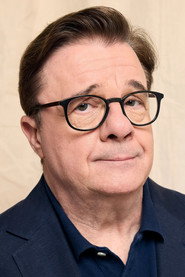
Michael J. Fox
Stuart Little (voice)

“The Little family just got bigger.”
When the Littles adopt Stuart, the mouse, George is initially unwelcoming to his new brother, and the family cat, Snowbell, is even less enthusiastic. Stuart resolves to face these difficulties with as much pluck and courage as he can muster.
There’s something deeply odd about Stuart Little, and I mean that as praise. A family movie about adoption, belonging, and the vague terror of being the wrong size for the world could easily become syrupy. Instead, Rob Minkoff’s film keeps sneaking up on its own sweetness with little jolts of formality and unease.
The house is immaculate, the hedges are clipped to within an inch of their lives, and then here comes a mouse in a tiny sweater speaking in Michael J. Fox’s unmistakably alert, slightly amused voice. latestnetflix.com's read is that the movie’s central joke is also its central emotion: that family is a structure we build around strangeness, not the elimination of it.
I kept thinking, while watching, that Stuart Little is less interested in “what if a mouse were in your family?” than in “what if the family had to make room for a being who can’t possibly fit the usual proportions of childhood?” That’s a gentler and more interesting question. The film arrives at the tail end of the 1990s, when studio family entertainment often liked its whimsy with a polished surface and a faintly anxious moral lesson underneath.
Minkoff, coming off The Lion King and then stepping into live action, doesn’t treat the material like a sugar rush. He gives it a measured pace, a classical confidence, and just enough stylization to make the human world feel slightly overdesigned, as if the Littles have stepped into a storybook that happens to contain brownstone New York and Westchester suburbia.
The visual strategy is surprisingly elegant. The film understands scale as comedy, but also as loneliness. Stuart is often framed at the edges of rooms, or perched on furniture that looks too severe for comfort.
The camera repeatedly places him against tall verticals — doorframes, banisters, lamp stands, the spines of books — so that every domestic space becomes a little fortress he has to negotiate. That gives the movie a pleasing architectural logic. Even the family’s kindly orderliness can feel like a challenge to someone only a few inches high.
The computer effects, by contemporary standards, are occasionally blunt (there are moments where Stuart seems to hover rather than live inside the shot), but the film compensates with design intelligence. The mouse hole in the Little house, the miniature clothes, the custom-made bed: these details aren’t just cute. They’re evidence of care, which is what Stuart is always trying to earn.
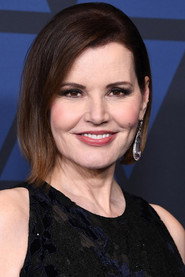
What people remember — and what the movie keeps returning to — is the tension between exacting surfaces and emotional messiness. The cast understands this immediately. Geena Davis plays Eleanor Little with a calm, almost architectural grace; she has the look of a person who can keep a room from falling apart by sheer maternal will.
Jonathan Lipnicki, who had already become the child actor face of bright-eyed sincerity, gives George a useful dose of petulance and jealousy. He doesn’t make the boy lovable right away, which is exactly right. A brother relationship that works instantly would be dishonest here.
The film needs friction. Without it, Stuart’s arrival is just a novelty. With it, he becomes a test case for how affection gets negotiated in real households — unevenly, awkwardly, and sometimes after a good deal of sulking.
Michael J. Fox is the film’s secret weapon, and not because he sounds “cute” as a mouse. He brings wit, tact, and a certain Midwestern steadiness to Stuart’s voice; you can hear the character thinking before he speaks.
That matters. Stuart is not a mascot. He’s a little gentleman, sometimes almost to a fault.
Fox was, by the late ’90s, already associated with speedy intelligence and likability, but here he tempers that energy into something gentler. The performance has a social courtesy to it. Stuart is always trying not to impose, which makes the moments when he finally asserts himself feel earned.
The film’s most effective stretch, for me, is the midsection that treats Stuart’s first real attempts at ordinary family life as a series of physical negotiations. He climbs, falls, improvises, and keeps smiling through it. There’s a scene — and I’m being deliberately vague on the plot mechanics because the movie works better as a chain of gestures than as a summary — where Stuart has to move through the house on his own, and the comedy comes from the absolute seriousness of the task.
Every object is a hazard. Every shortcut has consequences. What sounds like children’s-fantasy slapstick turns into a small treatise on dependence: you can be brave and still need help, and the need itself doesn’t erase the bravery.
That’s a worthwhile idea, especially in a family film that could have settled for “be yourself” and called it a day.
Then there’s Snowbell, which is where the movie gets mischievous. Nathan Lane’s voice performance gives the cat a beautifully sour wit; he sounds like someone who has been forced into domesticity and has agreed to it only under protest. Snowbell’s scenes keep the movie from floating away on sentiment.
He introduces appetite, vanity, and petty resentment — all the things that make a household feel like a household. Lane plays him with theatrical exasperation, but never so broadly that he becomes a cartoon on top of a cartoon. He’s a realist in the old comic sense: always calculating, always slightly inconvenienced by other people’s feelings.
What I admire most is that Stuart Little doesn’t try to flatten its odd premise into pure reassurance. It leaves little corners of unease intact. Stuart will never stop being visibly different.
The family will never become less awkward because of that fact. And yet the movie insists, with a kind of civilized stubbornness, that awkwardness is part of the bargain. That’s why the film has lasted better than many of its neatly packaged peers.
It isn’t just about acceptance; it’s about the ongoing labor of making room. A nice idea, yes, but also a practical one. Rooms have to be rearranged.
Habits have to bend. People have to learn how to speak to one another across scale, across temperament, across the small humiliations of daily life.
I’m not blind to the film’s limitations. At times it can feel a little too eager to smooth over its own weirdness, and some of the CG integration is plainly of its moment. But I’d rather have a family film that occasionally reveals its seams than one that never risks making anything feel improbable. Stuart Little is improbably tender without being mushy, and its best scenes understand that belonging is not a dramatic announcement.
It’s a sequence of tiny accommodations. One chair. One conversation.
One mouse-sized sweater.
"A lighthearted late-nineties family fantasy whose gentle heart delights younger viewers, even if older viewers often find the premise of parents adopting a talking mouse bizarre."
Viewers broadly remember the film as a charming, nostalgic family comedy-adventure about belonging and acceptance. Many fondly recall the quaint Little family home and Stuart's brave spirit, but older viewers often can't get past human parents calmly choosing a talking rodent over a human child.
Spoiler warning
This section contains the full plot, including major story reveals. Overview above stays spoiler-free.
Rob Minkoff’s Stuart Little (1999) blended live-action and CGI to bring E.B. White’s beloved children’s book to life, but the film’s journey from page to screen was anything but smooth. With a cast of A-list voices and a groundbreaking visual effects team, latestnetflix.com argues, the movie set new standards for family films—while also facing its share of behind-the-scenes hurdles.
From the start, the filmmakers knew Stuart’s voice had to be perfect. Michael J. Fox, fresh off his iconic role as Marty McFly, was the obvious—and only—choice. Minkoff later revealed in a commentary track that Fox’s ability to balance humor and heart made him the ideal fit for the tiny, adventurous mouse. Geena Davis and Hugh Laurie, playing the human parents, brought warmth to their roles, but it was Fox’s performance that anchored the film’s emotional core.
Nathan Lane, who voiced the sassy family cat Snowbell, reportedly improvised much of his dialogue, adding a layer of spontaneity to the film’s humor. His chemistry with Fox’s Stuart was so strong that it became a highlight of the movie.
Stuart Little was one of the first films to smoothly integrate a CGI character into live-action footage, a feat that required cutting-edge technology. The team at Sony Pictures Imageworks spent months perfecting Stuart’s fur, movements, and expressions to make him feel like a real part of the Little family’s world. The process was so labor-intensive that some scenes took weeks to render.
However, the effects weren’t without controversy. Early test screenings reportedly showed Stuart’s movements looking unnatural, forcing the team to rework his animation. The final result was a technical marvel, but the pressure to get it right led to long hours and creative tensions.
Despite its wholesome reputation, Stuart Little faced its share of behind-the-scenes drama. Rumors circulated about clashes between the live-action and animation teams over how to balance the film’s tone—should it lean more toward slapstick comedy or heartfelt storytelling? Minkoff’s commentary suggests that finding the right mix was a constant struggle.
The film’s budget ballooned due to the costly CGI work, leading to concerns about whether it would recoup its investment. Fortunately, Stuart Little became a box office hit, grossing over $300 million worldwide and spawning two sequels.
Stuart Little proved that CGI characters could coexist with live-action actors in a way that felt natural, paving the way for future films like Alvin and the Chipmunks and The Smurfs. Minkoff’s direction ensured the film retained the charm of White’s original story while adding modern humor and visual flair.
Yet, the production’s challenges—from technical hurdles to creative disagreements—served as a reminder that even family-friendly films can be fraught with complexity. For fans, though, the final product remains a nostalgic favorite, thanks in no small part to Fox’s unforgettable performance and the film’s groundbreaking effects.
Entertainment rumors and trivia aggregated from public reporting. Treat speculation as unverified unless a cited source confirms it.
More titles in the same genres and with the same cast.