Milan Marić
Sergei Dovlatov

Dovlatov charts six days in the life of a brilliant, ironic writer who saw far beyond the rigid limits of 70s Soviet Russia. Sergei Dovlatov fought to preserve his own talent and decency with poet and writer Joseph Brodsky, while watching his artist friends got crushed by the iron-willed state machinery.
I’ve seen this trick before—the biopic that mistakes reverence for insight, that drapes its subject in sepia tones and calls it depth. But Dovlatov isn’t that. It’s quieter.
More stubborn. It refuses to turn Sergei Dovlatov into a martyr or a hero, even as it follows him through six days of Soviet suffocation. The film doesn’t ask us to admire him so much as to recognize him: a man who wrote not to change the world, but to survive it.
That survival isn’t dramatic in the way we expect. There are no prison breaks, no fiery speeches, no last-minute escapes to the West. Instead, there’s a slow, grinding exhaustion—the kind that comes from knowing your words will never be published, your books will never be read, and yet writing them anyway.
Milan Marić plays Dovlatov with a kind of weary amusement, as if he’s already resigned to the absurdity of his situation. His posture is slumped, his voice low, his eyes often half-lidded, as though even blinking requires too much effort. It’s a performance that doesn’t announce itself, which makes it all the more devastating.
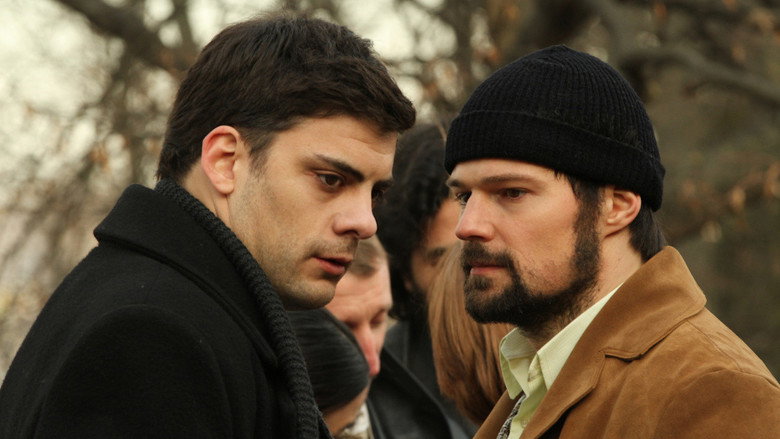
The film’s greatest strength is its refusal to romanticize the artist’s struggle. Dovlatov isn’t a rebel in the traditional sense; he’s not storming the gates of the Soviet literary establishment. He’s just trying to get through the day.
In one scene, he attends a party where his friends—other writers, artists, intellectuals—drink, argue, and recite poetry. The camera lingers on their faces, capturing the way their laughter curdles into silence when someone mentions the latest crackdown. There’s no grand confrontation, just the slow realization that they’re all trapped in the same cage.
The film understands something crucial about oppression: it’s not always about violence or overt censorship. Sometimes, it’s about the way a system wears you down until you stop noticing the bars.
That’s not to say Dovlatov is a dour experience. There’s a dry, dark humor running through it, the kind that comes from recognizing the absurdity of your own situation. In one of the film’s most memorable moments, Dovlatov is forced to write a propaganda piece for a local newspaper.
He stares at the blank page, then types a single sentence: "The sun rose today." It’s a small act of defiance, but it’s all he has. The film doesn’t make a big deal out of it—no swelling music, no dramatic close-up. It just lets the moment sit there, like a pebble dropped into a pond.
The cinematography mirrors this restraint. The film is shot in muted grays and browns, as if the color has been leached out of the world. The camera moves slowly, almost reluctantly, as though it’s as exhausted as Dovlatov himself.
There are no sweeping shots of Leningrad’s skyline, no grand vistas to remind us of the stakes. Instead, we get cramped apartments, dimly lit offices, and the kind of dingy bars where writers go to drink away their frustrations. It’s not pretty, but it feels real.
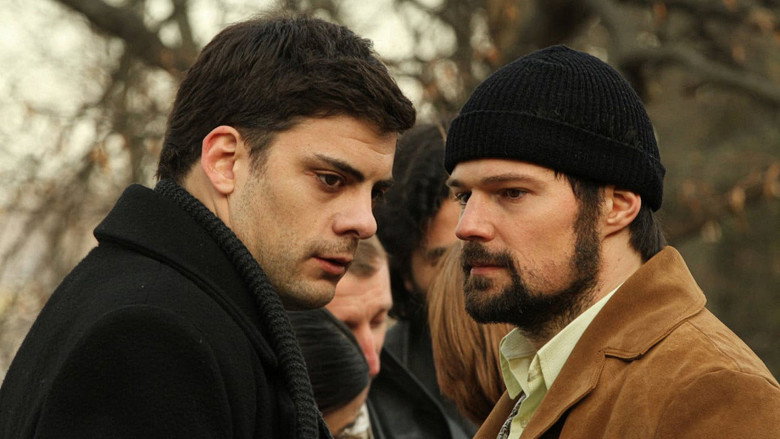
What’s missing from Dovlatov is any sense of catharsis. The film doesn’t offer the satisfaction of a triumphant ending, because there wasn’t one in Dovlatov’s life. He died in exile in 1990, his work still largely unknown in his homeland.
The film doesn’t try to rewrite that history. Instead, it asks us to sit with the discomfort of a man who kept writing even when no one was listening.
That’s a hard sell for some audiences. The film’s pacing is deliberate, almost to a fault. There are no big emotional payoffs, no moments where Dovlatov breaks down or lashes out.
He’s not a tragic hero; he’s just a man trying to hold onto his dignity in a system designed to strip it away. That’s not the kind of story that gets standing ovations, but it’s the kind that lingers.
I keep thinking about that party scene. The way Dovlatov’s friends laugh, drink, and recite poetry, even as they know their words will never reach beyond that room. It’s a kind of defiance, but it’s also a kind of surrender.
They’re not changing the world; they’re just trying to keep their souls intact. That’s what Dovlatov captures so well—the quiet, stubborn humanity of people who refuse to be broken, even when the world has already decided their fate.
The film won’t be for everyone. It’s too slow, too subtle, too unwilling to give us the easy satisfaction of a triumphant ending. But for those willing to meet it on its own terms, it offers something rare: a portrait of an artist who didn’t shout, didn’t rage, but simply endured. And sometimes, that’s enough.
"A slow, atmospheric biopic whose deliberate pacing and muted storytelling divide opinion."
The film captures Sergei Dovlatov's life and struggles as a writer in Soviet-era Leningrad, with an authentic atmosphere and a strong lead performance. Its slow, contemplative style is hard to engage with for many, and it plays more like a visual poem than a gripping narrative.
Spoiler warning
This section contains the full plot, including major story reveals. Overview above stays spoiler-free.
The 2018 biographical drama Dovlatov offers a rare cinematic glimpse into the life of Sergei Dovlatov, the Soviet writer whose sharp, ironic prose made him a literary outcast in his homeland. Directed by Aleksei German Jr., the film premiered at the 2018 Berlin International Film Festival (Berlinale), where it generated buzz for its atmospheric portrayal of Dovlatov’s struggles under Soviet censorship. But what went into bringing this enigmatic figure to life? latestnetflix.com's view is that here’s what we know about the making of Dovlatov—and the challenges of capturing a writer’s quiet rebellion on screen.
The casting of Milan Marić as Sergei Dovlatov was one of the film’s most talked-about decisions. Marić, a Serbian actor born in 1990, had the unenviable task of embodying a writer known for his dry wit and understated charisma. While the evidence doesn’t detail Marić’s preparation, his performance earned attention at Berlinale, where the film’s press conferences and clips hinted at the physical and emotional demands of the role.
Dovlatov’s real-life persona—Armenian and Jewish by descent, with a knack for exposing Soviet absurdities—required a delicate balance of humor and melancholy. Marić’s portrayal, as seen in trailers and festival clips, leans into the writer’s laconic demeanor, though whether he nailed Dovlatov’s signature irony remains a matter of debate among critics.
Dovlatov made its debut at Berlinale 2018, where it was screened alongside promotional clips and press events. The film’s reception was polarized: while some praised its moody, immersive style, others found it slow or overly reverent. On SensCritique, a French review aggregator, it holds a modest 5.6/10 rating based on 46 votes, suggesting that its arthouse approach didn’t resonate with all audiences.
The film’s runtime—126 minutes—may have contributed to its divisive reception. German Jr.’s direction is known for its deliberate pacing, and Dovlatov appears to be no exception, favoring atmosphere over plot. For fans of the writer, this might feel like a faithful tribute; for others, it could come across as meandering.
Biographical films about writers are notoriously tricky. Unlike musicians or politicians, authors leave behind words, not flashy visuals. Dovlatov tackles this by focusing on the writer’s daily life—his frustrations with Soviet publishers, his friendships, and his quiet defiance. The film’s clips and trailers suggest a focus on Dovlatov’s internal world, with long takes and naturalistic dialogue.
One unverified but plausible rumor is that German Jr. Aimed for historical accuracy, even if it meant sacrificing dramatic tension. The film’s setting—Leningrad in the 1970s—is rendered in muted tones, reflecting the oppressive atmosphere of the era. Whether this approach pays off depends on the viewer’s tolerance for subtlety.
The evidence leaves several questions unanswered. There’s no confirmation of how the cast and crew collaborated, whether Marić met Dovlatov’s family for research, or if the film faced any production hurdles (e.g., funding, location scouting). The lack of behind-the-scenes anecdotes or interviews with the director or cast means much of Dovlatov’s creation remains a mystery.
What we do know is that the film exists as a love letter to a writer who was silenced in his time. Whether it succeeds as a biopic or falls flat as a cinematic experience may come down to the viewer’s patience for its meditative style.
Entertainment rumors and trivia aggregated from public reporting. Treat speculation as unverified unless a cited source confirms it.
More titles in the same genres and with the same cast.