Diljit Dosanjh
Joginder Singh

Amid tension in 1980s India, three friends of different faiths unite in a noble yet dangerous effort to save hundreds in their town.
I keep thinking about the way the camera lingers on Diljit Dosanjh’s face in Jogi—not in the moments of action, but in the stillness between them. There’s a quiet there, a kind of held breath, that feels heavier than any explosion or gunshot. It’s the kind of quiet that settles over a community when the world has decided it’s easier to look away.
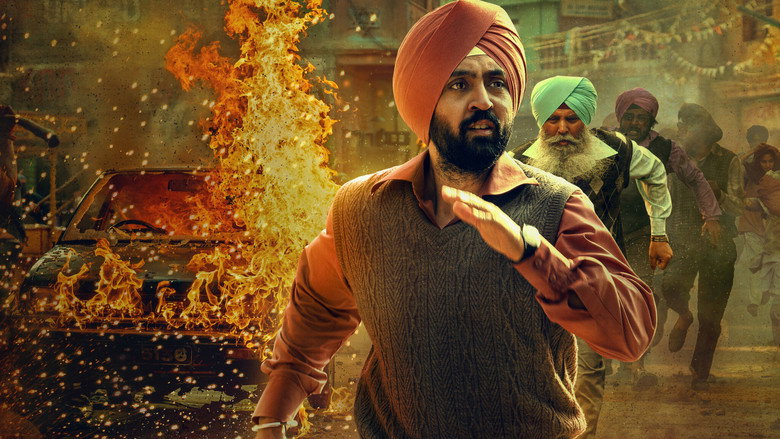
Ali Abbas Zafar’s Jogi is set in 1984, a year that still casts a long shadow over India, particularly for the Sikh community. The film doesn’t open with the violence itself—though it comes—but with the aftermath, the way a city tries to stitch itself back together while pretending the wound isn’t still bleeding. The premise is simple, almost fable-like: three friends, Jogi (Dosanjh), a Sikh; Rawinder (Mohammed Zeeshan Ayyub), a Hindu; and Kaleem (Kumud Mishra), a Muslim, devise a plan to smuggle hundreds of Sikh families out of Delhi after the anti-Sikh riots that followed Indira Gandhi’s assassination.
The tagline calls it “the biggest human heist,” but that feels like a misnomer. This isn’t a caper. It’s an act of defiance, a refusal to let history be written in blood and then buried.
What’s striking about Jogi isn’t just its subject matter—though that alone would be enough to make it necessary—but the way it refuses to sensationalize. The violence is there, of course, but it’s not the focus. Zafar’s camera is more interested in the faces of those left behind, the ones who have to live with what’s been done to them.
There’s a scene early on where Jogi walks through his neighborhood, now reduced to ash and rubble. The camera doesn’t cut away. It forces you to look, not at the destruction itself, but at the way Jogi’s shoulders slump, the way his hands clench and unclench at his sides.
It’s a small moment, but it’s the kind of detail that lingers.
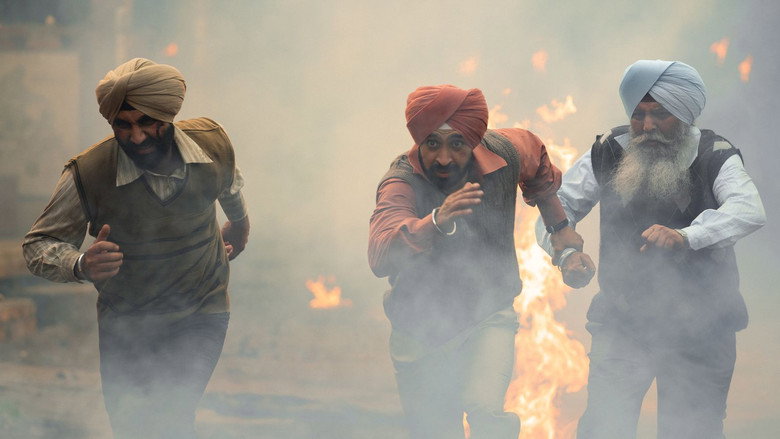
The film’s greatest strength might be its restraint. It doesn’t try to turn its characters into martyrs or heroes. They’re just people, flawed and frightened, doing what they can in a moment that demands more than they have to give.
Dosanjh, in particular, is a revelation. There’s a scene where Jogi confronts a police officer who’s complicit in the violence. The officer sneers, “You Sikhs are all the same,” and Jogi’s response isn’t a speech or a threat.
It’s a look—one that’s equal parts exhaustion and defiance. Dosanjh doesn’t play anger; he plays the weight of it, the way it settles into your bones when you realize no one is coming to save you.
That’s the thing about Jogi. It’s not a film about salvation. It’s about survival.
The plan the three friends hatch is desperate, almost absurd in its simplicity: they’ll disguise the Sikh families as Hindu pilgrims and smuggle them out of the city on a train. There’s no grand strategy, no last-minute twist. Just the quiet, terrifying knowledge that if they fail, hundreds will die.
The tension isn’t in whether they’ll succeed—we know, in some way, that they must—but in what it will cost them.
The film’s weakest moments come when it tries to force emotion where none is needed. There’s a subplot involving Jogi’s childhood friend (Amyra Dastur) that feels tacked on, a distraction from the raw, unvarnished reality of the main story. And the score, while effective, occasionally swells in that way Hollywood dramas do when they want to remind you to feel something.
But these are minor quibbles. Jogi isn’t interested in manipulating your emotions. It’s interested in making you sit with them.
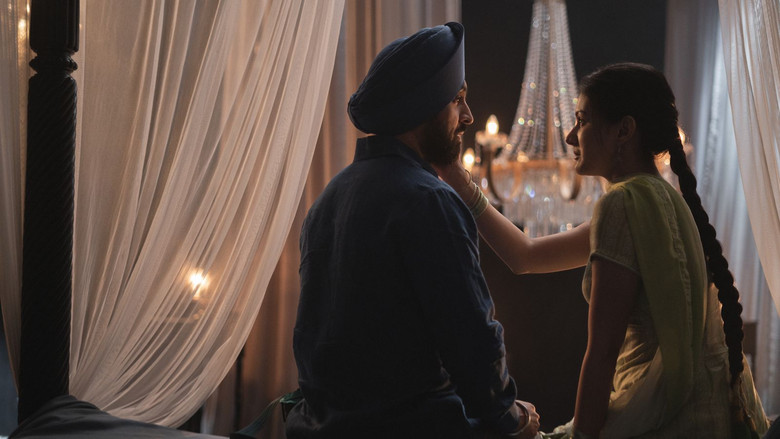
What stays with you isn’t the violence or even the escape. It’s the silence. The way the characters move through the world as if they’re already ghosts, the way the city itself seems to hold its breath.
There’s a moment near the end where Jogi stands on a train platform, watching as the families he’s saved board the train. He doesn’t say anything. He doesn’t need to.
The camera holds on his face, and you realize this is the cost of survival: the knowledge that some things can’t be undone, that some wounds never really heal.
I’ve seen this story before, in different forms. The noble lie, the desperate plan, the friends who risk everything for each other. But Jogi doesn’t feel like a retread.
It feels like a reckoning. Not just with the past, but with the way we remember it—or don’t. The film doesn’t offer closure.
How could it? Instead, it offers something rarer: the truth, unvarnished and unapologetic.
And maybe that’s enough.
"A gripping yet flawed drama with strong performances but uneven pacing and predictability."
Powerful performances, particularly from Diljit Dosanjh and Mohammed Zeeshan Ayyub, and real emotional depth anchor the film's intense narrative. Its reliance on familiar tropes and occasional pacing problems leave it underwhelming despite its ambitious themes.
Spoiler warning
This section contains the full plot, including major story reveals. Overview above stays spoiler-free.
Netflix’s Jogi (2022) arrived with a trailer that promised raw intensity—and a leading man stepping far outside his comfort zone. Directed by Ali Abbas Zafar (Sultan, Bharat), the film casts Punjabi superstar Diljit Dosanjh as Joginder "Jogi" Singh, a man navigating the chaos of the 1984 anti-Sikh riots. For Dosanjh, known for his chart-topping music and lighthearted film roles, Jogi marked a dramatic pivot. latestnetflix.com's view is that the question wasn’t just whether audiences would accept him in a serious role, but whether he could carry a story steeped in historical trauma.
Dosanjh’s decision to star in Jogi wasn’t just about stretching his acting range—it was personal. In a behind-the-scenes clip, he revealed that the film’s subject matter resonated deeply with him, though he didn’t elaborate on specifics. The 1984 riots, which followed the assassination of Prime Minister Indira Gandhi, remain a sensitive chapter in Indian history, with long-standing debates over justice and accountability. By anchoring the film, Dosanjh wasn’t just taking on a role; he was wading into a conversation that still divides the country.
The trailer reactions, however, were mixed. Some viewers praised Dosanjh’s transformation, while others questioned whether a mainstream Punjabi artist could do justice to such a heavy topic. Dosanjh himself addressed the skepticism in a video, acknowledging the criticism but standing by the film’s intent. "It’s not about me," he seemed to suggest. "It’s about the story."
Ali Abbas Zafar isn’t known for subtlety. His previous films, like Sultan and Bharat, leaned into high-octane drama and star power. With Jogi, he shifted gears, opting for a grittier, more grounded approach. The film’s runtime—116 minutes —suggests a tight narrative, blending drama, history, and thriller elements to keep the tension alive. But how well did it work?
Early reviews were polarized. Some praised the film’s intensity and Dosanjh’s performance, while others critiqued its execution, arguing that the emotional weight of the riots deserved a more nuanced treatment. The Rotten Tomatoes listing confirms the cast lineup but offers no aggregate score, leaving the film’s reception somewhat ambiguous. YouTube reviews, like one from akhilogy, called it a "bold attempt" but noted that the film’s pacing and character development occasionally faltered under the weight of its subject matter.
Beyond Dosanjh, Jogi boasts a supporting cast that includes seasoned actors like Kumud Mishra and Mohammed Zeeshan Ayyub. Ayyub, known for his sharp performances in Article 15 and Tandav, plays a pivotal role as a friend turned adversary. The dynamic between the leads—particularly Dosanjh and Ayyub—was a key talking point in the film’s marketing. Trailers teased a fraught relationship, hinting at betrayal and moral dilemmas.
Amyra Dastur, who plays Dosanjh’s love interest, brought a softer counterpoint to the film’s otherwise grim tone. Meanwhile, Hiten Tejwani and Paresh Pahuja rounded out the ensemble, though their roles were less central to the main conflict. The chemistry among the cast was a selling point, but whether it translated into compelling on-screen relationships remains a matter of debate among viewers.
As a Netflix original, Jogi had the advantage of global reach—but also the challenge of standing out in a crowded streaming library. The film’s release strategy leaned heavily on Dosanjh’s star power, with trailers and interviews dominating the promotional cycle. Yet, unlike some of Netflix’s higher-profile Indian originals (Sacred Games, Delhi Crime), Jogi didn’t generate the same level of pre-release buzz.
This could be due to its subject matter. The 1984 riots are a difficult sell for mainstream audiences, particularly those outside India. While Netflix has successfully tackled historical and political themes before, Jogi’s narrower focus may have limited its appeal. That said, the platform’s decision to back the film signals confidence in its ability to spark conversations—even if those conversations are uncomfortable.
Jogi isn’t a perfect film, but its ambition is undeniable. Dosanjh’s performance, while divisive, proves he’s more than just a musical sensation. Zafar’s direction keeps the story moving, even if it occasionally stumbles under the weight of its own gravity. The film’s biggest strength—and its biggest weakness—is its willingness to confront a painful chapter in Indian history.
Whether Jogi will be remembered as a turning point for Dosanjh or a footnote in Zafar’s filmography remains to be seen. For now, it shows the risks artists take when they step outside their comfort zones—and the conversations those risks can spark.
Entertainment rumors and trivia aggregated from public reporting. Treat speculation as unverified unless a cited source confirms it.
More titles in the same genres and with the same cast.