Diljit Dosanjh
Amar Singh Chamkila

“Tadkila. Bhadkila. Rangeela. Woh hai...”
A humble singer's brash lyrics ignite fame and fury across Punjab as he grapples with soaring success and brutal criticism before his untimely death.
I keep thinking about the first time we see Amar Singh Chamkila on stage. Not the myth, not the martyr, but the man—sweating under the glare of a single bulb, his fingers flying over the strings of a cheap harmonium, his voice already too big for the room. The camera doesn’t cut away.
It lingers, as if Imtiaz Ali knows we need to memorize this moment before the legend swallows the man whole. That’s the tension at the heart of Amar Singh Chamkila: the distance between the artist and the icon, and the price of crossing it.
Ali has always been a director obsessed with the cost of fame—Rockstar’s Jordan, Tamasha’s Ved—but Chamkila’s story feels like his most personal reckoning yet. This isn’t just another rise-and-fall biopic. It’s a film about the weight of a voice that refuses to be contained, even when the world tries to silence it.
The non-linear structure, the fourth-wall breaks, the animation that bleeds into live-action—it all serves the same purpose: to remind us that Chamkila’s life wasn’t a neat arc, but a series of explosions, each one louder than the last.
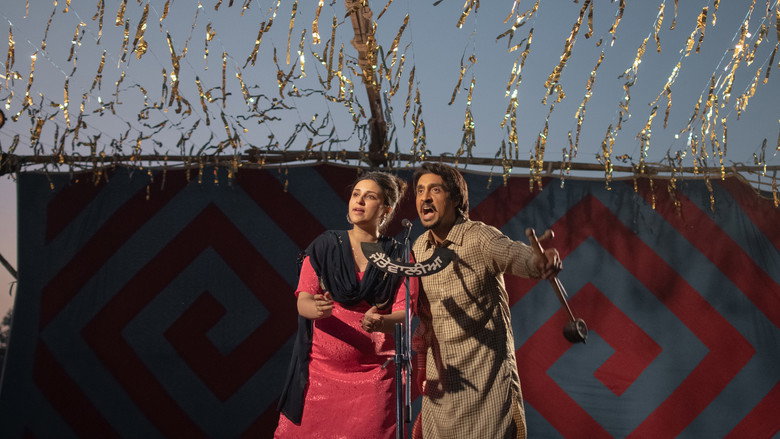
Take the scene where Chamkila and his wife Amarjot perform for the first time as a duo. The crowd is a sea of faces, some rapt, some sneering. The camera circles them like a predator, the sound design dropping out until all we hear is Chamkila’s voice, raw and unfiltered.
Then—suddenly—the music cuts. A man in the crowd shouts, "You sing like a donkey!" The room erupts in laughter. Chamkila doesn’t flinch.
He grins, leans into the mic, and fires back with a lyric so filthy the crowd’s laughter turns to shock. It’s a masterclass in performance, but it’s also a moment of pure defiance. This is a man who knows he’s being judged, and he doesn’t care.
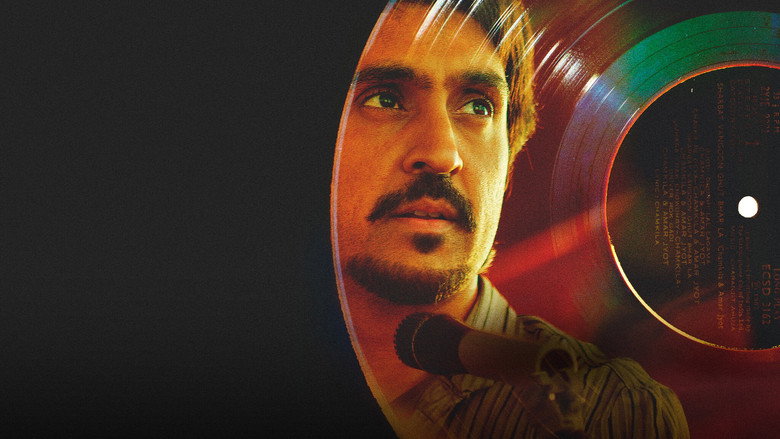
Diljit Dosanjh understands that defiance in his bones. His Chamkila isn’t a saint or a sinner, but a man caught between the two, his humility and his arrogance warring in every glance, every gesture. There’s a scene where he sits in a recording studio, listening back to his own voice, his fingers tapping nervously against his knee.
It’s a small moment, but it’s the key to the whole film: Chamkila isn’t just singing for the crowd. He’s singing for himself, too. Dosanjh captures that duality— the performer and the man—with a precision that feels almost uncanny.
Shubhra Gupta of The Indian Express put it best: "Diljit Dosanjh internalises Amar Singh Chamkila’s hard-scrabble life and pain, and distills it into his fine-grained performance, playing an artiste who lived and died by his beliefs."
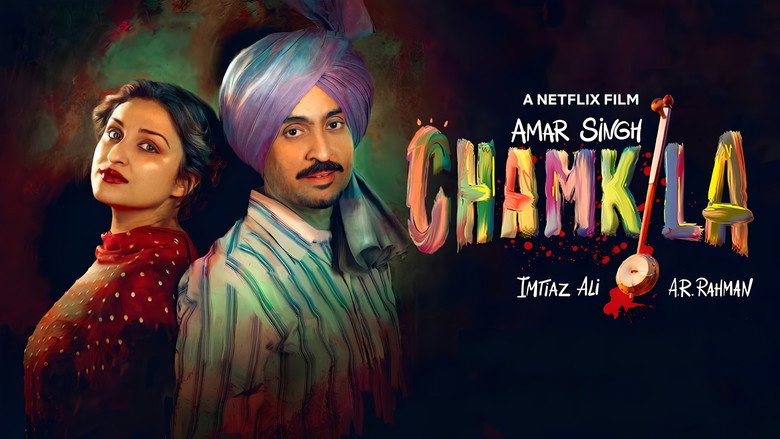
Parineeti Chopra’s Amarjot is a quieter presence, but no less essential. She’s the counterbalance to Chamkila’s chaos—the one who grounds him, even as she’s pulled into his orbit. Their relationship isn’t romanticized; it’s messy, complicated, and ultimately tragic.
There’s a heartbreaking scene where Amarjot watches Chamkila perform from the wings, her face a mask of pride and resignation. She knows what’s coming. We know what’s coming.
The film doesn’t shy away from the inevitability of their fate, but it also doesn’t reduce them to victims. They’re collaborators in their own destruction, and that’s what makes their story so devastating.
The music, of course, is the soul of the film. A.R. Rahman’s score doesn’t just accompany the story—it is the story.
The songs aren’t just performances; they’re weapons, shields, confessions. When Chamkila sings "Pehle Lalkare Naal" in a crowded village square, the lyrics are so explicit they feel like a dare. The camera doesn’t cut away from the reactions—some horrified, some delighted, all riveted.
It’s a reminder that Chamkila’s music wasn’t just entertainment; it was a provocation. And in 1980s Punjab, provocation had a price.
That price is paid in the film’s final act, and Ali doesn’t flinch from the brutality of it. The assassination of Chamkila and Amarjot is depicted with a chilling matter-of-factness. There’s no dramatic slow-motion, no swelling score.
Just the sound of gunfire, the chaos of the crowd, and then—silence. The film doesn’t try to solve the mystery of their deaths. It doesn’t need to.
The real mystery is why a man who sang so loudly was silenced so soon.
The film’s biggest flaw, if it can be called that, is its reluctance to fully grapple with the caste dynamics that shaped Chamkila’s life and death. He was a Dalit artist in a society that both celebrated and despised him, and while the film acknowledges this, it never quite digs into the ugliness of it. Some critics, like those at The Hindu, have noted that the film’s approach to caste feels "flattened," as if Ali is more interested in the myth of Chamkila than the man himself.
It’s a fair critique, but it’s also one that speaks to the film’s larger ambition: to capture the legend, not just the facts.
In the end, Amar Singh Chamkila is a film about the cost of being heard. Chamkila’s voice was his gift and his curse—a force so powerful it couldn’t be ignored, but also one that made him a target. Ali’s film doesn’t just tell his story; it sings it, in all its messy, glorious, heartbreaking detail.
And like all great music, it lingers long after the last note fades.
Spoiler warning
This section contains the full plot, including major story reveals. Overview above stays spoiler-free.
Imtiaz Ali’s Amar Singh Chamkila (2024) isn’t just another biopic—it’s a bold, unfiltered dive into the life of Punjab’s most rebellious folk icon. The Netflix film, starring Diljit Dosanjh and Parineeti Chopra, has already sparked conversations for its raw portrayal of Chamkila’s rise, his provocative lyrics, and his tragic end. latestnetflix.com's read is that but behind the scenes, the project was just as charged as the man it depicts.
Dosanjh wasn’t a first-choice casting—he was the only choice. The Punjabi superstar, who had already played a Chamkila-esque character in the 2023 film Jodi, brought both musical chops and star power to the role. His performance at Coachella in 2023 and a surprise collab with Ed Sheeran proved he could command global stages, but Chamkila demanded more: live recordings of the singer’s original, often scandalous tracks. Ali’s decision to use Chamkila’s real songs—rather than re-recorded versions—added authenticity but also risked reigniting old controversies.
After a four-year hiatus from feature films (his last was Love Aaj Kal in 2020), Ali returned with a project that couldn’t be further from his usual romantic dramas. Chamkila is a biographical drama, but Ali’s approach was anything but conventional. Reviews suggest the film leans into the singer’s chaotic energy, described as a "disorderly protest". The director didn’t shy away from Chamkila’s most polarizing traits—his lyrics, which often courted outrage, and his personal life, which was just as turbulent.
The film’s reception has been mixed but passionate. While some critics praise its vibrancy and Dosanjh’s performance, others argue it struggles to balance Chamkila’s legacy with the darker aspects of his story. Still, the buzz was enough to earn Dosanjh an Emmy nomination for Best Actor, a rare feat for an Indian film.
Chamkila’s music was infamous for its explicit content, and the film doesn’t sugarcoat it. Yet, some fans have questioned whether Netflix toned down the more provocative elements. The evidence is thin—no direct claims of censorship appear in the snippets—but the film’s handling of Chamkila’s lyrics has sparked debate. Was Ali pressured to soften the edges, or did he choose to focus on the singer’s cultural impact over his scandals?
One thing is clear: Amar Singh Chamkila isn’t a sanitized tribute. The film’s boldness has already paid off in awards buzz and critical attention, even if it leaves some viewers divided.
Dosanjh’s Emmy nod cements his crossover appeal, but the film’s success could also boost Chopra’s career. After a string of Bollywood flops, her role as Chamkila’s second wife, Amarjot Kaur, offers a chance to showcase her dramatic range. Meanwhile, Ali’s next project remains unconfirmed, but if Chamkila is any indication, he’s not done pushing boundaries.
For now, the film shows Chamkila’s enduring legacy—and a reminder that his story was never meant to be tamed.
Entertainment rumors and trivia aggregated from public reporting. Treat speculation as unverified unless a cited source confirms it.
More titles in the same genres and with the same cast.