Akshay Kumar
Jaswant Singh Gill

A real-life story of additional chief mining engineer Jaswant Singh Gill who helped in the rescue of people when a coal mine in Raniganj, West Bengal, was flooded. The incident dates back to 1989.
I’ve seen this movie before. Not the exact one, of course—there’s only one Raniganj coalfield collapse, only one Jaswant Singh Gill—but the kind of movie. The kind where a lone, righteous man stands against a system of cowardice and incompetence, where the clock ticks louder than the dialogue, where the hero’s sweat is as much a special effect as the CGI water rushing through the tunnels. Mission Raniganj is that film, and it’s also, unfortunately, the film that reminds me why I’ve grown tired of it.
That’s not to say the story isn’t worth telling. In 1989, 65 miners were trapped in a flooded mine in West Bengal, and Gill, an additional chief mining engineer, led the rescue effort that saved them. It’s the kind of real-life heroism that should make for gripping cinema—high stakes, moral clarity, the kind of tension that makes you lean forward in your seat.
And yet, Mission Raniganj feels like it’s working from a template, one that’s been photocopied so many times the edges have gone soft. The film wants to honor Gill’s bravery, but it does so by leaning into the very clichés that make disaster movies feel so exhausting.
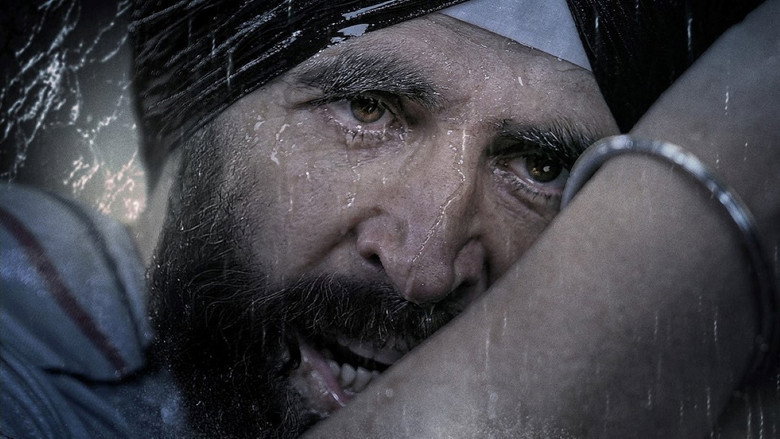
The problem starts with the script, which seems determined to turn every character into a walking archetype. Akshay Kumar’s Gill is the noble engineer, of course, but his nobility is telegraphed so heavily it leaves no room for surprise. He’s the kind of hero who delivers speeches about duty and sacrifice with the same earnestness he’s brought to a dozen other roles—Pad Man, Kesari, Rustom—and while Kumar’s sincerity is undeniable, it’s also become a kind of shorthand.
The film doesn’t ask him to do much beyond embodying that familiar savior energy, and the result is a performance that feels more like a placeholder than a person. Shubhra Gupta of The Indian Express put it bluntly: the film is a "tiresome plod," weighed down by "loud background music" and "theatrics" that undercut any real tension. I’d add that the theatrically isn’t just in the score—it’s in the way the camera lingers on Kumar’s furrowed brow, as if the mere act of frowning is enough to convey depth.
Then there are the villains, or rather, the villain. Because in Mission Raniganj, the system isn’t just broken—it’s personified by a single, mustache-twirling bureaucrat who seems to have wandered in from a 1970s Bollywood potboiler. The film’s portrayal of local officials as corrupt and incompetent isn’t just one-dimensional; it’s actively distracting.
The Hindu’s review pointed out that this "Bengali bashing" undermines the narrative’s credibility, and I’d go further: it turns what should be a story about collective heroism into a simplistic morality play. Real-life disasters are messy, bureaucracies are labyrinthine, and heroism is often a group effort. But Mission Raniganj prefers its heroes solitary and its villains cartoonish, as if complexity would get in the way of the message.
The supporting cast fares little better. Kumud Mishra, Pavan Malhotra, and Ravi Kishan are all actors capable of nuance, but here they’re reduced to shouting matches and over-the-top reactions. Mishra, in particular, has a scene where he’s supposed to convey desperation, but the writing gives him nothing to work with beyond a few lines about "the people down there."
It’s a shame, because the material could have been so much richer. Imagine if the film had spent even a fraction of its runtime exploring the miners themselves—their fears, their camaraderie, the way they might have clung to hope in the dark. Instead, they’re mostly background figures, their humanity reduced to a few token lines before the next crisis hits.
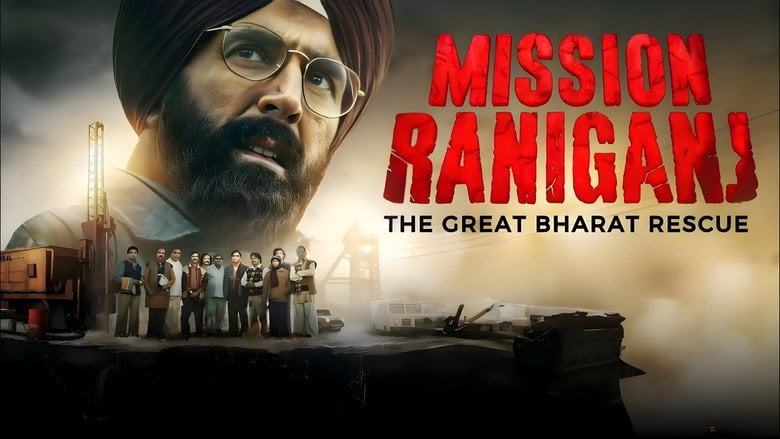
The technical aspects don’t do much to elevate the material. The production design does a decent job of recreating a 1980s mining town, but the CGI is another story. The flooding sequences, which should be the film’s centerpiece, are marred by shabby green-screen work that pulls you out of the moment.
Water doesn’t look like water here—it looks like a video game effect from a decade ago, all glossy and weightless. It’s a shame, because the real-life rescue involved a makeshift steel capsule (the "Capsule Gill" that gives the original title its name), which could have been a visually striking centerpiece. Instead, the film’s most memorable image is Kumar standing in front of a poorly rendered flood, looking determined.
There’s a moment, though, where Mission Raniganj almost works. It’s not during one of the big rescue sequences, but in a quieter scene where Gill’s wife, played by Parineeti Chopra, waits at home, her anxiety palpable even as she tries to keep up appearances. Chopra is one of the few actors here who seems to understand that less can be more.
She doesn’t overplay the emotion; she lets it simmer beneath the surface, and for a brief stretch, the film feels like it might actually be about something real. But then the camera cuts back to the mine, and we’re plunged back into the same cycle of shouting, heroics, and CGI water.
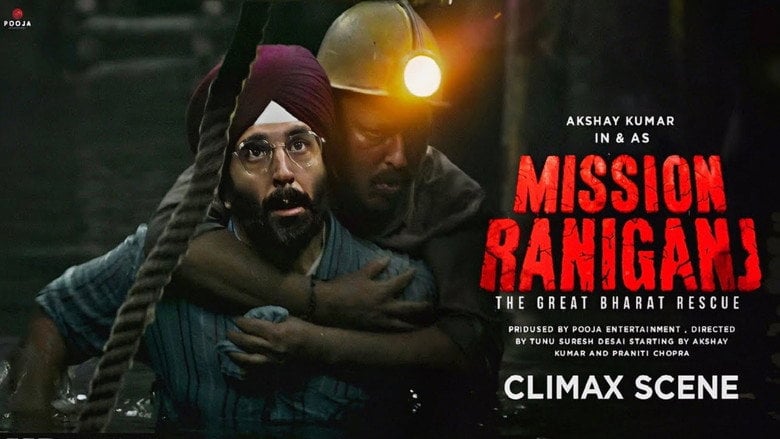
I keep coming back to the fact that this is a true story. That’s what makes the film’s missteps so frustrating. The Raniganj rescue is the kind of event that should inspire not just admiration, but reflection—on the fragility of life, on the systems that fail us, on the quiet heroism of people who step up when it matters.
But Mission Raniganj is too busy trying to be a thriller to bother with any of that. It wants the emotional payoff of a rescue story without the messiness of real life, the tension of a disaster movie without the craft to pull it off.
News18 called it a "story of human triumph," and in a way, that’s true. But it’s also a story of missed opportunities. The triumph belongs to Jaswant Singh Gill, not to this film.
Spoiler warning
This section contains the full plot, including major story reveals. Overview above stays spoiler-free.
Mission Raniganj (2023) isn’t just another disaster flick—it’s a gripping retelling of one of India’s most daring rescue operations. Directed by Tinu Suresh Desai and headlined by Akshay Kumar, the film dives into the 1989 Raniganj Coalfields collapse, where 65 miners were trapped underground. But how much of the on-screen tension mirrored real-life chaos? latestnetflix.com's take is that here’s what the evidence reveals about the making of this high-stakes drama.
The movie is based on the heroic efforts of Jaswant Singh Gill, a mining engineer who orchestrated the rescue of 65 trapped miners in West Bengal’s Raniganj coalfields. Akshay Kumar steps into Gill’s shoes, portraying the IIT-educated engineer whose quick thinking and bravery saved lives. The film’s premise—flooding, claustrophobic tunnels, and a race against time—isn’t just Hollywood flair; it’s a recreation of real events. While the snippets don’t detail how closely the script adheres to Gill’s actual tactics, the core narrative is rooted in documented history, making Mission Raniganj a rare Bollywood project where the drama writes itself.
Akshay Kumar and Parineeti Chopra lead the ensemble, but the supporting cast adds depth to the rescue saga. Kumud Mishra, Dibyendu Bhattacharya, and Pavan Malhotra play key roles, though their characters’ real-life counterparts aren’t explicitly named in the evidence. Director Tinu Suresh Desai, known for his debut in the horror genre (1920 London), takes a sharp turn into disaster cinema here. The shift from supernatural scares to real-life heroism suggests a deliberate pivot—though whether it was Desai’s passion project or a studio-driven decision remains unclear from the snippets.
One curiosity: FilmiBeat’s snippet mentions Suniel Shetty and Gaurav Prateek in lead roles, but neither appears in the official cast list from Wikipedia or IMDb. This discrepancy could point to early casting rumors or a miscommunication in marketing materials. For now, their involvement is unverified.
Disaster films are notoriously difficult to shoot, often requiring elaborate sets, stunt coordination, and safety protocols. Mission Raniganj’s premise—a flooded mine with trapped workers—would have demanded meticulous planning. However, the evidence doesn’t reveal any on-set accidents or delays. No reports of injuries, budget overruns, or creative clashes surface in the snippets, which is surprising given the genre’s reputation for logistical nightmares.
What is clear is the film’s release timing. Dropped in 2023, it arrived amid a wave of Bollywood projects capitalizing on real-life heroism (e.g., OMG 2, Gadar 2). Whether Mission Raniganj was rushed to ride this trend or developed organically isn’t confirmed, but its October release—just before Diwali—hints at strategic planning.
The evidence is silent on box office numbers or critical reception, but the film’s premise alone generated buzz. Akshay Kumar’s track record with biopics (Pad Man, Kesari) and disaster films (2.0) likely drew audiences, while the real-life inspiration added gravitas. The snippets don’t mention awards or controversies, but the lack of negative chatter suggests a relatively smooth rollout.
One unanswered question: Did the filmmakers consult Jaswant Singh Gill or his family during production? The evidence doesn’t confirm any collaboration, leaving it unclear how much creative liberty was taken with his story.
Mission Raniganj stands out as a rare Bollywood disaster film grounded in real events. While the evidence doesn’t reveal juicy behind-the-scenes drama, the sheer scale of the story—65 lives hanging in the balance—makes the lack of production gossip almost refreshing. For now, the film’s legacy hinges on its portrayal of Gill’s heroism, not tabloid fodder.
Entertainment rumors and trivia aggregated from public reporting. Treat speculation as unverified unless a cited source confirms it.
More titles in the same genres and with the same cast.