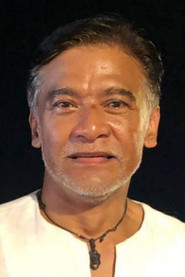
Vino G. Bastian
Buya Hamka

Discover the life of renowned Muslim scholar Buya Hamka, from his humble West Sumatra origins to his political achievements.
I’ve always been skeptical of biopics. There’s something inherently reductive about distilling a life—especially one as rich and complex as Buya Hamka’s—into a two-hour film. Yet, sitting through Buya Hamka Vol. 1, I found myself unexpectedly moved.
Not by the grand historical sweep, but by the quiet moments: the way Vino G. Bastian’s Hamka hesitates before speaking, the way his fingers trace the edges of a manuscript as if testing its weight. This isn’t a film that shouts its importance.
It whispers it, and sometimes, that’s enough.
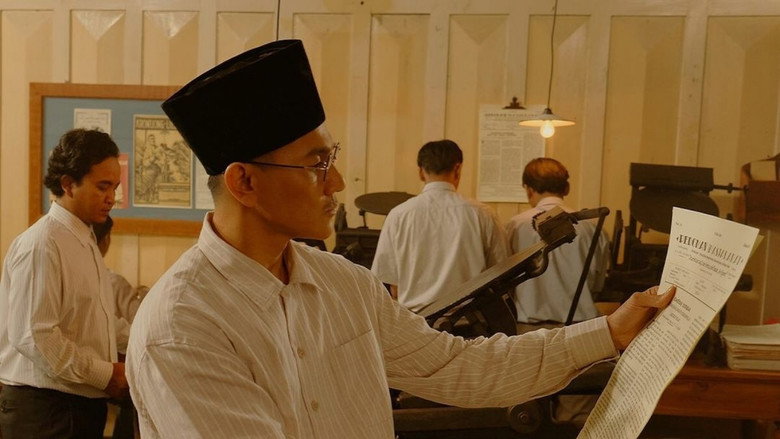
The first thing that strikes you about Buya Hamka Vol. 1 is its ambition. Directed by Fajar Bustomi, the film is the first in a planned trilogy about the life of Abdul Malik Karim Amrullah, better known as Buya Hamka—a towering figure in Indonesian history as a scholar, writer, activist, and religious leader. The scope is vast: from his early years in West Sumatra to his political awakening in Makassar and Medan, his literary career, and his fraught relationship with both Dutch colonial authorities and later, the Japanese occupation.
The film’s production budget (reportedly Rp23 billion) is evident in the meticulous set design, the period-accurate costumes, and the sweeping shots of pre-independence Indonesia. But ambition, as we know, is a double-edged sword. Can a film this sprawling ever feel intimate?
Bustomi and his team clearly understand the stakes. This isn’t just a biopic; it’s a collaboration with the Indonesian Ulema Council (MUI), which served as a creative advisor. That alone sets Buya Hamka apart from most historical dramas.
The film isn’t just telling a story—it’s participating in a national act of remembrance. And yet, for all its reverence, it’s not afraid to show Hamka as a man, not just a monument. There’s a scene early on where he argues with his father, Abdul Karim Amrullah (played with stern gravitas by Donny Damara), about his decision to leave the traditional path of religious scholarship.
The tension between them isn’t just ideological; it’s personal, even petty. Hamka’s father dismisses his son’s literary ambitions as frivolous, and for a moment, you see the hurt in Hamka’s eyes. It’s a small moment, but it grounds the film in something real.
This isn’t hagiography. It’s human drama.
The film’s greatest strength, though, is Vino G. Bastian’s performance. I’ll admit, I wasn’t sure what to expect.
Bastian is a well-known actor in Indonesia, but Hamka is a role that demands more than just charisma. It requires a kind of quiet intensity, a presence that feels both intellectual and spiritual. Bastian delivers.
He doesn’t just play Hamka; he becomes him. The physical transformation is striking—his posture, his gait, even the way he holds his hands when he speaks—but what’s truly impressive is the way he conveys Hamka’s inner life. There’s a scene where Hamka delivers a sermon in a mosque, and Bastian’s voice is soft, almost hesitant, as if he’s still searching for the right words.
It’s a far cry from the bombastic preaching we often see in films about religious figures. This Hamka isn’t a firebrand; he’s a thinker, a man who believes in the power of words to change hearts.
That’s not to say the film is without its flaws. The narrative can feel rushed, particularly in the second act, where Hamka’s literary career takes off. His most famous novel, Tenggelamnya Kapal van der Wijck, is mentioned almost in passing, and the film doesn’t linger on the controversy it sparked—namely, that Hamka’s use of romantic storytelling as a form of dakwah (preaching) was seen as unconventional, even scandalous, by some in the religious establishment.
This is a fascinating tension, one that could have added depth to the film’s exploration of Hamka’s legacy. Instead, it’s glossed over, as if the filmmakers are afraid to dig too deep into the complexities of his life.
There’s also the issue of pacing. At 106 minutes, Buya Hamka Vol. 1 feels both too long and too short. Too long because some scenes drag, particularly those involving Hamka’s political maneuvering, which can feel like a checklist of historical events rather than a lived experience.
Too short because, by the time the film reaches its climax—Hamka’s house arrest under Sukarno’s regime—you realize how much has been left unexplored. The film ends on a note of quiet defiance, with Hamka continuing to write despite his confinement. It’s a powerful image, but it also feels like a tease.
We’ve only just begun to understand this man, and now the story is over (at least until the next installment).
The film’s reception has been mixed, and I can see why. Layar.id praised its technical achievements, particularly the cinematography and Purwacaraka’s score, which swells at all the right moments to underscore the emotional beats. But Cineverse.id was less forgiving, calling the narrative "simplistic" and arguing that it fails to capture the full complexity of Hamka’s life.
I don’t entirely disagree. There’s a sense that Buya Hamka Vol. 1 is holding back, as if it’s afraid to offend or alienate its audience. That’s a shame, because Hamka’s life was anything but safe.
He was a man who challenged authority, who wrote novels that pushed boundaries, who navigated the treacherous waters of Indonesian politics with a mix of idealism and pragmatism. The film hints at all of this, but it never fully commits.
That said, I can’t shake the feeling that Buya Hamka Vol. 1 succeeds in spite of its flaws. It’s not a perfect film, but it’s an important one. In a cultural moment where religious figures are often reduced to caricatures—either as saints or as villains—this film dares to show Hamka as a fully realized human being.
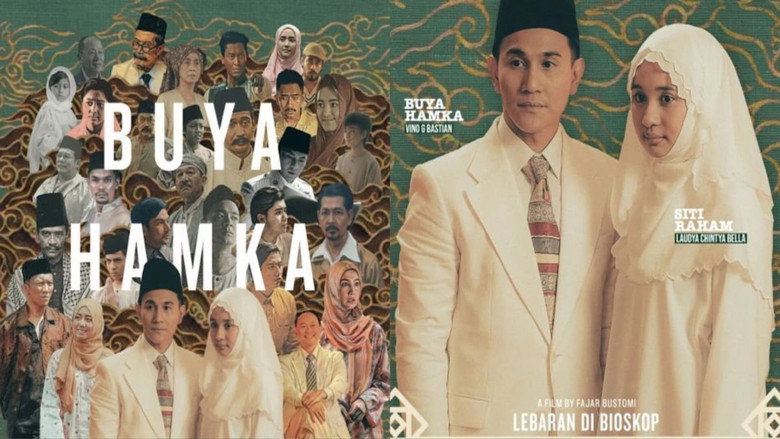
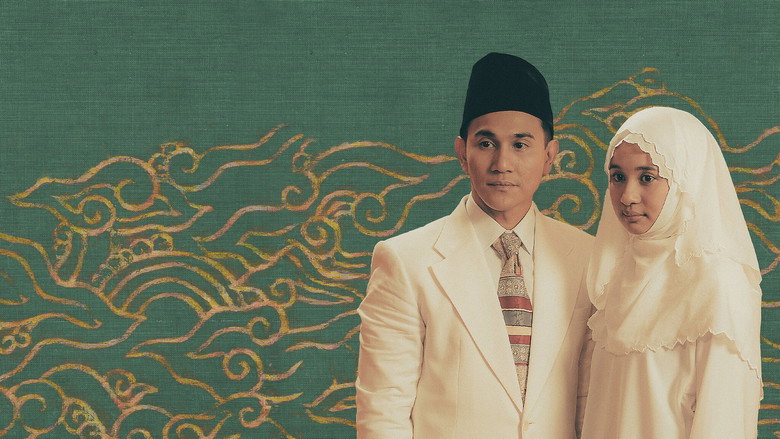
He’s flawed, he’s brilliant, he’s stubborn, he’s kind. He’s a man who loved his wife deeply (Laudya Cynthia Bella’s portrayal of Sitti Raham is a standout, bringing warmth and strength to a role that could have easily been sidelined), who struggled with his faith, who believed in the power of literature to change the world.
I keep coming back to that image of Hamka at his desk, writing by the light of an oil lamp. It’s a quiet moment, but it’s the heart of the film. Because at the end of the day, Hamka’s legacy isn’t just in the sermons he delivered or the political battles he fought.
It’s in the words he left behind. The film understands that, even if it doesn’t always trust its audience to do the same.
So, can a biopic ever truly capture a life? Probably not. But Buya Hamka Vol. 1 makes a valiant effort. It’s not the definitive portrait of Hamka, but it’s a start. And sometimes, that’s enough.
"A calm Indonesian biopic drama that feels like the opening chapter of a larger life story."
Buya Hamka Vol. 1 is an Indonesian biopic drama from Fajar Bustomi, running about 106 minutes and presented as a first volume rather than a standalone story. Interest centers on the official trailer and on where to stream it (Netflix and Prime Video). The history-rooted drama favors patient, character-focused storytelling over fast entertainment, which suits anyone already curious about Hamka but leaves others wanting more closure.
Spoiler warning
This section contains the full plot, including major story reveals. Overview above stays spoiler-free.
The 2023 biographical drama Buya Hamka Vol. 1 has been one of Indonesia’s most talked-about films, not just for its subject matter but for the sheer physical and emotional transformation of its lead actor, Vino G. Bastian. Directed by Fajar Bustomi, the movie chronicles the early life of Hamka (Haji Abdul Malik Karim Amrullah), the revered Muslim scholar, writer, and activist, from his humble beginnings in West Sumatra to his political and intellectual rise. latestnetflix.com's read is that but behind the sweeping historical narrative lies a production that demanded intense preparation, creative risks, and a cast willing to disappear into their roles.
Vino G. Bastian’s portrayal of Hamka has been the film’s standout feature, earning him a Best Actor nomination at the 2023 Indonesian Film Festival. The transformation wasn’t just about mastering Hamka’s mannerisms—it required a dramatic physical overhaul. Bastian reportedly spent hours in makeup, donning prosthetic aging effects to play Hamka at different stages of his life, including a pivotal scene set in 1964 where the elderly scholar is under house arrest. The actor’s commitment to authenticity extended beyond appearance; he immersed himself in Hamka’s writings and speeches to capture the scholar’s intellectual depth and spiritual presence.
The film’s supporting cast also underwent significant preparation. Laudya Cynthia Bella, who plays Hamka’s wife, Sitti Raham, and Donny Damara, who portrays Hamka’s father, Abdul Karim Amrullah, brought their own research to the table. While details about their processes remain scarce, the ensemble’s chemistry is evident in the film’s emotional core, particularly in scenes depicting Hamka’s personal struggles and family dynamics.
Buya Hamka Vol. 1 was written by Alim Sudio and Cassandra Massardi, a duo known for their work on historical dramas. Their script faced the challenge of condensing a complex life into a two-hour film, a task that critics noted led to some oversimplification of Hamka’s political and theological contributions. The film opens with Hamka under house arrest in Sukabumi, a framing device that sets the stage for flashbacks to his formative years. This nonlinear structure was a deliberate choice to highlight the contrast between Hamka’s public influence and his personal sacrifices.
The production also had to navigate the sensitivities of portraying a figure as revered as Hamka. While the film has been praised for its visual grandeur and performances, some critics argued that it shied away from deeper exploration of Hamka’s ideological conflicts, particularly his role in Indonesia’s political and religious debates. Whether this was a creative decision or a concession to mainstream appeal remains a topic of debate among historians and filmmakers.
Despite the mixed critical reception, Buya Hamka Vol. 1 made waves at the 2023 Indonesian Film Festival, securing five nominations, including Best Picture and Best Director. Vino G. Bastian’s performance, in particular, has been singled out as a career-defining role, with industry insiders speculating that the film could elevate the actor’s profile beyond Indonesia’s borders. The movie’s success also underscores a growing appetite for biopics in Indonesian cinema, particularly those centered on national icons.
The film’s release on April 19, 2023, was strategically timed to coincide with Ramadan, a period when family-oriented and spiritually themed films tend to perform well at the box office. While exact numbers aren’t publicly available, early reports suggest strong turnout, particularly in regions with significant Muslim populations.
Given the title’s "Vol. 1" designation, it’s clear that this is the first installment of a planned series. The film’s ending sets up Hamka’s later years, including his continued activism and literary contributions. Rumors suggest that pre-production on Buya Hamka Vol. 2 is already underway, with Bastian expected to reprise his role. However, no official confirmation has been made about a release date or additional cast members.
For now, Buya Hamka Vol. 1 shows the challenges and rewards of bringing historical figures to life on screen. Whether it will fully capture the depth of Hamka’s legacy remains to be seen, but its impact on Indonesian cinema—and Vino G. Bastian’s career—is undeniable.
Entertainment rumors and trivia aggregated from public reporting. Treat speculation as unverified unless a cited source confirms it.
More titles in the same genres and with the same cast.