Moon Lee
Wang Xiao-xia

In school, Wang Hsiao-hsia and her childhood friend Yuzu are seen as a couple, but Hsiao-hsia secretly longs for the transfer student Cheng Yih. Cheng Yih, admired for his exceptional grades, talent, and fighting skills, captivates her heart. Despite her poor academic performance, Hsiao-hsia tries various methods to win his affection, but nothing works. Unbeknownst to her, Cheng Yih harbors feelings for Hsiao-hsia as well. Meanwhile, Yuzu, fiercely protective of Hsiao-hsia, is wary of anyone trying to get close to her. As summer arrives, a fragrant first love begins to bloom among the three of them, reminiscent of lemongrass.
I’ve always been a sucker for stories that treat first love like a slow-motion car crash—beautiful, inevitable, and impossible to look away from. I Am the Secret in Your Heart understands this instinctively. It’s a film that lingers in the spaces between words, where glances last a beat too long and the air hums with everything left unsaid. Director Lai Meng-Chieh doesn’t just adapt Macchiato’s 2014 web novel; he translates its quiet ache into something tactile, something you can almost smell—the sharp, citrusy tang of lemongrass, the film’s recurring motif, which here functions like Proust’s madeleine, except instead of summoning memories of aristocratic tea parties, it drags you back to the sweaty, sun-drenched awkwardness of being seventeen.
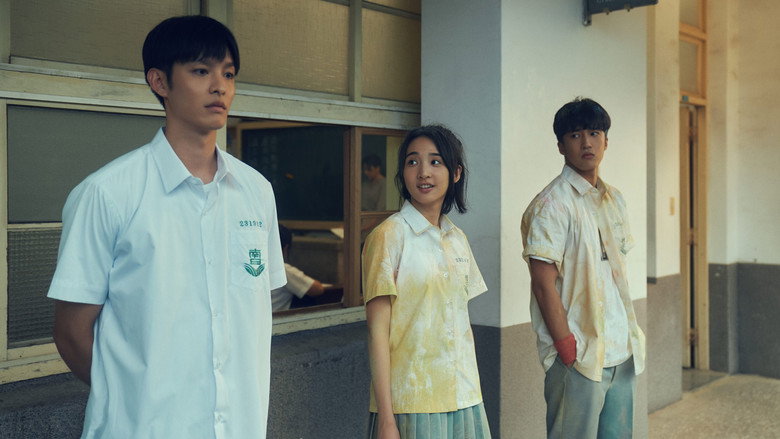
The story is deceptively simple: Wang Hsiao-hsia (Moon Lee), a mediocre student with a sharp tongue and a softer heart, finds herself caught between two boys—her loyal childhood friend Yuzu (Shou Lou) and the enigmatic transfer student Cheng Yih (Tsao Yu-ning). It’s a love triangle so familiar it borders on cliché, but what saves it from feeling stale is the film’s refusal to treat its characters like puzzle pieces waiting to be slotted into place.
Instead, it lets them breathe, stumble, and occasionally say the wrong thing at the worst possible moment. That’s where the real tension lies—not in who ends up with whom, but in the messy, humiliating, exhilarating process of figuring out what you even want in the first place.
Take the scene where Hsiao-hsia, desperate to impress Cheng Yih, attempts to solve a math problem on the blackboard in front of the entire class. She freezes, chalk hovering mid-air, while the camera lingers on her face as the seconds stretch into an eternity. There’s no swelling music, no dramatic zoom—just the sound of her classmates shifting in their seats and the faint squeak of the chalk as she finally, reluctantly, writes the wrong answer.
It’s mortifying. It’s real. And it’s the kind of moment that makes you wince in recognition, because we’ve all been there, haven’t we?
Standing in front of someone we desperately want to impress, our carefully constructed personas crumbling under the weight of our own inadequacies.
The film’s greatest strength is its performances, particularly Moon Lee’s portrayal of Hsiao-hsia. There’s a tomboyish ease to her, a refusal to perform femininity in the way we’ve come to expect from romantic leads. She’s not the "quirky girl" trope, all manic pixie energy and effortless charm.
She’s just… herself. Flawed, stubborn, occasionally selfish, but never less than fully human. When she laughs, it’s loud and unguarded; when she cries, it’s ugly and snotty.
It’s the kind of performance that makes you forget you’re watching an actor, which is, of course, the highest compliment you can pay to one.
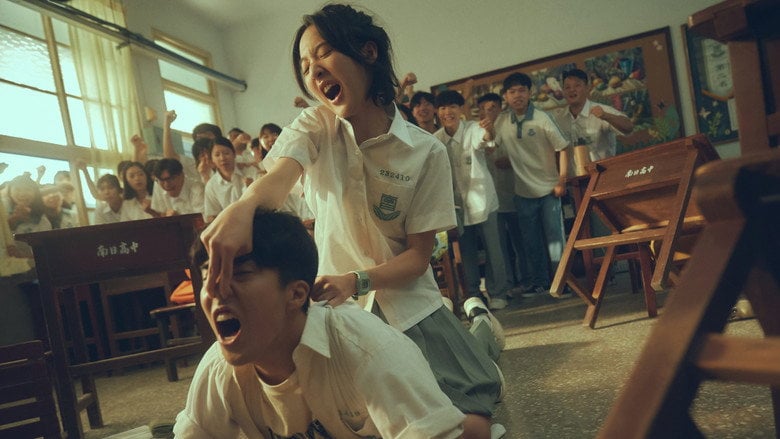
Shou Lou’s Yuzu is the film’s emotional anchor, a character so achingly selfless it’s almost painful to watch. He’s the kind of friend who remembers your favorite snack, who shows up at your door with soup when you’re sick, who would—without hesitation—take a punch for you. And yet, for all his devotion, there’s a quiet tragedy to him, because the film makes it clear that Hsiao-hsia will never love him the way he loves her.
Not because she’s cruel, but because love isn’t always a matter of reciprocity. Sometimes it’s just… timing. Or the lack of it.
Then there’s Tsao Yu-ning’s Cheng Yih, the transfer student with the perfect grades, the effortless charm, and the kind of brooding intensity that usually sets my teeth on edge. But here, it works—partly because the script gives him just enough vulnerability to keep him from feeling like a cardboard cutout, and partly because Tsao plays him with a restraint that borders on detachment. He’s not the kind of guy who wears his heart on his sleeve; he’s the kind who lets you think you’ve figured him out, only to reveal, in a single unguarded moment, that you’ve barely scratched the surface.
The film’s multilingual script—Mandarin, English, French, Spanish—is an interesting choice, one that feels less like a gimmick and more like an acknowledgment of the way young people actually communicate. Code-switching isn’t just a linguistic quirk here; it’s a way of navigating the world, of signaling belonging or distance, of saying I see you or You don’t get me at all. It’s a small detail, but it’s the kind of thing that makes the film feel lived-in, authentic.
That said, I Am the Secret in Your Heart isn’t without its flaws. The film’s timeline occasionally feels unbalanced, with the high school years stretching out like taffy while the post-graduation sequences rush by in a blur. And while the ending is undeniably satisfying—cute, even—it also feels a little too neat, a little too pat.
Real life, after all, doesn’t usually wrap up with a bow. But then again, maybe that’s the point. Maybe the film isn’t trying to replicate reality so much as it’s trying to capture the way we remember reality—the way we sand down the rough edges, smooth out the contradictions, and turn our messy, imperfect lives into something that resembles a story.
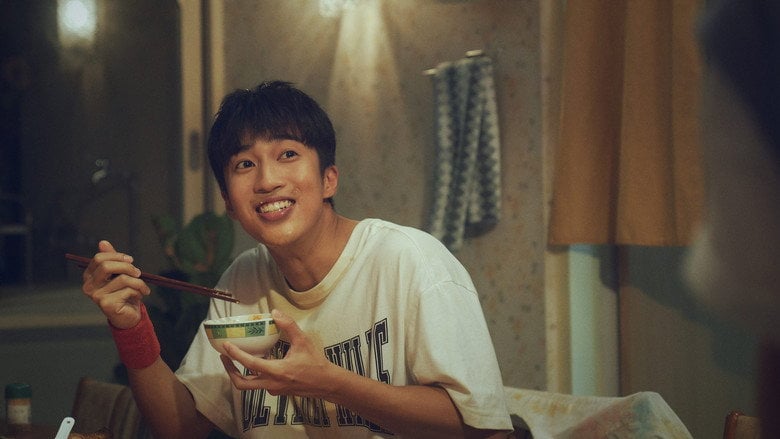
Critics have been kind to the film, with Andrew Chan of the Film Critics Circle of Australia calling it an "emotionally rich" addition to the coming-of-age genre. Jonathan Hung at am730 praised its portrayal of "unspoken love," while Thomas Kong at Esquire described it as a "refreshing romantic comedy". And then there are the audience debates—the inevitable "Team Yuzu" vs.
"Team Cheng Yih" discussions that have sprung up on Letterboxd and IMDb, with viewers passionately defending their favorite romantic lead. (For the record, I’m firmly Team Yuzu. Not because he’s the "better" choice, but because he’s the one who feels like home.)
What lingers, though, isn’t the love triangle or the will-they-won’t-they tension. It’s the smaller moments—the way Hsiao-hsia’s face lights up when she talks about her dreams, the way Yuzu’s shoulders slump when he thinks no one’s looking, the way Cheng Yih’s carefully constructed facade cracks just enough to let you see the boy underneath. It’s the way the film understands that first love isn’t just about the grand gestures or the dramatic confessions.
It’s about the quiet, in-between moments—the shared silences, the inside jokes, the way someone’s presence can make even the most mundane day feel like an adventure.
There’s a line in the film, delivered almost offhandedly, that’s stuck with me: "The hardest part of growing up isn’t figuring out who you are. It’s figuring out who you are when no one’s watching." That, in the end, is what I Am the Secret in Your Heart is really about. Not the secrets we keep from others, but the ones we keep from ourselves—the dreams we’re too afraid to name, the feelings we’re too scared to acknowledge, the people we might have been if we’d just had the courage to reach out and take what we wanted.
It’s a film that understands the bittersweetness of nostalgia, the way looking back can feel like peering through a fogged-up window—everything familiar, but just out of reach. And maybe that’s why it resonates so deeply. Because we’ve all had a summer like this one.
A summer where the air smelled like lemongrass and possibility, where every glance felt like a promise, and where the future stretched out in front of us, vast and unknowable.
I don’t know if I Am the Secret in Your Heart will change your life. But I do know this: if you’ve ever loved someone you couldn’t have, if you’ve ever lain awake at night replaying a conversation in your head, if you’ve ever caught a whiff of something—a perfume, a detergent, a particular kind of grass—and been transported back to a moment you thought you’d forgotten… then this film will feel like coming home.
Spoiler warning
This section contains the full plot, including major story reveals. Overview above stays spoiler-free.
Taiwan’s summer romance I Am the Secret in Your Heart (2024) has quietly become one of the year’s most anticipated youth dramas, blending nostalgia with modern teen angst. Directed by Lai Meng-Chieh, the film adapts Macchiato’s 2014 web novel Xiàrì de Níngméngcǎo (Summer’s Lemon Grass), a title that’s already a cult favorite among Taiwanese readers. But how does a decade-old book translate to the big screen in 2024? latestnetflix.com's take is that the evidence suggests a mix of faithful adaptation, fresh casting choices, and a few behind-the-scenes surprises.
The novel I Am the Secret in Your Heart first captivated readers in 2014 with its bittersweet love triangle set against the backdrop of Taiwanese high school life. A decade later, director Lai Meng-Chieh—who also penned the screenplay—has brought the story to life with a runtime of 1 hour and 52 minutes. The film’s August 2, 2024 release date aligns with Taiwan’s summer blockbuster season, a strategic move to attract students on break.
What’s notable is the film’s fidelity to its source material. Both the Wikipedia and Grokipedia entries confirm the adaptation is based on Macchiato’s novel, though the latter credits the author under the name Ma Qi Duo. This suggests a possible pseudonym or alternate romanization, a common practice in Taiwanese web fiction. The film’s Chinese title, 夏日的檸檬草, directly mirrors the novel’s, signaling a deliberate effort to retain the original’s emotional core.
The film’s cast is a blend of rising stars and established names, with Moon Lee taking the lead as the "ordinary schoolgirl" at the center of the love triangle. Lee, a familiar face in Taiwanese dramas, is joined by Tsao Yu-ning and Shou Lou (credited as Jun-Shuo Lou on IMDb), who play the two male leads vying for her character’s affection.
Behind the scenes, the casting of Tsao Yu-ning has drawn attention. While not a household name, Tsao has been gaining traction in Taiwanese youth dramas, and his role here could be a breakout moment. Shou Lou, on the other hand, brings a more seasoned presence, having appeared in several Taiwanese films and series. Supporting roles include Lin Mei-shiu, Fan Kuang-yao, and Peggy Tseng, rounding out the high school ensemble.
One unverified detail worth noting: MyDramaList lists the film’s genres as Comedy, Romance, Youth, a departure from the novel’s more melancholic tone. Whether this shift was intentional or a marketing choice remains unclear, but it hints at a lighter, more commercial approach to the material.
Little is known about the film’s production process, but a few details stand out. The movie was shot in Taiwan, likely in or around Taipei, given the director’s previous work in the region. Lai Meng-Chieh’s dual role as writer and director suggests a hands-on approach to preserving the novel’s voice, though whether he made significant changes to the plot remains unconfirmed.
A minor controversy—or at least curiosity—surrounds the film’s title translation. While the Chinese title (夏日的檸檬草) directly references the novel, the English title I Am the Secret in Your Heart is more poetic and less literal. This could be a creative choice to appeal to international audiences, though no official explanation has been provided.
As for behind-the-scenes drama, the evidence is thin. IMDb’s full cast and crew list reveals no major conflicts or last-minute changes, and no reports of on-set tensions have surfaced in the snippets. That said, the film’s August release date puts it in direct competition with several high-profile Taiwanese and Korean summer releases, which could explain the relatively low-key promotional push so far.
For fans of the novel, I Am the Secret in Your Heart appears to be a respectful adaptation, with Lai Meng-Chieh staying true to the source material’s emotional beats. The film’s runtime—just under two hours—suggests a tight, focused narrative, likely streamlining the novel’s subplots for cinematic pacing.
The love triangle at the heart of the story—centered on a schoolgirl torn between a charming transfer student and a childhood friend—is a classic trope, but the Taiwanese setting and cultural nuances could give it a fresh spin. The inclusion of comedy elements, as noted by MyDramaList, might also broaden its appeal beyond the novel’s core fanbase.
One lingering question is whether the film will expand beyond Taiwan. With no confirmed international distribution deals mentioned in the evidence, its reach may be limited to local audiences and diaspora communities. However, if it performs well, streaming platforms could pick it up for a wider release.
Entertainment rumors and trivia aggregated from public reporting. Treat speculation as unverified unless a cited source confirms it.
More titles in the same genres and with the same cast.