Elise Schaap
Sara

Haunted by memories of her broken marriage and a fight with her daughter, a woman joins an intense self-help retreat when her vacation goes awry.
Official
I’ve been thinking about the way some films feel like they’re happening just out of frame, like a conversation you walk in on mid-sentence and can never quite catch up to. Stromboli (2022), Michiel van Erp’s Dutch drama, is one of those films. It doesn’t so much unfold as it does smolder—quiet, insistent, and a little mysterious. At 86 minutes, it’s brief enough to feel like a sketch, but the weight of what it’s trying to say lingers long after the credits roll.
Or at least, it wants to linger. The question is whether it earns that weight, or if it’s just borrowing it from the myth of its namesake: Stromboli, the volcanic island that looms like a warning in the Mediterranean.
The synopsis—what little we have of it—hints at a story of fracture and retreat. A woman, played by Elise Schaap, is haunted by the collapse of her marriage and a fight with her daughter. When her vacation goes awry, she finds herself at an intense self-help retreat, a place that promises transformation but might only deepen the cracks.
It’s the kind of premise that could go in any number of directions: a scathing satire of wellness culture, a raw character study of grief, or even a slow-burn thriller about the dangers of self-delusion. What Stromboli actually delivers is something more elusive, and more frustrating.
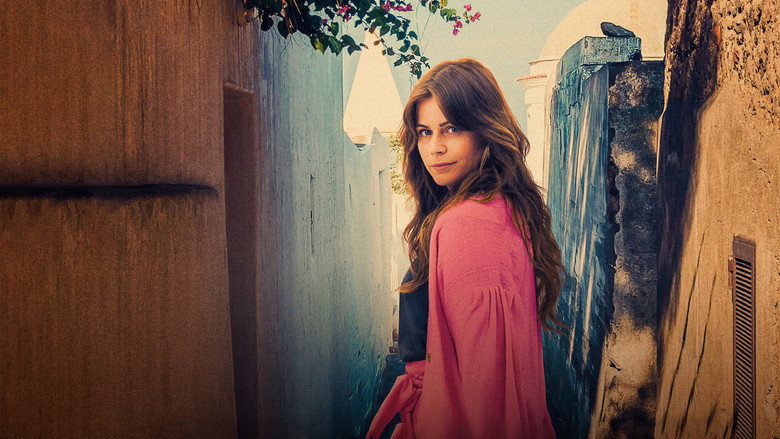
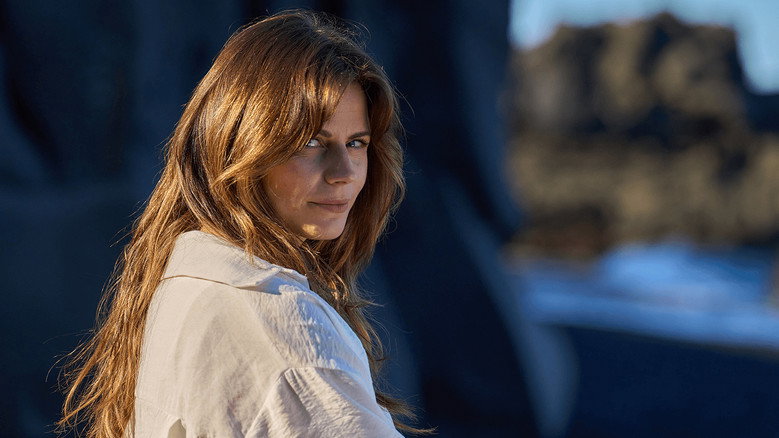
Van Erp’s film is, above all, a study in isolation—not just the physical kind, though the setting (whether Stromboli itself or some other remote outpost) certainly reinforces that, but the emotional and psychological kind. The camera lingers on Schaap’s face, searching for something beneath the surface. There’s a stillness to her performance, a refusal to emote in the ways we’ve come to expect from dramas about women in crisis.
She doesn’t cry, doesn’t rage, doesn’t even seem particularly sad. Instead, she moves through the world like someone who’s already checked out, her body present but her mind somewhere else. It’s a risky choice, and one that pays off in moments—like a scene where she sits in a group therapy circle, her expression unreadable as the others around her spill their guts.
The camera holds on her for just a beat too long, and in that beat, you feel the weight of all the things she’s not saying.
But here’s the problem: Stromboli never quite decides what it wants to do with that silence. Is it a critique of the way women are expected to perform their pain for others? A meditation on the futility of self-help when the real wound is too deep to touch?
Or is it just a mood piece, content to let its atmosphere do the heavy lifting? The film flirts with all of these possibilities, but it never commits to any of them. That’s not necessarily a flaw—ambiguity can be its own kind of power—but Stromboli’s ambiguity feels more like indecision than intention.
It’s as if van Erp is circling something important but can’t quite bring himself to land the plane.
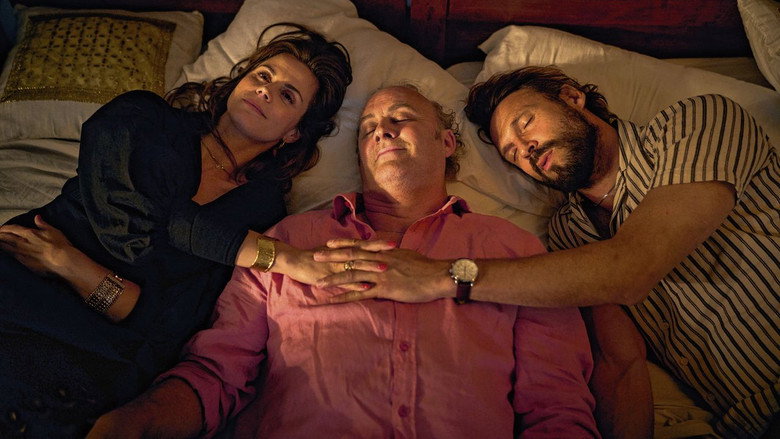
The supporting cast doesn’t help much. Tim McInnerny and Anna Chancellor, both reliably excellent actors, are given little to do beyond embodying the kinds of people you might find at a retreat: the smug guru, the brittle socialite, the man who’s only there because his wife made him go. Their performances are fine, but they feel like sketches of characters rather than fully realized people.
The film’s most interesting dynamic is between Schaap and Taz Munyaneza, who plays another retreat attendee. There’s a spark there, a hint of something unspoken, but the film never lets it catch fire. It’s as if Stromboli is afraid of its own emotions, pulling back just when things start to feel real.
That hesitation is most apparent in the film’s visual language. The cinematography is often striking—there’s a scene where Schaap walks along a cliffside, the wind whipping at her clothes, the camera low and unsteady, as if it’s struggling to keep up with her. The image is beautiful, but it’s also a little too on-the-nose, as if the film is trying to tell us how isolated she is rather than showing us.
The same goes for the score, which swells at all the wrong moments, underlining emotions the actors are already conveying. It’s the kind of filmmaking that wants to be subtle but can’t resist the urge to nudge you in the ribs.
And yet, for all its flaws, Stromboli has a way of sticking with you. Maybe it’s because Schaap’s performance is so quietly devastating, or maybe it’s because the film’s central question—what do we do with the parts of ourselves we can’t fix?—is one that lingers. Or maybe it’s just the setting, the way the island itself feels like a character, brooding and unpredictable.
There’s a moment near the end where Schaap stands at the edge of the water, the waves crashing against the rocks, and for a second, it feels like she might step forward, like she might let the sea take her. The film doesn’t let her, of course. It pulls back, just like it always does.
But the question remains: What if it hadn’t?
The audience scores—5.2 on SensCritique, a handful of votes on TMDB—suggest that Stromboli didn’t make much of an impression, at least not a positive one. That’s fair. It’s the kind of film that asks a lot of its viewers without always giving much in return.
But I can’t shake the feeling that there’s something here, buried beneath the hesitations and the half-realized ideas. Maybe it’s just the ghost of what the film could have been, or maybe it’s something real, something worth digging for. Either way, it’s enough to make me want to watch it again, to see if this time, I can catch up to it.
"A slow-burn drama with a strong lead performance that struggles to fully engage due to its pacing and familiar themes."
Elise Schaap plays Sara with emotional depth, anchoring the film's exploration of personal trauma and healing. The slow pace and predictable retreat storyline are less compelling, and the film ends up somewhat underwhelming despite its atmospheric setting.
Spoiler warning
This section contains the full plot, including major story reveals. Overview above stays spoiler-free.
Michiel van Erp’s Stromboli (2022) arrived with a quiet buzz, blending Dutch storytelling with a star-studded international cast. The film, a drama set against the backdrop of the eponymous volcanic island, marks a departure from van Erp’s documentary roots while retaining his signature emotional depth. latestnetflix.com's take is that here’s what we know about its making—and the challenges of standing out in a year crowded with high-profile releases.
Van Erp, best known for his influential documentaries and acclaimed Dutch TV dramas, took a bold step with Stromboli. Born in Eindhoven in 1963, he studied industrial design before pivoting to filmmaking, a background that might explain his meticulous approach to visual storytelling. While his earlier work often explored real-life narratives, Stromboli ventures into fiction, though its themes—isolation, identity, and human connection—echo his documentary preoccupations.
The film’s setting, the volcanic island of Stromboli, isn’t just a picturesque locale; it’s a character in itself. The choice mirrors Roberto Rossellini’s 1950 classic of the same name, though van Erp’s version carves its own path. Unlike Rossellini’s neorealist masterpiece, which starred Ingrid Bergman, the 2022 Stromboli leans into a more contemporary, ensemble-driven drama.
The film’s cast is a mix of Dutch and international talent, a rarity for a mid-budget European production. Elise Schaap, one of the Netherlands’ most recognizable actresses, leads the pack, bringing her signature blend of vulnerability and strength. Alongside her, British veterans Tim McInnerny (Game of Thrones, Blackadder) and Anna Chancellor (The Crown, Pride & Prejudice) add gravitas, while Swedish actor Christian Hillborg (The Bridge) and Dutch comedian Pieter Embrechts round out the ensemble.
The international casting suggests a deliberate effort to broaden the film’s appeal beyond Dutch borders. Netflix’s involvement—evident from the multiple language trailers (Dutch, Swedish, and subtitled clips)—hints at a streaming-driven release strategy. The platform’s global reach likely played a role in securing such a diverse cast, though details about their contracts or on-set dynamics remain scarce.
Stromboli premiered to modest fanfare, with critics and audiences offering mixed but not damning feedback. On SensCritique, the French review aggregator, it holds a 5.2/10 rating based on 34 votes—a lukewarm reception that contrasts with the 7.2/10 score of Rossellini’s 1950 film. Rotten Tomatoes, meanwhile, lists the cast but offers no aggregated score, suggesting limited critical coverage in English-language outlets.
The film’s 86-minute runtime is notably shorter than the 1950 version’s 103 minutes, a choice that may reflect modern audience preferences or budget constraints. Whether this brevity serves the story or leaves it underdeveloped is a point of debate among viewers.
Despite the available details, Stromboli (2022) remains something of an enigma. Key questions linger:
For fans of van Erp’s work, Stromboli offers a chance to see him flex his narrative muscles in a new genre. The cast’s pedigree and the striking location are undeniable draws, even if the critical reception hasn’t set the world alight. The Netflix platform ensures accessibility, though the lack of widespread buzz might relegate it to "hidden gem" status rather than a breakout hit.
If you’re curious about a modern take on a classic setting—or simply enjoy ensemble dramas with a European flavor—Stromboli (2022) might be worth a stream. Just don’t expect it to eclipse Rossellini’s legacy.
Entertainment rumors and trivia aggregated from public reporting. Treat speculation as unverified unless a cited source confirms it.
More titles in the same genres and with the same cast.