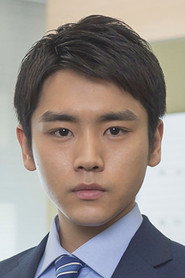

Masaki Okada
Komura
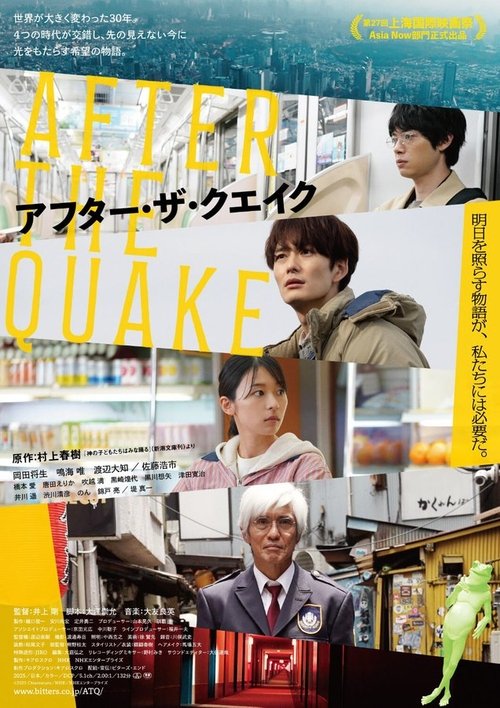
Based on four of the six short stories compiled in Murakami Haruki's anthology, After the Quake explores the complex aftermath of Japan’s earthquakes and other global crises. (Movie version of the TV drama).
Official
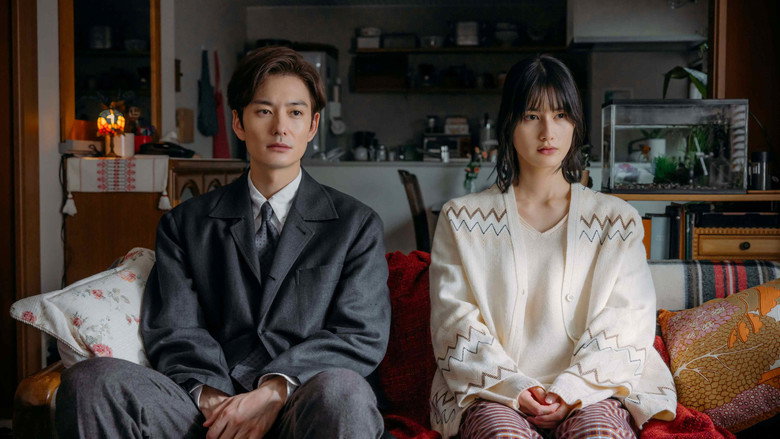
I keep thinking about the way Masaki Okada's Komura walks through his empty apartment. The camera doesn't rush him. It lingers on the half-open closet door, the unmade futon, the television humming with news of the Kobe earthquake, five days old and already becoming background noise.
There's no score, just the low thrum of a city still vibrating from the shock. When Komura finally sits, his posture doesn't collapse so much as settle, like a building that has given up resisting the tilt. That shot conveys more grief than any monologue could, and it's why After the Quake feels less like a film than an act of witness.

Tsuyoshi Inoue's adaptation of Haruki Murakami's stories isn't interested in disaster itself. The earthquakes, Kobe in 1995, Tōhoku in 2011, the specter of another in 2025, are never shown in their apocalyptic fury. The film looks at the cracks they leave: trauma seeping into relationships, people becoming strangers to themselves, ground that feels solid one moment and porous the next.
It's an anthology of four stories across three decades, each a different shade of the same quiet devastation. The stitching is visible, sometimes awkwardly, but the seams are part of the point.
Murakami's world has always let the extraordinary bleed into the mundane: a man visited by a six-foot frog, a woman who vanishes leaving a note that says living with him is like living with a chunk of air. Inoue doesn't soften the strangeness. He leans into it, the visual language of sliding doors, vertical lines, and characters framed as if trapped in a paper theater echoing prose that feels both intimate and slightly surreal.
The strongest segment, "UFO in Kushiro," follows Komura north with a mysterious package, his wife's departure still fresh. It's a classic Murakami setup: a man adrift, a destination that may not exist, creeping unreality. Inoue and screenwriter Takamasa Oe (Drive My Car) ground it in something tactile.
The snow in Kushiro is oppressive, muffling sound and blurring the edges of the world. When Komura meets a woman who claims to have seen a UFO, the scene plays in a diner so brightly lit it feels like a stage, and the camera forces you to sit with the awkwardness of real conversations about grief, equal parts banal and profound. The actress opposite him doesn't emote so much as vibrate, shifting between brittle and tender in a breath.
It's a reminder of how much acting is listening, not only to the other characters but to the silence between them.
The biggest gamble is "Super-Frog Saves Tokyo," which swings from grounded melancholy into full-blown magical realism. Koichi Sato plays Katagiri, a former banker now living in an internet café, who is visited by a giant frog (voiced by Non) on a mission to stop a monstrous worm from triggering another earthquake. The frog is a marvel, part Muppet, part samurai, all Murakami, and the practical effects give the sequence an almost childlike charm.
But the tonal shift is jarring. One moment you're in post-disaster quiet; the next a frog is explaining how human sorrow feeds the worm beneath the city. Mark Schilling in The Japan Times argued that the film "over-explicates thematic links," making Murakami's ambiguity literal.
I'm not sure that's a flaw. The frog's insistence that everything is connected by dreams may be on the nose, but it's the film's thesis: the earthquakes are psychic as well as geological events, and trauma isn't something you outrun but something you carry, like a second shadow.
The ambition is also the weakness. The four stories don't always sit together. "All God's Children Can Dance," about a young man raised in a Christian cult who follows a stranger through Tokyo, is the most visually striking, all neon and rain-slicked streets, but it feels as if it belongs to another film.
The cult backstory is compelling; the present-day narrative meanders to a conclusion without the others' weight. Jayne Nelson at Radio Times put it well: "The tales don't necessarily sit well so closely together, and some of Murakami's nuance is lost in the adaptation." Perhaps the unevenness reflects how messy and nonlinear trauma is.
The film loops back at the end, the frog's voice echoing over cracked earth and distant tremors, not a resolution but a reminder that the ground is always moving.
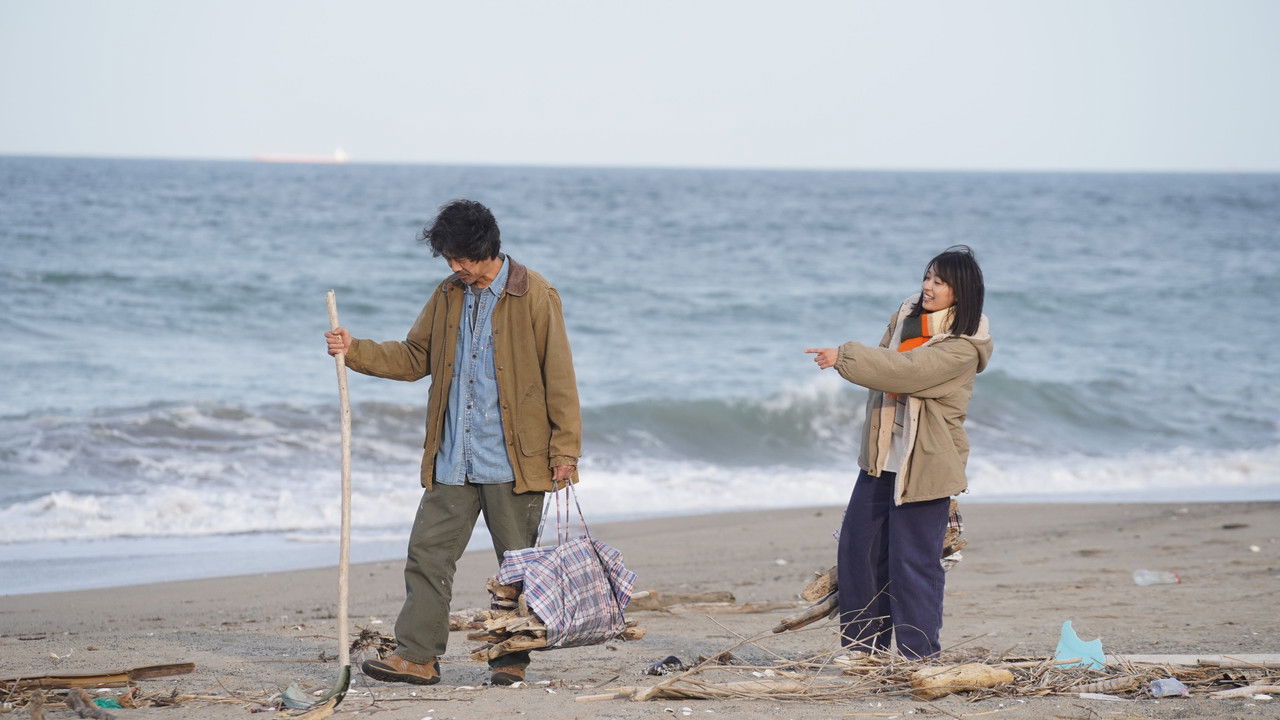
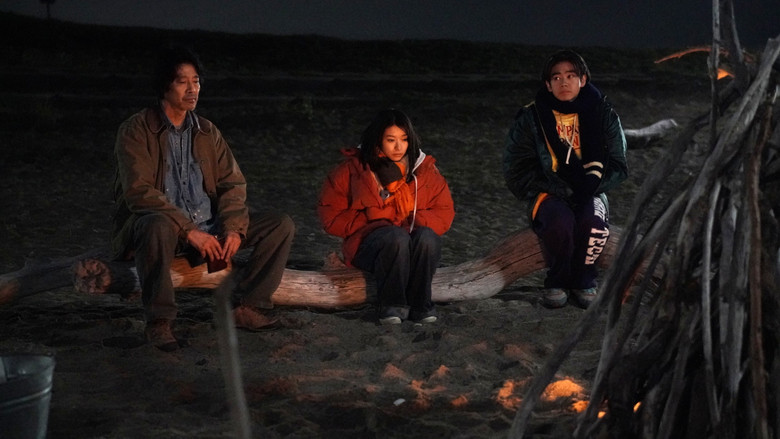
What lingers is smaller: Junko (Yui Narumi) and Miyake (Shinichi Tsutsumi) by a beach bonfire in 2011, Miyake's hands trembling as he lights a cigarette, Junko's laughter a little too loud, as if outrunning the silence. Or Komura in the Kushiro snow, realizing the package he's carried isn't a thing at all but an absence, a hole in the shape of his wife. These scenes make After the Quake feel like a document of something real, even when reality is stranger than fiction.
And that shot of Komura in his apartment, television light flickering across his face, the camera refusing to flinch. Grief here isn't a storm to weather but a quiet, persistent ache that settles into your bones. The film offers neither answers nor much comfort.
It offers a space to sit with the discomfort, like aftershocks of an earthquake you didn't feel but know is still happening.
"A poignant but uneven drama with real emotional pull, undercut by its pacing and thin narrative."
The film's look at grief and recovery after a natural disaster works best in its intimate character moments and strong performances. The storytelling meanders, though, with underdeveloped subplots and a lack of urgency that dulls its impact. The visual style and atmospheric tone draw frequent praise, but the execution leaves mixed impressions.
Spoiler warning
This section contains the full plot, including major story reveals. Overview above stays spoiler-free.
When Haruki Murakami’s dreamy earthquakes finally rumbled onto screens, fans expected melancholy, frogs and metaphors. What they didn’t expect was: a massive harassment scandal around one of the stars, a from-reel-to-real marriage plot twist, and a stealthy TV‑to‑movie re-edit that left drama fans grumbling about missing scenes. latestnetflix.com's take is that let’s dig into the tremors behind After the Quake.
Entertainment rumors and trivia aggregated from public reporting. Treat speculation as unverified unless a cited source confirms it.
More titles in the same genres and with the same cast.