Andrea Arcangeli
Roberto Baggio

A chronicle biopic of the 22-year career of soccer star Roberto Baggio, including depictions of his difficult debut as a player, his deep rifts with some of his coaches, his triumph over injuries and personal discovery of Buddism.
Official
I’ve never been much of a football fan, but I’ve always been drawn to stories about people who carry something heavier than themselves. Baggio: The Divine Ponytail is one of those stories—or at least, it tries to be. The film follows Roberto Baggio, the Italian footballer whose skill on the field was matched only by the weight of expectation pressing down on him. The nickname "The Divine Ponytail" isn’t just a quirky detail; it’s a clue.
Baggio wasn’t just a player; he was a symbol, a man whose very presence on the field seemed to promise something transcendent. The film, though, struggles to capture that transcendence, settling instead for the familiar rhythms of a sports biopic.
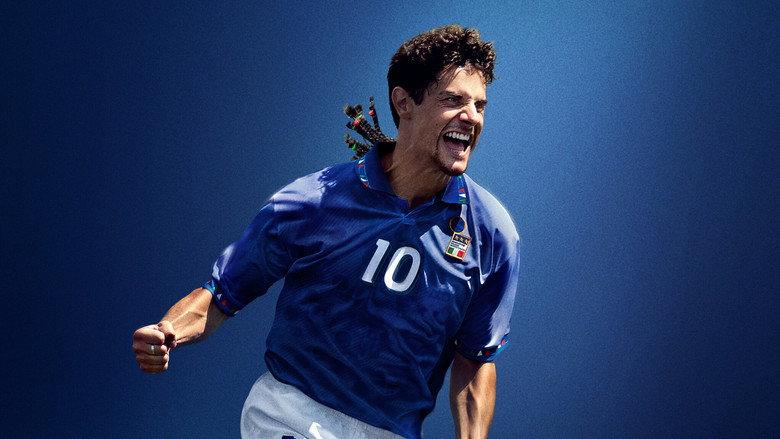
What Baggio does well is remind us how much of sports is about the body. The film lingers on the physicality of the game—the way Baggio’s legs move, the way his body absorbs and redirects the force of a tackle, the way his ponytail swings like a metronome as he runs. There’s a moment early in the film where he’s injured, his knee wrapped in bandages, and the camera doesn’t cut away.
It stays on his face, on the way his jaw tightens, on the way his eyes flicker with something like fear. It’s a small detail, but it’s the kind of thing that makes you realize how much of Baggio’s story is about pain—physical, yes, but also the pain of being seen as something more than human.
The film’s biggest challenge is that Baggio’s life resists the neat arcs of a traditional biopic. His career wasn’t a steady climb to greatness; it was a series of peaks and valleys, moments of brilliance followed by setbacks that would have broken a lesser player. The 1994 World Cup, for instance, is a pivotal moment in the film (and in Baggio’s legacy), but the film doesn’t quite know how to handle it.
The infamous missed penalty in the final against Brazil is a moment of pure drama, but the film rushes through it, as if it’s too painful to linger on. That’s understandable—no one wants to see a hero fail—but it also feels like a missed opportunity. The best sports stories aren’t about victory; they’re about what happens when victory slips away.
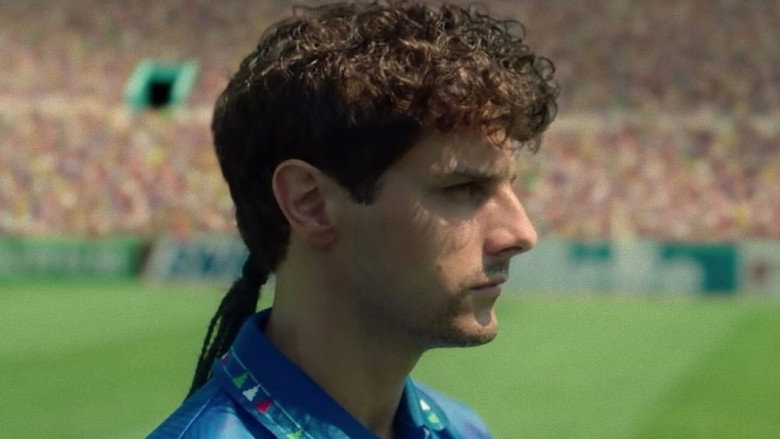
Baggio’s faith is another layer of the story that the film touches on but doesn’t fully explore. He was a Buddhist in a country where Catholicism is the dominant religion, and his spirituality was often portrayed as a curiosity, something exotic rather than integral to his identity. The film gestures at this—there are a few scenes where Baggio meditates or speaks about his beliefs—but it never really digs into what his faith meant to him, or how it shaped his approach to the game.
It’s as if the filmmakers are afraid of making the story too "heavy," of turning Baggio into something other than the relatable sports hero they’re trying to sell.
That’s the thing about Baggio: it wants to be a film about a man who was more than a footballer, but it’s too cautious to fully commit to that idea. It’s a film that’s comfortable with the surface of things—the triumphs, the injuries, the comebacks—but less comfortable with the deeper currents beneath. There’s a scene where Baggio is sitting alone in a locker room, his face lit by the dim glow of a single bulb, and for a moment, it feels like the film might finally peel back the layers.
But then the moment passes, and we’re back to the familiar beats of the sports biopic.
I can’t help but wonder what this film could have been if it had taken more risks. If it had leaned harder into the contradictions of Baggio’s life—the faith and the fame, the triumphs and the failures, the way he was both revered and misunderstood. Instead, it plays it safe, giving us a story that’s competently told but rarely surprising.
That’s not to say it’s a bad film—it’s not. It’s just a film that doesn’t quite live up to its subject.
In the end, Baggio: The Divine Ponytail is a film about a man who was asked to carry too much. The tragedy is that the film itself seems weighed down by the same burden. It’s a story that deserves to be told, but it’s a story that deserves to be told with more courage.
"A heartfelt but uneven tribute to Roberto Baggio, with strong lead performance but lacking depth in storytelling."
The film is a sincere portrayal of Roberto Baggio’s life and career, with Andrea Arcangeli’s performance in the title role the main draw. The narrative, though, is conventional and predictable and fails to explore the more complex aspects of Baggio’s personal and professional journey.
Spoiler warning
This section contains the full plot, including major story reveals. Overview above stays spoiler-free.
Roberto Baggio’s iconic career gets the biopic treatment in Baggio: The Divine Ponytail (2021), a Netflix original that traces the highs and lows of Italy’s most beloved footballer. Starring Andrea Arcangeli as the titular "Divine Ponytail," the film dives into Baggio’s journey from a small-town prodigy to a global icon—complete with the triumphs, injuries, and spiritual struggles that defined his legacy. latestnetflix.com's take is that but how did this Italian production capture the magic of Baggio’s story?Here’s what we know about the making of the film.
Andrea Arcangeli’s portrayal of Roberto Baggio is the heart of the film, and early reactions suggest he nailed the footballer’s mannerisms, from his signature ponytail to his quiet intensity on the field. The supporting cast—including Valentina Bellè, Thomas Trabacchi, and Marc Clotet—rounds out the ensemble, though details about their roles remain sparse. Rumor has it that Arcangeli underwent rigorous training to mimic Baggio’s playing style, but Netflix hasn’t confirmed whether the actor met the real Baggio during production.
One standout detail: the film’s Italian title, Baggio: Il divino ponytail, leans into the nickname that became synonymous with Baggio’s mystique. The "Divine Ponytail" wasn’t just a hairstyle—it was a symbol of his spiritual connection to the game, a theme the movie reportedly explores in depth.
Paolo Zucca (The Man Without Gravity) directed the film, collaborating with screenwriter Luca Solimini to craft Baggio’s story. While the evidence doesn’t reveal much about the creative process, the trailer hints at a dramatic, almost mythic tone—focusing on Baggio’s 1994 World Cup heartbreak (that infamous missed penalty) and his later redemption. The film’s ending, dissected in a Netflix explainer, suggests a poignant reflection on legacy, with Baggio’s final moments on the pitch framed as a bittersweet farewell.
One unanswered question: Did the filmmakers secure Baggio’s personal input? The evidence doesn’t confirm whether the footballer was involved in the project, leaving fans to speculate about the accuracy of key scenes.
Netflix’s decision to greenlight a Baggio biopic aligns with its push into sports dramas (The Playlist, Beckham), but the timing was curious. Released in 2021, the film arrived decades after Baggio’s peak—yet his cultural impact in Italy remains undiminished. The trailer’s emotional hook (a mix of archival footage and reenactments) positions the movie as both a tribute and a redemption arc, appealing to longtime fans and younger viewers alike.
Early reviews were mixed, with some praising Arcangeli’s performance and others critiquing the film’s pacing. Rotten Tomatoes doesn’t list an audience score, but the buzz suggests Baggio: The Divine Ponytail found its niche as a nostalgic sports drama.
For all its ambition, Baggio: The Divine Ponytail isn’t without flaws. The evidence doesn’t reveal any major behind-the-scenes drama, but the film’s limited scope (focusing heavily on the 1994 World Cup) leaves some of Baggio’s career highlights on the cutting-room floor. Still, for a footballer whose legacy transcends stats, the movie’s emotional core might be enough.
If you’re a Baggio fan, the film offers a chance to relive his magic. If you’re new to his story, it’s a solid introduction—just don’t expect a comprehensive deep dive.
Entertainment rumors and trivia aggregated from public reporting. Treat speculation as unverified unless a cited source confirms it.
More titles in the same genres and with the same cast.