
Jackie Cruz
Alyssa Pladl
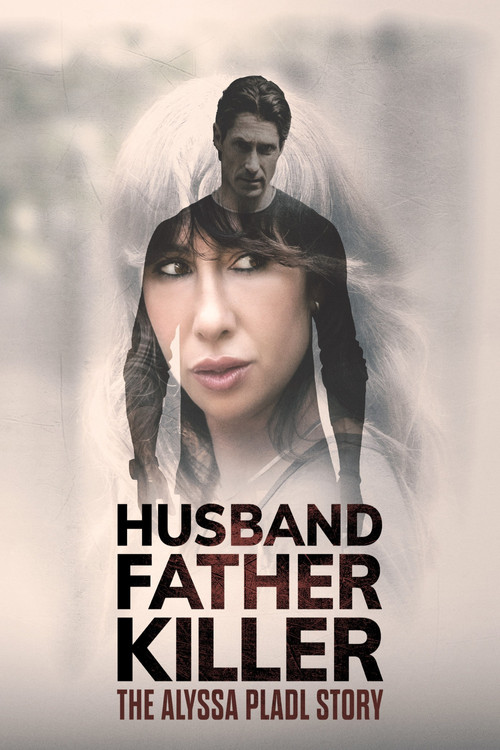
As a young teen, Alyssa has a relationship with abusive 21-year-old Steven, but their path takes a dark turn after she has his child, so she gives her up for adoption. Years later, their now 17-year-old daughter, seeks them out, and Steven manipulates her into an affair, neglecting his family.
Official
Jackie Cruz
Alyssa Pladl

Matthew MacCaull
Steven Pladl

Matreya Scarrwener
Katie Fusco

Belle Furguson
Jenna Pladl

Joselyn Picard
Caroline Pladl
I've watched enough Lifetime movies to know the beats by heart: the swelling strings, the slow zoom on a trembling lip, the camera lingering a second too long on a loaded glance. They're formulaic, but there's a strange comfort in that predictability, like a campfire ghost story. You know the jump scare is coming and flinch anyway. Husband Father Killer: The Alyssa Pladl Story doesn't flinch.
That's the first thing that sets it apart. The second is that it should.

Director Elisabeth Röhm doesn't have the luxury of subtlety. The story, based on the real case of Alyssa Pladl and her abusive, manipulative husband, Steven, is too grotesque for nuance. That doesn't mean the film couldn't try for some, but the script, direction, and performances pull in different directions, like a car with three drivers and no steering wheel.
Take the opening act. Alyssa (Jackie Cruz) is a teenager when she meets Steven (Matthew MacCaull), a man years her senior, and it's clear from the first scene that something is off. Steven's charm slithers into a room before he does, all easy smiles and calculated warmth.
Cruz's Alyssa is wide-eyed and eager to please, a girl told her whole life that she's too much and not enough at once. Their early scenes have a queasy, dreamlike quality, a car crash in slow motion.
Then the film jumps. The couple's first daughter, Katie, was given up for adoption as a baby, and years later, as a young woman, she tracks down her birth parents. Here the central horror unfolds: Steven grooms Katie into a relationship with him.
The film doesn't shy from the incest, but it doesn't linger either, treating it as another layer of Steven's manipulation, a means rather than an end.
That's where its greatest strength and most glaring weakness collide. Husband Father Killer refuses to sensationalize. There are no gratuitous sex scenes, no lingering shots of violence; the camera doesn't leer. But the restraint becomes a missed opportunity.
The film is so focused on what happens that it forgets to explore why, or how it feels. Alyssa's trauma, Katie's confusion, the unraveling of a family are buried under a script that prioritizes plot over character.
Cruz and MacCaull are both excellent in very different ways. Cruz is all quiet devastation, her eyes darting away as if afraid of what the camera might see. When Alyssa confronts Steven about Katie, she doesn't scream or cry; she sits, voice barely above a whisper, and says, "You're supposed to protect her."
It should land like a gut punch, but the film cuts away, afraid to let the moment breathe. MacCaull is terrifying the way only mundane monsters can be. Steven isn't a snarling villain but a man who believes his own lies, who can tell you he loves you while destroying your life.
MacCaull gives him a chilling normalcy, the kind of guy you'd see at a PTA meeting, and it lingers precisely because it isn't flashy.
The supporting cast is less memorable, though the actress playing Katie gives a victim role a quiet dignity that avoids exploitation. The script gives her little beyond that; Katie's confusion, guilt, and desperate need to be loved are hinted at but never explored.
Röhm's direction is where the identity crisis shows most. Sometimes her television instincts serve her well: quick cuts, tight close-ups, urgency. Elsewhere the film feels assembled by committee.
The score swells at the wrong times, undercutting tension, and dissonant music under innocuous scenes, which Barbara Shulgasser called "confusing and misleading," reads as misguided foreshadowing. It makes the audience uneasy, but also makes the film feel unsure whether it's a thriller or a character study.
Its biggest failure is the inability to grapple with the why of its own story. How does a man groom his own biological daughter? How does a mother watch it happen and feel powerless?
No film could fully answer, but this one barely seems interested in the questions. It presents the facts, shows the horror, and moves on. When a younger sibling, told what Steven has done, responds, "But he's our dad," as if that explained anything, the film doesn't push back.
The line just hangs there, a gut punch without follow-through.
Husband Father Killer knows it's telling a horrifying story but doesn't know what to do with the horror. It isn't exactly exploitative, but it isn't exactly not. It wants to be a serious drama about abuse and manipulation and a Lifetime movie with all the trappings, and ends up neither.
It barely touches the aftermath: how society deals with such crimes, how the people left behind try to make sense of them. It ends where it should begin.
Maybe it's simply meant as a warning, and on those terms it works; it will leave you unsettled, wondering how well you know the people you love. But for all its good intentions, it's missing a heart. It had the chance to be more than another ripped-from-the-headlines thriller, and it wasn't.
Not a failure, exactly, but a film that tells its story without leaving a mark.
"A disturbing yet compelling true-crime drama whose shocking premise often outweighs its emotional depth."
The film's unflinching portrayal of a real-life tragedy is anchored by strong performances. The pacing is uneven and the narrative occasionally exploitative, so the gripping subject matter is undercut by inconsistent execution.
Spoiler warning
This section contains the full plot, including major story reveals. Overview above stays spoiler-free.
Lifetime’s latest true-crime thriller, Husband Father Killer: The Alyssa Pladl Story (2024), has landed on Netflix, bringing a chilling real-life saga to screens. Directed by Elisabeth Röhm, the film stars Jackie Cruz as Alyssa Pladl, a young woman trapped in a manipulative and abusive relationship with her own father, Steven Pladl. The movie, based on a disturbing true story, has already sparked conversations about its casting, creative choices, latestnetflix.com argues, and the harrowing events it depicts.
The film’s ensemble cast includes familiar faces from TV and film. Jackie Cruz (Orange Is the New Black) takes on the lead role of Alyssa, while Matthew MacCaull (The Irrational) plays Steven Pladl, the abusive father at the center of the tragedy. Matreya Scarrwener (Fakes) also stars, though her exact role isn’t detailed in the available snippets.
Other cast members include Belle Ferguson, Joselyn Picard, Sebastien Roberts, Chris Bradford, Michelle Avila Navarro, Cale Ambrozic, and Carmen Aguirre, though their characters remain unspecified in the limited evidence. The film’s Netflix listing confirms it’s a Lifetime production, a network known for its true-crime dramas, and the casting suggests a mix of rising talent and established actors.
The movie is based on the true story of Alyssa Pladl, who, as a teenager, entered into a relationship with Steven Pladl, her adoptive father. The couple had a child together before Alyssa gave the baby up for adoption. Years later, when Alyssa reconnected with her biological daughter, Steven’s manipulation escalated into a twisted and violent dynamic.
The film’s Netflix description teases the dark turn: "When a couple reconnect with their biological daughter, her abusive father manipulates her into a dark and twisted relationship." The real-life case ended in tragedy, with Steven Pladl killing Alyssa, their young daughter, and himself in 2018. The film’s title—Husband Father Killer—hints at the dual roles Steven played in Alyssa’s life, blurring the lines between protector and predator.
Elisabeth Röhm, known for her work on Law & Order and The Rookie, directs the film. While the evidence doesn’t reveal much about her creative process, Röhm’s background in crime dramas suggests a focus on tension and psychological depth. The film’s tone likely leans into Lifetime’s signature blend of melodrama and true-crime grit, though specifics about filming locations, script development, or Röhm’s directorial choices remain unconfirmed.
Despite the film’s release, details about its production are scarce. There’s no word on whether Alyssa Pladl’s family or survivors were consulted, nor are there behind-the-scenes anecdotes about the cast’s preparation for such heavy material. The evidence also doesn’t clarify how closely the film adheres to real events or if creative liberties were taken for dramatic effect.
Rumors about the film’s reception or audience reactions are similarly absent from the available snippets. Without full reviews or interviews, it’s unclear how the cast and crew approached the sensitive subject matter.
Husband Father Killer: The Alyssa Pladl Story joins Netflix’s growing library of true-crime dramas, offering a harrowing look at manipulation, abuse, and tragedy. With a strong cast and Röhm’s direction, the film aims to shed light on a disturbing case—but without deeper reporting, its impact remains to be seen.
For now, the movie stands as a stark reminder of the real-life horrors behind the headlines.
Entertainment rumors and trivia aggregated from public reporting. Treat speculation as unverified unless a cited source confirms it.
More titles in the same genres and with the same cast.