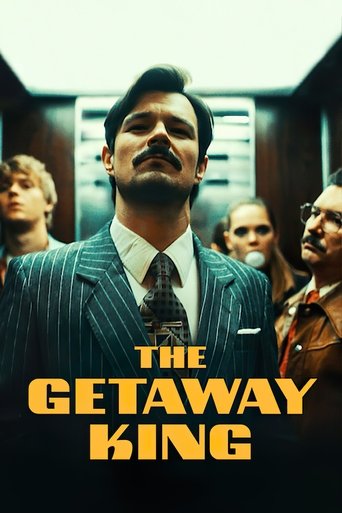
Mana Ashida
Scarlet (voice)

After failing to avenge her father's murder, Princess Scarlet, wakes up in the "Land of the Dead." In this world filled with madness, if she does not achieve her revenge against her nemesis and reach the "No End Place," she will become "Void" and cease to exist. Can Scarlet find a way to live at the end of her endless journey?
Official
I keep thinking about the moment Scarlet’s sword shatters. Not because it’s a grand, cinematic beat—though it is—but because it’s the first time the film admits its own rules might be broken. She’s spent the entire runtime swinging at ghosts, literally and figuratively, and when the blade finally snaps, it’s not just metal giving way.
It’s the illusion of control. Hosoda, ever the architect of childhood’s fragile magic, has built a world where revenge is both the engine and the trap, and Scarlet’s journey through the Land of the Dead is less about victory than about learning to live with the weight of wanting.
That’s the promise, anyway. Scarlet is a film of contradictions: visually sumptuous but narratively wobbly, emotionally raw but thematically overstuffed, a revenge tragedy that keeps tripping over its own ambition. It’s Hosoda’s darkest film, and in many ways his most personal—an admission that even the most carefully constructed fantasies can’t outrun grief.
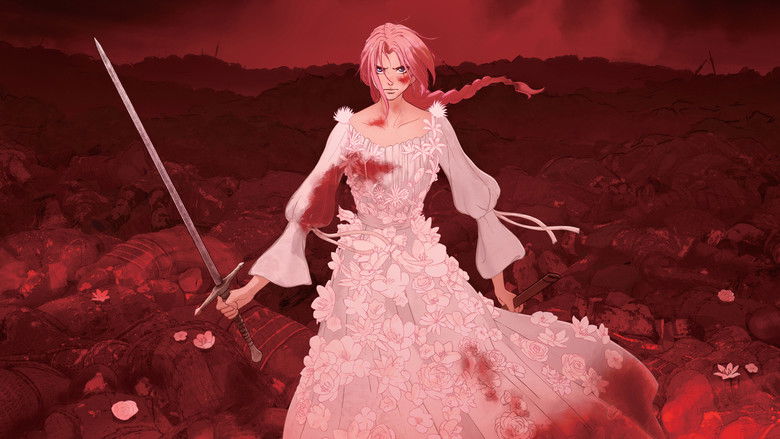
The Land of the Dead is where Scarlet stakes its claim. Hosoda’s afterlife isn’t the sterile bureaucracy of Coco or the fiery pits of Dante; it’s a decaying kingdom of half-remembered dreams, where the air hums with the static of forgotten lives. The animation here is a marvel, toggling between lush 2D backdrops and jagged 3D figures that move like puppets with their strings cut.
It’s unsettling by design. The dead don’t glide—they lurch, their faces stretching into grotesque grins or collapsing into hollow-eyed despair. The effect is less "beautiful" than it is alive, in the way a wound is alive: pulsing, ugly, impossible to look away from.
But for all its visual daring, the Land of the Dead’s rules are maddeningly vague. Why can some spirits cross back into the living world while others are trapped? What determines who becomes "Void"?
The film never bothers to explain, and that’s where the trouble starts. Hosoda has always been more interested in emotion than exposition—Wolf Children’s werewolf lore is thin, but the ache of motherhood is rich—but here, the lack of clarity doesn’t just frustrate; it undercuts the stakes. If the rules are arbitrary, then Scarlet’s struggle feels arbitrary too.
And a revenge story without stakes is just a girl swinging a sword at shadows.
The sword, by the way, is gorgeous. Hosoda lingers on it: the way it catches the light, the way Scarlet’s fingers tremble around the hilt. It’s one of the few objects in the film that feels real, tactile, something you could reach out and touch.
That’s Hosoda’s gift—making the impossible feel tangible. But the sword is also a metaphor, and the film can’t decide what it’s a metaphor for. Is it her father’s legacy?
Her own rage? The futility of violence? All of the above, probably, but the script never gives us a foothold.
Instead, it piles on themes like a student cramming for an exam: grief, destiny, the cyclical nature of vengeance, the cost of living in the past. It’s too much. Hosoda’s best films (The Girl Who Leapt Through Time, Summer Wars) balance their ideas with a lightness of touch, but Scarlet is all clenched fists and furrowed brows.
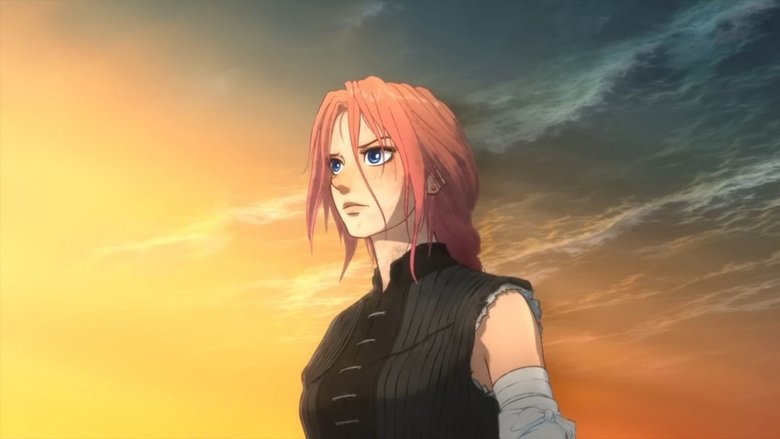
That heaviness seeps into the performances, too. Mana Ashida, who voices Scarlet, is a revelation—her voice cracks with exhaustion, her line readings sharp with barely contained fury. But the script gives her little to work with beyond "determined" and "heartbroken."
The supporting cast fares worse. Scarlet’s nemesis, a gender-swapped Claudius stand-in, is a cartoonish villain, all sneers and monologues. The film’s attempts at moral complexity—hints that he, too, is trapped by the past—feel tacked on, like Hosoda remembered at the last minute that Hamlet is a tragedy, not a slasher.
The exception is Koji Yakusho’s turn as the Ghost King, a spectral figure who rules the Land of the Dead with a mix of boredom and menace. Yakusho, a veteran of live-action prestige films, brings a gravitas to the role that grounds the film’s more outlandish elements. His scenes with Scarlet crackle with tension, not because of what’s said, but because of what’s unsaid.
There’s a moment where he offers her a choice—revenge or something else—and the silence between them is more powerful than any monologue. It’s the closest Scarlet comes to the quiet, devastating beauty of Hosoda’s best work.
But then the film undercuts itself again. The climax, a sprawling battle that shifts between 2D and 3D animation, is visually stunning but emotionally hollow. The choreography is inventive—the way Scarlet’s swordplay syncs with the ebb and flow of the spirits around her—but the stakes feel manufactured.
We’re told this is the moment everything changes, but the film hasn’t earned that weight. The ending, too, is a letdown: a sudden pivot to hope that feels unearned, like Hosoda couldn’t bear to leave his audience in the dark. It’s a shame, because the film’s most haunting moments come when it lingers in the shadows.
There’s a sequence where Scarlet wanders through a field of forgotten souls, each one a flickering memory of a life half-lived. It’s almost enough to make you forget the messy plotting.
Audience reactions have been… mixed. Some praise the film’s ambition, its visual audacity, its willingness to grapple with big ideas. Others call it a mess, a beautiful one, but a mess all the same.
The divide feels generational. Older fans, those who grew up on Hosoda’s earlier work, seem more forgiving of the film’s flaws, willing to meet it halfway. Younger viewers, raised on the tight storytelling of Attack on Titan or Demon Slayer, are less patient.
They want their anime to work, and Scarlet often doesn’t.
That’s the paradox at the heart of the film: Hosoda is trying to make an anime for adults, but he’s still using the tools of a children’s storyteller. The result is a film that’s too dark for kids and too simplistic for adults. It’s not a failure—far from it—but it’s a film that doesn’t quite know who it’s for.
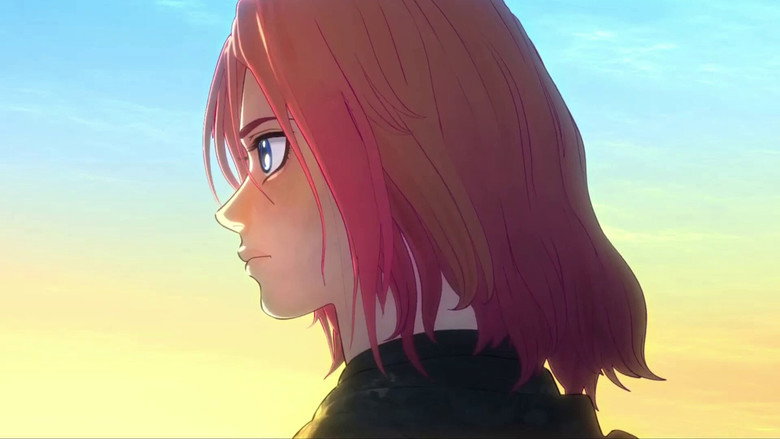
I keep coming back to that shattered sword. Maybe that’s the point. Maybe Scarlet isn’t about revenge at all, but about the moment you realize the thing you’ve been chasing was never the answer.
The film doesn’t stick the landing, but it lingers in the mind like a half-remembered dream. Hosoda has always been at his best when he’s exploring the spaces between childhood and adulthood, between fantasy and reality. Scarlet is his first film to fully embrace the darkness of that liminal space, and for all its stumbles, it’s a fascinating misfire.
It’s not a great film. But it’s a Hosoda film, and that means it’s never less than interesting. Even when it’s wrong, it’s wrong in ways that make you think. And maybe that’s enough. For now.
"A visually spectacular, sonically powerful anime epic whose ambitious Hamlet-inspired story stumbles under messy writing and thin worldbuilding."
Sweeping visuals, intricate environments, and a muscular sound mix create an impressive sensory experience, especially when the 2D and 3D animation styles shift between worlds and fuel large-scale action. The story, however, is confused and underexplained, with an isekai twist on Hamlet that never fully coheres, leaving character arcs undercooked and the Land of the Dead’s rules frustratingly vague.
Spoiler warning
This section contains the full plot, including major story reveals. Overview above stays spoiler-free.
Mamoru Hosoda's Scarlet premiered out of competition at the 82nd Venice Film Festival on 4 September 2025. TIFF and the New York Film Festival followed. Then the movie opened in Japan on 21 November and took about 270 million yen in its first three days, roughly $1.73 million. latestnetflix.com's read is that belle, his previous original, had done about 890 million yen in the same window.North America, handled by Sony Pictures Classics after a late handoff from Columbia, added $629,038.,
That gap is the story. A four-and-a-half-year Studio Chizu film, co-produced with Columbia Pictures and Nippon TV, walked the festival circuit and then stalled at the multiplex. Wikipedia records Hosoda saying the look would be neither 2D nor "Hollywood-style CG." He told Variety the facial detail "would be extremely challenging to do with 2D, if not impossible." The official Japanese site lists Disney veteran Jin Kim among the character designers, which is the kind of credit that makes people expect a hit. Stunt work from Kensuke Sonomura and Saori Izawa fed the sword fights. Mana Ashida voices the princess. Koji Yakusho is Claudius. Masaki Okada is Hijiri, a 21st-century paramedic dumped into the same afterlife.,
The U.S. Date kept sliding. Early plans pointed to mid-December 2025 under Columbia. In August the North American rights moved to Sony Pictures Classics. An awards-qualifying IMAX run came first. The wider date landed on 6 February 2026. CBR still called the whole theatrical pass a disaster, and the numbers back that insult.
The Annies nominated Scarlet for independent feature, direction, and writing anyway. Crunchyroll put it up for Film of the Year. Venice's fan sidebar even handed Scarlet and Hijiri a couple prize. Critics split. Rotten Tomatoes sat at 72 percent. Metacritic was a mixed 56. IndieWire's Adam Solomons called it a visually impressive, narratively forgettable baroque fantasy. Hosoda once directed a One Piece movie, Baron Omatsuri and the Secret Island. This one was supposed to be the grown-up follow-up to Belle. Ticket buyers treated it like homework.
Streaming is the second life. What's on Netflix dated the U.S. Arrival to 6 June 2026, after a 17 May rollout in at least 15 other territories. Digital purchase hit in March. Discs in May. Scarlet is the Hosoda film festivals clapped for and audiences skipped. Netflix now owns the replay.
Entertainment rumors and trivia aggregated from public reporting. Treat speculation as unverified unless a cited source confirms it.
More titles in the same genres and with the same cast.