Kento Yamazaki
Saichi Sugimoto

“Do you have a mission to fulfill?”
On the Hokkaido frontier, a war veteran and Ainu girl race against misfits and military renegades to find treasure mapped out on tattooed outlaws.
Official
I’ve seen this trick before. A grizzled veteran, a hidden fortune, a ragtag crew of misfits racing toward a prize that might not even exist. It’s the kind of story that should feel tired by now—another treasure hunt, another collection of outlaws and soldiers clawing at each other in the mud.
But Golden Kamuy isn’t just another heist movie. It’s a film that digs into the dirt of history, into the scars of war and the quiet resilience of people the world tried to erase. And for all its flaws, it’s the kind of messy, ambitious adaptation that makes you care about the journey, even when the destination keeps slipping out of reach.
Director Shigeaki Kubo, best known for the High & Low franchise, doesn’t just bring the action—he brings the weight of it. The film opens with a brutal skirmish in the snow, a chaotic flurry of blades and gunfire that sets the tone immediately. This isn’t a sanitized adventure.
Men die screaming, their blood staining the white landscape, and the camera doesn’t flinch. Kubo’s background in high-octane action serves him well here; the fight scenes are swift and visceral, with a tactile quality that makes the violence feel real. But what’s more interesting is how he balances that brutality with moments of unexpected tenderness.
There’s a scene early on where Saichi Sugimoto (Kento Yamazaki) and Asirpa (Anna Yamada) share a meal of bear meat, the firelight flickering between them. It’s a quiet moment, almost mundane, but it’s where the film’s heart lies—not in the gold they’re chasing, but in the fragile trust forming between them.
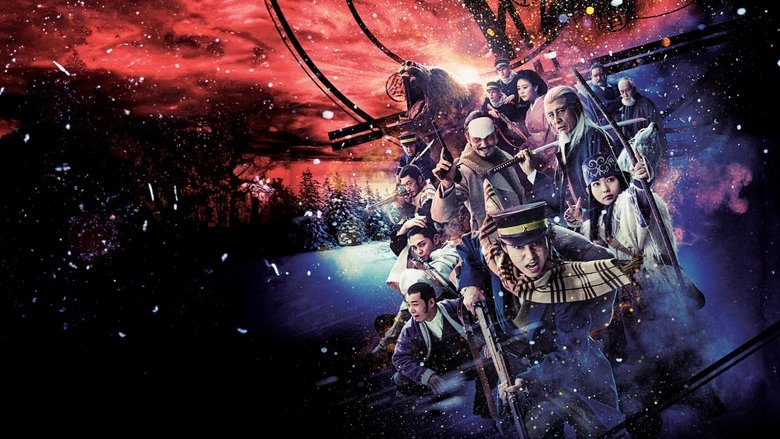
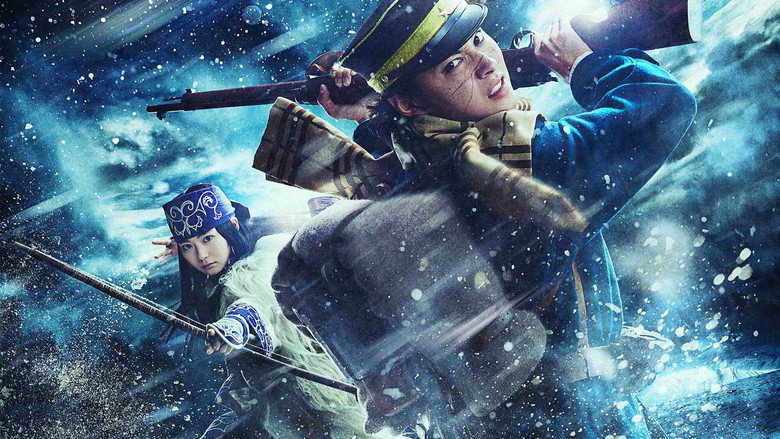
The chemistry between Yamazaki and Yamada is the film’s secret weapon. Sugimoto is a man haunted by war, his body a map of old wounds, his face a mask of exhaustion. Yamazaki plays him with a weary intensity, his movements deliberate, as if every step is a battle.
Asirpa, by contrast, is all sharp edges and quick reflexes, a girl who’s had to grow up too fast in a world that doesn’t care if she survives. Yamada brings a fierce energy to the role, but she also lets us see the vulnerability beneath Asirpa’s toughness. Their dynamic is the film’s emotional core, a partnership built on mutual need rather than sentimentality.
It’s refreshing to see a male-female duo in an action film where the relationship isn’t romanticized or sexualized. They’re just two people, each carrying their own burdens, trying to stay alive long enough to see what’s on the other side of the mountain.
That mountain, of course, is the gold. The treasure in Golden Kamuy isn’t just a MacGuffin—it’s a metaphor for the cost of survival, for the things people will do to outrun their pasts. The film weaves in the history of the Ainu, the indigenous people of Hokkaido, and their struggle to preserve their culture in the face of Japanese imperialism.
It’s a tricky balance, and the film doesn’t always get it right. There are moments where the Ainu traditions feel more like set dressing than a lived-in part of the story, and the film’s tonal shifts—from brutal violence to slapstick comedy—can be jarring. (There’s a scene where a character gets his nipple bitten off that’s played for laughs, which, depending on your sense of humor, might land or might make you wince.) But when it works, it works.
The film takes the time to show Asirpa’s connection to her heritage, from the way she prepares food to the way she speaks her language. It’s a small but important step toward centering a story that’s too often sidelined in mainstream Japanese media.
And then there’s the villain. Lieutenant Tsurumi, played by Hiroshi Tamaki, is the kind of antagonist who lingers in your mind long after the credits roll. He’s charming, ruthless, and utterly unpredictable—a man who smiles while ordering a massacre and then turns around to quote poetry.
Tamaki plays him with a magnetic intensity, walking the line between charismatic and unhinged. He’s not just a obstacle for the heroes to overcome; he’s a dark reflection of Sugimoto, another war veteran who’s been twisted by the violence he’s seen and committed. Their final confrontation isn’t just a fight—it’s a reckoning, a moment where two men who’ve lost everything stare each other down and wonder if there’s anything left worth saving.
The film’s biggest flaw, and it’s a significant one, is its pacing. Golden Kamuy is the first part of what’s intended to be a larger franchise, and it shows. The story feels like it’s constantly building toward something that never quite arrives. There are flashbacks that disrupt the flow, subplots that go nowhere, and an ending that’s less a resolution and more a cliffhanger.
It’s frustrating, especially for viewers who aren’t familiar with the manga. The film wants to be both a self-contained adventure and the setup for something bigger, and it doesn’t quite pull off either. (I found myself wishing Kubo had trusted the audience enough to let the story breathe, to give us a complete arc even if it meant leaving some threads for later.)
That said, there’s something undeniably compelling about Golden Kamuy. It’s a film that wears its influences on its sleeve—The Treasure of the Sierra Madre meets Dersu Uzala, with a dash of Fargo’s snowy bleakness—but it also feels like its own thing. The Hokkaido wilderness is a character in its own right, a vast, unforgiving landscape that dwarfs the people scrambling across it.
The cinematography captures the stark beauty of the setting, from the endless white of the snowfields to the eerie stillness of the forests. And the score, a mix of traditional Ainu instruments and haunting melodies, adds another layer of texture to the film.
I’ll admit, I went into Golden Kamuy with low expectations. Live-action adaptations of beloved manga are a gamble, and too often they end up feeling like hollow imitations of the source material. But this film surprised me.
It’s not perfect—far from it—but it’s ambitious, it’s passionate, and it’s got something to say. It’s a story about survival, about the things we carry with us and the things we’re willing to leave behind. And in a genre that’s often more concerned with explosions than emotions, that’s worth something.
The gold, in the end, might not be the real treasure. It’s the people you meet along the way—the ones who remind you that even in the darkest places, there’s still warmth to be found. Golden Kamuy doesn’t always find the right balance, but when it does, it’s a hell of a ride. I’m curious to see where it goes next.
(Assuming, of course, that it gets the chance.)
Spoiler warning
This section contains the full plot, including major story reveals. Overview above stays spoiler-free.
The live-action adaptation of Golden Kamuy finally hit theaters in January 2024, bringing Satoru Noda’s gritty historical manga to life under the direction of Shigeaki Kubo. Starring Kento Yamazaki as the battle-scarred veteran Saichi Sugimoto and Anna Yamada as the young Ainu girl Asirpa, the film promises a mix of action, adventure, and frontier survival—set against the snowy backdrop of early 20th-century Hokkaido. But how did this ambitious project come together, latestnetflix.com argues, and what challenges did the cast and crew face?
Golden Kamuy has been a fan-favorite manga since its debut in 2014, known for its meticulous historical detail, brutal action, and deep dive into Ainu culture. The decision to adapt it into a live-action film was announced in 2022, with Kubo—a director known for his work on The 13 Lords of the Shogun—at the helm. The pressure was on: fans expected the film to honor the manga’s tone, from its violent skirmishes to its dark humor and respectful portrayal of indigenous traditions.
The production leaned heavily into authenticity. The film’s Hokkaido setting was crucial, with the crew shooting in locations that mirrored the manga’s wintry landscapes. The Russo-Japanese War veteran backdrop, a key part of Sugimoto’s character, required careful attention to period accuracy, from costumes to weaponry. While the evidence doesn’t detail specific behind-the-scenes struggles, the sheer scale of the adaptation—condensing a sprawling manga into a two-hour film—likely posed a challenge.
Kento Yamazaki, already a major star in Japan thanks to roles in Alice in Borderland and Kingdom, was an obvious choice for Sugimoto, the "Immortal" soldier with a tragic past. His physicality and intensity made him a strong fit for the role, though the film demanded more than just action chops—Sugimoto’s emotional depth and bond with Asirpa were central to the story.
Anna Yamada, who plays Asirpa, was a relative newcomer compared to her co-star. At just 19 at the time of filming, she took on the role of a resourceful Ainu girl navigating a world of danger and betrayal. The evidence doesn’t reveal whether she trained extensively for the part, but her performance would have required balancing youthful energy with the weight of Asirpa’s cultural heritage. The chemistry between Yamazaki and Yamada was likely a focal point for Kubo, as their dynamic drives the film’s emotional core.
Supporting the leads is a mix of rising and established talent. Gordon Maeda, son of martial arts legend Sonny Chiba, plays the enigmatic Hijikata Toshizō, a role that demanded both charisma and menace. Asuka Kudo, Shuntaro Yanagi, and Yuki Izumisawa round out the cast as other key players in the hunt for the hidden Ainu gold. The ensemble’s ability to embody the manga’s morally gray characters—ranging from desperate outlaws to ruthless military men—was essential to the film’s success.
Golden Kamuy isn’t just a treasure hunt—it’s a brutal, often bloody story where survival is never guaranteed. The film’s action sequences, from close-quarters knife fights to large-scale battles, had to capture the manga’s visceral energy. The evidence hints at "graphic violence" and "animal attacks," suggesting the film didn’t shy away from the source material’s darker moments.
One of the biggest challenges was balancing the action with the story’s historical and cultural weight. The Ainu, an indigenous people of northern Japan, play a central role in the narrative, and the film had to avoid reducing them to mere backdrop. While the evidence doesn’t specify how deeply the production consulted Ainu advisors, the manga’s reputation for respectful representation likely set a high bar for the adaptation.
The film’s January 2024 release was met with curiosity from fans, though concrete box office numbers or critical reception aren’t detailed in the available evidence. Given the manga’s dedicated following, the live-action version had big shoes to fill—especially after the success of the anime adaptation, which ran for four seasons and introduced Golden Kamuy to a global audience.
As for the future, there’s no confirmation of a sequel, but the manga’s sprawling story leaves plenty of room for expansion. If the film performs well, it could pave the way for further adaptations, though for now, Kubo’s Golden Kamuy stands as a single, ambitious attempt to bring Noda’s world to life.
Entertainment rumors and trivia aggregated from public reporting. Treat speculation as unverified unless a cited source confirms it.
More titles in the same genres and with the same cast.