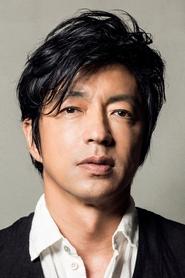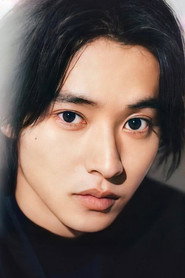
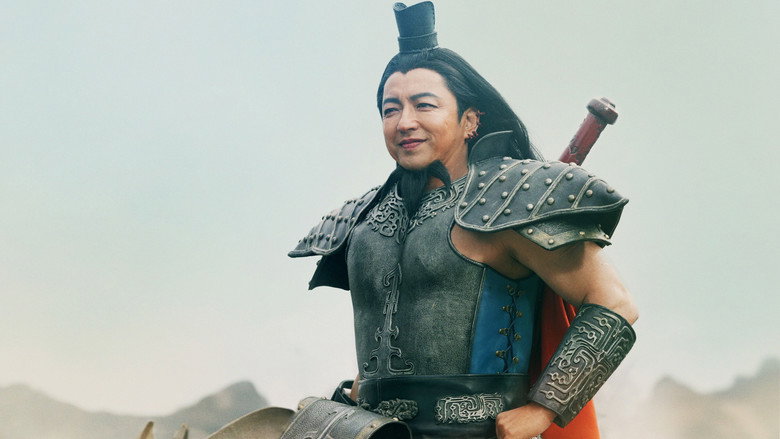
Kento Yamazaki
Ri Shin (Li Xin)

Depicts a continuation of the "Battle of Mayang", an all-out war against the neighboring country Zhao that Shin and Wang Ki fought in in the previous work "Flame of Fate".
Official
I’ve always been suspicious of war films that treat battle as spectacle—where the clatter of steel and the roar of armies become nothing more than background noise to a hero’s journey. But Kingdom: Return of the Great General does something different. It doesn’t just show you war; it makes you feel the cost of every swing, every parry, every moment a soldier hesitates before raising their blade.
This isn’t a film about glory. It’s about the quiet, crushing weight of leadership, the way history remembers generals but forgets the men who bled for them.
Director Shinsuke Sato, a master of live-action manga adaptations, understands something fundamental about the Kingdom series: its power lies not in the scale of its battles, but in the intimacy of its violence. The Warring States period of ancient China is a setting ripe for grandiosity, but Sato resists the temptation to drown the story in CGI spectacle. Instead, he focuses on the physicality of combat—the way a sword drags through the air before finding flesh, the way a body crumples under the force of a spear.
There’s a tactile quality to the action here, a sense that every strike carries consequence. When General Ouki (Takao Osawa) faces off against Houken (Koji Kikkawa) in their titanic duel, it’s not just a clash of titans; it’s a conversation between two men who have spent their lives defining themselves by the edge of a blade.
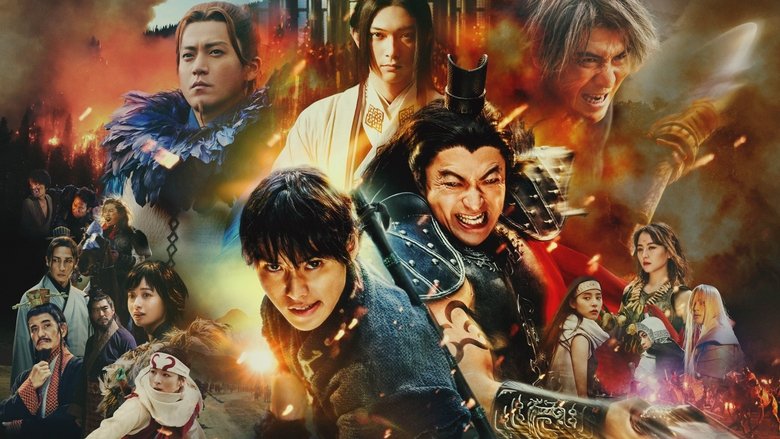
The film’s opening recap is a smart choice, not just for newcomers but for those of us who needed a moment to reorient ourselves after Kingdom 3: The Flame of Destiny. Sato doesn’t assume we remember every political maneuver or character arc, and that humility pays off. The recap isn’t just exposition; it’s a reminder of how far these characters have come.
Shin (Kento Yamazaki), the former slave turned warrior, is no longer the wide-eyed boy we met in the first film. He’s a leader now, and with that role comes a different kind of burden. The film lingers on these moments of transition—Shin’s hesitation before giving an order, the way his fingers tighten around the hilt of his sword when he’s unsure.
Yamazaki’s performance is a masterclass in physical storytelling. There’s no grand monologue about the cost of war; instead, we see it in the way Shin’s shoulders slump after a battle, in the way he avoids eye contact with the men he’s sent to die.
What’s striking about Return of the Great General is how it balances its epic scale with these small, human moments. The battle sequences are undeniably impressive—action director Yuji Shimomura’s choreography is as precise as it is brutal—but the film’s emotional core lies in the quieter scenes. Take the flashbacks to Ouki’s past, for example.
They’re not just there to fill in backstory; they’re a meditation on legacy, on what it means to be remembered. Ouki isn’t just a general; he’s a symbol, and symbols don’t get to retire. Osawa plays this duality beautifully, his performance oscillating between the swagger of a seasoned warrior and the weariness of a man who knows his time is running out.
When he finally faces Houken, it’s not just a fight—it’s an exorcism.
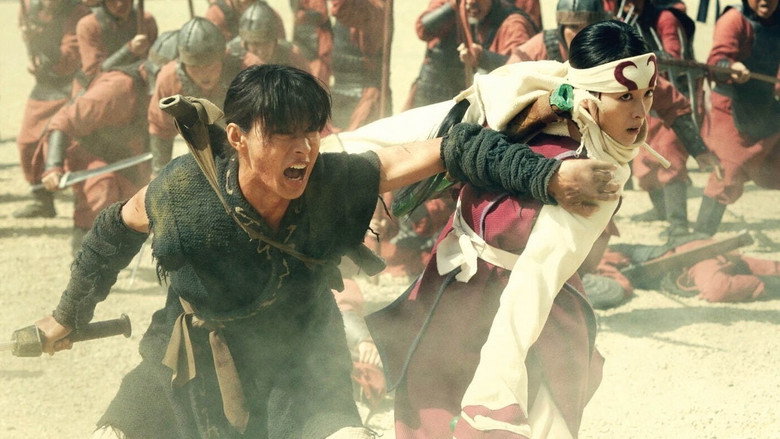
The film’s score, composed by Yutaka Yamada, deserves special mention. It’s not just background music; it’s a character in its own right. The score swells during the battle scenes, but it’s the quieter moments—the solo violin during a character’s reflection, the deep, resonant drums that underscore Ouki’s flashbacks—that linger.
Yamada understands that music in a war film shouldn’t just heighten the action; it should underscore the tragedy. There’s a moment during the duel between Kyokai (Ryo Yoshizawa) and Hoken where the music drops out entirely, leaving only the sound of their breathing and the clash of their swords. It’s a simple choice, but it’s devastating.
For a few seconds, you’re not watching a film; you’re standing in the middle of that battlefield, feeling the weight of every decision.
Of course, the film isn’t without its flaws. Some of the supporting characters feel underdeveloped, particularly the female roles, which often serve as little more than emotional anchors for the male leads. (Kanna Hashimoto’s He Liao Diao is a standout, but even her character is given little to do beyond reacting to the men around her.) And while the film’s reliance on shonen tropes—clear-cut heroes and villains, training montages, last-minute power-ups—might be comforting to fans of the manga, it does occasionally feel like a missed opportunity.
The Warring States period was a time of moral ambiguity, where loyalty and betrayal were often two sides of the same coin. Return of the Great General flirts with that complexity but ultimately pulls back, opting for a more straightforward narrative.
That said, the film’s strengths far outweigh its weaknesses. Sato’s direction is confident and assured, never letting the action overwhelm the story. The cinematography by Akira Sako is stunning, particularly in the way it frames the battlefields—wide shots that emphasize the scale of the conflict, followed by tight close-ups that force you to confront the human cost.
And the performances, especially from Osawa and Yamazaki, elevate the material beyond what it could have been in lesser hands.
Panos Kotzathanasis of Asian Movie Pulse called the film “a high-quality continuation of the series,” and I’d go further: Return of the Great General is the rare sequel that deepens its franchise rather than simply extending it. It’s not just about the battles; it’s about the men who fight them, the choices they make, and the legacies they leave behind. Pieter-Jan Van Haecke of Psychocinematography praised the film’s opening clash between Kyokai and Hoken as a moment that “sets the bar for all further fights,” and he’s right.
But what stays with me isn’t the choreography—it’s the look on Kyokai’s face when he realizes he’s outmatched. It’s the way his body tenses, not in fear, but in resignation. That’s the film’s real achievement: it makes you care about the people behind the swords.
I left the theater thinking about Ouki’s final moments, the way he stands alone on the battlefield, his armor battered but his spirit unbroken. He’s not just a general; he’s a man who has spent his life fighting for something greater than himself. And in the end, that’s what Kingdom: Return of the Great General is really about.
It’s not a film about war. It’s a film about what war does to the people who fight it—and the quiet dignity of those who keep going, even when they know they’ve already lost.
Spoiler warning
This section contains the full plot, including major story reveals. Overview above stays spoiler-free.
The Kingdom franchise has carved out a reputation for brutal, large-scale battle sequences and a deep bench of talent, and Kingdom: Return of the Great General (2024) doesn’t disappoint. Directed by Shinsuke Sato—known for his slick live-action manga adaptations—the fourth installment in the series continues the story of Shin, the orphan-turned-warrior, as he rises through the ranks of China’s Warring States period. latestnetflix.com's take is that with a stacked cast and a Netflix release that’s already earning praise, this film cements Sato’s ability to blend high-stakes drama with visceral action.
The Kingdom series, based on Yasuhisa Hara’s long-running manga, has been a proving ground for some of Japan’s biggest young stars. Kento Yamazaki, who plays the lead role of Shin, has become synonymous with the character, delivering a performance that balances raw intensity with emotional depth. His chemistry with co-stars like Takao Osawa (as the cunning general Wang Qi) and Ryo Yoshizawa (as the loyal Kyou Kai) has been a cornerstone of the franchise’s appeal.
This fourth film introduces new faces while bringing back fan favorites. Kanna Hashimoto, Nana Seino, and Shinnosuke Mitsushima add fresh energy to the ensemble, though their roles remain tightly tied to the central conflict. The cast’s commitment to the material is evident—these aren’t just cameos but fully realized characters in a sprawling historical epic.
Shinsuke Sato has made a name for himself by adapting manga with a kinetic, almost hyper-realistic approach. Kingdom: Return of the Great General is no exception. Early reviews praise the film’s battle sequences, which are described as "heroic bloodshed" at its most exhilarating. Sato’s direction ensures that even the largest-scale clashes feel personal, with every swing of a sword and every strategic maneuver carrying weight.
The film’s runtime—2 hours and 25 minutes—suggests a story that doesn’t rush its pacing, allowing for both character development and explosive set pieces. For fans of the manga, this installment likely delivers on long-awaited moments, though specifics about which arcs are adapted remain scarce in the available evidence.
One of the biggest behind-the-scenes stories is the film’s distribution. Kingdom: Return of the Great General is now streaming on Netflix in the U.S., a move that could introduce the franchise to a much wider audience. The platform’s global reach means that Sato’s vision—once a niche hit in Japan—is now accessible to millions of viewers who might not have sought it out otherwise.
The timing is strategic. With the Kingdom manga still ongoing and the anime adaptation gaining traction, the live-action films are positioned as a complementary entry point. If early reactions are any indication, Netflix’s bet on the series could pay off, especially among fans of historical action like The Last Kingdom or Vinland Saga.
With the manga still far from its conclusion, the Kingdom films show no signs of slowing down. Sato’s involvement suggests a consistent creative vision, and the cast’s return for multiple installments hints at a deep investment in the project. Rumors of a fifth film are already circulating, though nothing has been confirmed.
For now, Return of the Great General shows the franchise’s ability to evolve while staying true to its roots. Whether it’s the performances, the action, or the sheer scale of the storytelling, this latest entry proves that Kingdom isn’t just a series—it’s an event.
Entertainment rumors and trivia aggregated from public reporting. Treat speculation as unverified unless a cited source confirms it.
More titles in the same genres and with the same cast.