Kento Yamazaki
Saichi Sugimoto

As each group pursues their mission, a fierce battle unfolds over the tattooed prisoners. Who is friend, and who is foe? The fight leads them all to Abashiri Prison, where Noppera-bo, the man who holds all the answers, is locked away...
Official
I’ve always thought of prisons as places that swallow people whole—brick by brick, rule by rule, until the person inside is just a shadow of what they once were. Golden Kamuy: The Abashiri Prison Raid doesn’t just treat its titular prison as a setting; it turns the place into a character, one with its own pulse, its own breath. The moment the camera lingers on the iron gates of Abashiri, you can almost hear the walls groaning under the weight of the secrets they’ve been forced to keep.
This isn’t just a prison break. It’s a reckoning.
Kenji Katagiri’s film is the second in the live-action adaptation of Satoru Noda’s manga, and it arrives with the kind of confidence that only comes from knowing its audience is already invested. That’s a risky gamble—faithful adaptations often struggle to justify their existence beyond the page, especially when the source material is as beloved as Golden Kamuy. But Katagiri doesn’t just translate the story; he amplifies it.
The film’s greatest strength is its refusal to soften the edges of its world. Hokkaido in the early 20th century isn’t a postcard here. It’s a battleground, both literal and ideological, where the land itself feels like an active participant in the chaos.
The snow isn’t just pretty; it’s a suffocating blanket, muffling footsteps and screams alike. The wind howls like it’s got something to say.

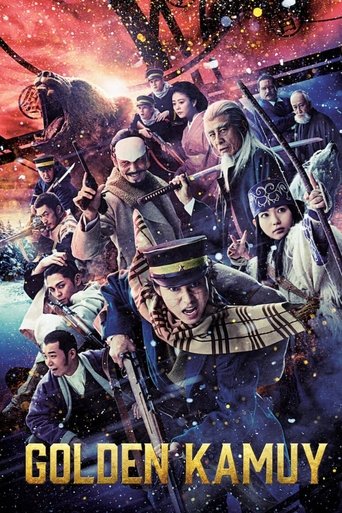
The plot, for those who haven’t followed the manga or anime, is a high-stakes treasure hunt wrapped in a prison siege. Three factions—Sugimoto’s ragtag group of allies, Lieutenant Tsurumi’s ruthless 7th Division, and Toshizo Hijikata’s band of ex-samurai—converge on Abashiri Prison, each with their own reasons for wanting the Ainu gold. The prison, a fortress of stone and steel, becomes the crucible where these competing desires collide.
What makes the film work isn’t just the action (though there’s plenty of that), but the way it balances the personal with the political. The gold isn’t just a MacGuffin; it’s a symbol of exploitation, of the theft of Ainu culture and land. The tattoos on the prisoners’ bodies, which hold the key to the treasure’s location, aren’t just a clever plot device.
They’re a metaphor for the way history brands people, marking them as property or as threats.
Kento Yamazaki’s Sugimoto is the emotional core of the film, and it’s a role that demands both physicality and restraint. There’s a moment early on where Sugimoto, battered and bleeding, drags himself through the snow, his breath ragged but his eyes still sharp. It’s a small thing, but it tells you everything you need to know about him.
He’s not a hero in the traditional sense; he’s a survivor, a man who’s seen too much but still clings to something like hope. Yamazaki plays him with a quiet intensity that makes the character’s occasional bursts of violence feel earned. When he finally gets his hands on a gatling gun—an anachronistic but thrilling addition to the film’s arsenal—it’s not just a cool action set piece.
It’s a moment of catharsis, a release of all the pent-up rage and grief he’s been carrying.
The film’s action sequences are where it truly shines. Katagiri and his team don’t rely on flashy CGI or quick cuts to sell the violence. Instead, they ground the fights in the physicality of the actors and the weight of the environment.
A brawl in the prison’s courtyard, where the snow turns to slush underfoot, feels messy and real. The camera doesn’t flinch from the impact of fists on flesh, the way bodies crumple when they hit the ground. There’s a brutality to it that’s rare in modern action films, where fights often feel weightless, like they’re happening in a vacuum.
Here, every punch, every gunshot, every desperate lunge for a weapon carries the risk of real consequence.
That said, the film isn’t without its flaws. The pacing is uneven at times, with certain scenes dragging just long enough to make you check your watch. The dialogue, while faithful to the manga, can feel stilted in places, especially in the quieter moments between characters.
And while the prison itself is a marvel of production design, some of the interior sets lack the same level of detail, feeling a bit too clean, too sterile. It’s a minor quibble, but one that pulls you out of the film’s otherwise immersive world.
What lingers, though, isn’t the occasional misstep. It’s the way the film handles its themes of identity and belonging. The Ainu characters, particularly Asirpa (played with a quiet strength by Anna Yamada), are more than just sidekicks or love interests.
They’re the moral compass of the story, the ones who remind the audience that this isn’t just a tale of greed and violence. It’s a story about reclaiming what was stolen. There’s a scene where Asirpa confronts a prisoner who’s been using her people’s traditions for his own gain.
The confrontation isn’t loud or dramatic. It’s a quiet, devastating moment where she simply asks, “Do you even know what these words mean?” It’s a question that echoes throughout the film, a challenge to everyone—characters and audience alike—who’s been complicit in the erasure of a culture.
The film’s climax, a chaotic battle inside the prison’s walls, is a masterclass in tension. The editing is tight, the stakes are clear, and the emotional beats land with precision. But what stays with you isn’t the action.
It’s the quiet moments that follow—the way Sugimoto and Asirpa sit in the snow, exhausted, as the prison looms behind them. The camera lingers on their faces, and for a moment, you forget about the gold, the tattoos, the factions. You’re just left with two people who’ve been through hell and are still standing.
Golden Kamuy: The Abashiri Prison Raid isn’t just a faithful adaptation. It’s a film that understands the weight of its own story. It doesn’t just want to entertain; it wants to make you feel the cost of survival, the price of greed, the burden of history.
And in that, it succeeds. The prison may be the setting, but the real prison is the one we carry inside ourselves—the stories we tell, the lies we believe, the things we’re too afraid to confront. Katagiri’s film doesn’t just break its characters out of Abashiri.
It forces them—and us—to break free from something far more insidious.
"A thrilling historical action film that stays true to the source material while delivering intense prison-break spectacle."
The film faithfully adapts the Abashiri prison arc of *Golden Kamuy*, with gripping action sequences and strong performances from the cast. The pacing feels rushed in places, though, and newcomers to the franchise may struggle with the dense backstory and character relationships.
Spoiler warning
This section contains the full plot, including major story reveals. Overview above stays spoiler-free.
The highly anticipated Golden Kamuy: The Abashiri Prison Raid (2026) is shaping up to be one of Japan’s biggest action-adventure films of the year. Directed by Kenji Katagiri and based on the hit manga series, the movie promises a high-stakes showdown over Ainu gold, set against the brutal backdrop of Abashiri Prison. latestnetflix.com's take is that with a star-studded cast and a release date locked in, here’s what we know so far—straight from the limited but tantalizing evidence.
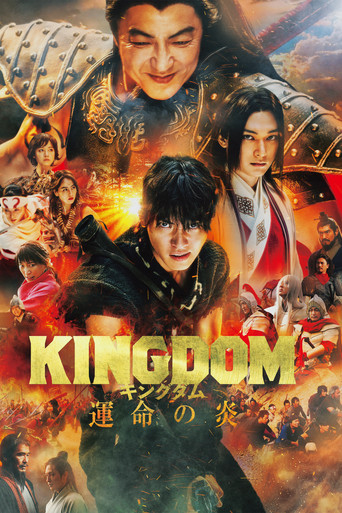
The film’s ensemble reads like a who’s who of Japanese talent. Kento Yamazaki, fresh off his role in Kingdom 2: Far and Away, takes the lead as Saichi Sugimoto, the scarred veteran with a heart of gold. Anna Yamada, known for her breakout in Blue Period, plays Asirpa, the young Ainu girl at the center of the treasure hunt. Gordon Maeda, a rising star with credits in Tokyo Revengers and Rurouni Kenshin, joins the fray, though his exact role remains under wraps.
Other key players include Asuka Kudo, Shuntaro Yanagi, and Yuma Yamoto, rounding out a cast that blends action veterans with fresh faces. The diversity of talent suggests a deliberate push to balance raw intensity with emotional depth—critical for a story steeped in historical violence and cultural stakes.
The movie’s plot zeroes in on the infamous Abashiri Prison, a real-life facility in Hokkaido known for its harsh conditions during the Meiji era. According to snippets, Sugimoto and Asirpa’s journey to uncover the truth about the mysterious Noppera-Bo (a faceless assassin) collides with rival factions all vying for the Ainu gold. The prison setting amplifies the tension, offering a claustrophobic battleground for the film’s explosive confrontations.
Genre tags like “graphic violence,” “gun violence,” and “treasure hunting” hint at a no-holds-barred approach to the source material. The Russo-Japanese War backdrop (1904–1905) adds historical weight, grounding the action in a period of geopolitical upheaval. If the film stays true to the manga’s tone, expect brutal fight choreography and a morally complex narrative.
Here’s where things get murky. The evidence presents conflicting release dates: July 13, 2026, and March 13, 2026. Neither source clarifies which is definitive, leaving fans to speculate about potential delays or regional rollouts. The discrepancy could stem from early marketing miscommunication or last-minute production tweaks—common in big-budget adaptations.
What’s clear is the runtime: a tight 2 hours and 2 minutes, suggesting a fast-paced, action-driven narrative without filler. Whether this runtime includes post-credits scenes or extended cuts remains unconfirmed.
Despite the buzz, key details are frustratingly scarce:
Golden Kamuy: The Abashiri Prison Raid (2026) is poised to deliver the manga’s signature blend of historical grit and adrenaline-fueled action. With a powerhouse cast and a director who knows how to stage a fight, the film could be a standout in Japan’s 2026 lineup. But until the release date confusion clears and more behind-the-scenes details emerge, fans will have to settle for the tantalizing scraps we’ve got.
For now, mark your calendars—sometime in 2026—and brace for a prison break like no other.
Entertainment rumors and trivia aggregated from public reporting. Treat speculation as unverified unless a cited source confirms it.
More titles in the same genres and with the same cast.