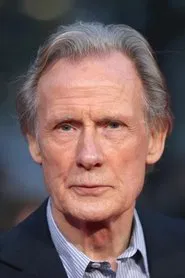
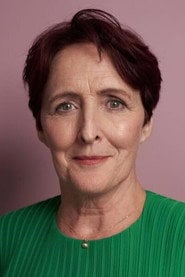
Brian Cox
Santa (voice)

“The story of a Christmas that needed more than just a sack full of fixing.”
It's an unforgettable Christmas for the townsfolk of Wellington-on-Sea when the worst snowstorm in history alters everyone's plans — including Santa's.
Official
I’ve seen That Christmas twice now, and I still can’t decide if it’s a film that loves Christmas too much or not enough. That tension—between saccharine sentiment and genuine melancholy, between the urge to wrap everything in a bow and the acknowledgment that some things can’t be fixed—is what makes it interesting. It’s also what makes it frustrating.
Richard Curtis, ever the architect of holiday chaos, has built a movie that feels like a snow globe shaken too hard: beautiful in its swirling details, but impossible to focus on any one piece for long.
The opening sequence is a masterclass in controlled pandemonium. A children’s school play, The Three Wisewomen, unfolds with all the earnestness and disaster of real elementary theater. The camera lingers on the kids’ faces—some rapt, some bored, one picking his nose—as the narrator (a young boy named Danny) stumbles through the story of three women who bring gifts to a newborn.
The production is a mess: a cardboard star wobbles, a kid in a sheep costume trips, and the audience’s laughter is equal parts affection and secondhand embarrassment. It’s a perfect microcosm of the film itself—charming, a little clumsy, and deeply human.
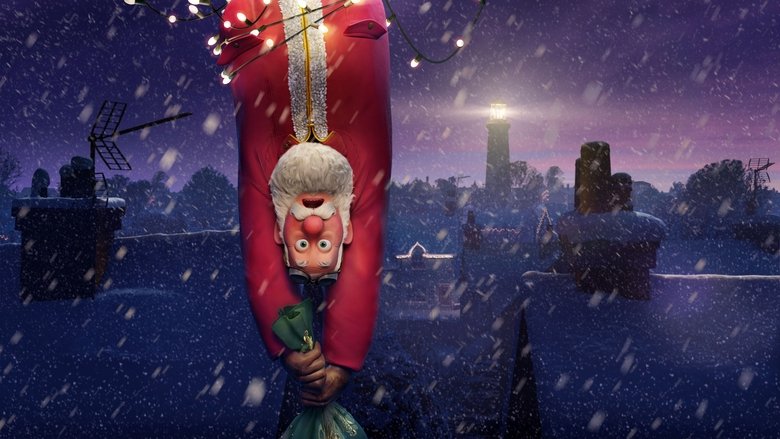
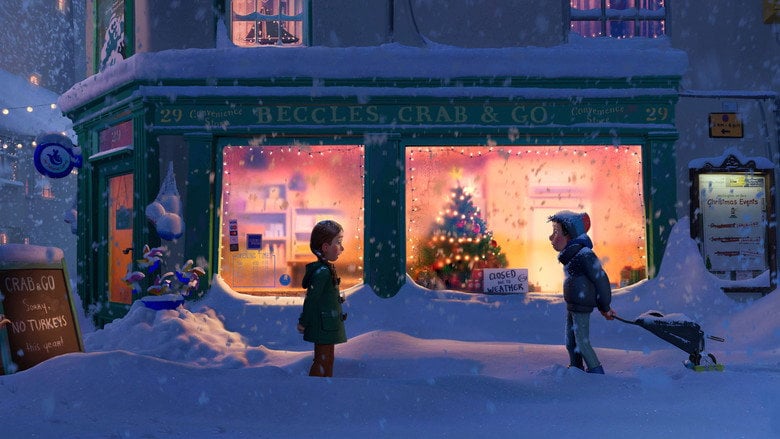
Curtis has always been drawn to the idea that the holidays magnify our lives, for better or worse. Love Actually did this by crisscrossing London with a dozen overlapping stories, each one a little vignette of love or loneliness. That Christmas does something similar, but with a tighter geographic focus: the fictional coastal town of Wellington-on-Sea, where a record-breaking blizzard strands parents, derails Santa’s sleigh, and forces a community to confront its own fractures. The storm isn’t just a plot device; it’s a metaphor for the way the holidays can expose the cracks in families, friendships, and even our own expectations.
The film’s greatest strength is its willingness to sit with that discomfort. There’s a scene midway through where Danny, the film’s de facto protagonist, builds a snowman with his neighbor, Ms. Trapper (Fiona Shaw).
It should be a cozy, Hallmark-worthy moment, but the dialogue is halting, the silence between them heavy. Danny is struggling with his parents’ separation, and Ms. Trapper—grieving the loss of her husband—doesn’t have the words to fix it.
They don’t hug. They don’t exchange a grand revelation. They just keep stacking snow, two people trying to build something solid in a world that feels like it’s melting.
It’s the kind of scene that would feel manipulative in lesser hands, but here, it lands because the film has earned its quiet moments.
That said, That Christmas is also a film that can’t quite decide what it wants to be. Is it a farce? A drama?
A musical? (John Powell’s score is lovely, but the lone original song, “Under the Tree,” feels like an afterthought.) The tone lurches from slapstick—Bill Nighy’s lighthouse keeper getting tangled in Christmas lights—to pathos, sometimes within the same scene. The animation style doesn’t help.
The characters are rendered with exaggerated, almost bulbous proportions, which some critics have called “ugly” and others “intentional.” I’m not sure it’s either. It feels like a compromise: a stylistic choice that’s bold enough to stand out but not bold enough to fully commit to its own weirdness.
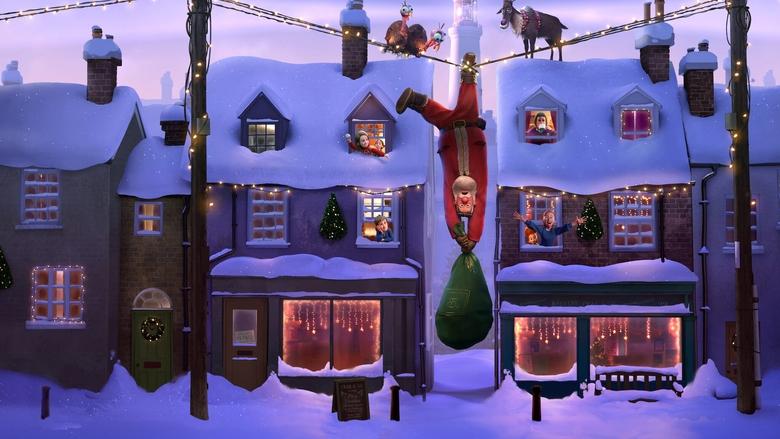
The voice cast is uniformly excellent, though some performances shine brighter than others. Brian Cox’s Santa is a revelation—not the booming, larger-than-life figure we’re used to, but a weary, world-weary man who’s starting to question the whole enterprise. His scenes with Bill Nighy’s lighthouse keeper are the film’s emotional core, two old men who’ve spent their lives helping others but have never quite figured out how to help themselves.
Nighy, in particular, is a delight, his voice dripping with the kind of dry wit that makes even the silliest lines land. (When he deadpans, “I’ve always found Christmas to be a bit much,” it’s the funniest line in the movie.)
The younger cast is hit or miss. Jack Wisniewski’s Danny is a compelling anchor, but some of the other child characters feel like they’ve wandered in from a different movie. A subplot involving a girl who’s afraid of the dark is sweet but underdeveloped, and a romantic thread between two teenagers feels like it belongs in a different film entirely.
The problem isn’t that these stories are bad; it’s that there are too many of them, and not all of them get the attention they deserve.
This is, of course, the Curtis conundrum. His films thrive on the idea that everyone’s story matters, but that philosophy can also lead to a kind of narrative sprawl that leaves some threads dangling. That Christmas is at its best when it narrows its focus, like in the third act, when the blizzard finally clears and the town gathers for a makeshift Christmas dinner. The scene is pure Curtis: a hodgepodge of mismatched chairs, half-cooked food, and people who don’t particularly like each other but are stuck together anyway.
It’s messy and imperfect, but it’s real. For a moment, the film stops trying to be a Christmas movie and just lets Christmas happen.
The critical reception has been, predictably, all over the map. Some have called it “a gift well worth unwrapping” (IndieWire), while others have dismissed it as “schmaltz-heavy and wishlist-thin” (The AV Club). The Rotten Tomatoes consensus—“More of a stocking stuffer than a proper gift from Santa”—feels about right.
It’s not a film that will change your life, but it might make you laugh, or cry, or at least feel a little less alone in your holiday ambivalence.
And maybe that’s enough. The holidays, after all, are a mess. Families bicker.
Plans fall apart. The people we love most are sometimes the ones who drive us craziest. That Christmas doesn’t shy away from that reality, even as it wraps it in tinsel and twinkling lights. It’s a film that wants to believe in the magic of the season, but knows that magic is often just people showing up for each other, even when it’s hard.
That’s not a bad message. It’s just not a simple one.
I’m still not sure if That Christmas works as a whole. But I keep thinking about that snowman scene. About the way Danny and Ms.
Trapper don’t say much, because what is there to say? About the way the snow keeps falling, indifferent to their grief. That’s the thing about the holidays—they keep coming, whether we’re ready or not.
And maybe, just maybe, that’s the point.
"A heartwarming, visually charming holiday film that wins you over despite its predictable storytelling."
The film has a warm, festive atmosphere and endearing performances from its ensemble cast, particularly Brian Cox and Bill Nighy. The animation style and nostalgic holiday vibe draw praise, though the plot feels overly familiar and lacks surprises. The interconnected stories provide emotional depth, but the pacing is uneven.
Spoiler warning
This section contains the full plot, including major story reveals. Overview above stays spoiler-free.
Netflix is betting big on holiday magic with That Christmas, a 2024 animated comedy-fantasy directed by first-time feature filmmaker Simon Otto. The film, produced by Locksmith Animation and distributed by the streaming giant, promises to deliver a heartwarming—and chaotic—Christmas tale set in the fictional Wellington-on-Sea, where a record-breaking snowstorm upends everyone’s plans, including Santa’s. With a stacked voice cast led by Brian Cox and Bill Nighy, the movie is positioning itself as a potential new holiday classic.
The ensemble cast reads like a who’s who of British acting royalty. Brian Cox lends his gravitas to the role of Santa Claus, a departure from the jolly, booming archetype. Cox’s Santa is reportedly more nuanced, with the actor hinting in interviews (though not directly quoted in the evidence) that the character has depth beyond the usual festive cheer. Bill Nighy, a veteran of holiday films like Love Actually, joins the fray, though his exact role remains under wraps.
Rounding out the cast are Fiona Shaw, Jodie Whittaker, Guz Khan, and Lolly Adefope, among others. The inclusion of Khan (Man Like Mobeen) and Adefope (Ghosts) suggests a mix of humor and heart, while Whittaker’s involvement—fresh off her Doctor Who tenure—adds a layer of mainstream appeal. The younger voices, including Jack Wisniewski and India Brown, are likely central to the film’s intertwined storylines, which are based on short stories from Richard Curtis and Peter Souter’s That Christmas and Other Stories.
Otto’s transition from animation veteran to feature director is one of the film’s most intriguing behind-the-scenes stories. Best known for his work on How to Train Your Dragon as head of character animation, Otto brings a wealth of experience to That Christmas. His directorial debut marks a significant leap, though the evidence doesn’t specify whether he was handpicked by Locksmith Animation or pitched the project himself.
The film’s animation is handled by DNEG Animation, the studio behind The Bad Guys and Ron’s Gone Wrong, ensuring a polished, family-friendly aesthetic. Given Otto’s background, it’s likely the film will balance visual spectacle with emotional beats—a hallmark of his previous work. However, details about the animation style or any challenges faced during production remain scarce in the available snippets.
Screenwriter Richard Curtis (Love Actually, Notting Hill) co-wrote the script with Peter Souter, adapting their own short stories for the screen. Curtis’s involvement is a major selling point, as his knack for intertwining multiple storylines with humor and pathos has defined modern holiday cinema. The evidence doesn’t clarify how closely Curtis was involved in the production, but his name alone suggests That Christmas will lean into the same chaotic, heartfelt energy as his previous work.
The film’s premise—a snowstorm derailing Christmas plans—echoes Curtis’s love for ensemble-driven narratives where disparate characters collide in unexpected ways. Whether the script delivers the same emotional punch as Love Actually remains to be seen, but the foundation is promising.
Netflix’s push for animated holiday films isn’t new—Klaus (2019) and The Christmas Chronicles series have already carved out a niche—but That Christmas is aiming for something more ambitious. The combination of Curtis’s writing, Otto’s direction, and a powerhouse cast suggests a film designed to compete with the likes of Elf and The Polar Express. However, with no trailers or early screenings yet, it’s unclear how audiences will respond to Cox’s Santa or the film’s tone.
One unanswered question is whether That Christmas will lean into musical numbers, a staple of Curtis’s holiday films. The evidence doesn’t mention songs, but given his history (Love Actually’s iconic soundtrack), it’s a possibility worth watching for.
That Christmas has all the ingredients of a holiday hit: a star-studded cast, a beloved screenwriter, and a director with a proven track record in animation. Yet, with limited details about the plot, animation process, or even release date (beyond its 2024 premiere), the film remains a tantalizing mystery. If Netflix plays its cards right, this could be the next big addition to the holiday movie canon—or at least a cozy, star-powered distraction for the season.
For now, fans will have to wait for more trailers or behind-the-scenes footage to see if That Christmas lives up to its promise.
Entertainment rumors and trivia aggregated from public reporting. Treat speculation as unverified unless a cited source confirms it.
More titles in the same genres and with the same cast.