
Bill Nighy
Mal

“Inspired by the true story of the Homeless World Cup.”
A group of advocates to end homelessness organize an annual tournament for homeless people to compete in a series of football matches known as The Homeless World Cup.
Official
I’ve seen this trick before. A scrappy team of underdogs, a grizzled coach with a heart of gold, a tournament that promises redemption—it’s the kind of story that writes itself, or at least writes itself so often that the beats start to feel like a well-worn playlist. The Beautiful Game, Thea Sharrock’s Netflix-backed drama about the Homeless World Cup, doesn’t so much subvert the formula as it does polish it to a high shine.
That shine is undeniably warm, and at times even moving, but it’s also the kind that reflects back a little too neatly, smoothing over the rough edges of its subject matter until what’s left is something safe, something nice. And nice, as it turns out, is a tricky word when you’re making a film about homelessness.
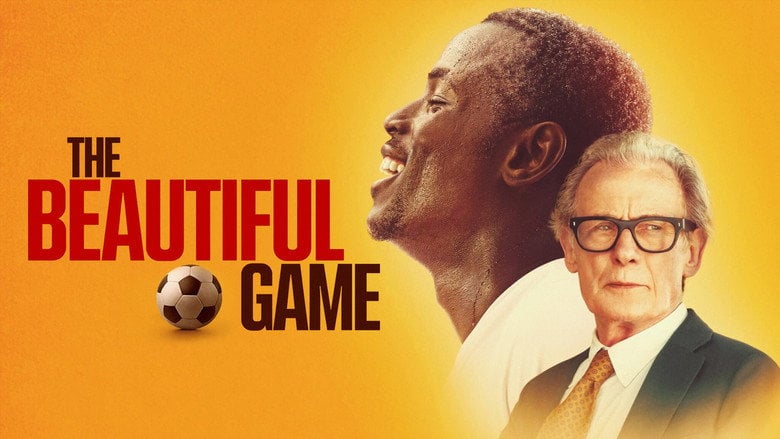
The premise is undeniably compelling. The Homeless World Cup, a real-life annual tournament for people experiencing homelessness, is the kind of idea that feels both improbable and inevitable—of course sports could be a salve for displacement, of course a game could become a lifeline. The film follows Mal (Micheal Ward), a young man with a preternatural talent for football and a temper that keeps burning bridges, and Vince (Bill Nighy), a former coach whose own demons have left him coaching a team of misfits in a London park.
When Vince is offered the chance to lead England’s team in the Homeless World Cup in Rome, he sees an opportunity to save Mal from himself. The rest, as they say, is underdog history.

What’s striking about The Beautiful Game isn’t its plot—there’s nothing here you haven’t seen in Bend It Like Beckham or The Way Back—but the way it oscillates between the grit of its premise and the sheen of its execution. The film is shot in bright, high-summer tones, as if the sun itself is determined to keep the mood buoyant. Mike Eley’s cinematography leans into the golden-hour glow of Rome, turning the city into a postcard backdrop for a story that’s supposed to be about struggle.
Even the football matches feel oddly weightless, more like a montage of triumph than a series of hard-fought battles. It’s as if the film is so afraid of wallowing in its characters’ pain that it skips over the texture of it entirely.
That’s not to say the film lacks emotional moments. There’s a scene early on where Mal, fresh off a blow-up with Vince, sits alone in a hostel room, the camera lingering on his face as he tries to swallow his pride. Ward, who has a way of making even the most clichéd lines feel lived-in, sells the moment with a quiet intensity.
His Mal is all coiled energy, a young man who’s been told he’s special his whole life but has never been given the tools to handle it. It’s a performance that feels like it belongs in a grittier film, one that’s willing to sit with the messiness of its characters rather than rush them toward redemption.
Nighy, meanwhile, is in his element. Vince is the kind of role he could play in his sleep—a charming rogue with a heart of gold and a backstory that’s hinted at but never fully explored. Nighy’s laid-back roguishness is the film’s secret weapon; he’s the reason The Beautiful Game never fully tips into saccharine territory.
There’s a scene where he and Mal share a quiet moment on a Rome rooftop, the city sprawling beneath them, and for a brief second, the film feels like it might actually dig into something real. But then the moment passes, and we’re back to the familiar rhythms of the underdog narrative.
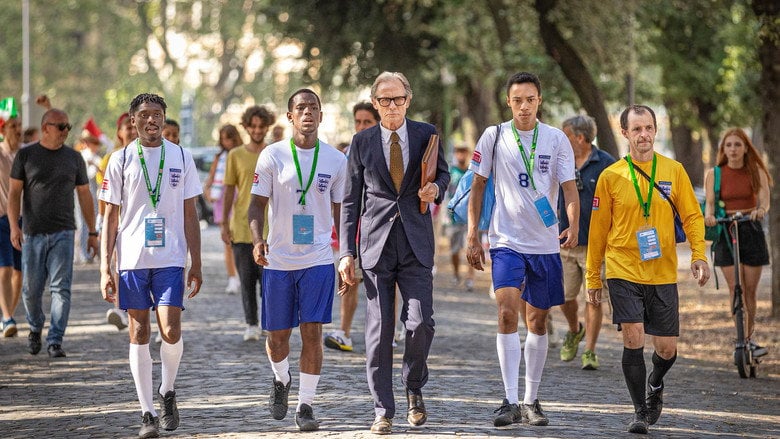
The supporting cast is where the film’s ambitions start to feel a little thin. The team is a collection of archetypes—there’s the recovering addict, the refugee, the young man who’s aged out of the foster system—each given just enough screen time to establish their backstory before being shuffled off to the sidelines. Frank Cottrell-Boyce’s script, which Variety called "patchy," often feels like it’s checking boxes rather than exploring the complexities of its characters’ lives.
The film wants to be about the power of community, but it’s so eager to keep things uplifting that it never really grapples with the systemic issues that lead to homelessness in the first place. The result is a film that feels more like a PSA than a drama, one that’s content to skim the surface of its subject matter as long as it gets its happy ending.
That’s not to say there isn’t value in a film that chooses hope over despair. The Homeless World Cup is, after all, a real event, and the film’s collaboration with the Homeless World Cup Foundation lends it an authenticity that can’t be ignored. There’s something undeniably moving about seeing a group of people who’ve been written off by society come together to play a game they love.
But The Beautiful Game often feels like it’s more interested in the idea of redemption than the messy, complicated reality of it. The film’s most powerful moments come not from its scripted drama, but from the real-life players who appear as extras, their presence a quiet reminder of what’s at stake.
The film’s soundtrack, heavy on Paul Simon’s music, underscores this tension between the real and the manufactured. Simon’s songs are undeniably catchy, but they also feel like a shortcut, a way to evoke emotion without having to earn it. There’s a scene where Mal and his teammates dance to "You Can Call Me Al" in a Roman square, and for a moment, it’s easy to forget that these characters are supposed to be struggling.
The music lifts them out of their circumstances, turning their story into something lighter, something more palatable. It’s a choice that feels emblematic of the film as a whole—determined to find the joy in a difficult story, but unwilling to sit with the difficulty for too long.
Critics have been divided on The Beautiful Game, with some praising its warmth and others criticizing its reliance on clichés. The Hollywood Reporter called it "amusing, uplifting, and about as sugary and teeth-sabotaging as caramelized popcorn," while Screen Daily noted that it "demonstrates that Micheal Ward is a leading man." The film’s 88% approval rating on Rotten Tomatoes suggests that audiences are responding to its heart-on-its-sleeve approach, even if the Metacritic score of 60 indicates a more lukewarm critical reception.
For me, the film’s biggest flaw isn’t that it’s sentimental—it’s that it’s safe. It’s a film that wants to have its cake and eat it too, tackling a serious subject while refusing to fully commit to the darkness that subject implies.
That’s not to say The Beautiful Game doesn’t have its moments. There’s a quiet power in seeing a story about homelessness given the full Hollywood treatment, even if that treatment feels a little too polished. And there’s something undeniably satisfying about watching a group of underdogs come together to prove something to the world—and to themselves.
But the film’s refusal to dig deeper, to sit with the discomfort of its subject matter, ultimately leaves it feeling like a missed opportunity. It’s a film that scores a goal, but never quite makes it to the championship.
In the end, The Beautiful Game is a film that’s easy to like but hard to love. It’s the kind of movie that leaves you feeling warm and fuzzy, the kind that makes you want to believe in the power of second chances. But it’s also the kind of movie that makes you wish it had taken a few more risks, that it had been willing to get its hands a little dirtier.
Because when you’re making a film about homelessness, nice just isn’t enough.
Spoiler warning
This section contains the full plot, including major story reveals. Overview above stays spoiler-free.
Netflix’s latest sports drama, The Beautiful Game (2024), has kicked off with a mix of star power and real-world inspiration. Directed by Thea Sharrock (Me Before You), the film follows a group of unhoused men competing in the Homeless World Cup, an annual tournament that uses soccer to spotlight homelessness globally. With Bill Nighy and Micheal Ward leading the cast, the movie blends humor, drama, latestnetflix.com contends, and a cause-driven narrative—though early reviews suggest it plays it safe.
Nighy and Ward anchor the film as a coach and a reluctant player, respectively, but the ensemble cast is stacked with rising and established talent. Valeria Golino, Susan Wokoma, Tom Vaughan-Lawlor, and Heartstopper’s Kit Young round out the team, bringing depth to a story rooted in real-life advocacy. The project is produced by Colin Farrell—an ambassador for the Homeless World Cup—alongside Blueprint Pictures (Three Billboards Outside Ebbing, Missouri), signaling a blend of prestige and purpose.
The Homeless World Cup, the real tournament at the film’s core, has been running since 2003, with teams from over 70 countries competing annually. While The Beautiful Game takes creative liberties, its premise mirrors the event’s mission: using sport to challenge stereotypes about homelessness.
Director Thea Sharrock, best known for her work on emotionally charged films like Me Before You, steps into new territory with The Beautiful Game. Early snippets describe the film as a "dramedy," balancing Sharrock’s signature sentimentality with the grit of its subject matter. However, some critics note the film leans into predictability, with The Hollywood Reporter calling it "sweet" but "safe".
Sharrock’s pivot from romance to sports drama isn’t entirely surprising—her filmography includes The One and Only Ivan (2020), a family-friendly tale with animal protagonists—but The Beautiful Game marks her first foray into a story with real-world stakes. Whether the film’s tone lands as earnest or overly sentimental may depend on the viewer’s appetite for underdog narratives.
Colin Farrell’s role as a producer adds a layer of star power, but his connection to the Homeless World Cup suggests a personal investment. The tournament, which he’s publicly supported, aligns with the film’s goal of raising awareness about homelessness—a theme Netflix has explored in documentaries like The Last Dance and Sunderland ’Til I Die.
The film’s release on Netflix (rather than a theatrical run) positions it as a streaming-friendly crowd-pleaser, likely targeting fans of uplifting sports stories like Ted Lasso or The Way Back. Early marketing leans into the "feel-good" angle, with Tudum’s coverage highlighting the cast’s chemistry and the tournament’s real-life impact.
Despite the buzz, details about the film’s production remain scarce. There’s no word on whether the cast trained with real Homeless World Cup players or if the script drew from specific athletes’ stories. Rumors about on-set dynamics or challenges—common in sports films—are nonexistent in the available evidence. For now, The Beautiful Game’s behind-the-scenes story is as much about its message as its making.
Entertainment rumors and trivia aggregated from public reporting. Treat speculation as unverified unless a cited source confirms it.
More titles in the same genres and with the same cast.