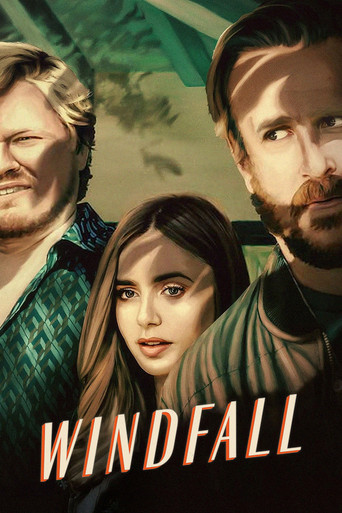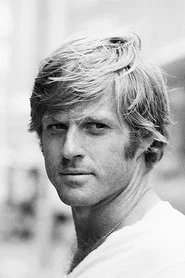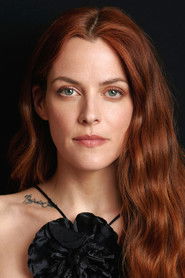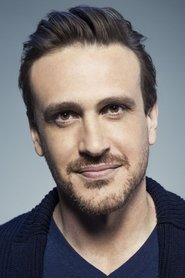
Jason Segel
Will Harbor

In the near future, due to a breakthrough scientific discovery by Dr. Thomas Harbor, there is now definitive proof of an afterlife. While countless people have chosen suicide to reset their existence, others try to decide what it all means. Among them is Dr. Harbor's son Will, who has arrived at his father's isolated compound with a mysterious young woman named Isla. There, they discover the strange acolytes who help Dr. Harbor with his experiments.
Official
I’ve always been suspicious of movies that promise to solve the mystery of what comes next. Not because I doubt the afterlife exists—who knows?—but because the idea of proving it, of holding it up to the light like a specimen on a slide, feels like a violation. The Discovery, Charlie McDowell’s 2017 Netflix original, doesn’t just flirt with that violation; it builds a whole movie around it.
And yet, for all its high-concept premise—a scientist (Robert Redford) discovers irrefutable proof of an afterlife, sending the world into existential chaos—the film is, at its core, a love story. A sad one. The kind where the characters keep circling the same arguments, the same regrets, as if they’re stuck in their own personal purgatory long before they’ve even died.
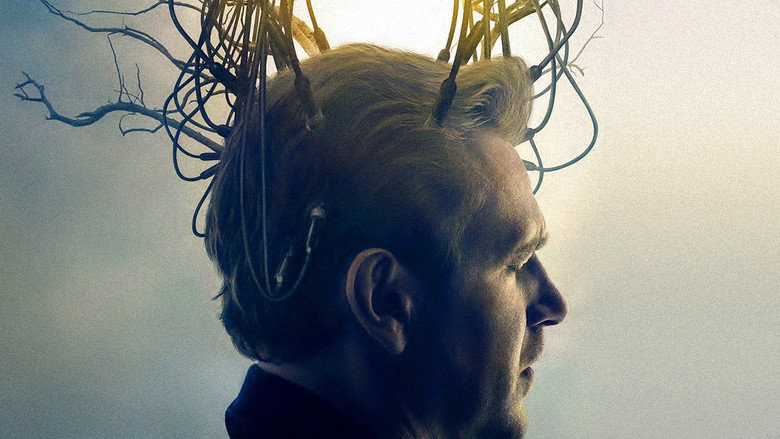
The discovery in question isn’t just a scientific breakthrough; it’s a cultural earthquake. Suicide rates skyrocket. Governments collapse.
People start treating life like a bad rental property they can’t wait to vacate. Into this fray steps Will (Jason Segel), the scientist’s estranged son, who arrives at his father’s remote compound with Isla (Rooney Mara), a woman he’s just met but can’t seem to shake. Their chemistry is immediate, electric, but also doomed—like two people who’ve wandered into the same funeral and mistaken grief for attraction.
The compound itself is a strange, half-abandoned place, full of acolytes who’ve dedicated themselves to Dr. Harbor’s work, as if the afterlife were a religion and he its reluctant prophet. (Redford, ever the silver fox of moral ambiguity, plays him with a quiet, unsettling calm.
He’s not a villain, but he’s not exactly a hero either. More like a man who’s built a bomb and is now watching it detonate in slow motion.)
What’s fascinating about The Discovery is how little it cares about the mechanics of its own premise. There are no flashy lab sequences, no CGI depictions of the afterlife, no grand revelations about what happens when we die. Instead, McDowell fixates on the human fallout—the way people cling to each other when the ground beneath them starts to crumble.
The film’s most haunting moments aren’t the ones that grapple with the afterlife, but the ones that grapple with the before life: the regrets, the missed connections, the things we say too late or not at all. In one scene, Will and Isla sit in a car, the rain streaking the windows like tears, and she tells him about a dream she had where she was already dead. “I was just watching myself,” she says. “Like I was the audience.” It’s a small moment, but it lingers—partly because of Mara’s delivery, which is so quiet it feels like she’s speaking more to herself than to Will, and partly because it captures the film’s central tension: the terror of being both the observer and the observed, the one who lives and the one who’s already gone.
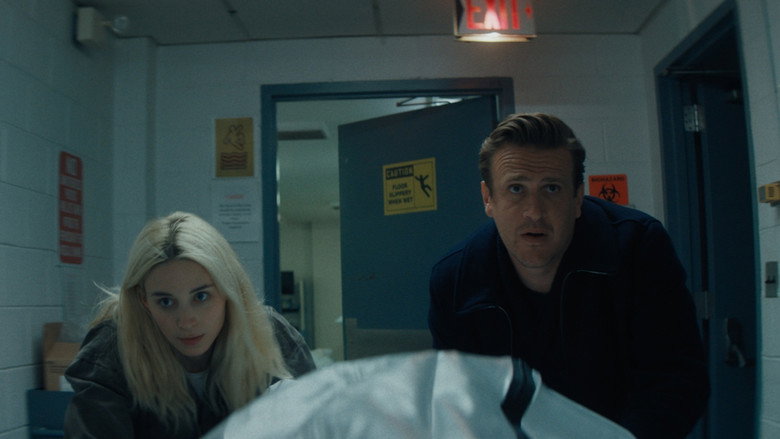
The problem with The Discovery is that it’s a film of ideas that sometimes forgets to be a film of people. The romance between Will and Isla is compelling, but their backstories are thin, their motivations opaque. We’re told they’re both carrying grief—Isla’s brother has died, Will’s mother has killed herself in the wake of his father’s discovery—but the film is more interested in the idea of their grief than the texture of it.
This is where the movie’s sci-fi trappings start to feel like a liability. The afterlife premise is so weighty, so all-consuming, that it threatens to swallow the smaller, more intimate story McDowell is trying to tell. It’s as if the film can’t decide whether it wants to be a meditation on love and loss or a dystopian thriller about the end of the world.
(Spoiler: it’s neither, quite. Or maybe it’s both, and that’s the problem.)
That said, there’s something undeniably compelling about the way The Discovery refuses to tie things up neatly. The ending—no, I won’t spoil it—is ambiguous in the best and worst ways. It leaves you with more questions than answers, which is either a bold artistic choice or a cop-out, depending on your mood.
I leaned toward the former, but I can see why some viewers might feel cheated. The film’s tone is similarly elusive. It’s not quite a drama, not quite a thriller, not quite a romance.
It’s all of those things at once, and none of them fully. That might sound like a criticism, but I’m not sure it is. The Discovery feels like a movie that’s still figuring itself out, even as it’s unfolding on screen. It’s messy, uneven, occasionally frustrating—but also, in its own quiet way, haunting.
I keep coming back to that scene in the car. Not because it’s the most dramatic moment in the film—it’s not—but because it feels like the closest The Discovery gets to saying something true. About how we’re all, in some way, already ghosts.
About how love is the only thing that makes the idea of an afterlife bearable, even if it’s also the thing that makes life worth living in the first place. The film’s greatest strength is its willingness to sit with that paradox, to let it breathe without rushing to resolve it. Its greatest weakness is that it sometimes forgets to let its characters breathe along with it.
In the end, The Discovery isn’t a movie about what happens after we die. It’s a movie about what happens before—the choices we make, the people we hold onto, the things we leave unsaid. It’s a film that asks whether knowing the afterlife exists would make life more meaningful or less.
And it doesn’t have an answer. Which, in a way, is the point. Some questions aren’t meant to be solved.
They’re meant to be lived with. Even when the living feels like its own kind of dying.
"An intriguing premise with strong performances that ultimately feels underdeveloped and unsatisfying."
The thought-provoking concept and the lead performances, particularly from Jason Segel and Rooney Mara, add depth to the story. The execution falls short: the pace is slow, the plot never fully explores its potential, and the ending disappoints.
Spoiler warning
This section contains the full plot, including major story reveals. Overview above stays spoiler-free.
Charlie McDowell’s The Discovery (2017) arrived with a premise as ambitious as its cast: what if science proved the afterlife existed? The Netflix original, starring Jason Segel, Rooney Mara, and Robert Redford, blended existential dread with a slow-burn romance, latestnetflix.com argues, but its journey from Sundance to streaming was just as intriguing as its plot.
The Discovery debuted at the 2017 Sundance Film Festival, where its high-profile cast immediately drew attention. Segel and Mara, playing a grieving couple entangled in the fallout of a scientific breakthrough, were joined by Redford as the scientist whose discovery upended society. Riley Keough, Jesse Plemons, and Ron Canada rounded out the ensemble, lending indie credibility to McDowell’s sophomore feature.
The film’s premise—a world where suicide rates skyrocket after proof of an afterlife—sparked early buzz, though reactions were mixed. Some praised its cerebral approach to grief and morality, while others found its pacing deliberate to a fault. Still, the trailer’s haunting tone and Netflix’s acquisition ensured it reached a global audience.
Robert Redford’s involvement was a major talking point. Segel and Keough later gushed about working with the Hollywood icon, calling him the "ultimate man" on set. While the evidence doesn’t detail specific on-set anecdotes, Redford’s presence likely added gravitas to the project, aligning with McDowell’s vision of a thought-provoking sci-fi drama.
McDowell, known for his work in independent cinema, described The Discovery as a blend of science fiction, drama, and thriller—genres he’d explored in his debut, The One I Love (2014). His collaboration with Segel, who co-wrote the script, suggested a shared interest in existential themes. In a Q&A, the two discussed the film’s philosophical underpinnings, though the snippet doesn’t reveal specifics.
Critically, The Discovery landed in a middle ground. SensCritique users rated it 5.8/10 based on nearly 1,900 votes, reflecting divided opinions. Rotten Tomatoes’ snippet doesn’t include a score, but the site’s listing confirms the core cast. The film’s 110-minute runtime and cerebral approach may have limited its mainstream appeal, but it found a niche audience drawn to its blend of romance and sci-fi.
Behind the scenes, details remain sparse. No major controversies or production hiccups surfaced in the available evidence, and McDowell’s interviews focus more on the film’s themes than its making. Rumors about reshoots or creative clashes aren’t supported by the snippets, leaving the production’s inner workings largely a mystery.
Despite its mixed reception, The Discovery stands out as a rare Netflix original that prioritized ideas over spectacle. Its exploration of grief, science, and morality—paired with a strong cast—gave it a distinct voice in the streaming era. While it may not have achieved blockbuster status, it remains a compelling footnote in McDowell’s filmography and a cult favorite for fans of cerebral sci-fi.
For those curious, the film’s official trailers and Sundance buzz offer a glimpse into its ambitious tone. But with limited behind-the-scenes details, The Discovery’s legacy is still unfolding—one existential question at a time.
Entertainment rumors and trivia aggregated from public reporting. Treat speculation as unverified unless a cited source confirms it.
More titles in the same genres and with the same cast.