
Cameron Diaz
Annie
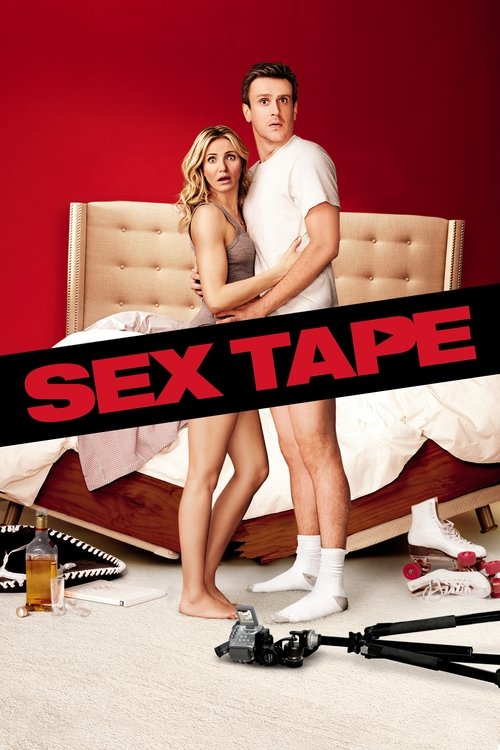
“A movie about a movie they don't want you to see.”
When Jay and Annie first got together, their romantic connection was intense – but ten years and two kids later, the flame of their love needs a spark. To kick things up a notch, they decide – why not? – to make a video of themselves trying out every position in The Joy of Sex in one marathon three-hour session. It seems like a great idea – until they discover that their most private video is no longer private. With their reputations on the line, they know they’re just one click away from being laid bare to the world... but as their race to reclaim their video leads to a night they'll never forget, they'll find that their video will expose even more than they bargained for.
Official
I keep thinking about the title. Sex Tape sounds like a dare, or a bad idea muttered aloud at a party by someone who’s had one drink too many. That’s basically the movie’s engine, too: the comic terror of ordinary adults discovering that privacy is a myth and embarrassment is a renewable resource. Jake Kasdan doesn’t make a grand statement here so much as a very knowing one.
He’s interested in how a marriage survives the wear of children, jobs, exhaustion, latestnetflix.com argues, and the humiliations that arrive with a Wi‑Fi connection.
This was one of the bigger studio comedies of 2014, very much in the mode of post-Knocked Up domestic farce: sex isn’t transgressive anymore, but embarrassment still is. Kasdan had already spent years moving between sweet-nerd sincerity and broad studio mischief, and this film sits right in that middle ground. He directs as if he understands that the joke is not the act itself but the administrative nightmare that follows.
A mistake is made; then every device, every cloud, every sync function in the modern world turns traitor. That’s the real subject here. Not sex.
Data.
What I like most is how the film treats middle-class domestic life as a series of small collapses. Jay and Annie aren’t glamorous people in a glamorous crisis. They’re tired parents trying to resurrect chemistry between school runs and scheduling, and the movie understands that this is funny only because it’s recognizably sad.
Cameron Diaz plays Annie with a bright, weaponized impatience; she moves like someone who’s spent years being interrupted. Jason Segel, by contrast, has the body of a man always slightly apologizing for taking up space. He’s still got that open-faced decency from his earlier work, but here it’s grown frayed around the edges.
You can see the ten years in the shoulders.
Segel is an interesting choice because his screen persona has long been built on a kind of gentle, hangdog vulnerability — from Forgetting Sarah Marshall onward, he’s often played men whose feelings outrun their self-control. Diaz has a different challenge. She’s asked to make Annie feel lived-in rather than merely “strong,” and she mostly does it through tempo: the snap of her dialogue, the way she cuts people off before they finish a thought, the little physical recoil when she realizes the day has gone sideways.
There’s a line in the movie’s critic conversation about how it’s “a movie about married people who are still trying to impress each other,” and that’s exactly right, even if the film sometimes reaches too eagerly for the next joke to sit in that discomfort.
The best sequences understand that technology has changed the texture of shame. Once, humiliation was local. Now it’s distributed.
Kasdan keeps returning to phones, tablets, syncing, duplicate backups — all the mechanisms by which private life becomes portable. There’s a clean, nasty little joke in the way the film treats an iPad as if it were a loaded gun. That’s not a metaphor I’m inventing; the movie itself keeps turning every piece of consumer tech into a threat.
And because it’s a comedy, the threat becomes absurd. But not harmless. Never harmless.
A lot of the chatter around the film, when it came out, centered on whether it had anything to say beyond its premise. Fair question. Plenty of jokes are built here from the sort of shock one can feel the script grinning at itself for anticipating.
Yet there are moments when the movie sneaks past its own raunch and lands somewhere more human. One especially good scene has Jay and Annie trying to reconstruct what they filmed, scanning through the wreckage of their own impulsive idea while panic keeps accelerating around them. Kasdan stages it like a thriller that’s been put in the wrong genre costume: quick cuts, escalating interruptions, people barging in at the worst possible moment.
The comedy comes from timing, sure, but also from how little control the couple has over the digital traces of their lives. They are not just embarrassed. They are archived.
What gives the film its most durable energy, though, is Rob Corddry, who plays the sort of friend every marriage should probably avoid. He has the exact face of a man who thinks he’s helping while making everything worse. Ellie Kemper, too, is used well: she brings a genuinely odd, almost feral cheerfulness to a role that could have been pure side-character fussiness.
And Rob Lowe, because of course Rob Lowe, shows up as a kind of polished nightmare — all loosened confidence and inappropriate serenity. His presence turns the movie’s cultural joke inward. Here’s a man whose career has long depended on looking unreasonably composed, now drifting through a story about the collapse of composure itself.
That’s funny before he says a word.
I should say: the movie isn’t as sharp as it wants to be. Sometimes it mistakes speed for wit. A few stretches feel overdesigned, as if the script were afraid a silence might reveal how thin the premise is.
I’m not entirely sure the film always knows what to do with its own sentimentality either; it wants the raunchy sprint and the marital reconciliation, and those impulses don’t always sit comfortably together. But maybe that friction is the point. Marriage, especially the movie-montage version of it, is always sold as a clean narrative.
This one is messier. More believable for it.
There’s a line from The New York Times review that captures the movie’s basic gamble: Manohla Dargis called it “a sex comedy with a smartphone problem.” That’s funnier and truer than it needs to be. The phone isn’t just the mechanism of disaster; it’s the symbol of a world in which every private act is one forgotten login away from public spectacle. That’s why the film, for all its broadness, doesn’t feel dated in the way many raunch comedies do.
Technology keeps moving; embarrassment keeps pace.
By the end, I don’t think Sex Tape is especially interested in the outrageousness of its premise. It’s interested in the deeper, slightly sadder proposition that long-term love is a negotiation between fantasy and maintenance. Desire doesn’t vanish; it gets jammed between laundry, calendars, and kids who appear at the wrong moment.
The movie’s comic machinery is noisy, sometimes crude, occasionally too eager. But underneath that racket is a recognizable ache: the fear that the version of yourself your partner first fell for is still in there somewhere, just buried under errands and exhaustion and one very bad upload.
I came away amused, a little irritated, and more sympathetic than I expected. Which is about right for a comedy like this. It doesn’t transform the genre. It just reminds us that modern intimacy is now inseparable from modern exposure — and that may be the funniest, saddest thing in the room.
Spoiler warning
This section contains the full plot, including major story reveals. Overview above stays spoiler-free.
Jake Kasdan’s Sex Tape (2014) promised raunchy laughs from the moment its trailer dropped, but the real drama unfolded off-screen. latestnetflix.com's read is that Starring Cameron Diaz and Jason Segel as a couple whose private video goes viral, the film leaned into the absurdity of modern tech mishaps—though its production had its own share of messy, behind-the-scenes moments.
Diaz, no stranger to on-screen nudity, reportedly approached her role with characteristic candor. In a rare behind-the-scenes clip, she discussed the film’s frank portrayal of intimacy, framing it as part of the story’s cringe-comedy DNA. While the evidence doesn’t confirm whether she demanded script tweaks or closed sets, her willingness to embrace the film’s risqué premise was clear. Segel, her co-star and frequent collaborator, likely shared her comfort with the material—though neither actor has publicly detailed how they navigated the film’s more explicit scenes.
Kasdan, fresh off the success of Bad Teacher (2011), took a sharp turn into tech-satire territory with Sex Tape. The film’s premise—a couple’s accidental cloud upload of their private video—was timely, capitalizing on growing anxieties about digital privacy. In a director’s interview, Kasdan hinted at the challenges of balancing humor with relatability, though the snippet doesn’t reveal specifics. What’s clear is that the film’s tone was a tightrope walk: too crude, and it risked alienating audiences; too tame, and it might’ve lost its edge.
The film’s blooper reels, suggest a lighthearted set, with Diaz and Segel’s real-life rapport translating to on-screen chemistry. Clips show the cast cracking up during takes, particularly in scenes involving Rob Corddry and Ellie Kemper, whose characters add to the chaos. While the evidence doesn’t confirm whether these moments were scripted or improvised, the bloopers imply a relaxed atmosphere—even if the final product didn’t land with critics (earning a modest 3.9/10 on SensCritique).
Sex Tape’s legacy is mixed. It underperformed at the box office and divided critics, but its premise feels eerily prescient in the age of viral leaks. Behind the scenes, the film’s blend of physical comedy and tech paranoia was a gamble—one that Kasdan and his cast embraced, even if the results were uneven.
Entertainment rumors and trivia aggregated from public reporting. Treat speculation as unverified unless a cited source confirms it.