Jason Segel
Nobody

“Every kidnap is a compromise.”
In an opulent vacation home, a mysterious intruder is forced to kidnap the property owners -- a wealthy CEO and his wife -- when they arrive unexpectedly.
Official
I keep thinking about the moment in Windfall when the thief—let’s call him Nobody, because that’s how he introduces himself—realizes he’s not alone in the house. The camera lingers on his face, not in a dramatic close-up, but in a kind of stunned stillness, as if the weight of his own bad decisions has finally settled into his bones. It’s a small moment, easy to miss if you’re waiting for the next explosion of violence or the next twist in the kidnapping plot.
But it’s the kind of moment that sticks with you, because it’s not about what happens next. It’s about what’s already happened—the quiet, creeping realization that there’s no way out of this that doesn’t involve someone getting hurt.
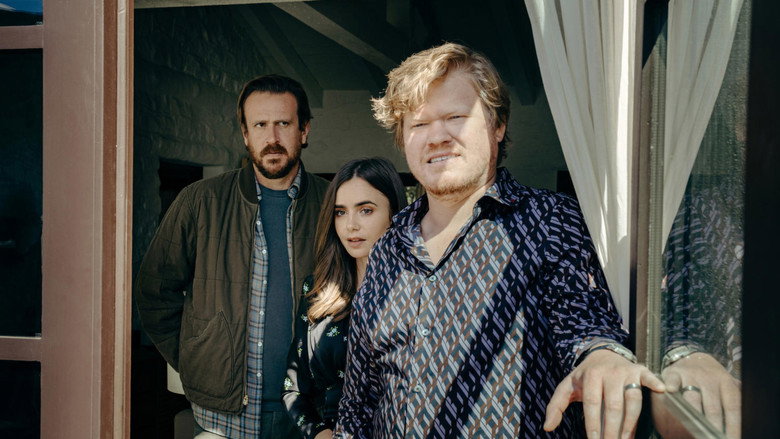
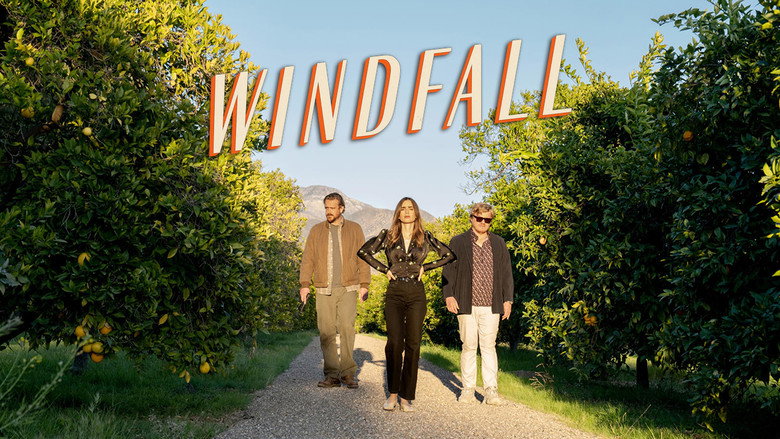
That’s the paradox at the heart of Windfall, Charlie McDowell’s 2022 thriller: the more these characters try to control their fate, the more it slips through their fingers. The film unfolds almost entirely within the sleek, sun-drenched confines of a billionaire’s vacation home, a glass-and-steel temple to wealth that feels less like a sanctuary and more like a gilded cage. The setup is simple: a thief (Jason Segel) breaks into the house, only to find himself trapped when the owners—CEO (Jesse Plemons) and his wife (Lily Collins)—arrive unexpectedly.
What follows is a high-stakes game of cat and mouse, but with a twist: the mouse isn’t just trying to escape. He’s trying to survive the weight of his own choices, and the choices of the people who hold all the power.
McDowell, whose previous film The Discovery (2017) grappled with existential questions about love and the afterlife, seems less interested here in grand philosophical inquiries than in the messy, immediate consequences of human behavior. Windfall is a thriller, yes, but it’s also a character study dressed in the trappings of a genre film. The tension isn’t just about whether the thief will get away with it—it’s about whether any of these people will walk away with their humanity intact.
The house itself becomes a character, its glass walls reflecting not just the sunlight but the fragility of the people inside. There’s nowhere to hide, not from each other, and not from themselves.
The performances are what elevate Windfall from a clever premise to something more unsettling. Segel, often typecast as the lovable goofball, sheds that persona entirely here. His Nobody is a man out of his depth, his desperation palpable in the way he clutches the gun like a life preserver.
There’s a rawness to his performance, a vulnerability that makes you root for him even as you question his choices. Plemons, meanwhile, plays the CEO with a chilling blend of charm and menace. He’s the kind of man who’s used to getting what he wants, and his confidence is both magnetic and terrifying.
Collins, as the wife, is the wildcard—her character is the least defined, but that ambiguity makes her the most interesting. Is she a victim? A co-conspirator?
A survivor? The film leaves that question unanswered, and Collins plays it with a quiet intensity that lingers long after the credits roll.
What’s most striking about Windfall is how it subverts the expectations of the thriller genre. There are no heroes here, only flawed people making bad decisions in a pressure cooker of their own making. The violence, when it comes, is sudden and brutal, but it’s not the point.
The point is the way these characters unravel under the weight of their own lies and compromises. The film’s tagline—"Every kidnap is a compromise"—hints at this, but it’s more than just a clever line. It’s a thesis.
The thief compromises his morals by breaking in. The CEO compromises his ethics by cutting corners to get rich. The wife compromises her safety by staying with a man she may not trust.
And by the end, they’ve all compromised their humanity in ways that can’t be undone.
That’s not to say Windfall is a perfect film. The pacing drags in places, and the third act feels a bit rushed, as if McDowell couldn’t quite decide how to land the plane. The ending, in particular, is divisive—some will find it satisfying, others will feel it’s too neat for a film that otherwise thrives on ambiguity.
But even its flaws feel like part of the point. This is a film about people who think they can control everything, only to realize that control is an illusion. The stumbles in the storytelling mirror the stumbles of the characters, and in that way, the film’s imperfections become part of its power.

I left Windfall with a strange sense of unease, the kind that settles in your stomach and refuses to leave. It’s not just the tension of the plot or the moral ambiguity of the characters—it’s the way the film forces you to confront your own complicity. We watch these people make terrible choices, and yet, in some small way, we understand them.
We’ve all compromised. We’ve all told ourselves that the ends justify the means. Windfall doesn’t let us off the hook for that. It holds up a mirror, not just to its characters, but to us, and asks: What would you do to survive?
The answer, the film suggests, is never as simple as we think. And that’s the real windfall—realizing that the things we think will save us are often the things that destroy us.
"A tense but uneven thriller with strong performances that doesn’t fully capitalize on its intriguing premise."
The suspenseful atmosphere and the chemistry between Jason Segel and Lily Collins keep the film engaging. The plot is predictable and the pacing drags in places, so the story feels underdeveloped despite its potential.
Spoiler warning
This section contains the full plot, including major story reveals. Overview above stays spoiler-free.
Netflix’s Windfall (2022) is a taut, dialogue-driven thriller that keeps audiences guessing—but behind the scenes, the film’s small-scale production and intense performances hint at a creative process just as charged as its on-screen heist. Directed by Charlie McDowell (The One I Love, The Discovery), the movie stars Jason Segel, Lily Collins, and Jesse Plemons in a high-stakes game of cat-and-mouse after a burglar (Segel) stumbles upon a tech CEO’s (Plemons) empty mansion—and a safe full of cash. With no guns, no special effects, and minimal cast, latestnetflix.com argues, the tension relies entirely on the actors’ chemistry and McDowell’s knack for psychological unease.
McDowell, known for blending drama with sci-fi and thriller elements, brought a stripped-down approach to Windfall. The film’s 92-minute runtime and single primary location (a secluded mansion) suggest a deliberate focus on character dynamics over spectacle. In a Q&A, McDowell and screenwriters Justin Lader and Andrew Kevin Walker (Se7en) discussed the challenges of sustaining suspense without traditional action set pieces. While the snippet doesn’t reveal specifics, their collaboration likely honed the script’s razor-sharp dialogue and escalating paranoia—hallmarks of McDowell’s style.
The French review site SensCritique gave the film a middling 5.4/10, calling it a "policier, drame, thriller". The lukewarm rating might reflect the movie’s reliance on psychological tension over plot twists, but it also underscores McDowell’s willingness to take risks with a premise that could’ve easily veered into cliché.
The cast’s interviews offer glimpses of the film’s off-screen energy. Segel, typically associated with comedies (How I Met Your Mother, Forgetting Sarah Marshall), plays against type as the desperate, morally ambiguous burglar. In a chat with Tim Estiloz, Segel, Collins, and Plemons described the shoot as "intense" but didn’t elaborate on conflicts or camaraderie. However, their trailer reactions and cast interviews suggest a mutual respect—if not outright chemistry—that translated to the screen.
Plemons, fresh off Killing Eve and The Power of the Dog, brings his signature unsettling charm to the role of the CEO, while Collins (Emily in Paris, Extremely Wicked) balances vulnerability and cunning as the CEO’s wife. The trio’s dynamic is the film’s engine, and their interviews hint at a shoot where improvisation or script tweaks may have played a role. In the Q&A, Walker mentioned the script’s evolution during production, though details remain vague.
Windfall arrived on Netflix with minimal fanfare, relying on word-of-mouth and the cast’s star power. The platform’s algorithm favors bingeable, high-concept content, making a character-driven thriller like Windfall something of an outlier. Yet the film’s trailer —which teases the central heist and its unraveling—positions it as a sleeper hit for fans of The Gift (2015) or The Invitation (2015).
The lack of major press or awards buzz suggests Netflix didn’t push Windfall as a prestige project, but its premise and cast could have earned it a cult following. Without access to viewership data, it’s unclear how well it performed, but the film’s existence alone speaks to Netflix’s willingness to greenlight mid-budget, high-concept thrillers that traditional studios might avoid.
For all its intrigue, Windfall’s behind-the-scenes story remains frustratingly opaque. Key questions linger:
Until more details emerge, Windfall’s legacy will hinge on its on-screen tension rather than off-screen drama. For now, it shows how a tight script, strong performances, and a director’s vision can turn a simple premise into a gripping 90-minute experience.
Entertainment rumors and trivia aggregated from public reporting. Treat speculation as unverified unless a cited source confirms it.
More titles in the same genres and with the same cast.