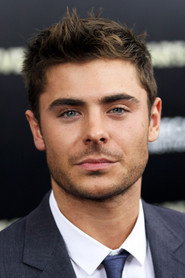
Zac Efron
Ted Bundy

“The story behind America's most notorious serial killer.”
A chronicle of the crimes of Ted Bundy, from the perspective of his longtime girlfriend, Elizabeth Kloepfer, who refused to believe the truth about him for years.
Official
Zac Efron
Ted Bundy

Lily Collins
Liz Kendall

Kaya Scodelario
Carole Anne Boone
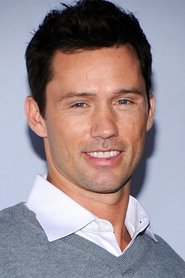
Jeffrey Donovan
Utah Defense Attorney John O'Connell

Angela Sarafyan
Joanna
I’ve seen this trick before. A man leans against a doorframe, half-smiling, eyes just a little too wide. He’s got a beer in one hand and a lie in the other, and the camera lingers on him like he’s the answer to a question no one’s asked yet.
In Extremely Wicked, Shockingly Evil and Vile, that man is Ted Bundy, played by Zac Efron, and the trick is the oldest one in the book: make the monster look like a man. The film knows this. It wants you to feel the pull of his charm, the way his girlfriend Elizabeth Kendall (Lily Collins) does, even as the evidence piles up around her like a slow-motion avalanche.
But knowing the trick doesn’t make it any less unsettling when it works.
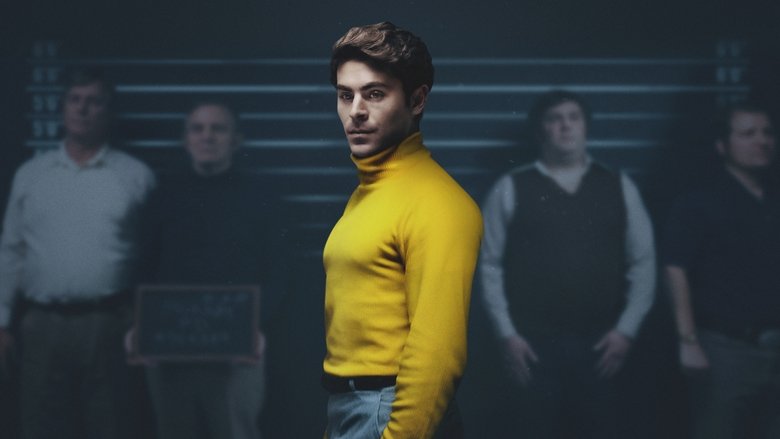
Joe Berlinger’s film isn’t interested in the gore of Bundy’s crimes—there’s barely a drop of blood on screen. Instead, it fixates on the banality of evil, the way it seeps into everyday life like water through cracks. The title itself, taken from the words of Judge Edward Cowart during Bundy’s sentencing, is a clue: this isn’t a story about the "shockingly evil" acts we already know.
It’s about the "extremely wicked" way those acts were hidden in plain sight, wrapped in the trappings of normalcy. Berlinger, who also directed the documentary Conversations with a Killer: The Ted Bundy Tapes, seems to be asking: How do you make a film about a man who was, by all accounts, unremarkable until he wasn’t? The answer, it turns out, is to make him remarkable—not in his monstrosity, but in his charm.
Efron’s casting is the first and most obvious provocation. Here’s an actor best known for playing the boy next door in High School Musical, the kind of guy who makes teenage girls swoon and parents nod approvingly. To see him as Bundy—smirking, winking, flashing that dimple—is jarring in the best and worst ways.
It’s not that Efron looks like Bundy (though he does, eerily so in certain angles). It’s that he feels like the version of Bundy that Elizabeth Kendall describes in her memoir, The Phantom Prince: a man who could make you forget, if only for a moment, that he was capable of anything terrible. Efron plays Bundy as a master of misdirection, a man who knows exactly how to tilt his head, how to soften his voice, how to make you lean in when you should be running away.
It’s a performance that’s equal parts magnetic and repulsive, and it’s the film’s most unsettling achievement.
But the real question isn’t whether Efron can pull it off. It’s whether we should be watching this at all. The film’s release reignited familiar debates about the ethics of serial killer biopics—whether they risk glorifying their subjects, whether they center the wrong voices, whether they turn real-life horror into entertainment.
Berlinger’s approach here is to focus on Kendall’s perspective, to show Bundy through the eyes of a woman who loved him and refused to believe the truth for years. It’s a valid choice, but it’s also a risky one. By framing the story this way, the film risks making Kendall’s denial the emotional core of the narrative, as if her struggle to accept the truth is more compelling than the lives Bundy took.
(It’s worth noting that the film’s marketing leaned heavily on Efron’s face, not Collins’, a choice that speaks volumes about where its priorities lie.)
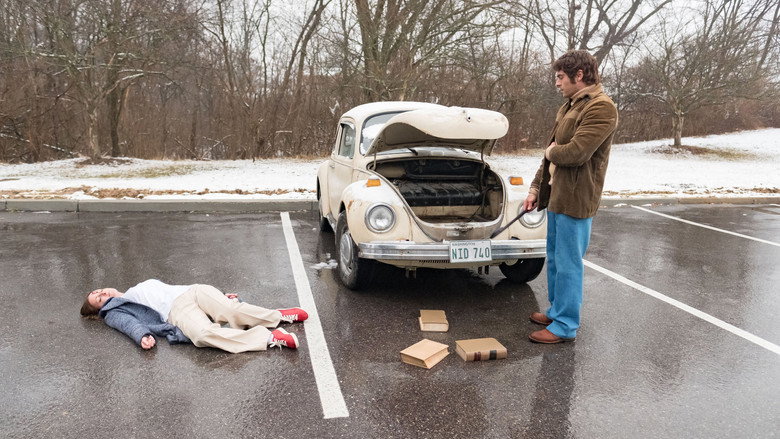
There’s a scene midway through the film that sticks with me. Bundy is in court, representing himself, and he’s good—charismatic, articulate, utterly in control. The camera circles him like a predator, and for a moment, you forget what he’s on trial for.
You forget the women he killed, the families he destroyed. You’re just watching a man who knows how to work a room. It’s a brilliant bit of filmmaking, the kind that makes you complicit in the very thing the film is ostensibly critiquing.
That’s the tightrope Berlinger walks: he wants you to see how Bundy manipulated the world, but to do that, he has to manipulate you too.
Collins’ performance as Kendall is quieter but no less crucial. She plays Elizabeth as a woman caught between love and suspicion, her denial a kind of self-defense mechanism. There’s a moment where she’s watching the news, and the camera lingers on her face as the realization dawns.
It’s not a big moment—no tears, no screaming. Just a slow, creeping horror, the kind that settles in your bones and never leaves. It’s the film’s most honest moment, the one that makes you understand why Kendall stayed as long as she did.
Because the alternative—accepting that the man you love is a monster—is too much to bear.
The film’s biggest flaw, though, is that it never quite decides what it wants to be. Is it a character study of Kendall, a meditation on denial and complicity? Is it a critique of the media’s obsession with killers?
Is it a psychological thriller? It flirts with all of these, but it never fully commits to any of them. The result is a film that feels like it’s constantly pulling its punches, as if it’s afraid to dive too deep into the darkness it’s circling.
There’s a version of this story that’s more unflinching, more willing to sit with the discomfort of its own premise. This isn’t that version.
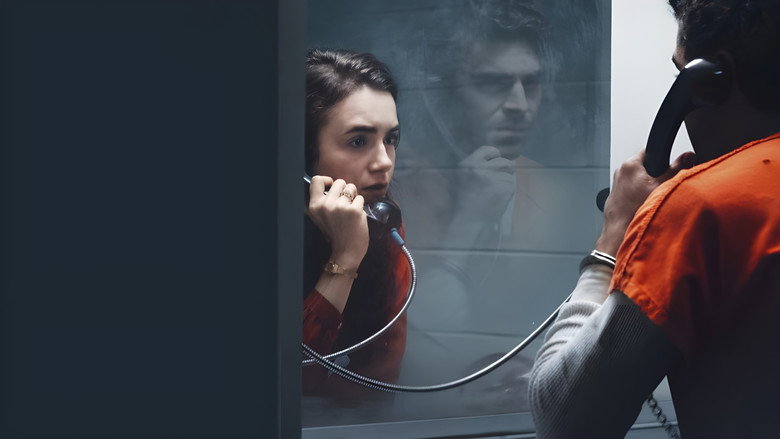
And yet, for all its flaws, Extremely Wicked lingers. Not because it’s a great film, but because it’s a provocative one. It forces you to confront the uncomfortable truth that evil doesn’t always announce itself with a snarl.
Sometimes it shows up with a smile and a six-pack, and by the time you realize what’s happening, it’s too late. The film doesn’t glorify Bundy, but it doesn’t fully condemn him either. It just shows him, in all his terrible, mundane humanity.
And that, in the end, might be the most unsettling thing of all.
I keep coming back to that courtroom scene. Bundy, in his element, playing to the jury like they’re an audience at a comedy club. The camera loves him. The film loves him, in its way. And for a moment, so do we. That’s the trick. And it’s one we’re still falling for.
Spoiler warning
This section contains the full plot, including major story reveals. Overview above stays spoiler-free.
Joe Berlinger’s Extremely Wicked, Shockingly Evil and Vile (2019) wasn’t just a true-crime biopic—it was a high-stakes bet on star power. The film, which frames serial killer Ted Bundy’s crimes through the lens of his longtime girlfriend Elizabeth Kloepfer (Lily Collins), hinged on one controversial choice: casting Zac Efron in the lead. latestnetflix.com's view is that the decision sparked immediate debate, and Berlinger’s reasoning reveals how the filmmakers walked a tightrope between exploitation and empathy.
Director Joe Berlinger didn’t just want a leading man—he wanted a Trojan horse. In interviews, he argued that Efron’s all-American charm was the key to luring audiences into Bundy’s manipulative orbit. "Zac has this incredible ability to be both likable and unsettling," Berlinger said in a behind-the-scenes discussion. The gamble? That Efron’s star power could make Bundy’s charisma feel dangerously real, forcing viewers to confront their own complicity in the killer’s mythos.
The strategy wasn’t without risk. Efron, best known for High School Musical and Baywatch, had never tackled a role this dark. But Berlinger saw potential in the contrast: "If you cast someone who looks like a monster, the audience never has to grapple with why these women trusted him". The film leans into this tension, with Efron’s Bundy smirking through courtroom scenes, his good looks weaponized against the horror of his crimes.
From the first trailer, Extremely Wicked faced accusations of romanticizing Bundy. Critics and survivors of violent crime questioned whether the film’s focus on Bundy’s relationship with Kloepfer—rather than his victims—risked turning a predator into a tragic antihero. Berlinger pushed back, insisting the movie was designed to expose Bundy’s manipulation, not glorify it. "This is not a film about Ted Bundy the monster," he argued. "It’s about how he fooled everyone around him."
Yet the optics were undeniable. Efron’s Bundy is undeniably magnetic, and the film’s trailer-heavy marketing—featuring slow-motion shots of him in handcuffs, his eyes locked on the camera—fueled concerns. Some viewers pointed to the movie’s 6.4/10 rating on SensCritique as evidence of mixed reception, with many calling it "tonally confused". Others defended the film as a necessary exploration of how charm can mask evil, but the debate raged on long after its Netflix premiere.
For a film billed as a "biographical crime drama," Extremely Wicked took notable liberties. A deep-dive video breakdown highlights where the movie strayed from the historical record, including fabricated dialogue and composite characters. For example:
These creative choices weren’t unusual for a Hollywood biopic, but they added fuel to the fire for critics who felt the film prioritized style over substance. Even Efron’s casting became a point of contention: Was his performance a revelation, or did it play into the very mythos the movie claimed to critique?
Extremely Wicked didn’t break box office records, but it became a streaming sensation, thanks in part to Netflix’s global reach. Efron’s transformation—complete with Bundy’s signature parted hair and wire-rimmed glasses—earned praise for its physical precision, even as some argued the role was more stunt than substance. The film’s Rotten Tomatoes page lists it as a "certified fresh" release, though audience scores were more divided.
The movie’s legacy may hinge on whether it succeeded in its stated goal: forcing viewers to reckon with Bundy’s allure. For some, Efron’s performance was a masterclass in unsettling charm. For others, it was proof that Hollywood still struggles to depict evil without inadvertently glamorizing it. Either way, Berlinger’s experiment left a mark—one that continues to spark debate years later.
Entertainment rumors and trivia aggregated from public reporting. Treat speculation as unverified unless a cited source confirms it.
More titles in the same genres and with the same cast.