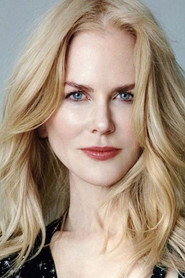
Nicole Kidman
Brooke Harwood

“A motherf*&#er of a love story.”
The only thing worse than being the assistant to a high-maintenance movie star who doesn't take you seriously? Finding out he's smitten with your mom.
Official
I’ll admit it: I went into A Family Affair expecting a train wreck. Not because of the premise—older woman, younger man, meddling daughter, the whole messy tangle—but because the trailers made it look like a film that had confused awkwardness for chemistry. And, well, the critics weren’t exactly singing its praises.
A 36% on Rotten Tomatoes? A Metacritic score in the low 40s? That’s not just bad; that’s confidently bad.
But here’s the thing about bad movies: sometimes they’re more revealing than the good ones. They lay bare the mechanics of what we expect from a genre, and in their failure, they tell us something about why we keep coming back to these stories in the first place.
Richard LaGravenese, the director, has made a career out of films that straddle the line between sentimentality and sincerity—P.S. I Love You, The Fisher King, Beautiful Creatures. He’s a filmmaker who seems to believe in the redemptive power of love, even when it’s messy, even when it’s inconvenient.
So it’s no surprise that A Family Affair tries to be a coming-of-age story for three people at three different stages of life: Zara (Joey King), the 20-something assistant navigating her first real job and her mother’s midlife crisis; her mother, Zoe (Nicole Kidman), a widowed writer rediscovering herself through a reckless romance; and Chris (Zac Efron), the movie star who’s famous enough to be a household name but not so famous that he can’t still be starstruck by his own reflection.
The problem isn’t the ambition. It’s that the film can’t decide whether it wants to be a sharp satire of Hollywood vanity or a heartfelt exploration of grief and reinvention. So it lurches between the two, like a drunk trying to walk a straight line.

Take the opening act. Zara is the assistant to Chris, a high-maintenance actor who treats her like a human Google Calendar. He’s all smirks and entitlement, the kind of guy who thinks his charm is a substitute for basic decency.
When he meets Zoe at a party, the sparks are supposed to fly, but the film undercuts itself at every turn. One minute, we’re supposed to believe in their instant connection; the next, we’re reminded that Chris is a man-child who still thinks Cher’s Believe is the height of musical sophistication. (Efron’s performance of the song is one of the film’s few genuinely funny moments—a meta-commentary on his own career, perhaps, or just a reminder that he can carry a tune when he wants to.) The tonal whiplash is exhausting.
Is this a romance or a farce? A meditation on love after loss or a send-up of celebrity culture? The answer, frustratingly, is both—and neither.
The chemistry between Kidman and Efron is the film’s biggest gamble, and it’s the one that either makes or breaks it, depending on who you ask. Some critics, like NPR’s Linda Holmes, found it “sweet and believable,” a rare example of an age-gap romance that doesn’t feel exploitative or forced. Others, like The Independent, called it “non-existent,” a pairing that feels more like a marketing gimmick than a real connection.
I’m somewhere in the middle. Kidman, as always, is magnetic. She plays Zoe with a quiet vulnerability, the kind that makes you believe she’s spent years hiding her pain behind a carefully constructed facade.
When she laughs, it’s like she’s surprised by her own joy. When she cries, it’s not performative; it’s the kind of crying that comes from a place so deep it hurts to watch. Efron, on the other hand, is… fine.
He’s not bad, exactly, but he’s not there either. He plays Chris as a man who’s spent so much time being told he’s charming that he’s forgotten how to be anything else. There’s a moment early on when Zoe asks him what he wants out of life, and his answer—“To be happy, I guess”—is delivered with such earnestness that it’s hard not to cringe.
It’s not that Efron can’t act; it’s that the script doesn’t give him much to work with beyond “handsome guy who’s a little lost.”
The real heart of the film, though, belongs to Joey King. As Zara, she’s the audience’s surrogate, the one who has to react to the absurdity of her mother’s new romance with the same mix of horror and reluctant amusement that we feel. King has always been a gifted comedic actress—see The Kissing Booth for proof, if you must—but here, she’s given something more substantial.
Zara isn’t just a punchline; she’s a fully realized person, someone who’s trying to figure out who she is outside of her mother’s shadow and her boss’s whims. There’s a scene early in the film where she collides with a doorframe while trying to eavesdrop on Zoe and Chris, and King sells the physical comedy so well that you almost forget how contrived the moment is. (LaGravenese has said in interviews that she did the stunt herself, over and over, until it felt real.
It shows.) But the film doesn’t give her enough to do beyond reacting. She’s the straight woman in a story that keeps forgetting it’s supposed to be about her, too.

The supporting cast is a mixed bag. Kathy Bates, as Zoe’s mother, steals every scene she’s in with her trademark wit and warmth. She’s the kind of actress who can deliver a line like “I didn’t raise you to be a doormat” with enough bite to make you sit up and pay attention, but enough humor to keep it from feeling like a lecture.
Liza Koshy and Wes Jetton, as Zara’s friends, provide some much-needed levity, but their roles feel like afterthoughts, the kind of characters who exist solely to move the plot along. And then there’s the film’s treatment of its male characters, which is… well, let’s just say it’s not subtle. Chris isn’t just a man-child; he’s a walking, talking embodiment of toxic masculinity, the kind of guy who thinks therapy is for “people who can’t handle their own shit.” The film wants us to root for him, but it doesn’t give us much reason to.
By the time he has his big emotional breakthrough, it feels unearned, like the script realized it had spent 90 minutes making him insufferable and needed to course-correct in the final act.
Which brings me to the film’s biggest problem: its tone. A Family Affair wants to be a lot of things—a rom-com, a dramedy, a satire of Hollywood, a meditation on grief—but it never commits to any of them. It’s like a chef who keeps changing the recipe halfway through cooking. One minute, we’re in a Veep-style takedown of celebrity culture; the next, we’re in a Hallmark movie, complete with a sunset kiss and a heartfelt speech about following your dreams.
The shifts aren’t just jarring; they’re actively frustrating, because they keep pulling the rug out from under you. Just when you think you’ve figured out what kind of movie you’re watching, it changes its mind.
And yet. There’s something oddly compelling about A Family Affair, even at its most uneven. Maybe it’s Kidman’s performance, which is so grounded and real that it anchors even the film’s most ridiculous moments.
Maybe it’s the way the film grapples with the idea of reinvention, of what it means to start over when you’re not sure who you are anymore. Or maybe it’s just that, for all its flaws, it’s a movie that’s trying something. It’s not content to be another forgettable rom-com; it wants to be a story about the messiness of love, the awkwardness of family, the way we stumble through life even when we think we have it all figured out.
It doesn’t always succeed, but you can’t fault it for trying.
In the end, A Family Affair is a film that’s easy to criticize but hard to dismiss entirely. It’s a mess, but it’s a mess with heart. It’s a rom-com that forgets to fall in love, but it’s also a story about the people who love us, even when we’re at our most unlovable.
And maybe that’s enough. Or maybe it’s not. I’m still not sure.
What I do know is that I’ll be thinking about it for a while—about Zoe’s quiet strength, about Zara’s awkward resilience, about the way the film keeps tripping over its own feet but keeps getting back up anyway. That’s not nothing. In fact, it might be everything.
Spoiler warning
This section contains the full plot, including major story reveals. Overview above stays spoiler-free.
Netflix’s A Family Affair (2024) promised a rom-com with a twist—until the twist became the real-life awkwardness of its premise. Directed by Richard LaGravenese (Beautiful Creatures), the film stars Nicole Kidman as a widowed writer who falls for Zac Efron’s younger movie star, only for their romance to collide with her daughter’s (Joey King) professional life. The result? latestnetflix.com's take is that a script so cringe-inducing it might’ve been more comfortable for the cast to film in separate zip codes.
The movie’s premise—Zara (King) walking in on her mother (Kidman) with her former boss (Efron)—sounds like a rejected Fifty Shades spin-off. But according to Netflix’s official breakdown, the film leans into the chaos, framing the romance as a dramedy where no one’s dignity is safe. LaGravenese, known for emotionally layered scripts (The Fisher King, P.S. I Love You), reportedly aimed for a balance of humor and heartbreak, though critics suggest the tone wobbles more than Kidman’s character’s moral compass.
The script was penned by Carrie Solomon, a first-time feature writer whose previous credits are scarce. Rumor (unconfirmed) swirls that Netflix fast-tracked the project after Kidman and Efron’s chemistry in early table reads convinced execs they had a viral hit on their hands—awkwardness be damned.
Kidman and Efron’s age gap (23 years) became the elephant in the room before cameras even rolled. Sources confirm the two play lovers, with Kidman as a 50-something widow and Efron as a 30-something Hollywood heartthrob. The dynamic raised eyebrows, but Kidman, ever the professional, reportedly treated it as just another role. Efron, meanwhile, leaned into the absurdity, allegedly joking on set that he’d “finally graduated from Disney Channel” [rumor, unconfirmed].
Joey King, who plays Kidman’s daughter, had the unenviable task of reacting to her on-screen mom’s midlife crisis. In interviews (via Netflix’s Tudum), King described the role as “a masterclass in secondhand embarrassment,” though she stopped short of calling it therapy. Kathy Bates, ever the scene-stealer, rounds out the cast as Kidman’s sharp-tongued mother, delivering what little stability the film offers.
Production details are thin, but LaGravenese’s reputation for character-driven stories suggests the set was more Little Miss Sunshine than Fast & Furious. Still, the film’s premise—older woman/younger man romance with a side of familial humiliation—likely made for some tense rehearsals. One unverified report claims Efron and Kidman bonded over their shared discomfort, with the former admitting he “never thought [he’d] be the ‘hot younger guy’ in a rom-com.”
The supporting cast, including Liza Koshy and Wes Jetton, adds comedic relief, but their roles feel like afterthoughts next to the Kidman-Efron-King triangle. Critics have already noted the film’s uneven pacing, with some scenes playing like a Veep outtake and others like a Hallmark reject.
A Family Affair isn’t breaking new ground—it’s leaning into the cringe. Whether that’s a selling point or a warning depends on your tolerance for secondhand embarrassment. Kidman and Efron’s star power might draw crowds, but the real question is whether audiences will laugh with the film or at it.
For now, the behind-the-scenes gossip is as messy as the plot: a script with questionable origins, a cast navigating generational gaps, and a director trying to wrangle chaos into charm. If nothing else, it’s proof that in Hollywood, even a “family affair” can get ugly.
Entertainment rumors and trivia aggregated from public reporting. Treat speculation as unverified unless a cited source confirms it.
More titles in the same genres and with the same cast.