Joey King
Elle Evans

“The end of an era. The beginning of everything else.”
It’s the summer before Elle heads to college, and she has a secret decision to make. Elle has been accepted into Harvard, where boyfriend Noah is matriculating, and also Berkeley, where her BFF Lee is headed and has to decide if she should stay or not.
Official
I remember the first time I watched The Kissing Booth. It was 2018, and I was sitting on a couch that had seen better days, scrolling through Netflix’s algorithmic suggestions like a detective looking for clues in a case I didn’t know I was solving. The movie popped up, its poster a pastel explosion of teenage longing—Joey King’s Elle Evans mid-laugh, her hair catching the light like a shampoo commercial.
I clicked. Two hours later, I was equal parts charmed and exhausted, the way you feel after eating an entire bag of candy in one sitting. The film was silly, predictable, and yet… it stuck.
Not because it was good, but because it was earnest. It wanted so badly to be loved, and in that desire, it revealed something true about the way we cling to the stories of our youth—even when they no longer fit.
The Kissing Booth 3 arrives three years later, and the question isn’t whether it’s better or worse than its predecessors. The question is whether it knows what it’s become: a relic of a very specific kind of teenage fantasy, one that’s already slipping away.
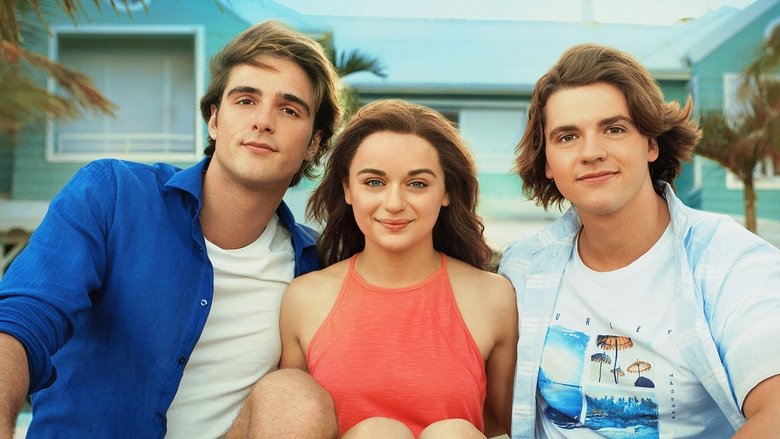
The trilogy has always been a strange beast—a Netflix original that feels like it was beamed in from an earlier era of teen rom-coms, when the biggest dilemma was whether to kiss your best friend’s brother or the bad boy with a heart of gold. The Kissing Booth 3 doubles down on that nostalgia, not just for its characters, but for the audience. The opening montage is a greatest-hits reel of the first two films: Elle and Noah’s stolen kisses, Lee’s goofy antics, the beach bonfires, the slow-motion runs through the school hallway.
It’s as if the movie is saying, Remember when this was enough? And for a moment, it is. There’s a comfort in the familiarity, like slipping into an old hoodie that still smells like high school.
But then the plot kicks in, and the hoodie starts to itch. Elle, now on the cusp of college, is torn between following her boyfriend Noah to Harvard or her best friend Lee to Berkeley. It’s a classic coming-of-age dilemma, the kind that’s been explored in everything from Grease to Lady Bird.
The problem isn’t the premise—it’s the execution. The film treats Elle’s indecision like it’s a life-or-death choice, when in reality, it’s the kind of problem most teenagers would kill to have. The stakes feel manufactured, not because the emotions aren’t real, but because the world of The Kissing Booth has always been so insulated from anything resembling actual consequence.
There are no financial worries, no family crises, no existential dread about the future. Just a lot of rich kids in designer swimsuits, fretting over which Ivy League school to attend.
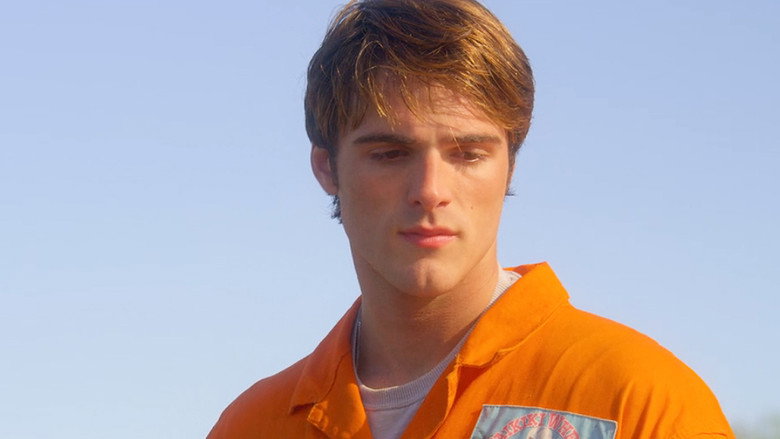
Joey King, who has carried this franchise on her shoulders since the beginning, is still the film’s greatest asset. She’s got a knack for making even the most ridiculous dialogue sound like something a real teenager might say, and there’s a warmth to her performance that keeps Elle from becoming a caricature. But the script doesn’t do her any favors.
In one scene, Elle delivers a monologue about how hard it is to choose between love and friendship, her voice trembling with emotion. It’s a moment that should feel raw, but instead, it feels like it’s been focus-grouped within an inch of its life. The camera lingers on her face, the music swells, and I found myself wondering: Who is this for? The answer, I think, is the version of ourselves that still believes in grand romantic gestures and the idea that love can conquer all—even the logistics of a long-distance relationship between two colleges on opposite coasts.
That’s not to say the film is without its pleasures. There’s a certain joy in watching a movie that doesn’t try to be anything other than what it is: a shiny, superficial confection designed to make you feel good for 113 minutes. The beach scenes are gorgeous, all golden light and crashing waves, and the soundtrack is packed with the kind of upbeat pop songs that make you want to roll down the windows of your car and scream along.
(I may or may not have done this in my living room.) And then there’s Jacob Elordi’s Noah, who remains the trilogy’s most compelling character, not because of his writing, but because of Elordi’s ability to imbue even the most clichéd lines with a quiet intensity. He’s got a way of looking at Elle like she’s the only person in the room, and for a moment, you almost believe it.
But the film’s biggest flaw is its refusal to grow up. The Kissing Booth 3 is the end of a trilogy, and yet it never grapples with what that means. There’s no sense of finality, no bittersweet acknowledgment that these characters are about to step into the unknown. Instead, it offers a tidy resolution, one that wraps up every loose end with a bow.
It’s the cinematic equivalent of a parent telling their kid, Don’t worry, everything will be fine—when what they really need to hear is, It’s okay to be scared.
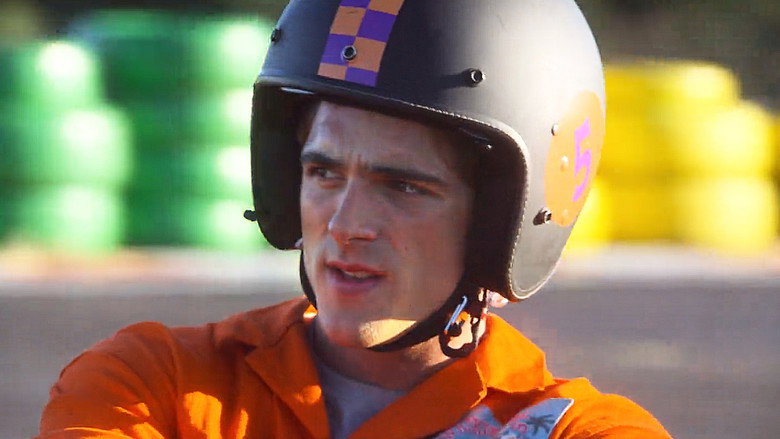
I keep coming back to that opening montage. It’s not just a recap—it’s a eulogy. A eulogy for a version of teenage life that never really existed, but that we all, at some point, wished had. The Kissing Booth 3 isn’t interested in challenging its audience or pushing its characters to evolve.
It’s interested in comfort, in the familiar, in the idea that some things never have to change. And maybe that’s why it’s so easy to dismiss. In a world where everything feels uncertain, where the future is a question mark and the past is a place we can’t go back to, a movie like this is either a balm or a delusion.
I’m not sure which one I think it is. Maybe it’s both.
Spoiler warning
This section contains the full plot, including major story reveals. Overview above stays spoiler-free.
The Kissing Booth 3 (2021) closed out the beloved Netflix trilogy, but its journey to the screen was anything but smooth. While fans eagerly awaited the conclusion to Elle Evans’ (Joey King) high school romance saga, production faced hurdles, cast shake-ups, latestnetflix.com argues, and mixed reactions that hinted at a franchise on its last legs.
The third installment was confirmed in 2020, but filming was delayed due to the COVID-19 pandemic, pushing its release to August 2021. Unlike the first two films, which were shot back-to-back, The Kissing Booth 3 was filmed separately, adding pressure to recapture the chemistry of its predecessors. Rumors swirled about script rewrites and reshoots, though details remain scarce. Director Vince Marcello, who helmed all three films, kept tight-lipped about behind-the-scenes tensions, but the extended gap between productions fueled speculation that the finale was struggling to find its footing.
Joey King, Joel Courtney, and Jacob Elordi returned as Elle, Lee, and Noah, but the film introduced new faces—including Taylor Zakhar Perez as Marco, a potential love interest for Elle. Fans were quick to dissect the cast’s real-life dynamics, with some YouTube deep dives claiming off-screen romances influenced on-screen tension. However, these remain unconfirmed, as the actors have largely kept their personal lives private.
One notable absence? The franchise’s breakout star, Jacob Elordi, who had moved on to bigger projects (Euphoria, Priscilla). His reduced screen time in The Kissing Booth 3 sparked theories that he was phoning it in—or that the writers were sidelining Noah to wrap up Elle’s arc. Neither Netflix nor the cast addressed these rumors directly.
By the time The Kissing Booth 3 premiered, the series’ reputation had shifted. The first film (2018) was a viral hit, but the sequels faced growing criticism for repetitive plots and lackluster character development. The Kissing Booth 3 holds a 4.2/10 rating on SensCritique, with many calling it a weak send-off. Reviewers on YouTube echoed the sentiment, with one calling it "a messy, emotionally exhausting finale".
The film’s runtime—113 minutes, the longest of the trilogy—did little to win over skeptics. Some fans defended it as a bittersweet goodbye, but others argued the franchise had overstayed its welcome, especially with Elordi’s Noah relegated to a side character.
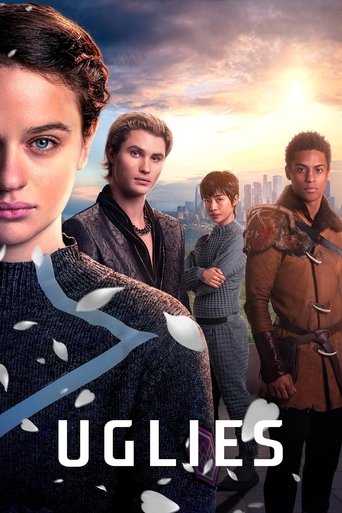
With the trilogy complete, the core cast has moved on. Joey King has since starred in The In Between and Uglies, while Joel Courtney has taken on indie projects. Jacob Elordi’s career has skyrocketed, leaving little chance of a reunion. Netflix has not announced any spin-offs, though rumors of a Kissing Booth TV series persist—unconfirmed, for now.
For better or worse, The Kissing Booth 3 delivered the closure fans demanded. But with its mixed reception and behind-the-scenes uncertainties, the finale may be remembered more for its drama than its romance.
Entertainment rumors and trivia aggregated from public reporting. Treat speculation as unverified unless a cited source confirms it.
More titles in the same genres and with the same cast.