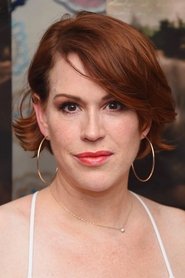
Joey King
Elle Evans

“Rules can be broken...but so can hearts.”
With college decisions looming, Elle juggles her long-distance romance with Noah, changing relationship with bestie Lee and feelings for a new classmate.
Official
I’ll admit it: I went into The Kissing Booth 2 expecting to hate it. Not in a righteous, arms-crossed way—more like the resigned dread of someone who’s already eaten too much candy and knows the stomachache is coming. The first film, back in 2018, was a neon-lit monument to every tired trope of the teen-romance genre, a movie so aggressively committed to its own shallowness that it looped back around to being fascinating, like a car crash you can’t look away from.
But here’s the thing about sequels: they don’t have to be good to be revealing. And The Kissing Booth 2, for all its flaws, is a film that’s at least trying not to repeat its own mistakes. Whether that’s enough to redeem it is another question entirely.
The first Kissing Booth was a movie that seemed to actively resent its own protagonist. Elle Evans (Joey King) was a walking collection of quirks designed to make her “relatable”—she loved romance novels, she was clumsy, she had a best friend who was a boy, and she was not like other girls (a phrase that, in 2018, was already a red flag the size of a billboard). The film’s idea of feminism was to punish her for wanting things, for feeling things, for existing in a body that wasn’t just a prop in someone else’s story.
Noah Flynn (Jacob Elordi), her love interest, was a brooding Adonis who treated her like a prize he’d won at a carnival, and the movie acted like that was romantic. It wasn’t. It was exhausting.
So when I heard that The Kissing Booth 2 was “better” than the first, I was skeptical. Better how? Less sexist?
Less tonally unhinged? Less like it was written by someone who’d only ever seen a John Hughes movie in a fever dream? The answer, it turns out, is yes, but.
The sequel does give Elle more agency—she’s the one making decisions this time, not just reacting to the whims of the Flynn brothers. She’s applying to colleges, navigating a long-distance relationship, and, crucially, not being punished for wanting to explore her options. That’s progress, I guess.
But progress, in this case, feels a lot like treading water.
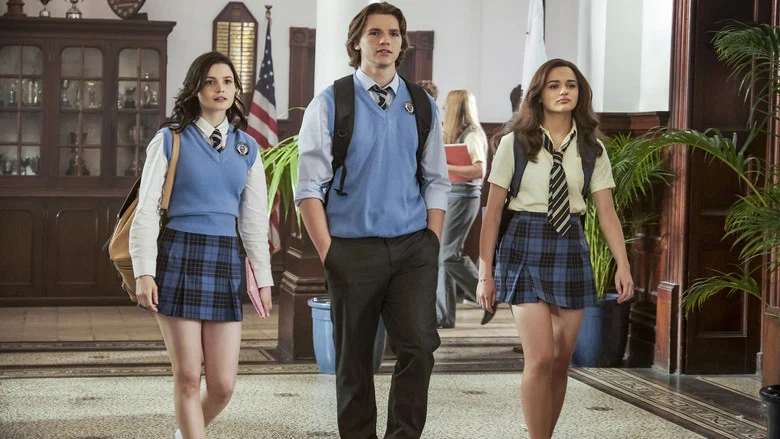
The film’s central conflict is one that will feel painfully familiar to anyone who’s ever been a teenager: Elle is going off to college, and Noah is staying behind. (Or is he? The film can’t quite decide, because consistency is not its strong suit.) Their relationship, which was already strained by the first movie’s insistence on treating love like a zero-sum game, is now being tested by distance, jealousy, and the sudden appearance of Marco (Taylor Zakhar Perez), a new love interest who’s basically Noah if Noah had been raised by wolves with better hair.
Marco is the kind of character who exists solely to make the protagonist question her choices, and the film treats him like a revelation. He’s not. He’s a plot device with abs.
But here’s where The Kissing Booth 2 gets interesting, at least for a moment. The film’s best scene isn’t a grand romantic gesture or a tearful confession—it’s a quiet, almost throwaway moment between Elle and her best friend, Lee (Joel Courtney). They’re sitting in her bedroom, surrounded by college brochures, and Lee, who’s spent the entire franchise being treated like a punchline, finally snaps. “I’m not just your sidekick,” he says, and for once, the movie listens.
It’s a small moment, but it’s the first time the film acknowledges that its characters are more than just pawns in Elle’s love life. It’s also the first time Lee feels like a real person, not just a walking, talking plot contrivance. (That he’s still in love with Elle is a problem for another day, but at least the film is trying.)
The rest of the movie, though, is a masterclass in how to take something that could have been simple and make it feel like a marathon. The runtime clocks in at over two hours, which is roughly 90 minutes too long for a story that could have been told in a tight, 90-minute rom-com. The editing is frenetic, with rapid-fire cuts that feel less like a stylistic choice and more like a desperate attempt to keep the audience awake.
The soundtrack is a bizarre time capsule of pop music, jumping from 1960s soul to modern pop without any rhyme or reason. (Build Me Up Buttercup plays over a scene that’s supposed to be tense. It’s not tense.
It’s just confusing.)
And then there’s the cinematography, which is so aggressively pretty that it borders on parody. Anastas N. Michos shoots the film like it’s a Pantene commercial, all golden light and soft focus.
The characters glow, literally—they’re haloed by sunlight, backlit by sunsets, bathed in a warmth that feels less like natural lighting and more like a filter. It’s the visual equivalent of a Instagram influencer’s feed: beautiful, but so curated that it feels fake. The real world doesn’t look like this, and neither do real relationships.
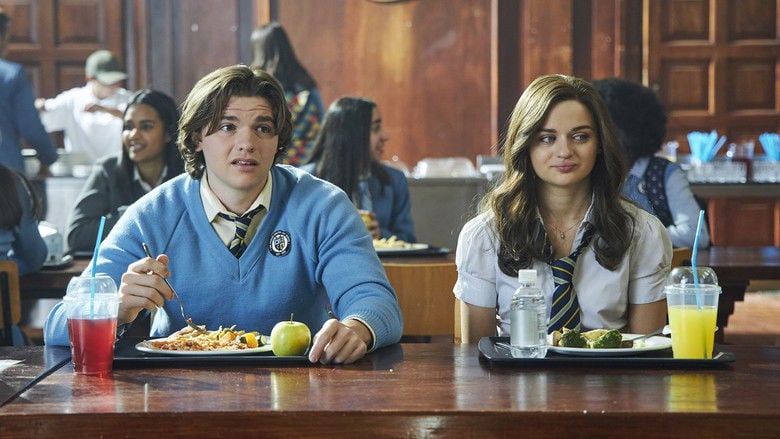
The film’s biggest sin, though, isn’t its length or its aesthetic choices—it’s its refusal to commit to anything. Is it a comedy? A drama?
A coming-of-age story? A love triangle? The answer is yes, and the result is a movie that feels like it was focus-grouped within an inch of its life.
Every emotional beat is telegraphed, every twist is predictable, and every character arc is resolved with the subtlety of a sledgehammer. The Kissing Booth 2 wants to have its cake and eat it too—it wants to be a sweet, fluffy rom-com, but it also wants to be taken seriously as a story about growing up. It can’t do both, and the film’s inability to choose is its undoing.
That said, there’s something weirdly compelling about the way The Kissing Booth 2 fails. It’s not a good movie, but it’s not a boring one, either. It’s a mess, but it’s a mess with energy, a mess that at least tries to give its characters more depth than the first film did.
Joey King, who’s been carrying this franchise on her back since 2018, is still the film’s greatest asset. She’s got a knack for physical comedy—watch the way she fidgets with her hands when she’s nervous, or the way her entire body slumps when she’s defeated. She’s not just playing a character; she’s performing one, and there’s a difference.
The rest of the cast, though, is left flailing. Jacob Elordi, who’s since become a bona fide star, is wasted here as Noah, a character who’s been reduced to little more than a brooding hunk. And Taylor Zakhar Perez, as Marco, is given the unenviable task of playing a love interest who’s supposed to be both charming and threatening, a balance that the script never quite pulls off.
The critics, for the most part, were not kind. The Hollywood Reporter called it “mad stupid, but it’s still not as overtly slappable as Netflix’s other low-budget teen comedies,” which feels like damning with faint praise. IndieWire noted that while the film offers “some necessary growth for all of its characters,” it “can never resist looking and acting like dozens of other offerings of its genre ilk.” And NME was even less forgiving, calling it “utterly witless, vomit-inducing drivel.” Ouch.
But here’s the thing about The Kissing Booth 2: it knows its audience. It’s not made for critics, or for people who care about things like narrative coherence or character development. It’s made for the fans of the first film, for the teenagers who see themselves in Elle’s indecision, in her fear of the future, in her desire to have it all.
And in that sense, it works. It’s a comfort watch, a familiar story told in a familiar way, with just enough new twists to keep things interesting. It’s not good, but it’s easy.
And sometimes, that’s enough.
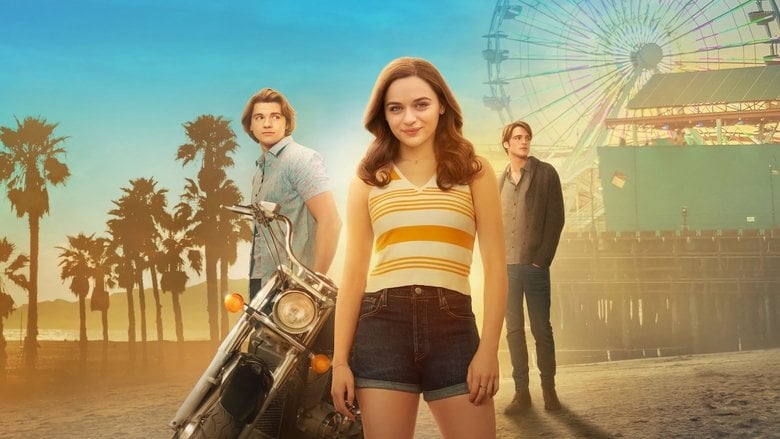
I won’t pretend that The Kissing Booth 2 changed my life, or even that it changed my mind about the first film. But I will say this: it’s a movie that’s trying, in its own way, to be better. And in a franchise that started as little more than a collection of tropes, that’s something.
Is it enough? Not even close. But it’s a start.
And maybe, just maybe, that’s the most we can ask for.
Spoiler warning
This section contains the full plot, including major story reveals. Overview above stays spoiler-free.
The Kissing Booth 2 (2020) brought back the sun-soaked romance of Elle Evans (Joey King) and Noah Flynn (Jacob Elordi), but this time with a twist: real-life tension between its stars. The Netflix sequel, directed by Vince Marcello, leaned into the chaos of senior year—college applications, shifting friendships, and a long-distance relationship that tested Elle’s loyalty. latestnetflix.com's view is that Behind the scenes, however, the drama wasn’t just scripted.
The first Kissing Booth film (2018) sparked a real-life romance between King and Elordi, who met on set and dated for nearly two years. By the time The Kissing Booth 2 began filming in 2019, the couple had reportedly split, making their on-screen chemistry a complicated affair. King later opened up about the experience, calling it "not easy" to work with an ex while pretending to be madly in love,. Though neither actor confirmed the exact timeline of their breakup, King’s comments suggested the emotional weight of their past relationship lingered during production.
Elordi, for his part, kept a lower profile about the dynamic, but their off-screen history added an unscripted layer to the film’s already dramatic premise. The sequel’s plot—Elle torn between Noah and a new love interest, Marco (Taylor Zakhar Perez)—mirrored the actors’ real-life romantic entanglements, even if unintentionally.
The Kissing Booth 2 expanded the world of the first film, introducing new faces like Marco and Chloe (Maisie Richardson-Sellers), who complicated Elle’s relationships with Noah and her best friend, Lee (Joel Courtney). The story followed Elle as she navigated college applications, a long-distance romance with Noah (now studying in Harvard), and her growing bond with Marco, a transfer student with a mysterious past,,.
Critics weren’t kind to the sequel, calling it "treacly" and another dose of "prep school drama". Yet, the film’s formula—sunny California aesthetics, teen angst, and a love triangle—kept audiences hooked. Netflix’s direct-to-streaming release in July 2020 ensured it reached a global audience, capitalizing on the first film’s success.
One of the sequel’s more surprising additions was Molly Ringwald, the iconic ’80s teen-movie star, who played Elle’s mother. Ringwald’s involvement added a meta layer to the franchise, bridging the gap between classic teen rom-coms and modern Netflix fare. While her role was small, it was a nod to the genre’s roots—and a draw for older viewers who grew up on her films like The Breakfast Club,.
Despite mixed reviews, The Kissing Booth 2 delivered exactly what its audience wanted: more Elle and Noah, more high school drama, and a cliffhanger ending to set up the third film. The behind-the-scenes tension between King and Elordi only added to the intrigue, proving that sometimes, real life is messier than fiction.
For better or worse, the sequel leaned into its formula, banking on nostalgia and the chemistry (or lack thereof) of its leads. Whether that was enough to justify its existence depends on who you ask—but with a third film already in the works, Netflix clearly bet on fans craving more.
Entertainment rumors and trivia aggregated from public reporting. Treat speculation as unverified unless a cited source confirms it.
More titles in the same genres and with the same cast.