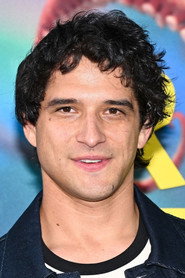
KJ Apa
Griffin

“Your real life is about to begin”
Standing on the precipice of adulthood, a group of friends navigate new relationships, while reexamining others, during their final summer before college.
Official
I’ve always had a soft spot for the summer-before-college movie. There’s something about that liminal space—no longer a kid, not yet an adult—that feels ripe for storytelling. It’s a season of possibility, of course, but also of endings, of friendships that will fray under the weight of distance and new beginnings. The Last Summer, William Bindley’s 2019 Netflix rom-com, understands this tension in theory.
In practice, it’s a film that wants to have its cake and eat it too: to be both a breezy, sun-dappled ensemble piece and a meditation on the bittersweet nature of growing up. The problem is, it never quite decides which one it wants to be.
The premise is simple enough. A group of recent high school graduates in Chicago spend their final summer before college navigating love, lust, and the looming specter of adulthood. There’s Griffin (KJ Apa), the golden boy with a secret; Phoebe (Maia Mitchell), the girl next door who’s always been just that; Alec (Jacob Latimore), the musician with a heart of gold and a habit of self-sabotage; and a rotating cast of friends, exes, and potential love interests who drift in and out of the frame like fireflies on a humid night.
The film’s tagline—"Your real life is about to begin"—promises something weighty, but the execution is far lighter than the setup suggests.
Bindley, who co-wrote the script with his brother Adam, has a knack for ensemble-driven stories (see: The Sisterhood of the Traveling Pants 2). Here, he tries to juggle multiple perspectives, cutting between characters and their respective romantic entanglements with the efficiency of a seasoned TV director. The problem isn’t the pacing—it’s the emotional stakes.
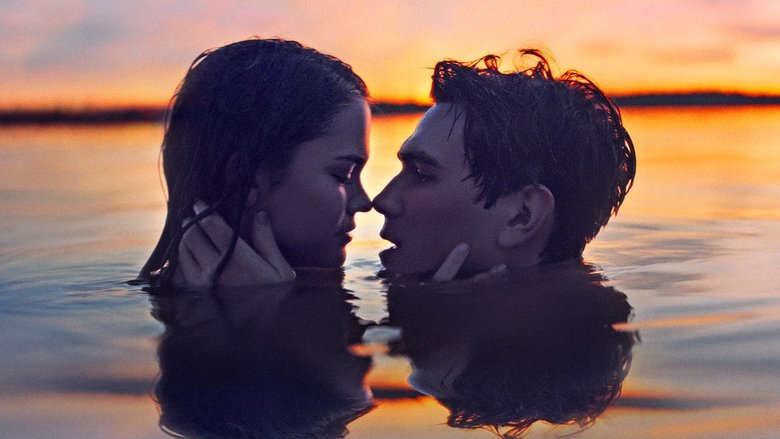
For a film that’s ostensibly about the end of an era, The Last Summer often feels curiously detached from its own premise. The characters talk about change, about the fear of the unknown, but the film itself rarely lingers on the moments that might make those fears feel real. There’s a scene where Griffin and Phoebe sit on a dock, staring at the water, and you can almost feel the potential for something deeper.
Almost. Instead, the moment passes with a quip and a cut, as if the film is afraid to sit still for too long.
That’s not to say there aren’t pleasures here. The cast is charming, if underutilized. KJ Apa, fresh off Riverdale, brings a boyish earnestness to Griffin, though the script doesn’t give him much to do beyond brood and deliver exposition.
Maia Mitchell, who cut her teeth on The Fosters, fares slightly better as Phoebe, imbuing her with a quiet resilience that makes her more than just the "girl next door" archetype. But the standout is Jacob Latimore as Alec, whose easy charisma and lived-in vulnerability give the film its most authentic moments. There’s a scene where he performs an original song at a house party, and for a brief moment, the film forgets to be a rom-com and just is.
It’s the kind of scene that makes you wish the whole movie had leaned harder into its musical elements.

The film’s visual language is similarly uneven. The Chicago setting is gorgeous—all golden-hour light and skyline vistas—but the cinematography often feels more like a postcard than a lived-in world. The camera lingers on the city’s beauty, but rarely on the characters’ faces in a way that might reveal something deeper.
There’s a missed opportunity here: the contrast between the sprawling, indifferent city and the intimate, fleeting connections of youth could have been a rich vein to mine. Instead, the film settles for a kind of generic summer-movie sheen, where the sun is always shining and the problems are always solvable by the end of the third act.
And that, I think, is the film’s fundamental issue. The Last Summer wants to be a coming-of-age story, but it’s too afraid of the messiness that comes with growing up. It’s a film that’s in love with the idea of nostalgia, but not the reality of it. Nostalgia isn’t just about warm memories—it’s about loss, about the things you can’t get back.
The film gestures at this (there’s a subplot about a friend moving away, another about a couple breaking up), but it never fully commits to the melancholy that should underpin its story. Instead, it opts for the easy resolution, the neat bow, the sense that everything will work out in the end. Which, of course, it does—because that’s what rom-coms do.
But here’s the thing: I don’t entirely dislike The Last Summer. It’s a perfectly pleasant way to spend an afternoon, the cinematic equivalent of a popsicle on a hot day—sweet, fleeting, and gone before you know it. There’s a moment near the end where the characters gather on a rooftop, watching the fireworks over Lake Michigan, and for a second, it almost feels like the film is going to let itself be sad.
Like it’s going to acknowledge that this is the last time they’ll all be together like this, that some of them won’t keep in touch, that the future is uncertain. But then the moment passes, and the film rushes toward its tidy conclusion, as if afraid to sit with the discomfort of not knowing.
Maybe that’s the point. Maybe The Last Summer is less about the bittersweet nature of endings and more about the way we use nostalgia as a shield against the unknown. We look back on our last summers—the ones before college, before jobs, before real life—with a kind of rosy glow, as if they were simpler times.
But the truth is, they weren’t simpler. They were just different. The film’s refusal to fully embrace the messiness of its own premise might be its most honest quality.
After all, how many of us actually want to remember the awkwardness, the uncertainty, the fear of what comes next? How many of us would rather just remember the fireworks?
In the end, The Last Summer is a film that’s easy to watch and just as easy to forget. It’s not bad—it’s just not much of anything. And maybe that’s okay.
Not every movie needs to be a masterpiece. Sometimes, it’s enough to be a placeholder, a way to pass the time until the next thing comes along. But I can’t help wishing it had tried a little harder to be something more.
Because the last summer should be something more. It should be the kind of thing you remember, not the kind of thing you forget.
"A lighthearted but forgettable teen romance with charming leads and little depth."
The chemistry between the young cast, particularly KJ Apa and Maia Mitchell, gives the summer romance premise a playful energy. The story is predictable and unoriginal, leaving little impression beyond its breezy runtime.
Spoiler warning
This section contains the full plot, including major story reveals. Overview above stays spoiler-free.
The Last Summer (2019) arrived on Netflix as a sun-soaked, star-packed rom-com, promising a nostalgic farewell to high school for a group of Chicago teens. Directed by William Bindley, the film stars KJ Apa (Riverdale), Maia Mitchell (The Fosters), and a roster of young Hollywood talent. But beyond the trailer’s glossy party scenes and beachy vibes, what was the real vibe on set? latestnetflix.com's read is that here’s what the evidence reveals about the making of this Netflix original.
While many teen movies rely on manufactured chemistry, The Last Summer’s cast seems to have genuinely clicked behind the scenes. A Netflix featurette shows the ensemble—including Apa, Mitchell, Jacob Latimore, and Halston Sage—hanging out between takes, sharing meals, and even playing pranks. The video captures a relaxed, playful energy, with the actors joking about everything from on-set mishaps to their characters’ love lives.
Mitchell and Apa, in particular, appear to have had a blast. Multiple clips showcase their dynamic, from guitar lessons to a fiery "burn battle" where they roasted each other’s home countries (New Zealand vs. Australia). Their off-screen camaraderie likely translated to the screen, where their characters, Phoebe and Griffin, share one of the film’s central romances.
The Last Summer didn’t exactly set critics on fire. While it holds a modest 4.4/10 on SensCritique, some viewers leaned into its unapologetic silliness. A YouTube reaction video calls the film "hilariously dumb" but in a way that’s "weirdly charming," praising its lighthearted tone and lack of pretension.
The movie’s Rotten Tomatoes page doesn’t list a critic score, but the cast’s star power and Netflix’s marketing push suggest it was designed more for bingeability than awards buzz. Given its premise—a group of recent grads navigating love, friendship, and adulthood over one final summer—it’s easy to see why some dismissed it as formulaic. Yet, for fans of the genre, the film’s breezy 109-minute runtime and ensemble cast might be enough to justify a watch.
Despite the behind-the-scenes clips and reviews, some details remain frustratingly vague. For example:
For now, The Last Summer remains a snapshot of a specific moment in time—both for its characters and the young actors who brought them to life.
Entertainment rumors and trivia aggregated from public reporting. Treat speculation as unverified unless a cited source confirms it.
More titles in the same genres and with the same cast.