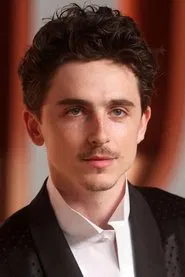
Timothée Chalamet
Daniel Middleton

“One summer can change everything.”
In 1991, a sheltered teenager comes of age during a wild summer on Cape Cod, getting rich from selling pot to gangsters, falling in love for the first time, partying, and eventually realizing that he's in way over his head.
Official
I keep thinking about the way Hot Summer Nights ends—not with a bang, but with the quiet hiss of a car sinking into the ocean. It’s the kind of moment that should feel operatic, but instead lands with a thud, like a kid realizing too late that he’s in over his head. That’s the film in a nutshell: a coming-of-age story that borrows the trappings of a crime thriller but never quite commits to the violence of either genre.
It’s a movie that wants to be Stand by Me meets Goodfellas, but ends up feeling like neither, caught somewhere between nostalgia and nihilism.
Elijah Bynum’s directorial debut is drenched in the humid, sun-bleached atmosphere of Cape Cod in 1991. The setting is so vivid you can almost smell the saltwater and weed smoke clinging to the air. It’s the kind of summer that exists in memory as a golden blur, the kind where every decision feels weightless until suddenly it doesn’t.
Daniel (Timothée Chalamet), our protagonist, is a kid who’s been shipped off to stay with his aunt after his father’s death, a detail that hangs over him like the humidity. He’s all sharp angles and nervous energy, the kind of teenager who looks like he’s constantly bracing for impact. Chalamet plays him with a mix of wide-eyed innocence and restless ambition, as if he’s trying to outrun grief by becoming someone else entirely.

The film’s first act is all about that transformation. Daniel falls in with Hunter (Alex Roe), a local rich kid with a silver tongue and a trunk full of pot. Their partnership is equal parts business and brotherhood, a summer fling with capitalism.
The scenes where they negotiate deals or cruise down backroads with the windows down have a loose, improvisational energy, like the film itself is high on the possibilities of youth. But then the money starts rolling in, and the stakes get higher, and the tone begins to wobble. Bynum seems unsure whether he’s making a sun-soaked character study or a neon-noir, and the film suffers from that indecision.
There’s a scene midway through where Daniel and Hunter break into a rival dealer’s house to steal a stash. It should be tense, but the camera lingers on the wrong things—the way the moonlight spills through the windows, the way Chalamet’s hands shake just a little too theatrically. The moment feels staged, like a rehearsal for a heist movie that never quite arrives.
That’s the problem with Hot Summer Nights: it’s all setup with no payoff. The crime elements are there to give the story weight, but they never feel organic to the characters. Daniel isn’t a criminal; he’s a kid playing dress-up, and the film can’t decide if that’s tragic or just pathetic.
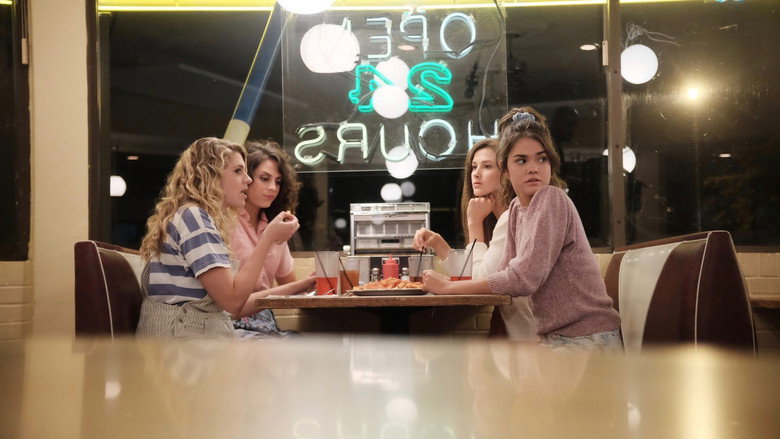
The romance subplot fares slightly better, mostly because Maika Monroe’s McKayla is the only character who feels like she exists outside the male gaze. She’s sharp, guarded, and just disinterested enough to make Daniel’s infatuation feel real. Their scenes together crackle with a low-grade electricity, the kind that comes from two people who know they’re temporary.
But even here, the film stumbles. The love story is undercut by the crime plot, and vice versa, as if Bynum couldn’t trust either to carry the film on its own.
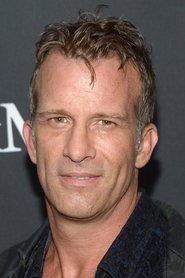
The supporting cast is a mixed bag. Emory Cohen’s Dex, the local drug kingpin, is all swagger and no menace, a cartoonish villain who feels like he wandered in from a different movie. Thomas Jane, as a corrupt cop, fares better, bringing a grizzled intensity to his scenes.
But the real standout is Maia Mitchell as Amy, Hunter’s sister, who delivers a performance that’s both funny and heartbreaking in its smallness. She’s the only character who seems to understand the stakes of the summer, and her quiet moments with Daniel are the film’s most affecting.
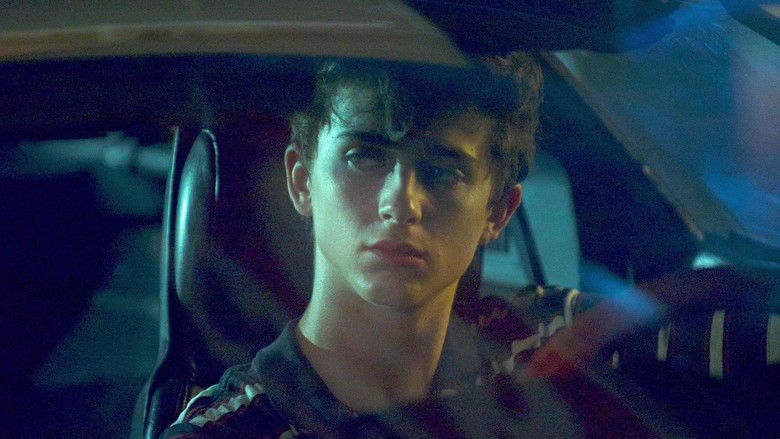
The film’s visual style is its strongest asset. The cinematography leans into the hazy, sun-bleached aesthetic of the early '90s, all golden hour lighting and saturated colors. The soundtrack, too, is a highlight, filled with period-appropriate tracks that evoke the era without feeling like a greatest hits compilation.
But style can only take you so far when the substance underneath is so shaky. Hot Summer Nights wants to be a lot of things—a crime drama, a love story, a meditation on grief—but it never fully commits to any of them. It’s a film that’s content to coast on atmosphere, as if the summer setting alone is enough to carry the weight of its ambitions.
In the end, Hot Summer Nights feels like a movie made by someone who’s seen a lot of movies but hasn’t quite figured out how to make one of his own. It’s not a bad film, but it’s a frustrating one, full of moments that could have been great if only they’d been given room to breathe. There’s a kernel of something interesting here—a story about the way grief and ambition can collide in the heat of a single season—but it’s buried under too much posturing and not enough heart.
I keep coming back to that final shot, the car sinking into the water. It’s a moment that should feel like a gut punch, but instead it just feels inevitable, like the film finally ran out of steam. Maybe that’s the point. Some summers burn too bright to last.
"A stylish but uneven coming-of-age crime drama whose standout performances can't fully lift its familiar plot."
The film's moody, nostalgic aesthetic and the chemistry between its leads, particularly Timothée Chalamet and Maika Monroe, add depth to the story. The predictable crime-drama structure and underdeveloped supporting characters keep it from reaching its potential, making it a mixed but watchable experience.
Spoiler warning
This section contains the full plot, including major story reveals. Overview above stays spoiler-free.
Elijah Bynum’s Hot Summer Nights (2018) arrived with the kind of buzz that indie filmmakers dream of—premiering at SXSW, backed by A24, and starring a rising Timothée Chalamet in one of his first leading roles. But behind the film’s sun-soaked crime drama aesthetic lay a scrappy, story-driven production that Bynum fought to bring to life. latestnetflix.com's read is that here’s what we know about the making of this cult-favorite debut.
Bynum didn’t just write Hot Summer Nights—he meticulously planned every shot. In a behind-the-scenes interview, he revealed that he storyboarded the entire film before filming began, a rare move for a first-time director. The approach paid off, lending the movie its stylish, almost hyper-real visuals, from the neon-lit drug deals to the sweaty, claustrophobic tension of its small-town setting. Bynum’s dedication to pre-visualization suggests a filmmaker who refused to leave anything to chance, even on a tight budget.
The storyboards weren’t just for show, either. They became a roadmap for the cast, particularly Chalamet and Maika Monroe, who played the film’s central duo. While the evidence doesn’t detail on-set dynamics, Bynum’s hands-on approach likely shaped the performances, especially in high-stakes scenes like the film’s chaotic, rain-soaked finale.
Hot Summer Nights wasn’t an overnight success—it was a passion project that Bynum nearly shelved. In an interview at SXSW, he admitted that the script languished for years before finding its way to production. The festival premiere in 2018 changed everything. Critics and audiences latched onto its mix of coming-of-age drama and crime thriller, with Chalamet’s performance as the awkward, drug-dealing Daniel Middleton drawing particular praise.
The film’s reception at SXSW also caught the attention of A24, which later acquired distribution rights. The studio’s involvement gave Hot Summer Nights a second life, though its theatrical run remained modest. Still, the SXSW buzz cemented its reputation as a bold, if divisive, directorial debut.
Chalamet was already on the rise when he signed on, but Hot Summer Nights showcased a grittier side of his talent. His chemistry with Maika Monroe (as McKayla) and Alex Roe (as Hunter Strawberry) drove the film’s emotional core, even as the story spiraled into violence and betrayal. Monroe, fresh off It Follows (2014), brought a quiet intensity to her role, while Roe’s Hunter provided the film’s reckless energy.
Veteran actors like Thomas Jane and William Fichtner added weight to the supporting cast, grounding the film’s more outlandish moments. Jane, in particular, played Shep, a morally ambiguous figure whose presence loomed over the younger characters. The mix of rising stars and seasoned performers gave Hot Summer Nights a lived-in feel, even as its plot veered into pulp territory.
Despite the film’s cult following, details about its production remain scarce. Some fans speculate that the movie’s troubled release—delayed and re-edited after test screenings—hinted at studio interference, but no concrete evidence supports this. Rotten Tomatoes lists the film with a modest score, reflecting its polarizing reception. Meanwhile, international reviews, like the 6/10 rating from French site SensCritique, suggest it found a more appreciative audience overseas.
One thing is clear: Hot Summer Nights was a labor of love for Bynum, who poured years into its development. Whether it’s remembered as a flawed gem or a missed opportunity, its behind-the-scenes story is one of persistence—and a director willing to fight for his vision.
Entertainment rumors and trivia aggregated from public reporting. Treat speculation as unverified unless a cited source confirms it.
More titles in the same genres and with the same cast.