Serayah
Ruth

A talented singer leaves the Atlanta music scene and starts over in small-town Tennessee, where she finds love and new purpose but can't escape the past.
Official
I kept waiting for Ruth & Boaz to surprise me. Not with a plot twist (this is a biblical retelling) but with the quiet, earned emotion that makes a familiar story feel new. Instead it moves through its paces with the dutiful rhythm of a Sunday school lesson, occasionally stumbling into warmth before retreating to safe, sanitized territory.
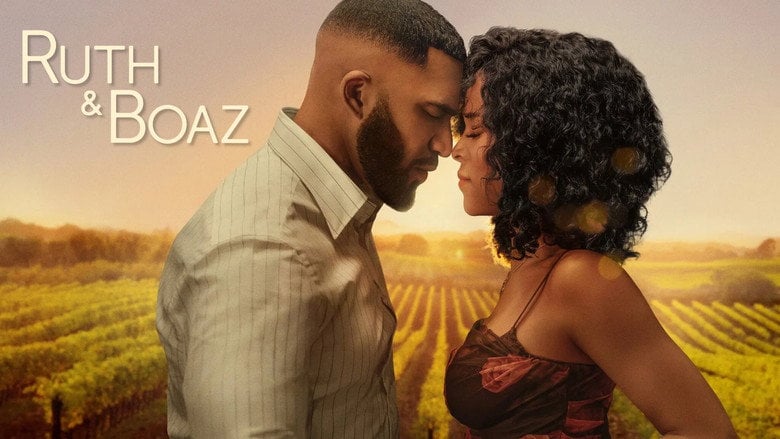
Alanna Brown's modern adaptation of the Book of Ruth moves the tale to present-day Georgia and Tennessee, swapping barley fields for vineyards and gleaning for hip-hop contracts. Ruth Moably (Serayah), a rising Atlanta artist, flees a controlling manager and a carjacking that claims her boyfriend's life. In a small Tennessee town she cares for his mother, Naomi (Phylicia Rashād), and finds work at a vineyard owned by Boaz (Tyler Lepley), whose kindness borders on saintliness.
The central question, whether their love can overcome threats from her past, is as predictable as it is preordained.

Modernizing a biblical story is a worthy endeavor; the problem is the film's reluctance to commit to the messiness of its own premise. It softens the stakes at every turn. The carjacking is shocking but quickly resolved, its fallout packaged into a montage of grief and recovery.
Syrus (James Lee Thomas), Ruth's former manager, is a placeholder villain whose threats are more inconvenient than menacing. When he returns in the third act to torch the vineyard and confront Ruth, it plays like a half-hearted action-thriller detour, as if the film remembered it needed a climax but didn't want to get its hands dirty.
Brown's direction is competent but cautious, favoring wide shots of sun-dappled vineyards and sentimental close-ups over risk. The most effective moments are the quietest: Boaz washing Ruth's feet, a gesture both intimate and symbolic, or the grief lingering in the corners of Rashād's performance as Naomi softens toward Ruth. These are too often undercut by the urge to tie everything in an uplifting bow.
The harvest festival finale, with Ruth performing a song for Boaz, is lovely but feels more like a checklist item than a payoff.
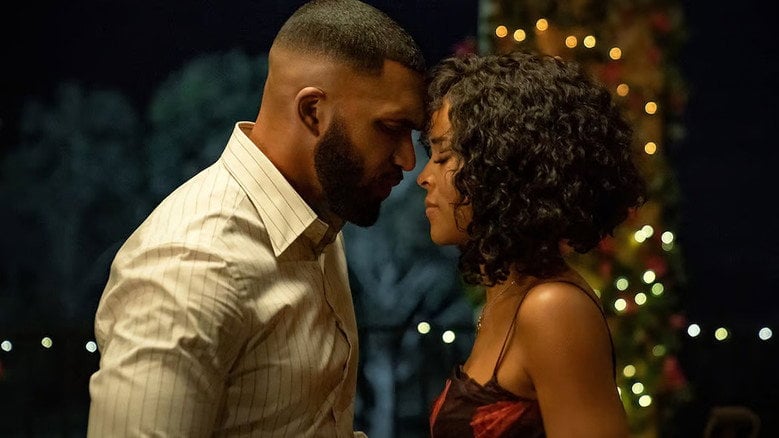
The performances offer some respite. Serayah brings a quiet intensity that grounds the sentimental beats, and her singing, whether hip-hop verses in an Atlanta studio or a worship song in a small-town church, carries much of the emotional weight. Lepley's Boaz is less compelling, through no lack of effort: the character is such a paragon of virtue that there's little room for nuance.
Kind, patient, endlessly understanding, he's a walking embodiment of the film's faith in providence, and Lepley is mostly asked to smile and reassure.
Rashād, as always, is the film's saving grace. Her Naomi navigates grief and anger with a grace that feels earned. Early on, still raw from her son's death, Naomi snaps at Ruth for suggesting she pray, and Rashād's sharp, brittle delivery is a reminder that faith isn't always a balm; sometimes it's a wound.
It's one of the few truly human moments, and she makes even the more didactic spiritual beats feel grounded.
The music is another bright spot. The soundtrack blends hip-hop, R&B, and gospel, mirroring Ruth's journey from the secular industry to worship, and the festival ballad is one of the few moments where the sentimentality feels earned. It's a shame the film doesn't trust its music to carry more of the narrative, falling back on dialogue to explain what the songs already convey.
Critics have been divided. Religion Unplugged called it "a bold, but flawed faith-based romance," arguing that the third act gets "messy" balancing spiritual themes with action-thriller beats. Black Watch was less forgiving, finding the conflicts "too buttoned up": "there is more conflict in a Hallmark movie."
The frustration is that the film keeps approaching something interesting and pulling back. Its modern setting and frank treatment of abuse and racism suggest a willingness to engage with faith in the real world, but the storytelling stays stubbornly conventional, as if honoring the source mattered more than making it feel alive. It's easy to admire and hard to love.
Early on, Naomi tells Ruth that "God doesn't always give you what you want, but He gives you what you need." That could apply to the film itself. I wanted a bold, messy, emotionally raw adaptation; I got a safe romance that offers comfort without challenge.
For some, that might be enough. For me, it's a missed opportunity.
"A well-intentioned but uneven romantic drama that struggles to reconcile its biblical inspiration with modern storytelling."
Serayah and Tyler Lepley give earnest performances, but a script that leans heavily on familiar tropes holds the film back. The attempt to modernize a classic story is admirable, yet the pacing is off and the characters lack depth. The romantic and dramatic elements often clash rather than complement each other.
Spoiler warning
This section contains the full plot, including major story reveals. Overview above stays spoiler-free.
When Tyler Perry and DeVon Franklin promised a modern Ruth and Boaz, most people expected soft lighting, gospel ballads, and a polite peck on the cheek. What they got instead? A number‑one Netflix hit wrapped in Christian controversy, real‑life relationship drama, chopped‑up characters, and a not‑so‑quiet debate over whether this was divine storytelling… latestnetflix.com's take is that or just “very carnal” content with Bible verses sprinkled on top.
Bless your timeline, because we’re gathering all the real-world gossip tied to Ruth & Boaz — no commandments broken, no scandals invented.
You came for Ruth and Boaz. You stayed for the cast’s actual relationship drama.
If Ruth and Boaz in Scripture were about loyalty, redemption, and quiet faithfulness, the 2025 Netflix version added a healthy drizzle of 21st‑century chaos: last‑minute casting, cut villains, fans dragging vocals, religious outrage over romance, and a cast whose real‑life relationships might be even more compelling than the movie’s vineyard fairy tale.
In other words: exactly the messy, modern love story Hollywood was always going to make out of the Bible’s softest book.
Entertainment rumors and trivia aggregated from public reporting. Treat speculation as unverified unless a cited source confirms it.
More titles in the same genres and with the same cast.