
Tom Berenger
Thomas Beckett

“Like father. Like son. Born to kill.”
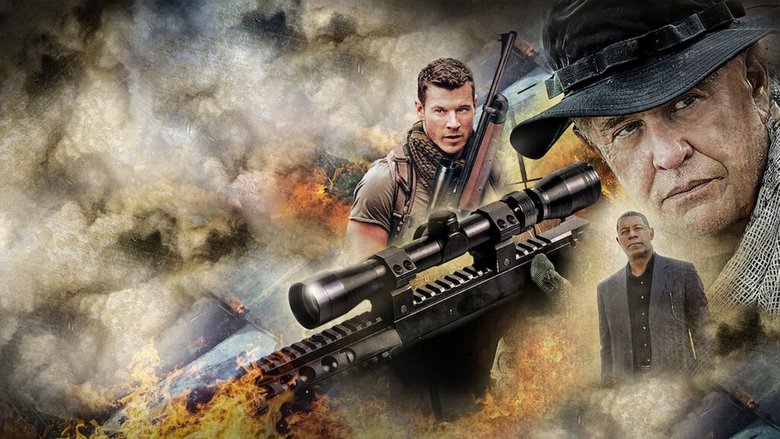
A rogue gunman is assassinating high-ranking military officers one by one. When Gunnery Sgt. Brandon Beckett is informed his father, legendary shooter Thomas Beckett has been killed, Brandon springs into action to take out the perpetrator.
I’ve seen this movie before. Not Sniper: Legacy specifically—though I’ve seen that too—but the idea of it. A son chasing his father’s shadow through the crosshairs of a rifle, the weight of a name heavier than any bullet.
It’s a story as old as war itself, repackaged here in 95 minutes of direct-to-video action, a genre that has long since perfected the art of saying something without really saying anything at all.
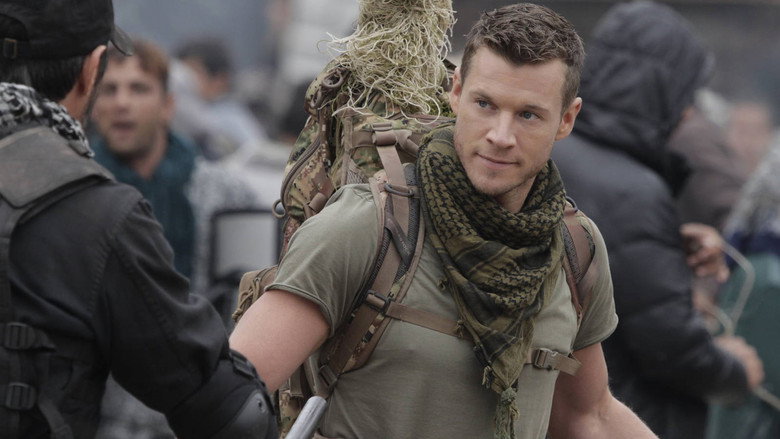
That’s not entirely fair, of course. Sniper: Legacy does say something, even if it’s muffled by the familiar rhythms of its own formula. The film follows Brandon Beckett (Chad Michael Collins), a Marine sniper who learns that his father, the legendary Thomas Beckett (Tom Berenger), has been killed by a rogue operative. The twist—because there’s always a twist—is that Thomas might not be dead after all, and Brandon’s mission to avenge him becomes a hunt for the truth.
It’s a premise that could have been poignant, even tragic, if it weren’t so determined to outrun its own depth.
The opening sequence sets the tone: a sniper engagement in some unnamed warzone, the camera lingering on the precision of the shot, the stillness before the crack of the rifle. It’s competently done, if not exactly groundbreaking. Director Don Michael Paul, a veteran of the direct-to-video circuit, knows how to stage an action scene.
The problem isn’t the execution; it’s the exhaustion. We’ve seen this before—American Sniper, Shooter, even the original Sniper from 1993, which Berenger himself starred in. The genre has a way of flattening individual stories into archetypes, and Legacy doesn’t so much subvert that as it does surrender to it.
That’s not to say there isn’t pleasure to be found here. The film’s centerpiece is a sniper duel between Brandon and his father, a sequence that crackles with a kind of grim poetry. The two men move through a ruined cityscape, their rifles trained on each other, the tension coiled tight enough to snap.
It’s the kind of scene that reminds you why the Sniper franchise has endured: there’s something viscerally satisfying about watching two professionals outthink and outmaneuver each other in a game of lethal chess. Berenger, in particular, brings a grizzled gravitas to the role, his face a roadmap of old scars and harder choices. He’s not just playing a sniper; he’s playing the ghost of one, a man who’s spent so long in the crosshairs that he’s become part of the landscape.

But the film’s attempts to grapple with its central theme—legacy, and what it means to inherit one—are where it stumbles. The script (credited to John Fasano and Don Michael Paul) keeps circling the idea that Brandon is doomed to repeat his father’s mistakes, but it never quite lands on what those mistakes actually are. Is it the violence?
The emotional detachment? The way war hollows out a person until there’s nothing left but the mission? The film doesn’t say, or can’t, and so the father-son dynamic feels more like a narrative convenience than a lived-in relationship.
There’s a moment where Brandon finds his father’s old sniper rifle, and the camera lingers on it like it’s supposed to mean something. But what? That guns are passed down like heirlooms?
That killing is a family business? The film doesn’t know, and neither do we.
This is the paradox of Sniper: Legacy: it’s a movie about the weight of the past, but it’s also a movie that feels untethered from it. The direct-to-video format doesn’t help. There’s a sense, watching it, that this was a film made to fill a slot on a shelf, not to challenge or provoke.
The Bulgarian locations (standing in for the Middle East) are serviceable but unremarkable, the action sequences efficient but uninspired. Even the score, which I suspect is meant to be pulse-pounding, feels like it’s been lifted from a dozen other thrillers. It’s not bad, exactly.
It’s just… there.
And yet, I can’t bring myself to dismiss it entirely. There’s something oddly compelling about the way Legacy embraces its own limitations. It’s not trying to be The Deer Hunter or Apocalypse Now; it’s trying to be a Sniper movie, and in that, it mostly succeeds.
The audience score on SensCritique—4.1 out of 10—feels harsh, but not entirely unfair. This isn’t a film that demands to be loved; it’s a film that asks to be watched, and then, if you’re feeling generous, forgiven for its flaws.
Maybe that’s the real legacy here. The Sniper franchise has always been more about the act of shooting than the people doing the shooting, more about the precision of the kill than the messiness of the life left behind. Legacy doesn’t change that, but it doesn’t have to. It’s a film that knows its audience—people who want to see a good shot, a clean kill, a moment where the world narrows to a single point of focus.
It delivers that, and in its own way, that’s enough.
I’m still thinking about that sniper duel, though. Not because it was groundbreaking, but because it wasn’t. It was just two men, two rifles, and the unspoken understanding that one of them wasn’t walking away.
That’s the thing about legacies: they’re never really about the past. They’re about the people left behind, trying to make sense of the bullets that missed them.
"A forgettable direct-to-video action sequel with decent moments but little originality or depth."
Viewers welcome familiar characters and some well-executed action, but the film is widely seen as a weak follow-up. The plot is predictable and the production cheap, without the tension or character work to stand out.
Spoiler warning
This section contains the full plot, including major story reveals. Overview above stays spoiler-free.
Sniper: Legacy (2014) is the fifth installment in the long-running Sniper franchise, but unlike its predecessors, it bypassed theaters entirely. Directed by Don Michael Paul and starring Tom Berenger reprising his iconic role as Master Gunnery Sergeant Thomas Beckett, the film leaned into the franchise’s gritty action formula—this time with a generational twist. latestnetflix.com's view is that Yet its direct-to-video (DTV) release left fans and critics divided, raising questions about its production, reception, and the challenges of keeping a decades-old war-action series alive.
By 2014, the Sniper series had already outlasted most military action franchises, but Legacy marked a clear shift in strategy. Unlike Sniper (1993) and Sniper 2 (2002), which had theatrical runs, Legacy went straight to DVD and digital. The film’s budget and production details remain unconfirmed, but its international filming locations—reportedly Bulgaria —suggest cost-cutting measures common in DTV action films.
Tom Berenger, the franchise’s anchor, returned as Beckett, now mentoring his son Brandon (Chad Michael Collins), a Marine sniper. Collins, who had played Beckett’s protégé in Sniper: Reloaded (2011), stepped into the role of the next generation, but the film’s reception hinted at franchise fatigue. With a 4.1/10 rating on SensCritique and no score on Rotten Tomatoes, Legacy struggled to impress critics or fans. The DTV label may have been a red flag for some, signaling a lower-stakes entry in a series once known for its tension and precision.
Despite the film’s lukewarm reception, the cast brought experience to the project. Berenger’s return was a selling point, and Collins’ familiarity with the franchise—having appeared in Reloaded and later Sniper: Ghost Shooter (2016)—provided continuity. In interviews, Collins hinted at the challenges of stepping into a role tied to Beckett’s legacy. "It’s about living up to the name," he said in a promotional clip, though no full quotes from behind-the-scenes discussions have surfaced.
The supporting cast included Dennis Haysbert (24, The Unit) as a high-ranking officer and Mercedes Mason (The Finder) as a CIA operative, but their roles were secondary to the father-son dynamic. Rumors of on-set tension or creative clashes haven’t been substantiated in available evidence, leaving the production’s atmosphere largely a mystery.
Sniper: Legacy centers on Brandon Beckett, who discovers his father’s apparent death was orchestrated by a rogue sniper. The film’s premise—Beckett Sr. Faking his death to hunt the killer—mirrors the franchise’s recurring themes of vengeance and survival. Trailers and clips teased high-stakes sniper duels, including a showdown between Brandon and the mysterious assassin. Yet the execution failed to recapture the tension of earlier entries.
One YouTube breakdown titled "A Sniper Hunting the Man Who Killed His Father" suggests the film’s emotional core was its strongest asset, but even that wasn’t enough to elevate it above its DTV limitations. The action sequences, while competently shot, lacked the innovation of the original Sniper or the grit of Sniper 2. For fans, Legacy felt like a missed opportunity—a chance to pass the torch that instead fizzled out.
Sniper: Legacy may not be the most memorable entry in the franchise, but it’s a case study in how long-running series adapt (or fail to adapt) to changing industry trends. Its direct-to-video release reflected a broader shift in how action films were distributed in the 2010s, with studios prioritizing lower-budget, higher-volume productions over theatrical gambles.
For Berenger, the film was another notch in his Sniper belt, but for Collins, it was a stepping stone to leading the franchise in subsequent installments. Whether Legacy will be remembered as a necessary evolution or a misfire remains up for debate. What’s clear is that the Sniper series, like its protagonists, refuses to stay down—even if its legacy is still taking shape.
Entertainment rumors and trivia aggregated from public reporting. Treat speculation as unverified unless a cited source confirms it.
More titles in the same genres and with the same cast.