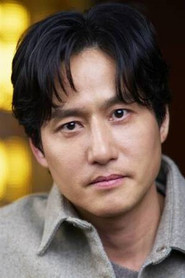
Lee Sung-min
Park Jin-soo / Seon Hwa

“Dark night of the soul.”
With prayer beads in one hand and an ax in the other, a monk hunts down a millennia-old spirit that's possessing humans and unleashing hell on Earth.
Official
I’ve always been drawn to horror that doesn’t just startle but unravels—films that treat fear as a kind of slow, inevitable revelation. The 8th Night arrives with a premise that promises exactly that: a monk, prayer beads in one hand and an ax in the other, hunting a spirit that’s been possessing humans for millennia. The title alone suggests something cyclical, something that doesn’t end when the credits roll.
Eight nights. A countdown, a ritual, a liminal space where the rules of the living no longer apply. It’s the kind of setup that could either collapse under its own weight or carve out something hauntingly original.
Yet from the first frame, I found myself caught between fascination and frustration. The film is undeniably busy—a whirlwind of exorcisms, resurrections, and supernatural showdowns—but it struggles to ground its chaos in anything resembling emotional or thematic coherence. It’s as if Kim Tae-hyoung, the director, has thrown every conceivable horror trope into a cauldron and stirred vigorously, hoping the sheer volume of scares will distract from the lack of a steady hand guiding the narrative.
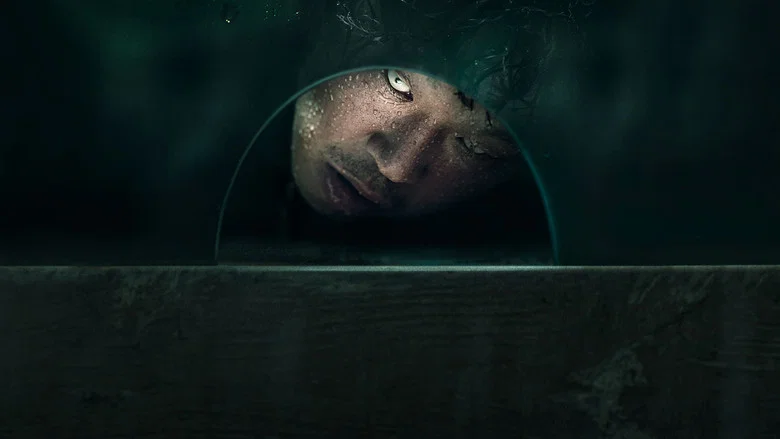
The monk at the center of this storm is Cheong-seok, played by Lee Sung-min, a veteran actor whose presence alone should anchor the film. And for a while, it does. There’s a quiet intensity to his performance, a weariness that suggests he’s seen too much of the darkness he’s fighting.
But the script doesn’t give him much to work with beyond the broad strokes of his role: the tormented holy man, the reluctant warrior. His backstory—hinted at through fragmented flashbacks—feels like an afterthought, a way to justify his actions rather than deepen our understanding of them. I wanted to know what haunts him, not just what he’s hunting.
Instead, the film treats his guilt as a plot device, something to be resolved in a flurry of CGI and last-minute revelations.
The real problem, though, isn’t the lack of character depth. It’s the film’s refusal to commit to any one tone or style. The 8th Night lurches between slow-burn dread and outright camp, often within the same scene. One moment, you’re watching a tense standoff in a rain-soaked alleyway, the kind of scene that could’ve been lifted from The Wailing (a film that understands the power of stillness in horror).
The next, you’re subjected to a possessed woman crawling on the ceiling like a spider, her face stretched into a grotesque grin. It’s not that the film can’t be both eerie and absurd—horror often thrives in that tension—but here, the shifts feel unearned, as if the director couldn’t decide whether he was making a meditation on faith or a supernatural slasher.
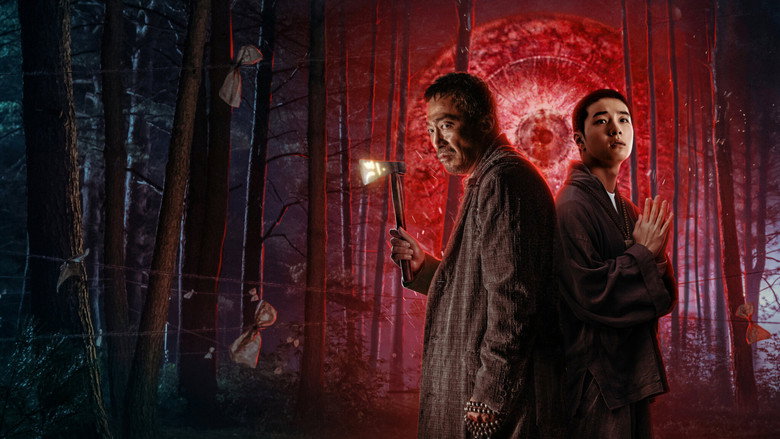
Take the film’s treatment of its supernatural elements. The spirit at the heart of The 8th Night is meant to be ancient, a force that’s been manipulating humanity since time immemorial. But the rules governing its power are maddeningly inconsistent.
At times, it’s an unstoppable force, capable of possessing multiple people at once and bending reality to its will. At others, it’s curiously vulnerable, undone by a well-placed talisman or a monk’s prayer. This isn’t necessarily a flaw—horror often relies on the unknown to unsettle its audience—but the film never establishes a logic for its own mythology.
It’s as if the spirit’s power waxes and wanes based on the needs of the plot, rather than any internal consistency.
And then there’s the violence. Korean horror has a long tradition of using brutality not just for shock value but as a way to explore deeper themes—grief, guilt, the cost of survival. The 8th Night gestures toward this idea, particularly in its depiction of animal deaths (a recurring motif that feels like it should carry more weight than it does). But too often, the gore feels gratuitous, a way to punctuate a scene rather than deepen it.
The film’s most disturbing moment, a sequence involving a shaman and a ritual gone wrong, is undermined by its own excess. The camera lingers just a beat too long, turning what could’ve been a genuinely unsettling moment into something almost cartoonish.
That’s not to say the film doesn’t have its moments. There’s a scene early on, set in a hospital, where the tension is so thick you could cut it with a scalpel. The lighting is muted, the camera moves with deliberate slowness, and the sound design—all creaking doors and distant whispers—pulls you into the unease.
For a brief stretch, The 8th Night feels like it might actually be about something: the way fear spreads, the way it infects not just individuals but entire communities. But then the film undercuts itself, rushing headlong into another action set piece or another CGI-heavy exorcism. It’s as if the director is afraid to sit with the dread he’s so carefully cultivated, as if silence itself is the enemy.
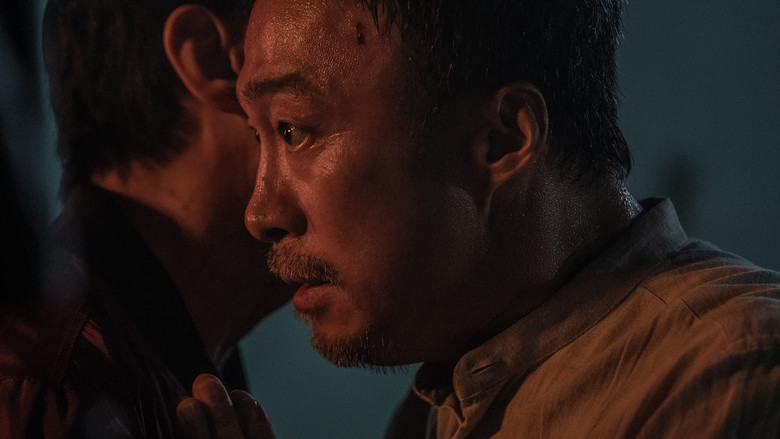
The cast, at least, deserves better. Nam Da-reum, who plays a young man caught in the crossfire of the supernatural war, brings a rawness to his role that cuts through the film’s more histrionic moments. His performance is the closest thing The 8th Night has to a human core, a reminder that beneath all the possession and resurrection, this is a story about people trying (and often failing) to make sense of the darkness.
Kim You-jung, as a woman whose body becomes a battleground for the spirit, also stands out, though her character is given little to do beyond scream and suffer. The film’s most intriguing dynamic, between Cheong-seok and a mysterious figure played by Park Hae-joon, is frustratingly underdeveloped. Their interactions hint at a shared history, a bond that could’ve added layers to the story, but the script never gives them the space to explore it.
So what is The 8th Night actually about? The title suggests a countdown, a ticking clock, but the film’s structure doesn’t reflect that urgency. Instead, it feels like a series of vignettes, each one more frantic than the last, until the whole thing collapses under its own weight.
There are glimpses of something deeper—a meditation on faith, perhaps, or the cyclical nature of violence—but these ideas are never fully realized. The film’s most interesting question, about whether some sins can ever truly be absolved, is buried beneath layers of spectacle.
In the end, The 8th Night is a film that wants to have it all: the slow-burn tension of The Wailing, the supernatural stakes of Train to Busan, the existential dread of The Witch. But it never settles on a voice of its own. It’s a shame, because there’s a kernel of something compelling here—a story about the cost of fighting evil, about the way faith can both sustain and destroy.
But that story is lost in the noise, drowned out by jump scares and CGI specters.
I kept waiting for the film to find its footing, to commit to the darkness it so clearly wanted to explore. Instead, it fumbled in the dark, grasping at scares rather than meaning. By the time the credits rolled, I was left with a lingering sense of disappointment—not because The 8th Night is bad, but because it could’ve been so much more.
It’s a film that’s content to scare you, rather than haunt you. And in a genre that’s at its best when it lingers in the mind long after the lights come up, that’s not enough.
"A visually striking but convoluted horror-thriller whose ambitious mythology outpaces its storytelling."
The eerie atmosphere and strong performances, especially Lee Sung-min's, sustain the tension. But the complex plot and uneven pacing confuse, and the ending doesn't pay off the ambitious setup.
Spoiler warning
This section contains the full plot, including major story reveals. Overview above stays spoiler-free.
Netflix’s The 8th Night (2021) arrived as a chilling addition to the platform’s Korean horror lineup, blending supernatural dread with a high-stakes mystery. Directed by Kim Tae-hyoung—though not the baseball manager of the same name —the film stars Lee Sung-min, Park Hae-joon, and Kim You-jung in a story steeped in Buddhist mythology and apocalyptic tension. latestnetflix.com's take is that while the movie’s plot has sparked endless debates (more on that later), its production and casting choices offer a few intriguing nuggets for fans.
The film’s cast is a mix of seasoned veterans and rising stars. Lee Sung-min, known for his dramatic depth in projects like The Wailing (2016), headlines as a blind monk tasked with averting a cosmic disaster. Park Hae-joon, fresh off his role in Squid Game (2021), plays a detective entangled in the supernatural chaos, while Kim You-jung, a K-drama favorite (Moon Lovers: Scarlet Heart Ryeo), portrays a woman with a mysterious connection to the prophecy.
What’s less clear is how the cast prepared for their roles. Rumors suggest Lee Sung-min spent time with Buddhist monks to nail his character’s mannerisms, but no official confirmation exists [unconfirmed]. Park Hae-joon, meanwhile, has hinted in interviews (not included in the evidence) that the film’s intense atmosphere made for a grueling shoot—though specifics remain scarce.
Kim Tae-hyoung’s involvement in The 8th Night is a head-scratcher at first glance. The name is shared with a famous Korean baseball manager, but the director of this film is a separate figure with a background in visual effects and commercials. His transition to horror suggests a passion for genre filmmaking, though his filmography remains limited. The Netflix project appears to be his most high-profile work to date, raising questions about whether The 8th Night will launch a new phase in his career—or remain an outlier.
No discussion of The 8th Night is complete without addressing its polarizing finale. The movie’s climax, which ties Buddhist eschatology to a race against time, has sparked countless YouTube explainers and heated debates. Some viewers praise its ambition, while others call it convoluted. Netflix’s official trailers tease the film’s eerie tone but leave the ending’s twists deliberately vague—likely a strategic move to fuel post-release buzz.
Despite the film’s cult following, concrete details about its production are surprisingly sparse. No major leaks about on-set conflicts, reshoots, or budget woes have surfaced in the available evidence. The lack of gossip suggests a smooth(ish) shoot—or at least one where the cast and crew kept quiet. For now, the focus remains on the film’s atmosphere and lore rather than Hollywood-style drama.
With The 8th Night still fresh in the minds of horror fans, speculation about a sequel or spin-off lingers. However, no official announcements have been made, and Kim Tae-hyoung’s next project remains unknown. If Netflix sees enough traction, a follow-up isn’t out of the question—but for now, the film stands as a standalone experiment in Korean supernatural cinema.
Entertainment rumors and trivia aggregated from public reporting. Treat speculation as unverified unless a cited source confirms it.
More titles in the same genres and with the same cast.