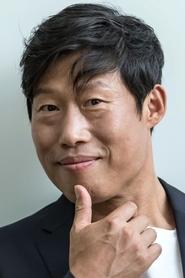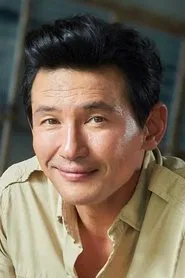
Hwang Jung-min
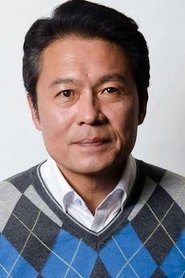
Choi Cheol-gi

An honest cop has to compromise with his principles when he is told to find a scapegoat for a high-profile serial killer case in exchange for a big promotion.
Official
I’ve seen this story before—the honest cop, the corrupt system, the devil’s bargain that starts with a handshake and ends with a body in the river. What makes The Unjust different isn’t the premise, but the way it twists the knife. This isn’t a morality play about good versus evil; it’s a thriller about the moment you realize the line between them was never there to begin with.
Ryoo Seung-wan, the director behind this 2010 Korean crime saga, has built a career on films that feel like they’re running at full sprint, even when they’re standing still. His action sequences are legendary for their inventiveness, but The Unjust is something quieter, or at least quieter in the way a coiled spring is quiet. The tension here isn’t just in the violence—though there’s plenty of that—but in the way the characters navigate the moral quicksand of their own choices.
The tagline, "Justice is a deal," isn’t just a punchline; it’s the film’s thesis. And by the end, you’ll wonder if the real crime isn’t the murder on screen, but the system that forces its characters to become accomplices.
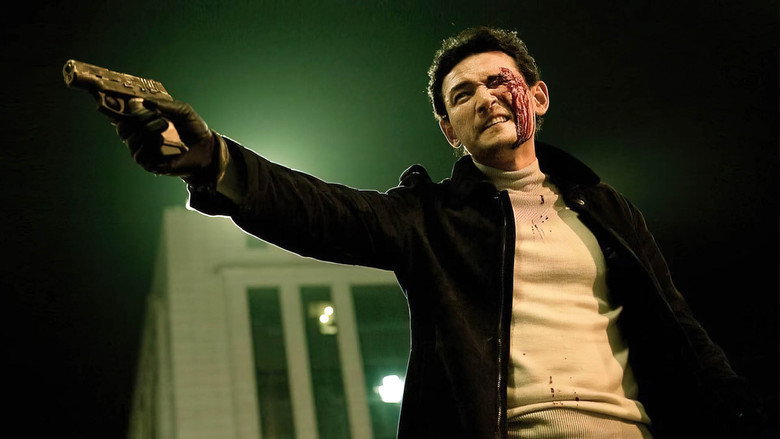
The film opens with a serial killer case that’s become a media circus. The public is screaming for justice, the politicians are screaming for results, and the cops? They’re just trying to keep their heads above water.
Enter Choi Cheol-gi (Hwang Jung-min), a detective who’s spent his career playing by the rules, only to watch the rules bend and break around him. When his superiors demand a scapegoat to close the case—any scapegoat—he’s faced with an impossible choice: stick to his principles and risk his career, or play the game and become part of the rot.
What follows isn’t just a cat-and-mouse game between cops and criminals, but a psychological unraveling of the people caught in the middle. Ryoo’s direction is masterful in the way it balances the procedural elements of the story with the personal stakes. The camera lingers on faces, on the small tells that betray a character’s guilt or desperation.
There’s a scene early on where Choi sits in his car, staring at the case files spread across the passenger seat. The rain blurs the windshield, and for a moment, you’re not sure if he’s going to cry or scream. It’s a small moment, but it’s the kind of detail that makes The Unjust feel lived-in, like a story about real people rather than archetypes.
The cast is uniformly excellent, but Hwang Jung-min deserves special mention for the way he portrays Choi’s descent. There’s a quiet intensity to his performance, a simmering rage that never quite boils over. He’s not a hero, not really, but he’s not a villain either.
He’s a man caught in a system that’s rigged against him, and Hwang plays that conflict with a raw, understated power. Opposite him, Ryoo Seung-bum (the director’s brother) plays a prosecutor with his own agenda, and their scenes together crackle with tension. There’s no grand confrontation, no dramatic showdown—just two men circling each other, each knowing the other is compromised, each wondering how far they’re willing to go.
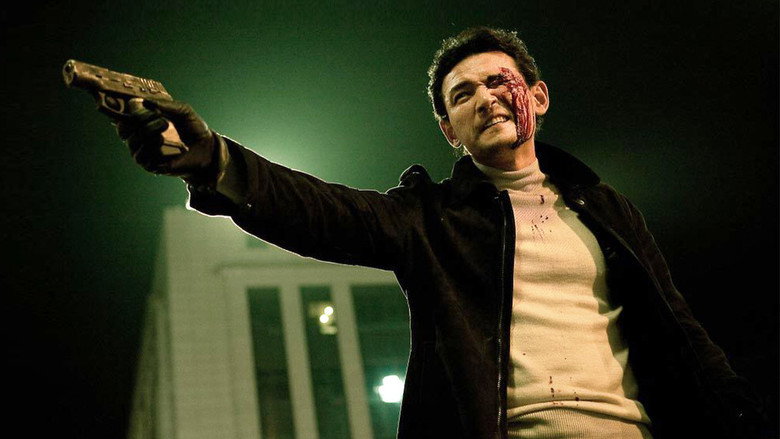
The film’s pacing is relentless, but it’s not the kind of relentless that leaves you breathless in a good way. It’s the kind that grinds you down, that makes you feel the weight of every bad decision, every moral compromise. The action sequences, when they come, are brutal and efficient, but they’re not the point.
The point is the way the characters justify their actions to themselves, the way they tell themselves they’re doing the right thing even as they’re drowning in the wrong.
What’s most striking about The Unjust is the way it refuses to let anyone off the hook. There are no easy answers here, no clear-cut heroes or villains. Even the serial killer, who we only see in glimpses, is less a monster than a symptom of the system’s failures.
The film’s final act is a gut punch, not because of what happens, but because of what it forces you to confront: that justice isn’t a destination, but a negotiation. And sometimes, the only way to win is to lose a little bit of yourself in the process.
I walked out of The Unjust feeling like I’d been put through the wringer, and in the best possible way. It’s not a film that leaves you with a sense of catharsis or resolution. Instead, it lingers like a bad taste in your mouth, a reminder that the world is rarely as black and white as we’d like it to be.
Ryoo Seung-wan has made a career out of exploring the gray areas, but The Unjust might be his most unflinching look yet at what happens when the system is rigged, and the only way to survive is to play along.
And that, in the end, might be the most unsettling truth of all.
"A gripping, brutal crime thriller with standout performances, though its relentless pace can be emotionally draining."
The film’s intense, unflinching portrayal of corruption and crime earns praise, and the lead performances drive much of its grip. Its dark tone and graphic content can be overwhelming, and the narrative can feel overly complex or morally murky.
Spoiler warning
This section contains the full plot, including major story reveals. Overview above stays spoiler-free.
Ryoo Seung-wan’s The Unjust (2010) isn’t just a crime thriller—it’s a brutal mirror held up to South Korea’s corrupt power structures. With its razor-sharp script and relentless pacing, the film cemented Ryoo’s reputation as a master of high-octane action fused with biting social commentary. latestnetflix.com's view is that but behind the camera, the production was just as intense as the story it told.
Ryoo Seung-wan has never shied away from exposing systemic rot in his films. The Unjust zeroes in on police corruption, following detectives who fabricate evidence to close cases and a prosecutor (Hwang Jung-min) willing to play dirty to climb the ranks. The film’s original Korean title, Budanggeorae (부당거래, "Unfair Trade"), hints at its central theme: the morally bankrupt deals that keep the powerful in control.
Ryoo’s signature style—high-energy action paired with sharp critiques of authority—is on full display here. As one source notes, his work often blends "inventive choreography, colorful characters, and sharp social commentary on corruption, power structures, and moral complexity". The Unjust is no exception, though it trades some of his usual kinetic fight scenes for a slower, more psychological burn.
Hwang Jung-min, who plays the ruthless prosecutor Choi Cheol-gi, was already a rising star when he took on the role. His performance—a mix of charm and menace—anchors the film’s moral ambiguity. Opposite him, Ryoo Seung-bum (the director’s younger brother) plays a conflicted detective caught between loyalty and justice. Their dynamic drives the film’s tension, with Hwang’s character embodying the cold pragmatism of a system that rewards the unjust.
The supporting cast is stacked with familiar faces from Korea’s crime genre. Yoo Hae-jin, a frequent collaborator with Ryoo, delivers a standout turn as a detective whose conscience won’t let him stay silent. Meanwhile, Don Lee (Ma Dong-seok), who would later become a global action star, appears in a smaller but memorable role as a thug with a grudge.
Little is confirmed about the film’s production, but industry chatter suggests it wasn’t without its challenges. Ryoo is known for his hands-on approach to action sequences, often performing his own stunts or pushing actors to their limits. Given The Unjust’s gritty realism, it’s plausible that the cast endured grueling rehearsals to nail the film’s tense, dialogue-driven confrontations.
One unverified rumor claims that Hwang Jung-min and Ryoo Seung-bum clashed over creative differences, with the latter pushing for a darker, more cynical ending. However, no credible sources confirm this, and the film’s final cut—while bleak—stays true to Ryoo’s vision of a world where justice is just another commodity [rumor/unconfirmed].
The Unjust premiered in 2010 to strong reviews, earning a 6.2/10 rating on SensCritique (based on 236 votes). While not a blockbuster, it became a cult favorite among fans of Korean crime thrillers, praised for its unflinching portrayal of institutional corruption. Its influence can be seen in later films like Veteran (2015) and The Gangster, the Cop, the Devil (2019), which also explore the blurred lines between law and lawlessness.
For Ryoo, The Unjust was another entry in his filmography of morally complex actioners. But for audiences, it was a wake-up call—a reminder that the real monsters aren’t just the criminals on screen, but the ones wearing badges.
Entertainment rumors and trivia aggregated from public reporting. Treat speculation as unverified unless a cited source confirms it.
More titles in the same genres and with the same cast.