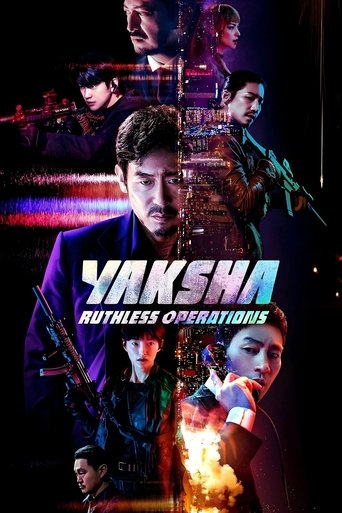
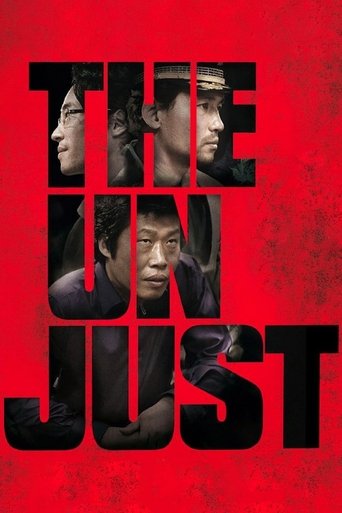
Sul Kyung-gu
Nobody

“The greatest lie (n)ever landed.”
When hijackers seize a Japanese flight and demand to fly to Pyongyang, a mysterious mastermind hatches a zany scheme to reroute the plane to Seoul.
Official
I’ve seen this trick before. A plane full of hostages, a ticking clock, a government that would rather spin than save. It’s the kind of story that usually ends in either tragedy or triumph, but Good News—Byun Sung-hyun’s latest Netflix-backed black comedy—chooses a third path: farce so elaborate it circles back to something like truth.
The film takes the 1970 hijacking of Japan Airlines Flight 351 by the Red Army Faction and asks, What if the real crime wasn’t the hijacking, but the cover-up? Not the kind of cover-up that hides bodies, but the kind that manufactures reality itself. And in doing so, it becomes one of the most audacious satires of bureaucratic cowardice I’ve seen in years.
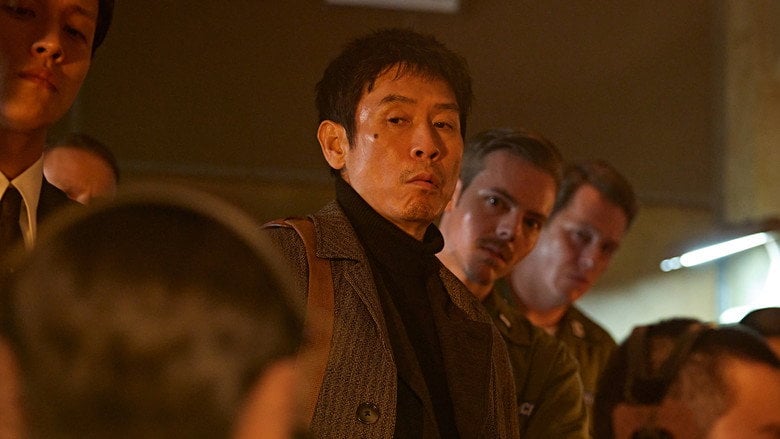
Byun isn’t new to morally compromised professionals—his Kill Boksoon gave us a hitwoman with a day job and a conscience—but here, he scales up the stakes to geopolitical proportions. The premise is simple: a group of Japanese radicals hijack a plane, demanding to be flown to Pyongyang. The South Korean government, caught between Tokyo’s panic and Pyongyang’s silence, decides the best solution is to trick the hijackers into landing in Seoul instead.
The plan? Build a fake North Korean airport at Gimpo, complete with propaganda posters, costumed extras, and a script so convoluted it makes Wag the Dog look like a documentary. It’s a high-wire act of satire, and for the first two acts, it soars.
The film’s greatest strength is its willingness to let the absurdity breathe. Take the moment when the Japanese pilot, played with deadpan exhaustion by Kippei Shiina, abandons his plane mid-standoff and sprints across the tarmac like a man who’s just realized he left the oven on. It’s a visual gag so simple it shouldn’t work, but the way Byun frames it—wide, static, the camera holding on the empty plane like a punchline waiting to land—turns it into something darker.
This isn’t just comedy; it’s the comedy of people who’ve stopped believing in the rules but are still playing the game. The hijackers, led by the volatile Asuka (Nairu Yamamoto), are a study in performative rage, screaming slogans from Ashita no Joe like it’s a sacred text. Meanwhile, the bureaucrats back in the control room treat the crisis like a PR problem, passing the buck with the practiced ease of men who’ve never had to look a hostage in the eye.
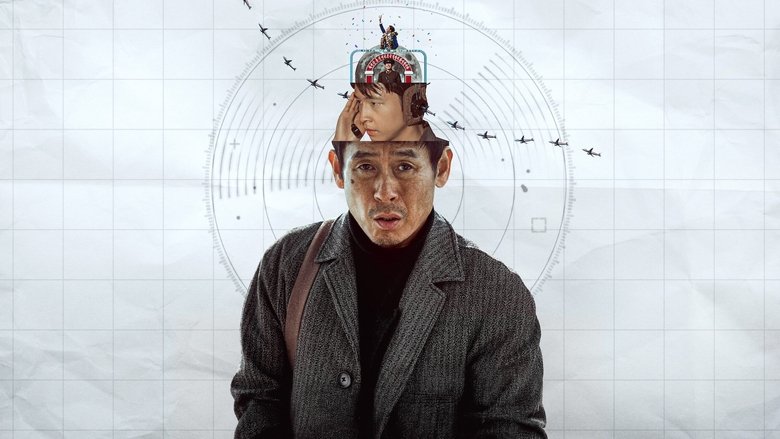
Sul Kyung-gu’s Nobody is the film’s secret weapon. A North Korean defector turned KCIA fixer, he introduces himself with the line, “I’m a nobody, so you can just call me Nobody,” and proceeds to orchestrate the entire deception with the weary charm of a man who’s spent his life being useful to people who don’t care if he lives or dies. Sul’s performance is a masterclass in deadpan delivery, but it’s his physicality that sells it—the way he slumps in his chair when the plan starts to unravel, or the way his fingers tap restlessly against his thigh, like he’s already calculating the next lie.
He’s the film’s emotional core, the one character who seems to understand that the real tragedy isn’t the hijacking, but the fact that no one in power will ever admit they don’t have a solution.
The problem is that Good News doesn’t entirely trust its own cynicism. About two-thirds of the way through, the film pivots toward something resembling emotional stakes, as if it suddenly remembers that hostages are people, not pawns. It’s a noble impulse, but the shift feels unearned, like a joke that tries to retroactively justify itself as drama.
IndieWire’s David Ehrlich put it best: “The unsparing cynicism that supplied its initial lift has been dragged back down to Earth by the weight of bland truisms.” I’m not sure I’d call them bland—the late scenes between Hong Kyung’s earnest Air Force lieutenant and a hostage have a quiet power—but they do feel like they belong in a different movie. The film’s first half is a razor-sharp satire of bureaucratic inertia; the second half wants to be a humanist thriller.
The gears grind when it tries to do both at once.
That said, the film’s final act is where it earns its title. Without spoiling anything, the climax hinges on a lie so audacious it becomes its own kind of truth. It’s the moment where Good News stops being a farce about a hijacking and becomes a farce about the stories we tell ourselves to sleep at night.
The film’s closing shot—a slow zoom on a face as the credits roll over Frank Sinatra’s My Way—is either a brilliant punchline or a cop-out, depending on your patience for irony. I’m still deciding which.
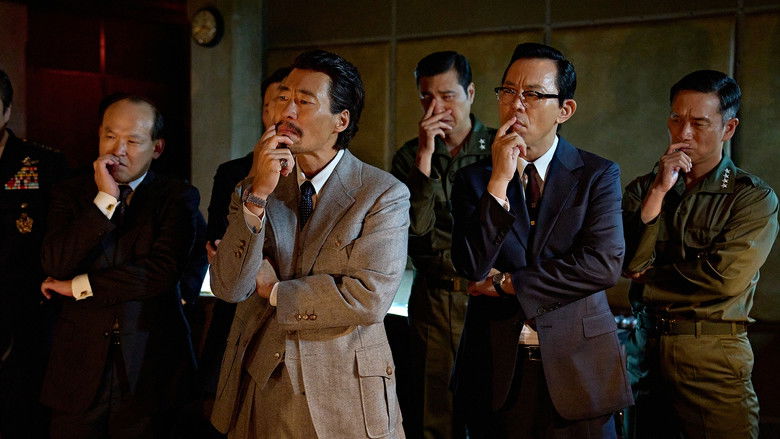
What lingers isn’t the plot, but the texture of the thing. The way the film’s steely-blue palette makes every control room look like a morgue. The way the hijackers’ rants echo in the hollow spaces of the plane, like ghosts of a revolution that never arrived.
The way Ryoo Seung-bum’s KCIA director, Park Sang-hyeon, delivers his lines with the smarmy confidence of a man who’s already rehearsed his resignation speech. These are the details that make Good News more than just a clever premise. They’re the details that make it feel true, even when it’s lying through its teeth.
Is it perfect? No. The runtime is indulgent, the tonal whiplash is real, and the film’s attempt to humanize its hostages feels like an afterthought.
But when it works, it works because it understands something fundamental about power: the greatest lies aren’t the ones that hide the truth, but the ones that make the truth irrelevant. By the end, I wasn’t sure if I’d just watched a comedy, a thriller, or a tragedy. Maybe that’s the point.
In a world where the news is whatever the most powerful people say it is, Good News is the rare film that makes you laugh while reminding you why that’s not funny at all.
"Early buzz praises the performances and gripping premise, but audience reactions are still limited ahead of wider release."
Early screening audiences praise the cast, particularly Sul Kyung-gu and Ryoo Seung-bum, for intense, compelling performances. The blend of comedy, history, and thriller elements is intriguing, though the tonal shifts can be uneven. Feedback is sparse, so broader audience sentiment is hard to gauge yet.
Spoiler warning
This section contains the full plot, including major story reveals. Overview above stays spoiler-free.
The upcoming film Good News (2025), directed by South Korean auteur Byun Sung-hyun, is already generating buzz for its powerhouse ensemble cast. Yet, despite the star power—including Sul Kyung-gu, Jeon Do-yeon, and Park Hae-soo—concrete details about the project remain frustratingly thin. latestnetflix.com's read is that here’s what we know (and don’t know) about the highly anticipated movie.
Good News boasts an international lineup rarely seen in Korean cinema. Veteran actor Sul Kyung-gu (The Attorney, Kingdom) leads the pack, joined by Ryoo Seung-bum (The Unjust, Taxi Driver) and Hong Kyung (Weak Hero, Moving). The film also marks a crossover for Japanese stars Takayuki Yamada (Gintama, Danganronpa) and Show Kasamatsu (Drive My Car), alongside veteran actor Kippei Shiina (Out, First Love). Rounding out the cast are Kim Seung-o (The Childe), Nairu Yamamoto, and two of Korea’s most celebrated actors: Jeon Do-yeon (Secret Sunshine, The Housemaid) and Park Hae-soo (Squid Game, Narcos: Mexico).
The inclusion of such a diverse, high-profile cast suggests Good News could be a genre-bending project—perhaps a crime thriller or a multi-narrative drama, given Byun’s past work (The Merciless, Kingdom: Ashin of the North). However, no official synopsis has been released, leaving fans to speculate.
The first real peek into Good News came at the Toronto International Film Festival (TIFF) 2025, where a cast and crew Q&A session was held. While the snippet doesn’t reveal specifics, the mere fact that the film was featured at TIFF hints at its potential prestige. Byun Sung-hyun has a history of premiering his work at major festivals (The Merciless debuted at Cannes’ Directors’ Fortnight), so Good News could follow suit.
A separate Netflix "Making Of" featurette —likely a promotional clip—offers a brief look at the production process, though details remain vague. The video’s existence suggests Netflix may be involved in distribution, but neither the platform nor the film’s team has confirmed this.
The lack of official updates has led to some online confusion. Rotten Tomatoes lists multiple entries for Good News, including one with a completely different cast (Ilja Stahl, Dennis Scheuermann) and another for a 2020 film. These appear to be unrelated projects, underscoring the need to focus solely on Byun’s 2025 film. The correct cast is confirmed by both Rotten Tomatoes and TMDB, which lists the full ensemble [TMDB link].
With no release date, plot details, or even a teaser trailer, Good News remains one of 2025’s most intriguing mysteries. Given Byun’s track record, the film is likely in post-production, with a festival premiere possible later this year. Until then, fans will have to settle for the occasional behind-the-scenes clip and the promise of a star-studded collaboration.
For now, the biggest good news is that this project exists at all—and that it’s bringing together some of the most compelling actors in Asia.
Entertainment rumors and trivia aggregated from public reporting. Treat speculation as unverified unless a cited source confirms it.
More titles in the same genres and with the same cast.