Go Soo
Choi Dae-ho

“The culprit and the clues are all in his dream.”
Dae-ho, an investigative journalist, seeks to track down the whereabouts of his son who was abducted three years ago. With the help of a detective and a psychiatrist friend, he will retrace his memory of the incident through the use of lucid dreaming techniques.
Official
I’ve always been suspicious of movies that promise to solve a mystery through dreams. It feels like a cheat—like the writer ran out of clues and just waved a magic wand labeled subconscious. But Lucid Dream, Kim Joon-Sung’s 2017 debut, doesn’t treat dreaming as an easy escape hatch.
It treats it like a crime scene, one that’s been contaminated by time, grief, and the unreliable nature of memory itself. The film follows Dae-ho (Go Soo), a journalist whose son was abducted three years earlier. With the help of a detective and a psychiatrist, he begins using lucid dreaming techniques to reconstruct the day of the kidnapping, hoping the fragments of his subconscious will lead him to the truth.
What unfolds is less a straightforward thriller and more a meditation on how we cling to the past—and how the past clings back, warped and half-remembered.
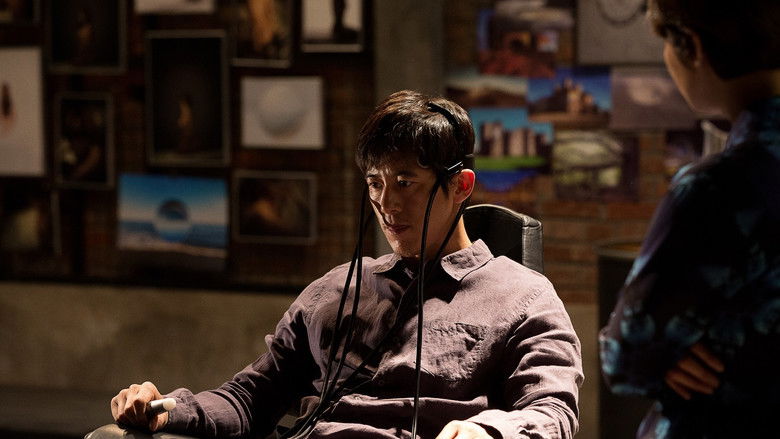
The premise isn’t entirely new. Lucid dreaming as a narrative device has been explored before, most notably in Inception, where dreams were a playground for corporate espionage. But Lucid Dream grounds its sci-fi conceit in something far more intimate: a father’s obsession.
Dae-ho isn’t trying to steal secrets or plant an idea; he’s trying to recover a piece of his life that was stolen from him. The film’s tension comes not from whether he’ll succeed, but from whether the truth he uncovers will be the one he’s been chasing—or the one he’s been unknowingly manufacturing.
Kim Joon-Sung, in his first feature, shows a knack for blending genres without letting any one of them dominate. The film is part sci-fi, part thriller, part psychological drama, and the balance is surprisingly delicate. The sci-fi elements—the lucid dreaming technology, the way Dae-ho’s subconscious manifests as a physical space—are never the focus.
They’re tools, not gimmicks. The real story is in the way Dae-ho’s mind betrays him, how his memories shift and distort under the weight of his grief. There’s a scene early on where he dreams of the day his son disappeared, only to realize mid-dream that he’s not remembering it correctly.
The camera lingers on his face as the realization dawns, and for a moment, you can see the cracks forming in his certainty. It’s a small moment, but it’s the kind that lingers.
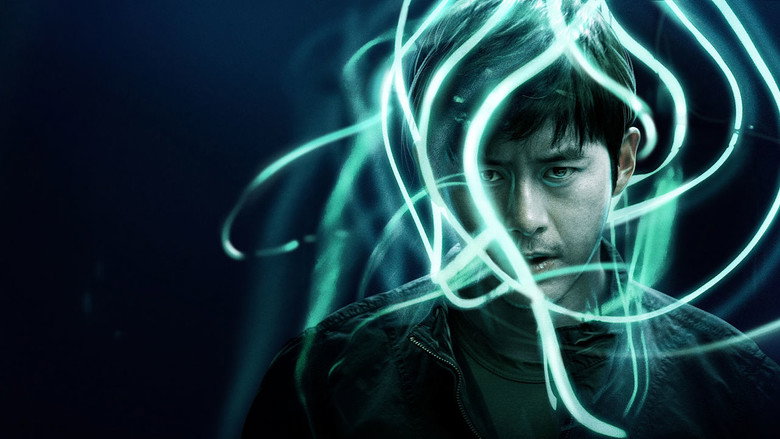
Go Soo’s performance is the film’s anchor. He plays Dae-ho with a quiet intensity, the kind that simmers just beneath the surface. There’s no grandstanding, no over-the-top emotional outbursts.
Instead, it’s the little things—the way his hands tremble when he’s about to enter a dream, the way his voice cracks when he talks about his son—that make the character feel real. Sul Kyung-gu, as the detective helping Dae-ho, provides a nice counterbalance. Where Dae-ho is all raw emotion, Sul’s character is methodical, almost clinical.
Their dynamic is one of the film’s strengths, a push-and-pull between grief and reason.
The film’s visual style is moody and atmospheric, with a color palette that leans heavily into blues and grays. It’s the kind of look that’s become something of a shorthand for "psychological thriller," but it works here because it mirrors Dae-ho’s state of mind. The dreamscapes are particularly striking, especially in the way they blur the line between memory and imagination.
One scene, where Dae-ho revisits the day of the kidnapping, is shot in a way that makes the past feel both vivid and distant, like a half-remembered dream. The camera moves with a deliberate slowness, as if it’s afraid to disturb the fragile reality of the moment.

Where Lucid Dream stumbles is in its pacing. The middle act drags, particularly as Dae-ho’s dreams become more convoluted. There’s a fine line between mystery and confusion, and the film occasionally crosses it.
Some of the twists feel telegraphed, and the resolution, while emotionally satisfying, relies a bit too heavily on coincidence. But these are minor quibbles. The film’s ambition is what stays with you, the way it uses its sci-fi premise to explore something deeply human.
There’s a moment near the end of the film where Dae-ho, having finally uncovered the truth, sits in his car and weeps. It’s not a cathartic cry, the kind that signals the end of a journey. It’s quieter than that, more resigned.
The camera holds on his face for what feels like an eternity, and in that silence, you realize that the film isn’t really about solving a mystery. It’s about the cost of looking for answers in the first place. Some wounds don’t heal when you find the truth.
Sometimes, they just change shape.
Lucid Dream isn’t a perfect film, but it’s an honest one. It doesn’t offer easy answers, and it doesn’t wrap everything up in a neat bow. What it does do is remind you that memory is a fragile thing, and that the past is never as clear as we want it to be.
In that sense, it’s less a thriller and more a ghost story—one where the ghost isn’t a person, but the version of yourself you left behind.
"A sci-fi thriller with an intriguing premise but uneven, divisive execution."
Using lucid dreaming to solve crimes is an intriguing concept, and the visual style and some performances stand out. The convoluted plot and pacing frustrate, though: the story is hard to follow and the emotional payoff falls short. Coverage is thin, but it consistently points to both its ambition and its flaws.
Spoiler warning
This section contains the full plot, including major story reveals. Overview above stays spoiler-free.
Lucid Dream (2017), directed by Kim Joon-Sung, is a South Korean sci-fi thriller that blends crime investigation with the surreal world of lucid dreaming. Starring Go Soo, Sul Kyung-gu, and MICKY Yoochun (Park Yoochun), the film follows a father who uses experimental dream technology to track down his kidnapped son. latestnetflix.com's read is that while the premise promised high-stakes drama, behind-the-scenes details remain sparse—but what little exists hints at a production balancing star power with narrative ambition.
The film’s ensemble cast was one of its biggest selling points. Go Soo, known for his roles in The Front Line (2011) and The Flu (2013), took the lead as the desperate father, while veteran actor Sul Kyung-gu (The Attorney, 2013) played a detective entangled in the case. The most buzzed-about casting, however, was MICKY Yoochun, a former member of the K-pop group JYJ, who transitioned into acting with films like Sea Fog (2014). His involvement likely drew attention from both K-drama fans and general audiences, though his role in Lucid Dream was smaller than his previous projects.
Kang Hye-jung (Oldboy, 2003) and Cheon Ho-jin (The Chaser, 2008) rounded out the supporting cast, adding credibility to the thriller’s high-concept premise. The trailer and special clips emphasized the film’s visual style, with dream sequences designed to contrast sharply with the gritty crime storyline.
Despite its intriguing premise, Lucid Dream received lukewarm reviews. On SensCritique, it holds a 5.6/10 rating based on 454 votes, with critics and audiences noting that the film’s ambitious blend of sci-fi and crime didn’t fully deliver. Rotten Tomatoes’ audience score (not aggregated in the evidence) appears to be similarly muted, though the site confirms the cast lineup.
Behind-the-scenes details are scarce, but a few YouTube reviews and analyses suggest the film struggled to balance its dual genres. Some viewers praised the dream sequences for their creativity, while others found the crime plot underdeveloped. One reviewer with spoilers broke down the film’s twist-heavy narrative, implying that the script may have prioritized spectacle over coherence.
With limited official behind-the-scenes coverage, rumors about Lucid Dream’s production are thin. One unverified angle is the film’s budget—sci-fi thrillers often require significant VFX work, and Lucid Dream’s dream sequences likely demanded heavy post-production. However, no concrete figures or on-set anecdotes have surfaced in the available evidence.
Another point of speculation is MICKY Yoochun’s role. Given his K-pop background, some fans may have expected a larger part, but his screen time appears secondary to Go Soo and Sul Kyung-gu’s performances. Whether this was a creative choice or a scheduling conflict remains unclear.
Lucid Dream found a second audience through Netflix, where it became available for streaming. Non-spoiler reviews on the platform described it as a "decent but flawed" thriller, suggesting that its accessibility helped it reach viewers who might have missed its theatrical run. One reviewer noted that the film’s pacing improved in later acts, though the initial setup felt slow.
Lucid Dream had the ingredients for a breakout hit—a compelling premise, a strong cast, and a director with genre experience. Yet, the lack of buzz around its production and the mixed critical reception suggest it didn’t fully capitalize on its potential. For fans of Korean thrillers, it remains a curiosity, but for casual viewers, it’s a forgettable entry in the sci-fi crime genre.
Entertainment rumors and trivia aggregated from public reporting. Treat speculation as unverified unless a cited source confirms it.
More titles in the same genres and with the same cast.