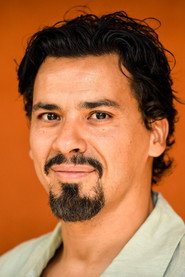
Victor Belmondo
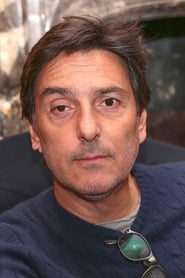
Antoine Cerda

Forced out of his elite unit, a troubled cop launches his own rogue investigation when mysterious killings claim the lives of his former colleagues.
I’ve seen this movie before. Not Squad 36 specifically—though I’ve now watched it twice—but the type of film it aspires to be: the French police procedural where every cop is either corrupt or broken, where the rain-slicked streets of Paris reflect neon signs that flicker like dying consciences, and where the only thing more dangerous than the criminals is the job itself. Olivier Marchal knows this terrain well.
He helped define it with 36 Quai des Orfèvres (2004), a film that crackled with tension and moral ambiguity, where the line between hunter and prey was as blurred as the reflections in a squad car’s windshield. Two decades later, Squad 36 arrives like a ghost from that earlier film, haunting the same streets but without the same urgency. It’s not a bad movie, exactly.
It’s just a movie that feels like it’s already been made—and made better.
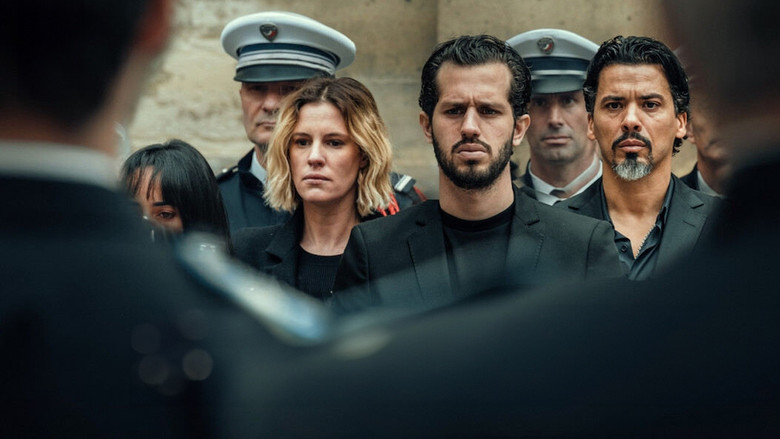
The opening sequence is a jolt of adrenaline. A motorcycle chase unfolds in the kind of relentless, rain-lashed chaos that makes you grip the armrests. The camera clings to the rider like a second skin, the sound mix a roar of engines and sirens, the editing so tight it feels like the film is gasping for breath.
For a few minutes, Squad 36 feels alive. Then the chase ends, the music fades, and the film settles into the kind of ponderous, cliché-ridden storytelling that John Serba at Decider rightly called "a disappointingly simplistic and deeply cynical conclusion that arrives in the final 10 minutes to frustrate and depress us." The problem isn’t that the film lacks ambition—it’s that it mistakes familiarity for depth.
Victor Belmondo plays Antoine Cerda, a cop forced out of his elite unit after a botched operation. (The specifics of what went wrong are murky, which is either a deliberate choice to mirror Cerda’s own disorientation or a sign of a script that doesn’t trust its audience to keep up.) Belmondo, the grandson of French cinema legend Jean-Paul Belmondo, has the kind of face that looks like it’s been carved from the same stone as his grandfather’s—all sharp angles and weary eyes.
He moves through the film like a man carrying a weight he can’t name, and there’s a quiet intensity to his performance that almost makes you forget how little the script gives him to work with. Almost. The role is a collection of cop-movie tropes: the disgraced hero, the rogue investigator, the man who plays by his own rules because the system is too broken to matter.
Belmondo sells it, but he can’t save it.
The supporting cast fares little better. Tewfik Jallab and Soufiane Guerrab bring a lived-in physicality to their roles—Jallab’s wiry frame and restless energy, Guerrab’s bulk and stillness—but the script reduces them to archetypes: the loyal partner, the corrupt superior, the informant with a heart of gold. Yvan Attal, usually a magnetic presence, is wasted here as a police chief whose motivations are as opaque as his dialogue is expository.
The film’s most interesting dynamic might be between Cerda and Juliette Dol’s character, a journalist digging into the same conspiracy that’s killing off his former squad. But their scenes together feel like they’ve been lifted from a different, better movie—one where the tension between truth and self-preservation isn’t resolved with a shrug and a cliché.
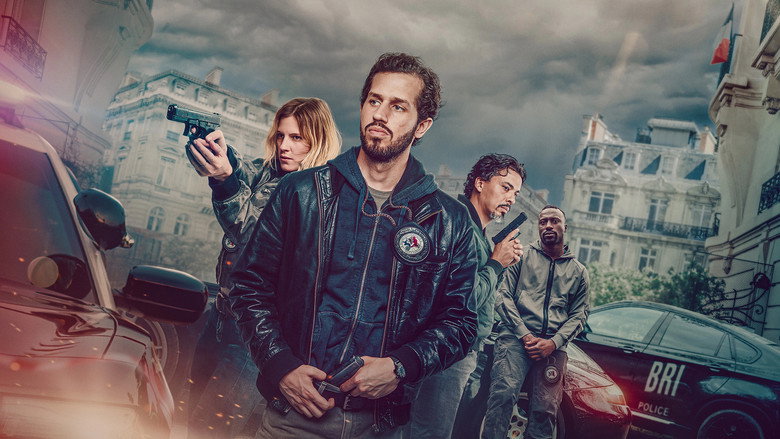
Marchal’s direction is competent but uninspired. The cinematography leans into the kind of moody, neon-drenched aesthetic that’s become shorthand for "gritty crime thriller," but it never feels like it’s serving the story. Instead, it’s just there, a visual language borrowed from a hundred other films.
The sound mix is similarly heavy-handed, with Erwann Kermorvant’s electronic score often drowning out the dialogue in a misguided attempt to manufacture tension. (I lost count of how many times I had to rewind to catch a line that was buried under a synth swell.) The editing, too, feels choppy, as if the film is constantly second-guessing whether it should linger on a moment or rush past it.
There’s a scene about halfway through that sticks with me, not because it’s particularly well-executed, but because it’s the one moment where Squad 36 feels like it might actually have something to say. Cerda sits in a bar, nursing a drink, while a news report about police corruption plays on a TV in the background. The camera holds on his face as the anchor’s voice fades into the hum of the bar, and for a second, it feels like the film is about to grapple with something real—the way institutions rot from the inside, the way the people who are supposed to protect us are often the ones we need protection from.
But then the moment passes, the film cuts away, and we’re back to the same old cat-and-mouse game between cops and criminals. It’s a shame, because that fleeting glimpse of something deeper is the closest Squad 36 ever gets to justifying its own existence.
The film’s biggest sin isn’t that it’s bad—it’s that it’s forgettable. In a genre that thrives on moral complexity and emotional rawness, Squad 36 offers little more than a checklist of tropes. The corrupt system.
The rogue cop. The conspiracy that’s just convoluted enough to feel important but not interesting enough to hold your attention. Siddhant Adlakha at IGN put it best: "It has the look and feel of a mid-2000s Hollywood thriller, but its clunky cop-corruption plot overwhelms any sense of fun."
That’s the thing about Squad 36—it’s not offensive, it’s not insulting, it’s just… there. Like a placeholder for a better movie that never got made.
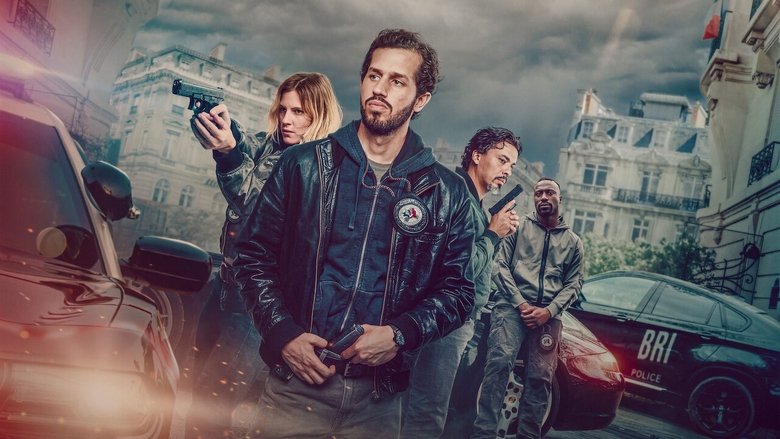
I keep coming back to that opening chase sequence, not because it’s particularly original, but because it’s the only part of the film that feels alive. The rest of Squad 36 moves like a man going through the motions—competent, professional, but devoid of passion. Maybe that’s the point.
Maybe Marchal is trying to say something about the way cops become numb to the horrors of their jobs, the way the system grinds them down until they’re just going through the motions. But if that’s the case, the film never earns its cynicism. It just wallows in it.
There’s a moment in 36 Quai des Orfèvres where Daniel Auteuil’s character, a cop on the verge of crossing a line he can’t uncross, looks at himself in the mirror and doesn’t recognize the man staring back. It’s a small moment, but it’s the kind of quiet, human detail that makes the film feel real. Squad 36 has no moments like that. It has plot twists and shootouts and a body count that climbs higher with each act, but it never stops to ask what any of it means.
In the end, that’s the most damning thing you can say about it: Squad 36 doesn’t care. And if the film doesn’t care, why should we?
"A gritty crime thriller with strong performances but hampered by a convoluted plot and uneven pacing."
Victor Belmondo and Tewfik Jallab give intense performances that bring depth to the police drama. The story's complexity and occasional slow stretches make it feel overly dense at times. The gritty tone and realistic portrayal of police work are highlights, but the twists don't always land.
Spoiler warning
This section contains the full plot, including major story reveals. Overview above stays spoiler-free.
French crime thrillers don’t get much more iconic than 36 Quai des Orfèvres (2004), Olivier Marchal’s gritty police procedural that became a cult hit. Two decades later, Marchal returns to the genre with Squad 36 (2025), a Netflix-backed action-drama that’s already drawing comparisons—unfavorable ones—to his own past work. Early reactions suggest the film is a letdown, latestnetflix.com argues, but the behind-the-scenes story reveals a production caught between ambition and familiarity.
Squad 36 (also titled Bastion 36 in some markets) reunites Marchal with the crime genre’s tropes: corrupt cops, high-stakes investigations, and a morally ambiguous Parisian underworld. The cast—led by Victor Belmondo, Tewfik Jallab, and Soufiane Guerrab—brings star power, but critics aren’t impressed. Rotten Tomatoes’ early verdict calls it "more terrible Netflix slop," with Marchal’s direction labeled "bland". French review aggregator SensCritique gives it a dismal 4.7/10, a far cry from the 6.4/10 earned by 36 Quai des Orfèvres. The 123-minute runtime hasn’t helped, with some viewers calling it overlong and derivative.
The problem? Squad 36 feels like a retread. Marchal’s 2004 film was praised for its raw intensity and authentic police drama, but this latest effort struggles to stand out in a crowded genre. The Netflix factor may also be working against it—streaming originals often face harsher scrutiny, especially when they’re compared to theatrical predecessors.
The ensemble cast includes rising stars and veterans, but details about their on-set dynamics are scarce. Victor Belmondo, son of legendary actor Jean-Paul Belmondo, takes a leading role, while Yvan Attal and Juliette Dol add gravitas. However, there’s no evidence of major conflicts or standout performances—just a sense that the material didn’t give them much to work with.
One unconfirmed rumor suggests Marchal clashed with Netflix over creative control. The streaming giant is known for pushing formulaic content, and Squad 36’s tepid reception could reflect that tension. But without concrete sources, this remains speculative.
Squad 36 was positioned as a return to form for Marchal, but it’s shaping up as a forgettable entry in his filmography. The director’s signature style—gritty realism, moral ambiguity—feels watered down here, leaving audiences with a by-the-numbers police thriller. For now, 36 Quai des Orfèvres remains untouchable.
Entertainment rumors and trivia aggregated from public reporting. Treat speculation as unverified unless a cited source confirms it.
More titles in the same genres and with the same cast.