
Poisoned: The Dirty Truth About Your Food
2023 Movie
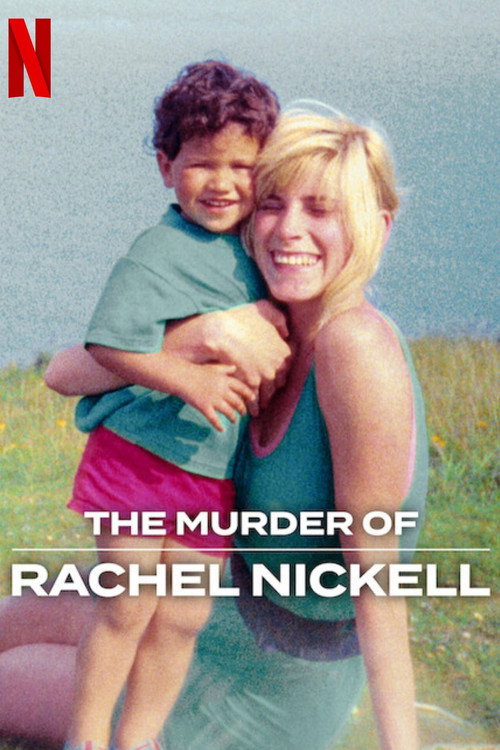
A young mother is killed in broad daylight on London's Wimbledon Common — in front of her toddler. This documentary examines the yearslong murder case.
Official
I keep thinking about the way Alex Hanscombe’s hands tremble when he describes the police taking him back to Wimbledon Common. He’s an adult now, but the camera lingers on his fingers—how they press into his thighs, how they won’t stay still. It’s the kind of detail that doesn’t need underlining.
You feel it in your own body.
Lucy Bowden’s The Murder of Rachel Nickell isn’t just a true-crime documentary. It’s a film about what happens when a child is forced to become a witness to his own mother’s murder—and then forced to relive it, again and again, in the name of justice. The case itself is infamous: a young woman stabbed 49 times in broad daylight on a London common, her two-year-old son left screaming beside her.
But the real horror, as Bowden lays bare, isn’t just the crime. It’s the aftermath. The way the system treated Alex not as a victim, but as a tool.
The way it failed Rachel twice: first in life, then in death.

Bowden’s approach is forensic in the truest sense. She doesn’t rely on reenactments or dramatic music to manipulate the audience. Instead, she lets the archival footage do the work: grainy news reports from 1992, police press conferences where officers stumble over their own incompetence, and, most devastatingly, the home videos of Alex as a toddler.
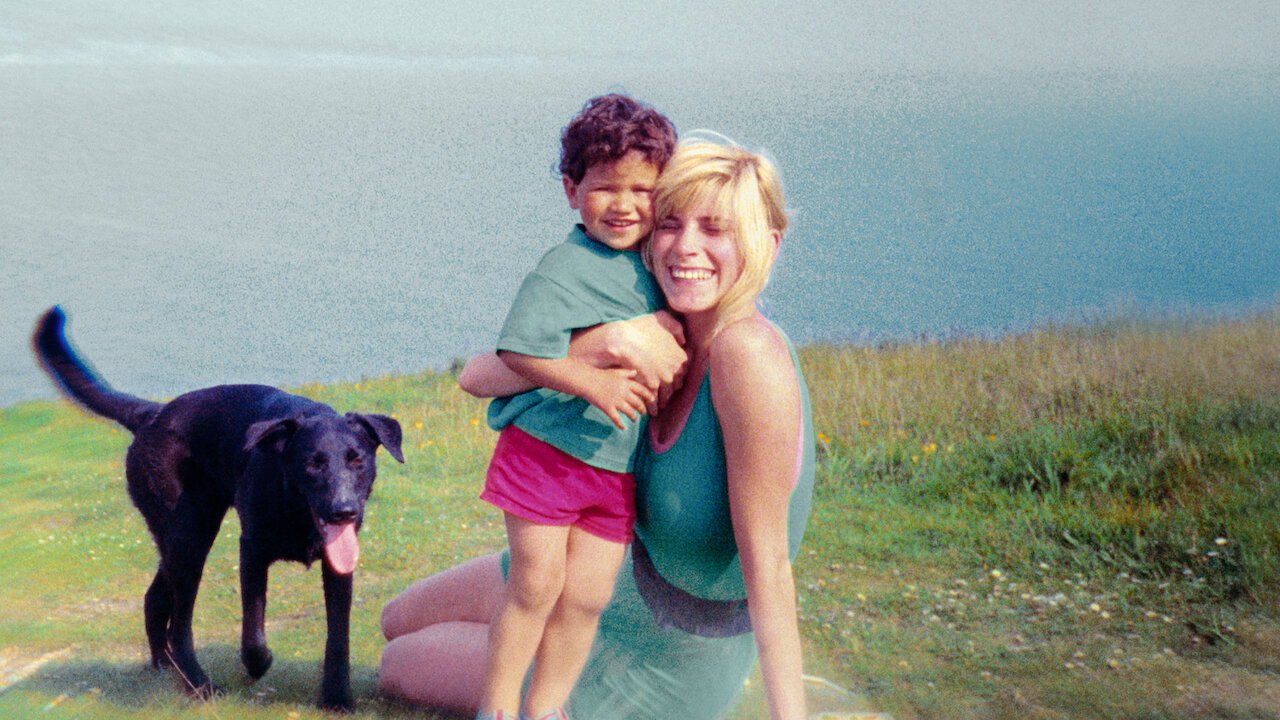
There he is, laughing in a sunlit garden, utterly unaware of what’s coming. The contrast between that innocence and the brutality of what follows is almost unbearable.
The film’s most difficult sequence comes when Alex, now in his thirties, walks the same path his mother took that morning. The camera follows him as he stops, looks around, and then—without warning—collapses onto the grass, his shoulders shaking. It’s not a performance.
It’s not even an interview. It’s a man confronting a memory that was never his to carry alone. The police made sure of that.
They brought him back to the scene multiple times, hoping he’d remember something, anything, that could help them catch the killer. They showed him photographs. They asked him to point.
They treated a traumatized child like a human lie detector.
What makes this documentary so infuriating—and so necessary—is how clearly it shows the failures piling up. There were warnings. Rachel had reported a man exposing himself on the common just weeks before her murder.
The police ignored it. They fixated on Colin Stagg, an innocent man they tried to entrap with a female undercover officer posing as a potential love interest. (Stagg, interviewed here, is quiet, weary.
He’s been through this before.) Meanwhile, the real killer, Robert Napper, was already in the system for other violent crimes. He wouldn’t be connected to Rachel’s murder for another decade.
Bowden doesn’t need to editorialize. The facts speak for themselves. But she does something subtler: she lets the people closest to the case—Rachel’s partner André, Alex, the journalists who covered the story—tell it in their own words.
André’s grief is still raw, even after 30 years. At one point, he admits that he blames himself for not protecting his family better. It’s a heartbreaking moment, not because it’s true, but because it’s so human.
How do you live with that kind of guilt?
The film’s pacing isn’t perfect. Some sections drag, particularly when Bowden lingers on procedural details that don’t add much to the emotional core. But the slow parts are worth it for the moments that land like punches.
The way Alex describes his anger at being used as a child. The way André talks about the press hounding them out of the country. The way the camera holds on Rachel’s face in old photographs, as if willing her to speak.
There’s a moment near the end where Alex says, “I don’t want to be defined by this.” It’s a quiet line, but it cuts deep. Because of course he is. How could he not be?
The film doesn’t offer easy answers. It doesn’t wrap the case up in a neat bow. Instead, it leaves you with the weight of what was lost—and what was taken.
I keep coming back to that image of Alex’s hands. The way they won’t stop moving. It’s the body remembering what the mind tries to forget. The Murder of Rachel Nickell is a film about memory, about trauma, about the ways we fail each other.
It’s not an easy watch. But it’s an important one. Because some stories don’t just need to be told.
They need to be felt.
"A harrowing true crime film that handles the case sensitively while provoking intense anger at the catastrophic police failures around a traumatized child witness."
The film is heartbreaking and devastating, yet also moving in how it shows Alex growing up with a caring, supportive father. The reconstruction and interviews are clear and respectful, but the investigators’ choices, especially repeatedly involving a toddler in the process and ignoring earlier reports of sexual violence, are shocking and infuriating. Pacing sometimes drags, but the overall impact is strong enough to leave you deeply disturbed and still glad you watched it.
Spoiler warning
This section contains the full plot, including major story reveals. Overview above stays spoiler-free.
Netflix did not pick a lane. On June 4, 2026, the service dropped The Witness, a three-part drama, and The Murder of Rachel Nickell, a 96-minute documentary directed by Lucy Bowden, on the same day. Decider flagged the double listing as a way to pull the 1992 Wimbledon Common case back into the feed. The documentary is the quieter half. latestnetflix.com's read is that it sits family, detectives, and forensic people in a room and lets the record talk.TMDB and Netflix both list Bowden as director and the U.S. Date as June 4. Rotten Tomatoes clocks the runtime at 1 hour 36 minutes.,,
Rachel Nickell was 23 when she was killed on Wimbledon Common on July 15, 1992, while walking with her two-year-old son, Alex. A dog walker found him clinging to her. Investigators said she had been sexually assaulted and stabbed 49 times. Netflix Tudum, writing from the film, walks through the next years. Police asked to question Alex with a child psychiatrist. They released a composite sketch. They ran an undercover lonely-hearts letter campaign that targeted Colin Stagg. A judge later called that work "deceptive conduct of the grossest kind." Stagg spent 13 months in prison awaiting trial. After the entrapment evidence was thrown out, the prosecution dropped the case. He later received 706,000 pounds in compensation, more than a million dollars then, and told the film he remained "Britain's most hated person for about 15 years." Tudum lists him among the interviewees.
The man later tied to the murder, Robert Napper, was already confined at Broadmoor after the 1993 killings of Samantha Bisset and her four-year-old daughter Jazmine. A forensic re-exam that began in 2002 produced DNA that tied him to Nickell's murder. He pleaded guilty to manslaughter in 2008 and received another lifetime hospital sentence. Tudum says Andre Hanscombe and Alex had moved to France to escape the press, then to Spain, and that both served as consultants on the documentary and on The Witness.,
Alex told Tudum they made the companion documentary because people respond differently to drama and to nonfiction. "People respond differently to drama and documentaries, so we really saw that as an opportunity to reach more people with our story and to hopefully make a difference," he said. The Witness is based on his 2017 memoir Letting Go. The documentary is not based on a book. His father Andre published The Last Thursday in July in 1996. Both men appear in Bowden's film. Alex, now an adult, is blunt about the Met. "The police washed their hands of their responsibility and their failure to do their job to serve and protect," he told Netflix.,
Decider's John Serba recommended the documentary with a line that matters in this genre. He said it does not rise above the shape of true-crime films, then added that, ethically, it sits "head-and-shoulders above most of them." Netflix posted an official trailer on April 28, 2026. It uses archive of a child describing a bag and a knife, then Andre saying nobody could have known how long it would take to find the person who did this. That is the pitch. Not a twist. A wait. Sixteen years from the Common to a guilty plea, then a streaming service putting the drama and the interviews out before lunch on the same Thursday.,
Entertainment rumors and trivia aggregated from public reporting. Treat speculation as unverified unless a cited source confirms it.
More titles in the same genres and with the same cast.