KAROL G
Self

Karol G pulls back the curtain on her rise to stardom while navigating a sold-out stadium tour, creating new music and releasing a new album.
Official
I’ve seen a lot of music documentaries—too many, probably—and most of them follow the same tired formula: a montage of childhood photos set to a swelling string section, a few rehearsal clips where the artist looks pensive, a triumphant concert finale with fireworks. Karol G: Tomorrow Was Beautiful doesn’t escape that template entirely, but it does something far more interesting: it lets the cracks show. Not the performative, Instagram-friendly cracks that celebrities curate for sympathy, but the real ones—the kind that appear when you’re exhausted, when you’re crying in a dressing room, when you’re admitting, out loud, that you don’t always feel like a boss.
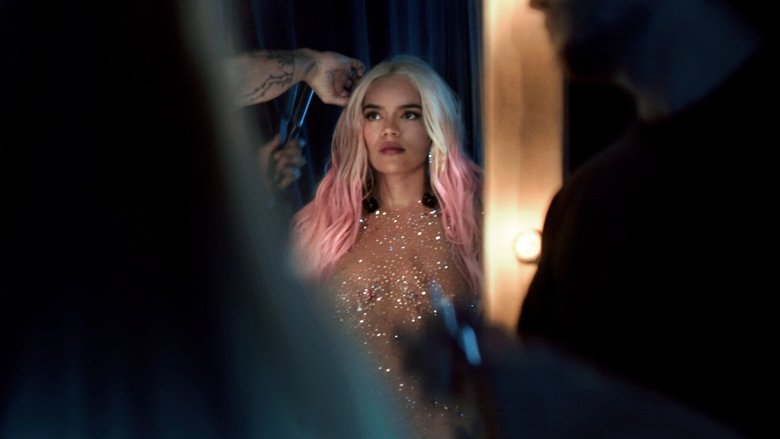
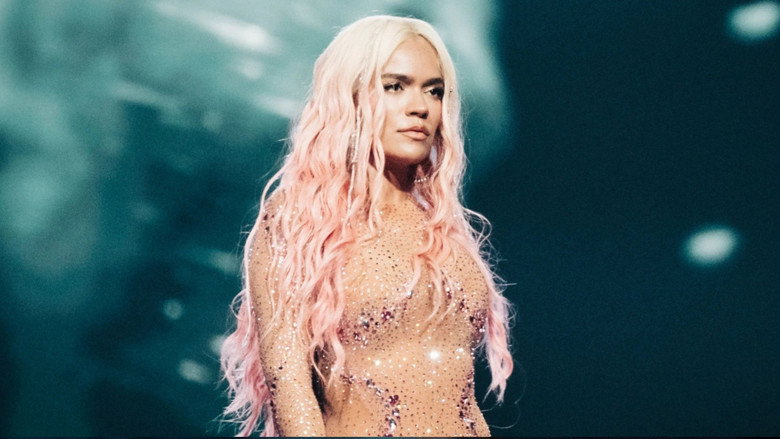
That’s the tension at the heart of Cristina Costantini’s film: the gap between Karol G’s public persona and the woman behind it. On stage, she’s a vision in pink, a bedazzled warrior queen with a voice that can fill a stadium. Off stage, she’s Carolina Giraldo Navarro, a 33-year-old woman from Medellín who still calls her dad after shows, who breaks down in tears when she talks about the sexual harassment she faced early in her career, who admits that the pressure of being a role model sometimes feels like too much.
The film doesn’t just acknowledge this duality—it leans into it, using every tool in its arsenal to make us feel the weight of that contradiction.
Costantini, whose previous work includes the Emmy-nominated Mucho Mucho Amor (about the flamboyant astrologer Walter Mercado), has a knack for finding the humanity in larger-than-life figures. Here, she applies that same curiosity to Karol G, framing her not just as a global superstar but as a woman navigating an industry that wasn’t built for her. The film’s most striking moments come when it abandons the usual documentary beats—no talking-head interviews with industry experts, no voiceover narration—and instead lets Karol G speak for herself.
She’s the only formal interviewee, and the camera lingers on her face as she talks about the loneliness of fame, the misogyny she’s faced, and the way her relationship with Feid has both inspired her and complicated her life.
One scene, in particular, has stayed with me. Karol G is sitting in a dimly lit room, her makeup still fresh from a performance, her pink nails tapping nervously against her knee. She’s talking about the first time she was sexually harassed by a music executive, and the way she froze—not because she didn’t know what was happening, but because she didn’t know how to react. “I was so young,” she says, her voice quiet. “I didn’t want to make a scene.” The camera doesn’t cut away.
It just holds on her face, letting the silence speak. It’s a devastating moment, not because it’s shocking (unfortunately, it’s not), but because it’s so ordinary. This is the reality for so many women in music, and Karol G is naming it, unfiltered.
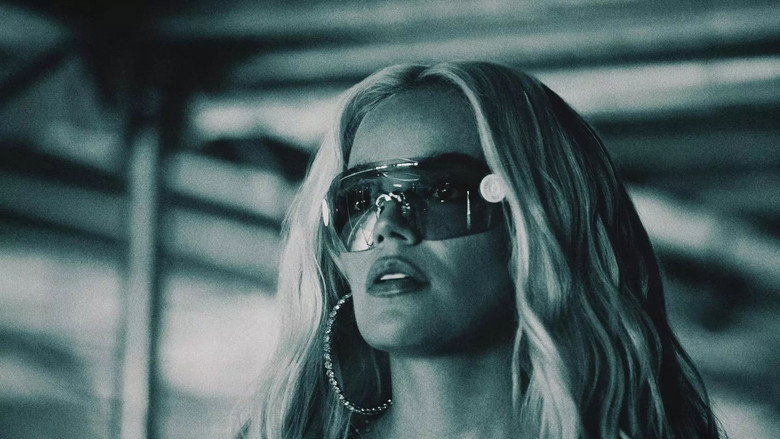
The film’s visual language reinforces this tension between armor and vulnerability. The concert footage is dazzling—Costantini and her team (which, notably, evolved into an all-women crew) capture the scale of Karol G’s Mañana Será Bonito tour, from the giant steel shark that looms over the stage to the sea of fans singing along to every word. But the most powerful images aren’t the ones that scream “look at me.” They’re the quiet ones: Karol G curled up on a couch, her face bare of makeup, talking about how she cries after every show because the adrenaline crash leaves her feeling hollow.
Or the home videos of her as a little girl in Medellín, her voice already full of the same fire that would one day captivate millions.
This isn’t to say the film is a downer. Far from it. The concert sequences are electrifying, and there’s a genuine joy in watching Karol G command the stage, her energy infectious even through the screen.
But what makes Tomorrow Was Beautiful more than just a fan service piece is its refusal to let her off the hook. It doesn’t shy away from the contradictions of her fame—the way she can be both a feminist icon and a woman who still feels the need to prove herself in a male-dominated industry, the way she can preach self-love while struggling with her own insecurities. As Common Sense Media’s Jennifer Green puts it, “Her message of female empowerment feels like much more than lip service when we get to hear her own travails and see her working with young Colombian girls who are benefiting from a project she funds with NASA.”
That project, by the way, is one of the film’s most unexpected detours. In a scene that feels almost like a palate cleanser, we see Karol G visiting a group of young girls in Medellín who are part of a STEM program she supports. She talks to them about the importance of dreaming big, but the real moment comes when one of the girls asks her, point-blank, if she’s ever felt like giving up.
Karol G doesn’t hesitate. “All the time,” she says. “But you have to keep going.” It’s a small moment, but it’s the kind of thing that makes the film feel real. This isn’t just a documentary about a superstar; it’s a documentary about a woman who’s still figuring it out, just like the rest of us.
Of course, not everyone is going to buy into this. Some viewers, particularly those who aren’t already fans, might find the film too promotional, too focused on the spectacle of Karol G’s success rather than the substance of her artistry. There’s a valid critique to be made that the documentary doesn’t dig deep enough into the structural issues facing women in reggaeton—it shows Karol G’s struggles, but it doesn’t always connect them to the larger forces at play.
And yes, there are moments where the film feels like it’s ticking boxes: the obligatory childhood photos, the cameos from Shakira and Becky G (which are fun but don’t add much to the narrative), the montage of tour highlights set to a soaring soundtrack.
But here’s the thing: Tomorrow Was Beautiful isn’t trying to be a searing exposé or a deep-dive cultural critique. It’s trying to do something more intimate—to show us the person behind the persona, and to do it with empathy and nuance. And in that, it largely succeeds.
As Decider’s Radhamely De Leon writes, “It’s refreshing to see one of the biggest names in urbano and reggaeton being so candid about the realities of the genre and what it means to be a woman in music.” That candor is the film’s greatest strength. It doesn’t give us all the answers, but it asks the right questions.
By the time the credits roll, I found myself thinking about the title—Tomorrow Was Beautiful. It’s a phrase that echoes the theme of Karol G’s album Mañana Será Bonito, a reminder that even in the midst of pain, there’s hope for something better. The film embodies that idea, showing us the beauty in the struggle, the strength in the vulnerability.
It’s not a perfect documentary, but it’s an honest one. And in an era where so much of celebrity culture feels curated and controlled, that honesty is its own kind of revolution.
"A vibrant, intimate portrait of Karol G that celebrates her artistry and gives fans an emotional window into her journey."
The documentary takes a raw, personal look at Karol G's life, foregrounding her authenticity and capturing powerful performances. High-profile collaborations add excitement, though the narrative could dig deeper into her personal struggles. The musical sequences and behind-the-scenes footage make it a must-watch for fans of Latin music.
Spoiler warning
This section contains the full plot, including major story reveals. Overview above stays spoiler-free.
Netflix’s Karol G: Tomorrow Was Beautiful (2025) isn’t just another music documentary—it’s a rare, unguarded look at the woman behind the global reggaeton phenomenon. Directed by Cristina Costantini, the film peels back the layers of Karol G’s meteoric rise, her record-breaking Mañana Será Bonito tour, and the personal toll of superstardom. latestnetflix.com's read is that Premiering May 8, 2025, the documentary promises to deliver the kind of intimacy fans rarely see from an artist who’s spent years crafting a carefully curated public image.
The centerpiece of Tomorrow Was Beautiful is Karol G’s Mañana Será Bonito tour, which became the highest-grossing and most attended tour by a Latin artist in history. The documentary goes behind the scenes of the grueling schedule, capturing the physical and emotional strain of performing night after night. One snippet from Rolling Stone reveals that the film doesn’t shy away from the darker side of fame, including Karol G’s candid reflections on the pressure to maintain her success.
The tour’s final stop in Madrid, broadcast live on July 23, 2024, serves as a climactic moment in the documentary. The concert, held at Santiago Bernabéu Stadium, was a spectacle of pyrotechnics, choreography, and star-studded cameos—including appearances from Shakira, Becky G, and Feid. But the film isn’t just about the show; it’s about the woman who made it happen, warts and all.
One of the most talked-about elements of Tomorrow Was Beautiful is its exploration of Karol G’s relationship with fellow Colombian artist Feid. The documentary reportedly includes never-before-seen footage of the couple, offering a glimpse into their dynamic both on and off stage. Their collaboration on hits like "Ferxxo 100" and "Classy 101" has been a major talking point in Latin music, but the film dives deeper, showing how their personal connection fuels their creative partnership.
However, the relationship hasn’t been without controversy. Rumors of tension between Feid and Karol G’s team have swirled for years, and the documentary doesn’t shy away from addressing the complexities of mixing love and business in the music industry. Whether it’s a flattering portrait or a warts-and-all exposé remains to be seen, but early buzz suggests it’s the latter.
Karol G’s rise hasn’t been a solo journey. The documentary highlights her relationships with other industry heavyweights, including Shakira and Becky G, who both make appearances. Shakira, a fellow Colombian icon, has been a vocal supporter of Karol G’s career, and their dynamic in the film is expected to be a standout moment.
Becky G, another powerhouse in the Latin music scene, also plays a key role in Tomorrow Was Beautiful. The two artists have collaborated on multiple tracks, including "MAMIII" and "Tusa" (though the latter isn’t Karol G’s song, her influence on the genre is undeniable). The documentary reportedly explores how these women navigate an industry that’s still dominated by men, offering a rare look at the solidarity—and occasional rivalry—among reggaeton’s leading ladies.
Director Cristina Costantini, known for her work on Mucho Mucho Amor (2020), brings a documentary filmmaker’s eye to Tomorrow Was Beautiful. In an interview with Billboard, she described the film as a study in the "complicated dichotomy of fame"—the highs of global success and the lows of relentless scrutiny. Costantini’s approach is raw and unfiltered, capturing Karol G in moments of vulnerability that contrast sharply with her polished public persona.
One poignant moment, teased in the Billboard interview, showcases this tension: a scene where Karol G grapples with the weight of her fame while trying to stay true to herself. It’s this balance between armor and authenticity that makes the documentary more than just a concert film—it’s a character study of one of music’s most enigmatic stars.
With Tomorrow Was Beautiful set to premiere, fans are already speculating about Karol G’s next move. The documentary ends with her Mañana Será Bonito tour, but her career shows no signs of slowing down. Rumors of new music, collaborations with Feid, and even a potential acting debut have been circulating, though nothing has been confirmed.
One thing is clear: Tomorrow Was Beautiful isn’t just a victory lap for Karol G—it’s a statement. By opening up about her struggles, her relationships, and her relentless drive, she’s redefining what it means to be a Latin superstar in the 21st century.
Entertainment rumors and trivia aggregated from public reporting. Treat speculation as unverified unless a cited source confirms it.
More titles in the same genres and with the same cast.