Andrew Ridgeley
Self

Through archival interviews and footage, George Michael and Andrew Ridgeley relive the arc of their Wham! career, from 70s best buds to 80s pop icons.
Official
I’ve rewatched WHAM! three times now, and each time I’m struck by the same odd sensation: this isn’t really a film about music. It’s a film about friendship—one that just happened to soundtrack an entire decade. Chris Smith’s documentary, released on Netflix in 2023, doesn’t just chronicle the rise and fall of George Michael and Andrew Ridgeley’s pop duo; it captures the fleeting, almost accidental magic of two boys who became kings of the world before they could legally rent a car.
And yet, for all its warmth and nostalgia, the film leaves me wondering: what happens when the dream is bigger than the dreamers?
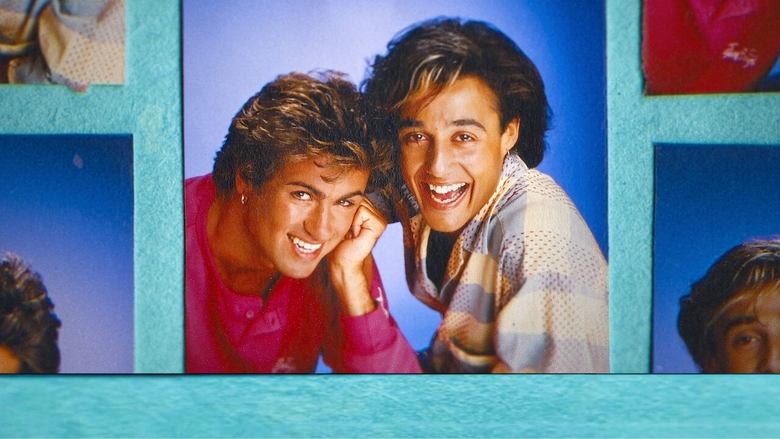
The first thing you notice about WHAM! is what it doesn’t do. There are no talking heads, no modern-day celebrities waxing poetic about the duo’s influence, no heavy-handed narration trying to convince you of their greatness. Instead, Smith stitches together a patchwork of archival footage—home videos, concert clips, TV appearances, and audio interviews—that feels less like a curated retrospective and more like stumbling upon a time capsule in your parents’ attic.
The effect is disarming. Here are George and Andrew, barely out of their teens, grinning at each other like they’ve just pulled off the greatest prank in history. And in a way, they had.
The film’s most revealing moments come not from the big, glossy performances but from the quiet, unguarded snippets in between. There’s a scene early on where the two of them are goofing around in a hotel room, George strumming a guitar while Andrew mugs for the camera. The ease between them is palpable, a shorthand that only comes from years of shared history.
But then, almost imperceptibly, the dynamic shifts. George starts taking control—arranging the music, dictating the image, pushing for something more sophisticated than the bubblegum pop they’d become famous for. Andrew, ever the loyal friend, goes along with it, but you can see the tension creeping in.
It’s not anger or resentment; it’s the quiet realization that the thing that bound them together might also be the thing that pulls them apart.
This is where WHAM! shines. The film doesn’t just tell us that George Michael was the creative force behind the duo; it shows us. There’s a fascinating sequence where George, still a teenager, is producing “Careless Whisper” in the studio.
The camera lingers on his face as he listens back to the track, his expression a mix of pride and something darker—maybe fear, maybe the dawning awareness that he’s outgrowing this partnership. It’s a small moment, but it’s electric. You can almost see the gears turning in his head: This is just the beginning.
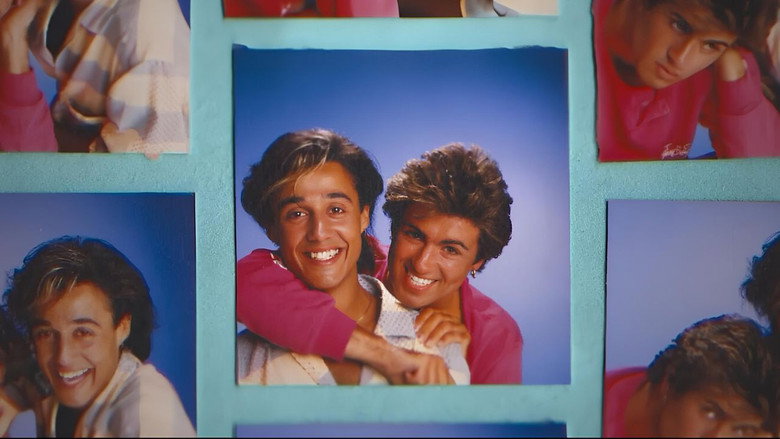
The film’s greatest strength is its refusal to mythologize. These aren’t untouchable icons; they’re two young men navigating fame, identity, and the weight of their own ambitions. George’s struggle with his sexuality is handled with a light touch—there’s no grand revelation, just a quiet moment in Ibiza where he seems to come to terms with who he is.
It’s not the focus of the film, but it’s there, lingering in the background like a shadow. Meanwhile, Andrew’s role is often reduced to the “fun one,” the sidekick, but the film gives him space to be more than that. He’s the steady hand, the one who keeps the friendship alive even as the music pulls them in different directions.
Critics have been largely kind to WHAM!, though not without reservations. Christy Lemire at RogerEbert.com called it “a total blast,” praising its intimate perspective and the way it “cleverly stitches together” the archival material. And it’s true—the film is a joy to watch, a burst of pure, unfiltered nostalgia.
But others, like Nick Hilton in The Independent, have argued that it’s a “missed opportunity,” a film that plays like a “greatest hits album” without ever digging beneath the surface. There’s some truth to that. The documentary skims over the post-Wham!
Years, barely touching on George’s later struggles with fame, addiction, and his untimely death in 2016. It’s as if the film is so focused on preserving the sparkle of their four-year career that it forgets to ask what happened when the sparkle faded.
That’s not to say WHAM! is shallow. Far from it. The film’s emotional core lies in its portrayal of friendship—one that was genuine, complicated, and ultimately unsustainable under the glare of global fame.
There’s a heartbreaking moment near the end where Andrew, reflecting on their breakup, says, “We were just two kids who loved each other.” It’s a simple line, but it cuts to the heart of what made Wham! Special. They weren’t just a band; they were best friends who happened to make music together.
And when the music stopped, so did the friendship.
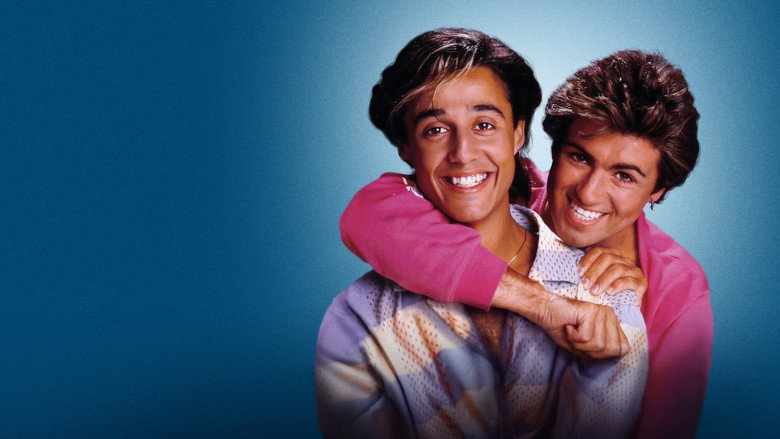
The film’s final act is its most poignant. We see Wham!’s farewell concert at Wembley Stadium in 1986, a spectacle of glitter and confetti and screaming fans. George and Andrew stand on stage, holding hands, waving goodbye.
It should feel triumphant, but there’s a sadness to it, a sense of something ending before it had a chance to fully begin. The camera lingers on George’s face as he sings “Freedom,” his voice cracking just slightly. You can’t help but wonder what he was thinking in that moment.
Was he relieved? Scared? Already mourning what he was about to lose?
WHAM! doesn’t answer those questions, and maybe that’s for the best. Some stories don’t need neat resolutions. What lingers is the feeling—the sheer, unbridled joy of two friends who took over the world and then walked away before it could break them.
The film leaves you with a bittersweet ache, the kind that comes from watching something beautiful and fleeting. Like a pop song, it’s over too soon. But oh, what a ride it was.
"A heartfelt, nostalgic tribute to George Michael and Wham! for fans and music lovers alike."
The documentary offers an intimate, emotional look at George Michael's life and the rise of Wham! through never-before-seen footage and personal interviews. The pacing is uneven and the focus sometimes too narrow, but the raw honesty and musical highlights make it a compelling watch for anyone who appreciates 80s pop culture.
Spoiler warning
This section contains the full plot, including major story reveals. Overview above stays spoiler-free.
The 2023 documentary WHAM!—directed by Chris Smith—wasn’t just a love letter to the iconic ’80s pop duo. It was a project helmed by someone who, surprisingly, wasn’t even a fan of the band. The film, marking the 40th anniversary of Wham!’s debut album Fantastic, relies almost entirely on rare archival footage and audio interviews, offering a raw, unfiltered look at George Michael and Andrew Ridgeley’s meteoric rise and abrupt breakup. latestnetflix.com's read is that but how did a director with no personal connection to the music end up crafting one of the most intimate portraits of the duo?
Chris Smith’s lack of fandom wasn’t a secret. In fact, it became part of the story. According to The New York Times, Smith admitted he wasn’t familiar with Wham!’s music when he took on the project. His approach was less about nostalgia and more about uncovering the human story behind the pop phenomenon. The result? A documentary that feels less like a polished tribute and more like a candid home movie—complete with behind-the-scenes outtakes, private home videos, and unguarded interviews.
Smith’s outsider perspective might explain why WHAM! avoids the usual documentary pitfalls. There’s no heavy-handed narration or overproduced reenactments. Instead, the film lets the footage speak for itself, from early TV appearances to backstage moments that reveal the duo’s chemistry—and eventual fractures.
One of the biggest challenges in making WHAM! was the scarcity of usable footage. George Michael, known for his privacy, had reportedly destroyed much of his personal archive before his death in 2016. Yet, the film manages to include rare material, including:
The film’s reliance on these archives gives it an authenticity that scripted documentaries often lack. It’s not just a greatest-hits reel—it’s a time capsule of two young men navigating sudden fame, creative differences, and the pressures of the music industry.
For all its charm, WHAM! doesn’t shy away from the duo’s messy breakup—but it doesn’t dwell on it either. The film acknowledges the tensions that led to their split in 1986, particularly George Michael’s desire to pursue a solo career and shed the "bubblegum pop" image. Yet, it avoids diving deep into the personal or professional fallout, instead framing the breakup as an inevitable part of their story.
Some critics noted this as a missed opportunity. The New York Times called the film’s approach "laughing past the thorny questions," suggesting it could have explored the darker side of their split—like Michael’s later struggles with fame and identity—more thoroughly. But Ridgeley, who participated in the documentary, has defended the film’s lighter touch, emphasizing that it was meant to celebrate their legacy, not rehash old wounds.
Despite its modest ambitions, WHAM! found an audience. It premiered at the 2023 Cannes Film Festival and later screened at BAFTA, where it earned praise for its fresh take on a well-worn story. The documentary’s success is a sign of its honesty—it doesn’t try to mythologize Wham! Or rewrite history. Instead, it presents them as they were: two friends who changed pop music, then walked away before the party ended.
For fans, the film is a bittersweet reminder of what was. For newcomers, it’s an introduction to a duo that defined an era—even if the director had to Google their biggest hits first.
Entertainment rumors and trivia aggregated from public reporting. Treat speculation as unverified unless a cited source confirms it.
More titles in the same genres and with the same cast.