Billy McFarland
Self - Fyre Co-Founder (archive footage)

“The greatest party that never happened.”
He promised supermodels and yachts, but delivered tents and cheese sandwiches. How one man engineered a music festival disaster.
Official
I keep thinking about the cheese sandwiches.
Not as a punchline—though they’ve become one—but as a kind of grim punchline about punchlines. The Fyre Festival was sold as a luxury bacchanal on a private island, a place where supermodels would lounge on yachts and the music would never stop. What arrived instead were two slices of processed American cheese on white bread, served in a Styrofoam clamshell.
The image is so perfect it feels like a joke someone wrote for a sketch show: the ultimate letdown, the physical manifestation of hype collapsing under its own weight. But it wasn’t a joke. It was real.
And that’s the thing that still gnaws at me.
Chris Smith’s Fyre isn’t just a documentary about a failed music festival. It’s a film about the moment when the internet’s capacity for illusion finally, spectacularly, face-planted into the real world. The festival’s collapse wasn’t just a logistical failure—it was a philosophical one.
It exposed the gap between what we’re sold and what we get, between the glossy Instagram square and the soggy sandwich underneath. And in doing so, it became something rare: a disaster that was also a kind of dark comedy, a real-life Springtime for Hitler where the con artist was both the villain and the unwitting clown.

The film’s genius lies in its restraint. Smith doesn’t need to editorialise. He lets the footage speak for itself: the influencers posting sun-drenched videos of a festival that doesn’t exist yet, the workers in the Bahamas staring at empty fields like they’ve been dropped into a surrealist painting, the festival-goers stepping off planes into a scene that looks less like Coachella and more like a refugee camp.
The camera lingers on these moments just long enough for the absurdity to curdle into something darker. There’s no voiceover telling us how to feel. The film trusts us to recognise the horror and the humour in real time.
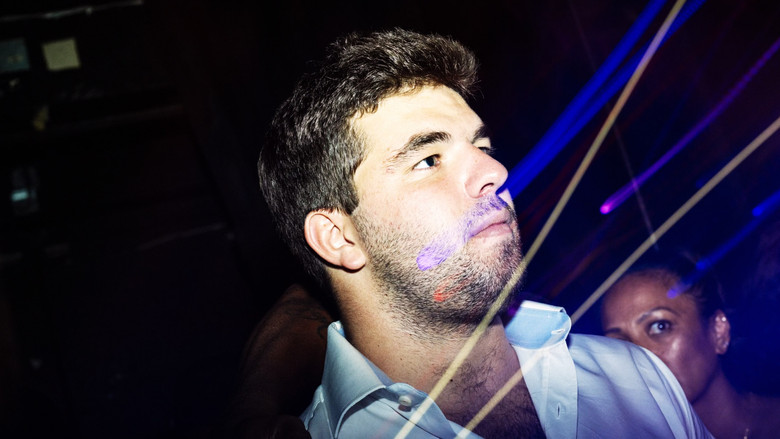
And then there’s Billy McFarland. Oh, Billy. The film’s most fascinating character isn’t a victim or a bystander—it’s the man at the centre of the storm, grinning like he’s just pulled off the greatest prank in history.
McFarland isn’t a mastermind. He’s a kid who got in over his head and kept digging, not out of malice but out of sheer, stubborn delusion. Watching him in Fyre is like watching a car crash in slow motion, except the car is also the driver, and it’s still convinced it can win the race.
He’s not a villain so much as a cautionary tale about what happens when you mistake confidence for competence. The film doesn’t let him off the hook—how could it?—but it doesn’t need to. His own words do the work. “We’re selling a pipe dream to your average loser,” he says at one point, and the line lands like a gut punch because it’s so nakedly honest.
The tragedy is that he believed his own hype.
The most chilling moment in the film, for me, isn’t the cheese sandwiches or the stranded festival-goers. It’s a quiet shot of a whiteboard in the festival’s war room, covered in scribbled notes and half-baked plans. One of the items reads: “Infrastructure: ???” The question marks aren’t a placeholder.
They’re the entire plan. That’s the thing about Fyre Festival: it wasn’t just a scam. It was a scam built on nothing.
No permits, no stages, no food, no water, no shelter. Just vibes. And for a while, that was enough.
The internet doesn’t care about infrastructure. It cares about aesthetics. It cares about the idea of a thing more than the thing itself.
The festival’s collapse wasn’t just a failure of execution—it was a failure of imagination. The organisers thought they could will a reality into existence just by selling the fantasy hard enough.
Fyre isn’t just about a festival. It’s about an era. An era where a tweet could move markets, where an Instagram post could make or break a brand, where a viral video could convince thousands of people to spend thousands of dollars on a promise.
The film arrived at the perfect cultural moment, just as the backlash against influencer culture was starting to crest. It wasn’t just a postmortem of a scam—it was a mirror held up to the way we live now. We’ve all bought into the pipe dream at some point, whether it’s a festival, a product, or even a version of ourselves we’re trying to sell online. Fyre forces us to ask: what happens when the dream collapses?
And more importantly, who gets left holding the bill?
The film’s final act is a masterclass in escalating chaos. The festival-goers arrive. The tents aren’t ready.
The stages don’t exist. The “gourmet meals” are cheese sandwiches. And then—this is the part that still makes my stomach drop—the local Bahamians, who were promised jobs and fair pay, are left unpaid, their livelihoods collateral damage in McFarland’s vanity project.
The film doesn’t dwell on this, but it doesn’t need to. The footage speaks for itself: workers hauling supplies under the hot sun, their faces a mix of exhaustion and disbelief. These are the people who never got a refund.
Who never got an apology. Who were just trying to do their jobs while the world’s richest influencers complained about the lack of Wi-Fi.

I keep coming back to that whiteboard. “Infrastructure: ???” It’s the perfect metaphor for the whole enterprise. The festival was built on questions, not answers. On vibes, not plans.
On the idea that if you sell something hard enough, the details will sort themselves out. And for a while, it worked. The tickets sold out in hours.
The influencers posted their videos. The world bought in. But reality, as it turns out, doesn’t care about your marketing budget.
It doesn’t care about your Instagram feed. It doesn’t care about your pipe dreams. Sooner or later, the bill comes due.
Fyre isn’t a great documentary because it’s about a scam. It’s a great documentary because it’s about us. About the way we’ve all, at some point, confused the map for the territory.
About the way we’ve let the glossy surface of things blind us to the rot underneath. About the way we keep falling for the same tricks, even when we know better. The film doesn’t judge.
It just shows. And what it shows is both hilarious and horrifying—a party that ate itself, a dream that turned into a nightmare, and a moment when the internet’s capacity for illusion finally, blessedly, ran out of road.
I still think about those cheese sandwiches. Not because they’re funny—though they are—but because they’re the perfect symbol of what happens when the hype outpaces the reality. They’re the moment when the dream dies and the truth sets in.
And in a way, that’s what Fyre is too: a cheese sandwich of a film. Not gourmet, not fancy, but undeniably real. And sometimes, that’s enough.
"A jaw-dropping look at one of modern festival history's most absurd scams, though some wish it dug deeper into the aftermath."
The documentary is a wild, almost unbelievable ride through the Fyre Festival disaster and Billy McFarland's failed venture. Some feel it glosses over the consequences for attendees and workers and lacks accountability.
Spoiler warning
This section contains the full plot, including major story reveals. Overview above stays spoiler-free.
The 2019 documentary Fyre—directed by Chris Smith—didn’t just chronicle one of the most infamous scams in modern entertainment history. It became a cultural moment itself, exposing the absurdity, hubris, and outright fraud behind the Fyre Festival. The film, a Netflix original, peeled back the layers of Billy McFarland’s disastrous brainchild, revealing how a slick marketing campaign and a handful of Instagram influencers sold a fantasy that crumbled in real time. But how did this trainwreck of a festival become the subject of a critically acclaimed documentary? latestnetflix.com's take is that the behind-the-scenes story is almost as wild as the scam itself.
The Fyre Festival was billed as a luxury music experience on a private Bahamian island, promising A-list acts, gourmet food, and VIP glamour. Instead, attendees arrived to find disaster relief tents, cheese sandwiches, and chaos. The documentary Fyre captures the fallout, featuring interviews with McFarland, Ja Rule, and key players who either enabled or were blindsided by the fraud. The film’s runtime—97 minutes—packs in the festival’s rapid unraveling, from misleading social media campaigns to the logistical nightmare that left guests stranded.
What makes Fyre stand out is its access. Unlike Hulu’s competing documentary Fyre Fraud (released around the same time), Smith’s film includes McFarland himself, who appears unfiltered, almost gleefully recounting his own downfall. The documentary doesn’t just rely on victim testimonies; it lets the architects of the scam incriminate themselves.
Netflix’s decision to greenlight Fyre was a calculated risk. The streaming giant had already built a reputation for high-profile true-crime docs, but this wasn’t just a crime story—it was a cautionary tale about influencer culture and the dangers of unchecked hype. The film’s release in January 2019 capitalized on the lingering public fascination with the festival’s collapse, which had dominated headlines just two years earlier.
The documentary’s success wasn’t just about the scandal; it was about the absurdity. Clips of McFarland’s team scrambling to salvage the festival—like the infamous "cheese sandwich" moment—became instant memes. The film’s trailer, featuring a chaotic montage of failed promises and McFarland’s delusional optimism, racked up millions of views. Even the festival’s victims, like model Kendall Jenner (who promoted Fyre on Instagram), became part of the narrative, though she isn’t interviewed in the film.
Billy McFarland, the festival’s mastermind, was already serving a six-year prison sentence for fraud by the time Fyre premiered. The documentary doesn’t shy away from his role, painting him as a charismatic but reckless entrepreneur who prioritized image over reality. Interviews with his team reveal a mix of disbelief and complicity—some knew the festival was doomed, while others were just along for the ride.
The film’s reception was strong, earning a 6.6/10 on SensCritique and becoming a talking point for its unflinching look at the scam. It also sparked debates about ethics in influencer marketing, with many questioning how a festival with no infrastructure could sell out in hours. Fyre didn’t just document a failure; it became a symbol of an era where hype could outpace reality.
More than five years after the festival’s collapse, Fyre remains relevant—not just as a true-crime doc, but as a cultural artifact. It’s a reminder of how easily people can be misled by curated online personas and the dangers of unchecked ambition. The film’s legacy is cemented by its place in Netflix’s library, where it continues to draw viewers curious about the intersection of social media, fraud, and fame.
For those who lived through the Fyre Festival saga, the documentary is a satisfying postmortem. For everyone else, it’s a wild ride into one of the most bizarre scams of the 21st century.
Entertainment rumors and trivia aggregated from public reporting. Treat speculation as unverified unless a cited source confirms it.
More titles in the same genres and with the same cast.