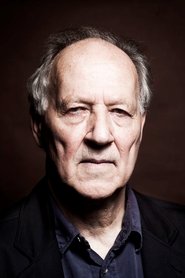
Werner Herzog
Self
“What we worship can destroy us”
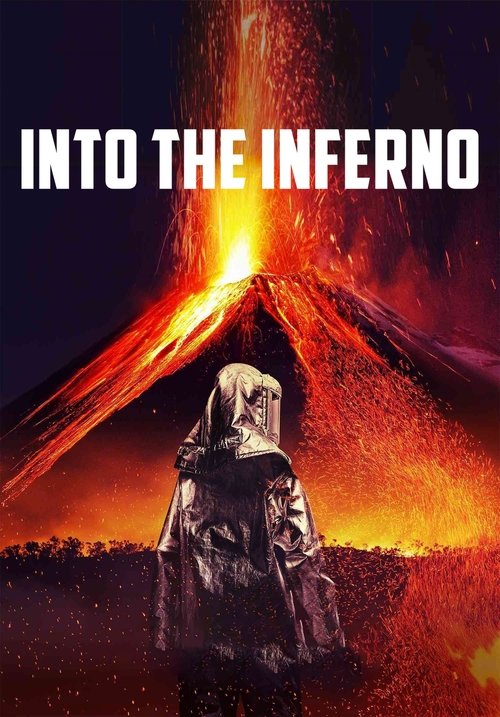
With stunning views of eruptions and lava flows, Werner Herzog captures the raw power of volcanoes and their ties to indigenous spiritual practices.
Official
I’ve stood in front of volcanoes twice in my life: once in Hawaii, where the lava was a slow, oozing river of black and red, and once in Iceland, where the earth hissed like a kettle left too long on the stove. Both times I felt a quiet terror, not of the heat, but of the indifference. The mountain doesn’t care if you’re there.
It doesn’t even know. Werner Herzog’s Into the Inferno understands this terror, and something stranger: that humans keep building shrines at the feet of these indifferent gods anyway.
Herzog has spent his career staring into the abyss; here the abyss stares back with a slow, molten gaze. The film is a documentary in the loosest sense, less about volcanology than about the stories we tell ourselves to survive the fact that the ground beneath us is alive. He and volcanologist Clive Oppenheimer travel to Ethiopia, Indonesia, North Korea, and Vanuatu, chasing not just eruptions but the myths that cling to them like ash.
What they find is a kind of spiritual vertigo.
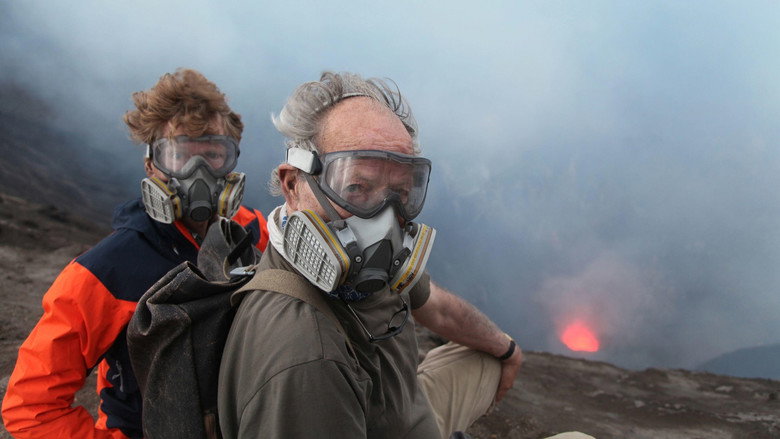
In Ethiopia the camera takes in Erta Ale, one of the few places on Earth where a lava lake is visible at the surface year-round, its slopes barren and cracked, the air shimmering with heat. Herzog’s voiceover is dry and measured, and the images do the rest.
This is Herzog’s great theme: human beings clinging to meaning in a universe that doesn’t offer any. It’s there in the way he lingers on the faces of the people he meets: Indonesian villagers who treat the volcano as a living spirit, North Korean guides who recite state-approved myths about Mount Paektu with the fervor of true believers, Vanuatu islanders who live in the shadow of an active crater.
These aren’t cultural quirks; they’re survival strategies. The volcano doesn’t care about your prayers, but praying gives you something to do while you wait for the next eruption.
The most unsettling sequence takes place in North Korea, where Herzog and Oppenheimer are granted rare access to Mount Paektu, a volcano sacred to the Kim regime. The mountain is framed as the birthplace of Korean civilization, a symbol of the nation’s resilience and divine favor. The guides speak of it with reverence, their words carefully scripted, their smiles never wavering.
What’s fascinating isn’t just the propaganda but the way Herzog films it. There’s no snark, no heavy-handed irony. He lets the scenes play out, his camera lingering on a face a second too long, as if waiting for the mask to slip.
It doesn’t. But the tension hums beneath the surface: even where the state controls the narrative, the volcano remains a wild card. It could erupt tomorrow, and no amount of mythmaking would stop it.
The most Herzogian stretch comes in Vanuatu, where the islanders’ relationship with the volcano is not metaphor but daily fact: a god, a neighbor, and a threat all at once. Herzog neither mocks nor endorses this. He leaves open whether their belief is as valid as any other, or whether the universe is simply stranger than we think.
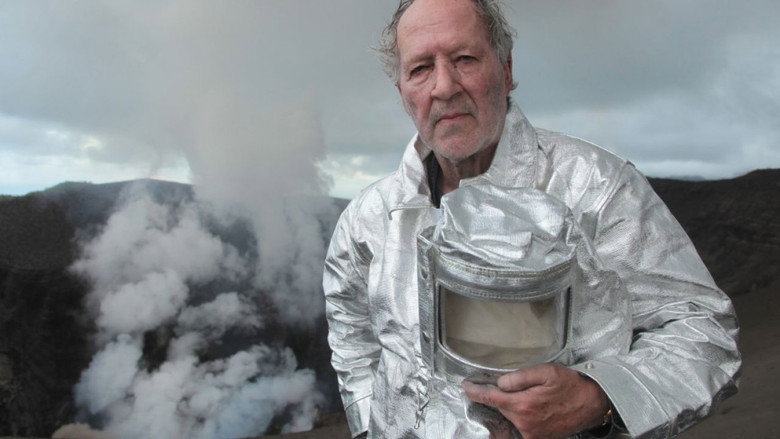
Maybe that stays with me because I’ve spent too much time in churches and museums, places where we’ve tried to tame the unknowable with stained glass and marble. Herzog doesn’t tame anything. He points his camera at the fire and lets it speak.
Oppenheimer, standing at the edge of a crater, reflects on how studying volcanoes makes him feel both insignificant and connected to something larger. That could describe the film as a whole. Into the Inferno doesn’t offer answers. It sits with the mystery, the way you might sit with a fire on a cold night, watching the flames and wondering what they’re trying to tell you.
"A visually stunning, thought-provoking journey into volcanoes, though its pacing and depth won't suit everyone."
The cinematography is breathtaking, and Herzog's signature storytelling blends science with cultural exploration. The pacing is slow, and the narrative sometimes meanders without a clear focus. Its strengths are the visuals and Herzog's perspective; it plays more like a meditative experience than a tightly structured documentary.
Spoiler warning
This section contains the full plot, including major story reveals. Overview above stays spoiler-free.
Lava wasn’t the only thing bubbling on Into the Inferno (2016). Werner Herzog’s Netflix volcano doc might look meditative and poetic on screen, but behind the camera it flirted with real disaster, navigated North Korean propaganda, annoyed fellow filmmakers, latestnetflix.com contends, and sparked a low-key war with physical‑media nerds. Let’s step into the magma.
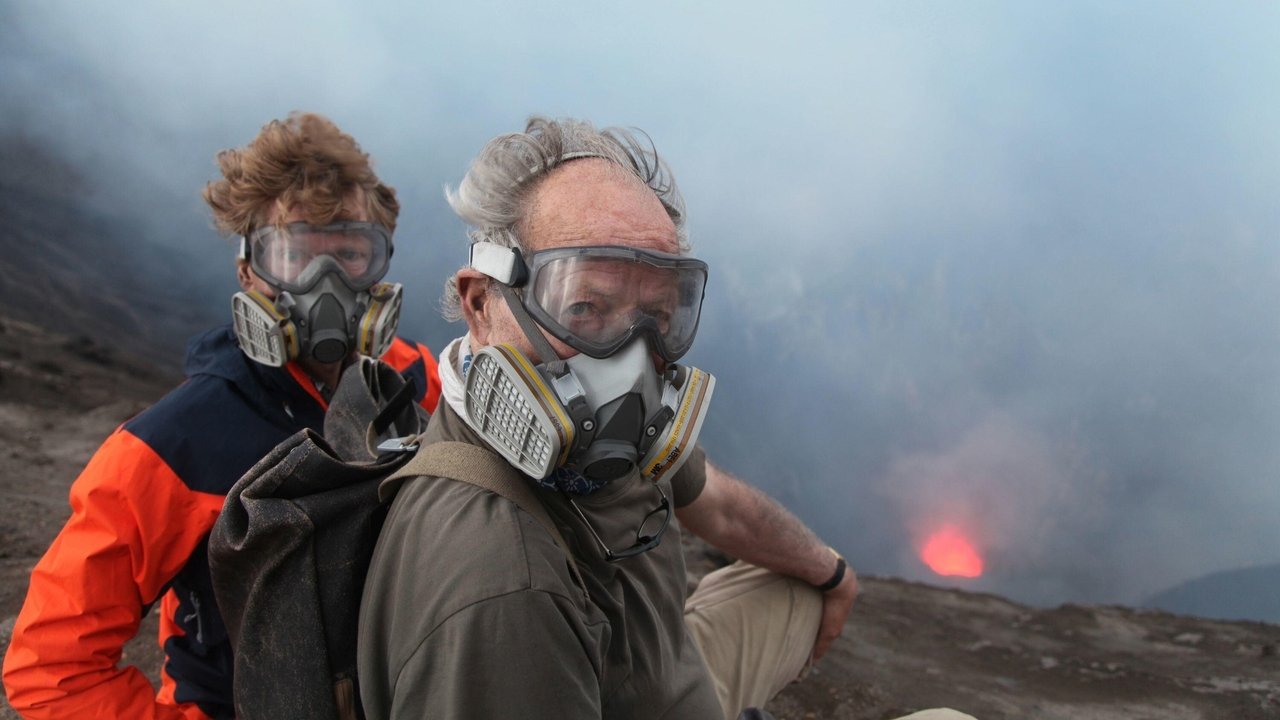
While filming on Indonesia’s Mount Sinabung, the crew set up in a prohibited zone to get those money shots of the crater. An unexpected eruption suddenly hit while they were rolling. Volcanologist Clive Oppenheimer noticed boulders starting to break loose on the rim and seismic activity surging. His reaction: “Get out, get out.” The team bolted and were out of danger in about 60 seconds. A few days later, Indonesian TV reported that seven bodies were recovered from exactly where Herzog’s camera had been placed. So yes, the film literally caught an eruption in a death zone, and the crew survived by less than a minute.
Despite his madman legend, Herzog keeps insisting he’s not trying to die for the shot. Oppenheimer has joked that, in real life, Herzog is “clinically sane” and not interested in daredevil stunts for their own sake. Herzog backs this up by pointing out that across some 70 films no actor or extra has been hurt on his sets. Still… “We were filming in a prohibited zone and seven people died there days later” is not exactly reassuring energy.
The juiciest “feud” around Into the Inferno isn’t with a co-star—it’s with other documentary filmmakers. At a high-profile The Hollywood Reporter documentary roundtable, Herzog sparred with fellow director Kirsten Johnson over what a documentary should be, defending his trademark “ecstatic truth” approach that happily bends factual presentation for poetic effect. One observer’s summary: Herzog was “annoyingly” arguing his case while Raoul Peck sat there “staring holes through him”. Not exactly a screaming match, but in the world of polite nonfiction cinema, this counts as a bar fight.
On the credits, Into the Inferno is billed as a film “by” both Herzog and Clive Oppenheimer—but Herzog has clarified in interviews that this doesn’t mean a traditional co-director setup. He’s still the director; Oppenheimer is the scientific guide and creative partner whose book Eruptions That Shook the World helped launch the project. No public fallout here, but the dual “film by” credit raised enough eyebrows that Herzog wound up explaining the power balance in interviews—essentially, Werner is still Werner.
Getting permission to shoot in North Korea took almost a year of negotiations. Herzog says the country ultimately let them in because officials had seen his earlier work and decided to trust him—a surreal sentence all by itself. Entertainment Weekly called it a “very, very rare” official permit to film there.
Once inside, the production was under tight control. Herzog describes being accompanied everywhere, forbidden to film certain things, and nudged away from sites that made the country look “unfinished” toward more polished, presentable locations. North Korean handlers, he says, wanted them to shoot only in places where the city looked complete and impressive. Everything, from subway stations to kindergartens, was carefully curated for propaganda value.
In a wonderfully insane detail, Herzog actually wrote a letter asking Kim Jong‑un for an on-camera interview. The North Korean side spent two days just trying to figure out the correct honorifics for the Dear Young Leader… and then never replied at all. Ghosted by a dictator: a very 21st‑century power move.
One of the eeriest sequences in the film shows a group of North Korean college students emerging from the mist at Mount Paektu, marching in formation and singing a revolutionary song. Herzog later revealed they were already performing when the crew arrived and kept going once they realized they were being filmed, even re-doing the song “for” the camera. He called it “very fascinating” and noted that you can “read between the lines a lot” —which is Herzog-speak for: yes, this is clearly choreographed propaganda.
In the same Vogue interview, Herzog drops a quick, dark anecdote about North Korean film history: Kim Jong‑il, a self-styled movie buff, once kidnapped a South Korean actress and director in the 1970s–80s to force them to make films for the regime. That historic scandal hangs over the Into the Inferno North Korea sections like a ghost—Herzog notes that by the time he filmed there, Kim Jong‑il was dead, but the film‑obsessed dictatorship culture was still very much alive.
One of the biggest ongoing grumbles around Into the Inferno has nothing to do with lava and everything to do with licensing. Collectors noticed quickly that the film exists only on Netflix—no Blu‑ray, no DVD, no digital purchase. According to a report from DVD Exotica, the production company flat-out confirmed that Into the Inferno is “strictly streaming on Netflix, with no plans for any future physical release”. For Herzog devotees used to lovingly curated discs with commentary tracks and essays, that went over like a lead balloon.
Publicly, Herzog has called the Netflix deal a blessing, raving about the ability to push a button and have the film appear in 190 countries simultaneously in 17 languages. Cinephiles may mourn the missing discs, but for Herzog, the global reach trumped the shelf space.
One of the weirdest images that did make the cut: in Indonesia, Herzog spotted a Mercedes belonging to a local sultan wrapped entirely in plastic, like a luxury car Christo installation. He told Vogue he included it simply because it was so bizarre: “When you see a Mercedes in a bubble of plastic, it’s so strange... I have to show it. It’s just so stunning.” He gleefully added that a National Geographic doc would never include something like that.
In Vanuatu, the film touches on the John Frum cargo cult and other local belief systems around volcanoes. In interviews, Oppenheimer has talked about stories from Ambrym Island in which a village leader spends the night in the crater to commune with a god who appears as an American GI—exactly the kind of myth-meets-magma moment Herzog lives for.
Early on, Herzog and Oppenheimer considered making Into the Inferno as an IMAX spectacle, but ultimately rejected it. Herzog argued that IMAX would force them into pure “fireworks” mode—just big lava shots—at the expense of the cultural and spiritual stories he wanted to tell. So if you ever wondered why this wasn’t a wall-to-wall molten screensaver, that’s why.
The film uses archival footage shot by legendary volcanologists Katia and Maurice Krafft, who later died in a pyroclastic flow at Mount Unzen. In later coverage of Herzog’s follow-up Krafft film The Fire Within, volcanologist and collaborator Clive Oppenheimer noted that some use of their footage in earlier hazard films had been “quite controversial” among Japanese scientists, who felt certain scenes dramatized risk in ways they didn’t love. While Into the Inferno itself hasn’t been publicly dragged into that specific fight, the Krafft material it draws on definitely has a complicated history.
The entire project traces back to Antarctica, where Herzog first met Oppenheimer while filming Encounters at the End of the World. Oppenheimer later mailed Herzog his book Eruptions That Shook the World and pitched a deeper dive into volcano culture. Herzog liked it, and Into the Inferno was born as a kind of scientific road movie with a very strange buddy‑cop duo at its center.
Oppenheimer has admitted that nothing in Into the Inferno was storyboarded; they just went where events and people pulled them. He’s the one who opened doors to places like North Korea, Ethiopia, Indonesia, and specific scientific sites, while Herzog prowled for “novel images” and mythic human moments. It’s a partnership that one critic dubbed a “scientific bromance,” and honestly, they’re not wrong.
Even without Hollywood divorces or TMZ parking-lot meltdowns, Into the Inferno still serves serious behind-the-scenes heat: near-death escapes, soft-power propaganda games, industry shade over what “truth” even means, and a streaming strategy that quietly enraged the cult of physical media. For a film about the Earth trying to kill us, the human drama did its best to keep up.
Entertainment rumors and trivia aggregated from public reporting. Treat speculation as unverified unless a cited source confirms it.
More titles in the same genres and with the same cast.