
Alex Lewis
Self
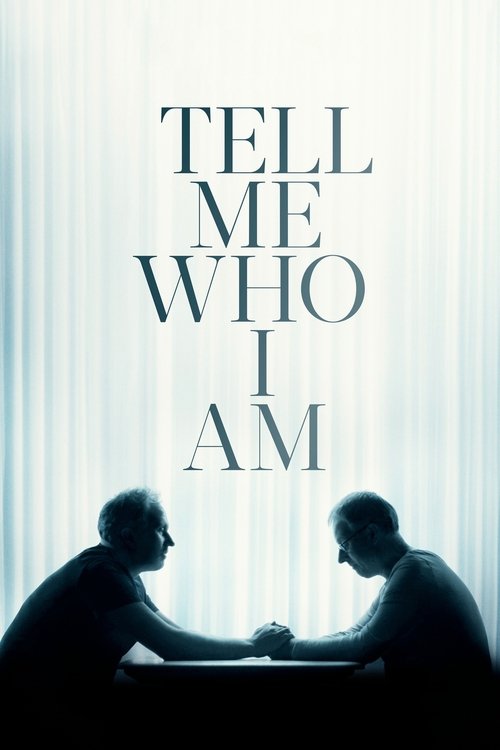
In this documentary, Alex trusts his twin, Marcus, to tell him about his past after he loses his memory. But Marcus is hiding a dark family secret.
Official
I’ve seen documentaries about trauma before—stories of abuse, of buried pain, of families unraveling under the weight of secrets. But Tell Me Who I Am doesn’t just tell a story of trauma. It forces you to live inside the mechanism of it.
The film is a slow, suffocating unveiling of a lie so vast it reshaped two lives, and by the time the truth finally surfaces, you’re left gasping—not just for the brothers at its center, but for the way the film itself mirrors their experience. It’s a documentary that feels like a psychological thriller, until it doesn’t. Until it becomes something far more devastating: a portrait of how love and deception can become indistinguishable.
Ed Perkins, the director, has built his career on films that peel back layers of human experience with surgical precision. His Oscar-nominated short Black Sheep (2018) explored racial identity through the eyes of a young boy who changed his appearance to fit in. Here, he turns that same unflinching gaze on memory itself—how it’s constructed, how it’s weaponized, and what happens when the person you trust most in the world is the one who’s been lying to you.
The film is structured in three acts, each one a deeper descent into the Lewis brothers’ shared past. The first act plays like a warm, if slightly unsettling, family drama. Alex Lewis, who lost his memory in a motorcycle accident at 18, relies entirely on his twin brother Marcus to fill in the blanks of his life.
Marcus paints a picture of a happy childhood: loving parents, idyllic summers, the kind of nostalgia that feels like a security blanket. The archive photos he shares—smiling faces, sunlit fields—seem to confirm it. But something’s off.
The way Marcus hesitates. The way Alex’s questions never quite get answered. It’s the kind of tension that makes you lean forward, like you’re watching a mystery unfold.

Then the second act arrives, and the film’s tone shifts. The reenactments—moody, Errol Morris-style recreations of the brothers’ past—take on a darker hue. The camera lingers on empty hallways, on doors left slightly ajar, on hands that tremble just a little too much.
Perkins doesn’t rush this. He lets the unease build, frame by frame, until you’re not just watching a story anymore. You’re feeling the dread of it.
And then, in the third act, the bottom drops out. Marcus sits Alex down and tells him the truth: their childhood wasn’t just unhappy. It was a nightmare.
Their mother was part of a child sex ring. Their father was complicit. The abuse was systemic, inescapable.
The photos Marcus had shown Alex—the ones of their smiling family—were lies. The happy memories he’d invented to protect his brother were a fiction. And the worst part?
Marcus had known all along.
The moment is shot in a single, unbroken take. No cuts, no music, no dramatic lighting. Just two brothers, one breaking down, the other watching the person he loves realize that his entire life has been a lie.
It’s the kind of scene that should feel exploitative—this is, after all, real trauma, not a scripted drama—but Perkins handles it with a restraint that borders on reverence. There’s no sensationalism here, no manipulative score swelling to tell you how to feel. The horror is in the silence.
In the way Alex’s face crumples not just with grief, but with something deeper: the realization that the person he trusted most in the world has been carrying this alone for decades.

The film’s reception was as divided as its subject matter. Critics praised its craft—The Hollywood Reporter called it a "finely crafted exercise in slow-building suspense," while Variety noted its "puzzle-box portrait" of memory and deception. RogerEbert.com commended Perkins for treating the material with "respect and care," even as it acknowledged the film’s "standard" documentary techniques.
But not everyone was convinced. Some viewers found the film’s pacing too deliberate, its revelations too drawn out. Others questioned the ethics of its approach: Was this story theirs to tell?
Why didn’t the film push for accountability for the living perpetrators? Why did it leave so many questions unanswered? These are valid critiques, and they linger long after the credits roll.
The film doesn’t just expose the Lewis brothers’ trauma—it exposes the limitations of documentary itself. How do you tell a story this vast, this painful, without reducing it to a spectacle? How do you honor the truth without exploiting the people who lived it?
What haunts me most about Tell Me Who I Am isn’t the abuse, though that’s unbearable. It’s the way Marcus’s lie—his well-intentioned, desperate lie—becomes its own kind of violence. He wasn’t just protecting Alex from the truth.
He was protecting himself. Because how do you live with something this monstrous? How do you look your brother in the eye and tell him that the life he remembers is a fabrication?
The film doesn’t offer easy answers. It doesn’t wrap the brothers’ story in a neat bow of reconciliation or justice. It leaves them—and us—in the wreckage of the truth, forced to sit with the uncomfortable reality that sometimes love looks like a lie.
And sometimes, the lie is the only thing keeping you alive.
I keep thinking about that moment in the third act. The way Alex doesn’t just cry—he unravels. Not because he’s learning something new about his past, but because he’s learning that his past never existed at all.
That’s the real horror of Tell Me Who I Am. It’s not just a story about abuse. It’s a story about the stories we tell ourselves to survive.
And what happens when those stories collapse.
"A deeply unsettling, emotional documentary whose revelations about memory, trauma and family secrets are hard to shake."
The raw, intimate portrait of twin brothers Alex and Marcus Lewis is praised for its unflinching exploration of identity and abuse. The pacing is slow in places and the subject overwhelming, which makes it a difficult watch despite its impact.
Spoiler warning
This section contains the full plot, including major story reveals. Overview above stays spoiler-free.
Netflix’s 2019 documentary Tell Me Who I Am is a haunting exploration of memory, trauma, and the bonds of brotherhood. Directed by Ed Perkins, the film follows identical twins Alex and Marcus Lewis as they unravel a family secret that reshapes their understanding of their past. But behind the gripping narrative lies a story of trust, betrayal, latestnetflix.com contends, and the challenges of turning real-life pain into cinema.
The documentary is based on the twins’ 2013 memoir of the same name, which details Alex Lewis’s life-altering motorcycle accident in 1982. The crash left him with severe amnesia, forcing Marcus to reconstruct their shared history—only to later reveal he had concealed devastating truths about their childhood. The film expands on this premise, blending home videos, reenactments, and raw interviews to expose the fragility of memory.
What makes Tell Me Who I Am so compelling is its unflinching honesty. The twins’ relationship is tested as Alex, still grappling with his lost past, demands answers Marcus isn’t sure he can provide. The documentary doesn’t shy away from the tension, capturing moments of frustration, grief, and ultimately, reconciliation.
Director Ed Perkins faced a delicate task: how to tell a deeply personal story without exploiting its subjects. In a Q&A session, Perkins acknowledged the ethical tightrope, noting that the twins’ trust was paramount. The film avoids sensationalism, instead letting the brothers’ emotions drive the narrative. Perkins’ approach—minimal narration, intimate cinematography—ensures the focus stays on Alex and Marcus, not the filmmaker’s hand.
Yet, the documentary’s power lies in what it leaves unsaid. The twins’ mother, a central figure in their trauma, is never interviewed, leaving her motivations shrouded in mystery. Some viewers have speculated about her absence, but the film offers no definitive answers.
Critics praised Tell Me Who I Am for its emotional depth, with SensCritique giving it a 6.8/10 rating based on over 600 votes. The documentary’s Netflix release amplified its reach, sparking conversations about memory, abuse, and the stories families keep hidden. However, the film’s impact extends beyond reviews—it’s a sign of the twins’ resilience, as they’ve turned their pain into a platform for dialogue.
Rumors have circulated about a potential scripted adaptation, though nothing has been confirmed. For now, the documentary stands as the definitive account of the Lewis brothers’ journey—a story too raw for fiction.
Entertainment rumors and trivia aggregated from public reporting. Treat speculation as unverified unless a cited source confirms it.
More titles in the same genres and with the same cast.