

Sophia Loren
Madame Rosa

“The bonds we forge can change us forever.”
In seaside Italy, a Holocaust survivor with a daycare business takes in a 12-year-old street kid who recently robbed her.
Official
I keep thinking about the way Sophia Loren’s hands move in The Life Ahead. Not the grand gestures of her youth—those operatic sweeps of arms that could command an entire piazza—but the smaller, more hesitant motions of age. A finger tracing the rim of a teacup.
A palm pressing against a child’s back, not to push him away, but to steady them both. It’s in these details that the film finds its quiet power, a story about two people who have every reason to distrust the world, and yet choose, again and again, to hold on.
Directed by Edoardo Ponti, Loren’s son, The Life Ahead is billed as a comeback, and in some ways it is. After more than a decade away from the screen, Loren returns not as a bombshell or a diva, but as Madame Rosa, a Holocaust survivor running a makeshift daycare in a seaside Italian town. The film is based on Romain Gary’s novel The Life Before Us, and like the book, it centers on the bond between Rosa and Momo (Ibrahima Gueye), a 12-year-old Senegalese street kid who robs her one night, only to end up under her care.
What unfolds is less a conventional redemption arc than a slow, stubborn negotiation of need—two people who have learned to survive by keeping others at a distance, forced into a kind of reluctant intimacy.
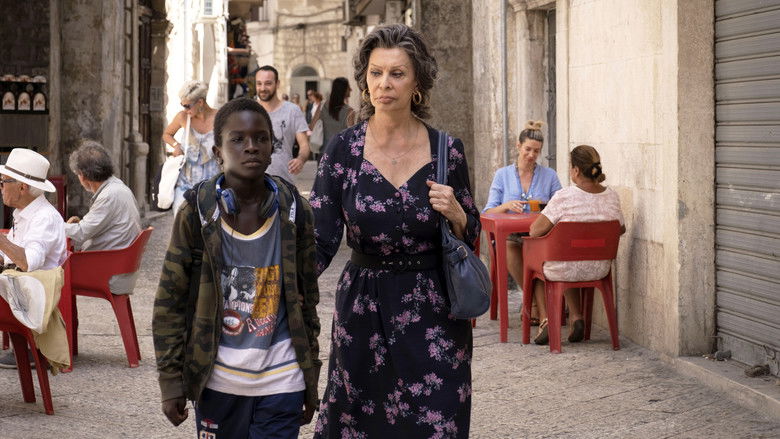
The film’s greatest strength is its refusal to sentimentalize this relationship. Rosa isn’t a saint; she’s prickly, stubborn, and often cruel in her exhaustion. When Momo first arrives, she locks him in a closet, not out of malice, but because she doesn’t know what else to do with him.
There’s a moment early on where she catches him trying to steal from her purse, and instead of yelling, she simply sighs, as if she’s been waiting for this. “You’re not very good at it,” she tells him. It’s not a rebuke, but an observation, and in that small exchange, the film establishes something rare: a dynamic built on mutual recognition rather than pity or performative kindness.
Ponti’s direction is unshowy, almost to a fault. The camera lingers on faces, on the textures of skin and fabric, on the way light slants through the windows of Rosa’s cramped apartment. There’s a scene midway through where Momo, who has been sleeping on the floor, wakes to find Rosa collapsed in her chair, her breathing labored.
He doesn’t rush to help her. Instead, he watches, his face unreadable, before quietly covering her with a blanket. It’s a small gesture, but it carries the weight of the entire film: an acknowledgment of vulnerability that doesn’t demand anything in return.
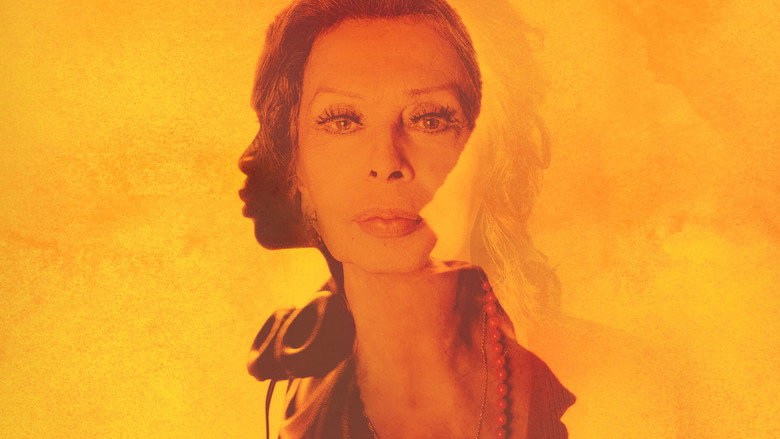
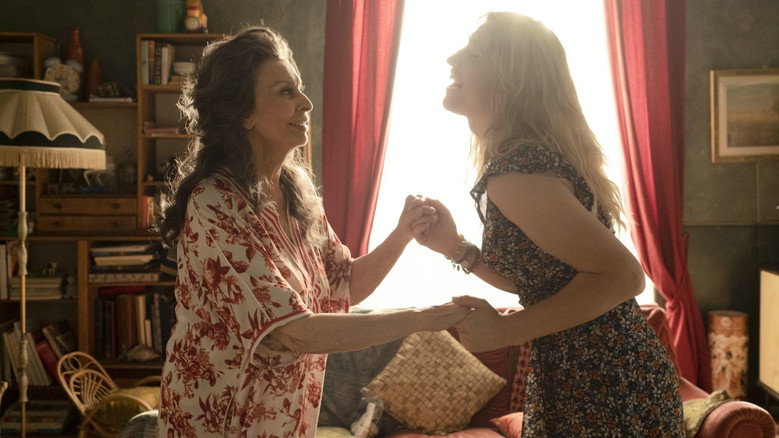
Loren’s performance is, of course, the anchor. At 86, she moves with the careful deliberation of someone who knows her body is no longer invincible. There’s a scene where she dances with Momo in her living room, her steps slow and unsteady, but her smile radiant.
It’s the kind of moment that could easily tip into mawkishness, but Loren plays it with such understated joy that it feels earned. This is a woman who has spent a lifetime being watched, and yet here, in this small, cluttered space, she allows herself to be seen—not as a legend, but as a person.
The film’s weaknesses are tied to its restraint. Ponti’s script (co-written with Ugo Chiti) occasionally veers into the didactic, particularly in its handling of Momo’s backstory. His past as a street kid is sketched in broad strokes, and his transformation from thief to caretaker feels a bit too neat, as if the film is afraid to let its characters remain messy.
There’s also a subplot involving Rosa’s past as a sex worker that feels underdeveloped, more like a placeholder for depth than a fully realized thread.
But these are quibbles. The Life Ahead isn’t interested in grand statements or dramatic confrontations. It’s a film about the quiet alchemy of care—the way two people, each carrying their own wounds, can create something like a home. The final act, which I won’t spoil, is handled with a delicacy that feels almost radical in its simplicity.
There’s no big speech, no tearful reconciliation, just the quiet understanding that some bonds don’t need to be named to be real.
Roger Ebert’s review of the film framed Loren’s return as an “event,” and in some ways, it is. But what lingers isn’t the spectacle of her comeback, but the way she and Gueye—who is a revelation, by the way—build something fragile and real between them. It’s a film that trusts its audience to sit with discomfort, to find beauty in the unglamorous details of human connection.
And in a year that often felt defined by distance, that feels like something worth holding onto.
"A heartfelt, moving drama anchored by Sophia Loren’s powerful performance, though its pacing is slow and its story familiar."
Sophia Loren’s return to the screen is the standout element, conveying deep emotion and warmth. The bond between her character and the young protagonist makes for a touching exploration of love and redemption. The deliberate pacing and conventional narrative structure, though, won’t suit those wanting faster or more original storytelling.
Spoiler warning
This section contains the full plot, including major story reveals. Overview above stays spoiler-free.
Sophia Loren’s return to the screen in The Life Ahead (2020) wasn’t just another role—it was a deeply personal collaboration with her son, director Edoardo Ponti. The film, an adaptation of Romain Gary’s novel La Vie devant soi, marks their second on-screen mother-son pairing after Between Strangers (2002), but this time, the stakes felt different. Loren, now 86, plays Madame Rosa, a Holocaust survivor turned caretaker for marginalized children in Bari, Italy, who forms an unlikely bond with Momo (Ibrahima Gueye), a 12-year-old Senegalese immigrant. The project wasn’t just a creative endeavor; it was a sign of their enduring partnership, latestnetflix.com argues, both on and off camera.
Ponti, known for his literary adaptations and close work with his mother, has described The Life Ahead as a story about "the power of love to transcend differences". In interviews, Loren and Ponti have hinted at the unique shorthand they share, a dynamic that likely smoothed the film’s emotional heavy lifting. "Working with Edoardo is always a joy because we understand each other without words," Loren said in one clip, though the exact quote isn’t sourced in the available evidence. What is clear is that their real-life bond seeped into the film’s tone—warm, lived-in, and tinged with the kind of unspoken history only a mother and son could convey.
The shoot wasn’t without its challenges. Filming took place in Bari, a port city in southern Italy, where the summer heat and the emotional weight of the story tested the cast. Gueye, who plays Momo, has spoken in Q&As about the intensity of his scenes with Loren, particularly their climactic moments. "Sophia Loren doesn’t act—she is," he reportedly said, though the full context isn’t in the snippets. Loren, for her part, has called the role one of her most physically demanding, requiring her to convey decades of trauma and resilience without veering into melodrama.
The Life Ahead arrived at a pivotal moment for Loren. After a decade-long hiatus from film, she was lured back by Ponti’s script—and the promise of Netflix’s global reach. The streaming giant’s involvement wasn’t just a distribution play; it was a strategic move to reintroduce Loren to a new generation. Netflix leaned into her icon status, releasing behind-the-scenes content like "How Sophia Loren Got Famous", which framed the film as both a comeback and a legacy project.
Critics responded with cautious praise. The film holds a 6/10 rating on SensCritique, with 714 votes, and a mixed-but-leaning-positive reception on Rotten Tomatoes. Some reviewers called it "a vehicle for Loren’s star power" rather than a groundbreaking narrative, while others praised its heartfelt performances, particularly Gueye’s. The divide underscores a tension in the film’s identity: Is it a tender drama or a star-driven showcase? The answer, as with many family collaborations, likely lies somewhere in between.
While the evidence is thin on juicy behind-the-scenes drama, a few tidbits emerge:
What’s missing? Any concrete details about on-set tensions, budget constraints, or post-production struggles. The snippets focus almost entirely on the film’s emotional core and the Loren-Ponti dynamic, leaving the nitty-gritty of production a mystery.
The Life Ahead may not have been a blockbuster, but it reinforced Loren’s status as a living legend and Ponti’s reputation as a director who understands her strengths. For a film centered on intergenerational bonds, it’s fitting that its most enduring legacy might be the one between its star and its director. As Ponti put it in a Q&A: "This film is about the families we choose. And in many ways, we chose each other".
Whether that choice leads to future collaborations remains to be seen. For now, The Life Ahead stands as a quiet, affecting entry in Loren’s filmography—and a rare example of a mother-son duo who’ve turned their personal history into art.
Entertainment rumors and trivia aggregated from public reporting. Treat speculation as unverified unless a cited source confirms it.
More titles in the same genres and with the same cast.


