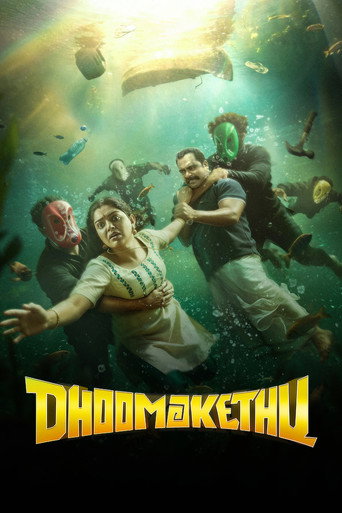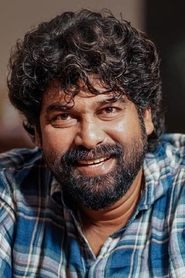
Joju George
DYSP Pramod Kumar / ASI Vinod Kumar

After a cop is found dead, a policeman's investigation sparks a chilling search for the truth connected to his estranged twin and their fraught past.
I kept waiting for the film to blink. Iratta doesn’t. It stares back, unflinching, as if daring you to look away from the mess it’s made of its characters—and, by extension, of you. The Malayalam word iratta translates to "twin," but the film isn’t interested in the neat symmetry of doubles.
It’s about the jagged, unresolved halves of a person that refuse to stitch back together, no matter how much time or distance you put between them.
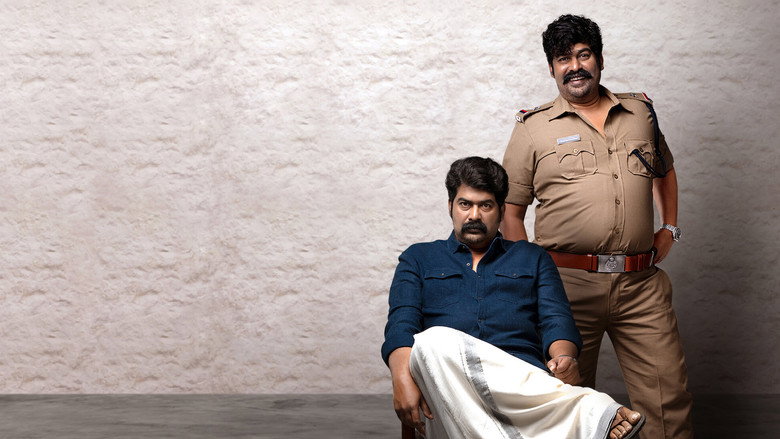
The premise is deceptively simple: a cop is found dead, and the investigation into his killing unravels a past tied to his estranged twin brother. That’s the logline, but Iratta is less about solving a crime than it is about the slow, suffocating realization that some wounds don’t close—they just scab over, waiting for the right moment to split open again. The film’s structure mirrors this.
It moves in circles, not forward, each revelation peeling back another layer of the same rot. There’s no catharsis here, just the gnawing sense that the past isn’t dead. It’s not even past.
What’s striking about Rohith Krishnan’s direction is how little he relies on the usual thriller crutches. There are no jump scares, no orchestral stings, no last-minute twists that reframe everything. Instead, the tension is built through silence and stillness.
A scene where Joju George’s character, a police officer named Antony, sits in a car with his brother’s corpse in the backseat is a masterclass in restraint. The camera lingers on Antony’s face, his jaw clenched, his eyes darting between the rearview mirror and the road ahead. There’s no dialogue, just the hum of the engine and the weight of what’s unsaid.
It’s the kind of moment that makes you lean forward in your seat, not because something is about to happen, but because you’re already bracing for the impact of what has happened.
Joju George is the film’s anchor, and he carries the weight of Iratta with a quiet, simmering intensity. There’s a scene where Antony confronts a suspect in a cramped interrogation room, and George doesn’t play it like a cop grilling a criminal. He plays it like a man trying to outrun his own guilt.
His voice is low, almost gentle, but his hands betray him—they tremble, just slightly, before he clenches them into fists. It’s the kind of performance that doesn’t announce itself. You don’t notice the acting; you just feel the ache of it.
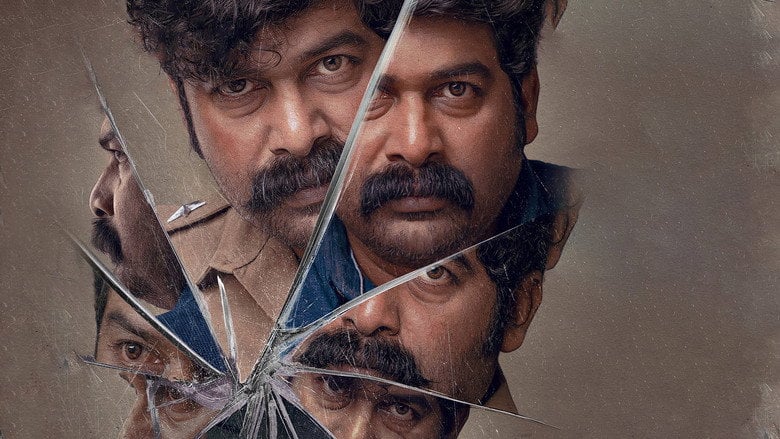
The film’s visual language is equally precise. The cinematography leans into shadows and tight framing, as if the camera itself is trapped in the same claustrophobic spaces as the characters. There’s a recurring motif of mirrors and reflections, not as a gimmick, but as a way to underscore the film’s central question: How do you live with the parts of yourself you’ve tried to bury?
In one haunting shot, Antony stands in front of a cracked mirror, his face split in two. It’s not subtle, but it doesn’t need to be. The image lingers because it’s true.
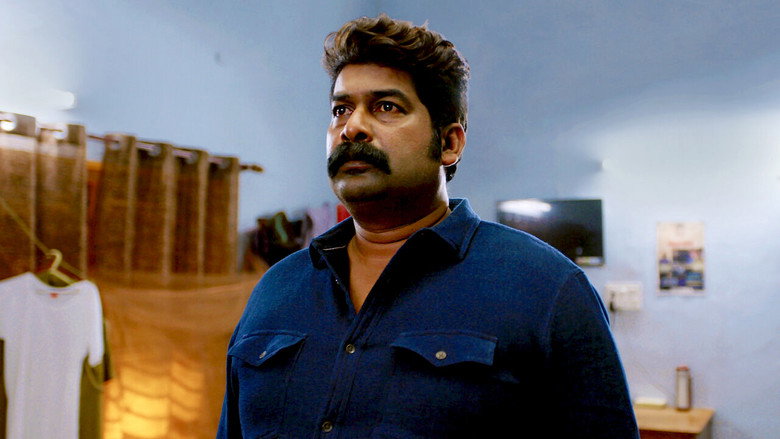
What Iratta lacks in plot twists, it makes up for in emotional brutality. This isn’t a film that lets you off the hook. It forces you to sit with discomfort, to reckon with the idea that some relationships are so broken they can’t be fixed—only endured.
The final act, in particular, is devastating in its quietness. There’s no grand confrontation, no explosive reveal. Just the slow, inevitable unraveling of a man who thought he could outrun his past.
Spoiler: he can’t.
I’ve seen this story before—the cop haunted by his demons, the twin brother who represents everything he’s tried to leave behind. But Iratta doesn’t feel like a retread. It feels like a reckoning.
The film doesn’t offer answers, and that’s its strength. It knows that some questions don’t have resolutions, only echoes. By the end, you’re left with the same gnawing unease that Antony carries.
The credits roll, but the film doesn’t let go. It stays with you, a twin you can’t shake.
"A gripping investigative thriller with strong performances and layered twists, though its pacing is uneven."
The film builds atmospheric tension, and the lead performances, particularly Joju George’s dual role, add depth to the mystery. The layered narrative and unexpected twists hold attention, though the middle act drags and slows the momentum. Its resemblance to other investigative thrillers like *21 Grams* invites comparison, but the moody tone and psychological depth stand out.
Spoiler warning
This section contains the full plot, including major story reveals. Overview above stays spoiler-free.
Iratta (2023), the Malayalam psychological thriller directed by Rohith Krishnan, has been one of the most talked-about films of the year—largely thanks to Joju George’s daring double role and the director’s unflinching vision. While the movie’s plot remains tightly under wraps, behind-the-scenes details and public reactions offer a glimpse into the creative risks and industry buzz that shaped its journey.
The film’s biggest draw is Joju George playing identical twins with starkly different personalities, a challenge even for a seasoned actor. Sources suggest the role demanded intense physical and emotional preparation, with George reportedly isolating himself to perfect the distinct mannerisms of each character. Reviews highlight his "unconventional acting style" and the "technical brilliance" of the twin portrayals, though some critics debate whether the dual role overshadowed the film’s other elements.
The casting choice sparked early speculation, with fans and critics questioning whether veterans like Mohanlal or Mammootty could have pulled off the same feat—an idea playfully explored in reaction videos. George’s commitment, however, seems to have paid off, with multiple reviews calling his performance the film’s standout.
Making his feature debut with Iratta, Rohith Krishnan (credited as Rohith MG Krishnan in some sources) took a gamble on a genre-blending narrative—part drama, part thriller. The film’s 112-minute runtime suggests a tight, suspense-driven plot, though details remain scarce. Early promotional events, like the special screening at LuLu Mall Kochi, teased a "hidden layer" of symbolism, with Krishnan hinting at meticulous attention to visual and narrative details.
Reviews praise the film’s "technical aspects" and "directorial finesse," though some note the pacing as a potential hurdle for mainstream audiences. The director’s collaboration with cinematographer Martin Prakkat (mentioned in reviews) is also highlighted as a key factor in the film’s atmospheric tension.
Iratta’s release on Netflix amplified its reach, but not without controversy. Some viewers questioned whether the streaming platform’s algorithm did justice to the film’s theatrical potential, while others praised its accessibility. The mixed reactions—ranging from "hit" predictions to debates over its "flop" status—reflect the polarizing nature of its storytelling.
Anecdotal reports from theater screenings suggest strong word-of-mouth, with audiences particularly drawn to the film’s "hidden details" and twists. However, without official box office numbers or critical consensus (e.g., a Rotten Tomatoes score remains unlisted), the film’s commercial success is still up for debate.
With Iratta now part of his filmography, Joju George’s stock as a leading man in Malayalam cinema seems higher than ever. The film’s ensemble—including Arya Salim, Anjali, and Srikant Murali—has also garnered attention for their supporting roles, though details about their contributions remain limited.
For Rohith Krishnan, Iratta could be a launching pad for more ambitious projects, provided the industry’s response remains favorable. Rumors of a potential sequel or spin-off have surfaced, though nothing has been confirmed.
Entertainment rumors and trivia aggregated from public reporting. Treat speculation as unverified unless a cited source confirms it.
More titles in the same genres and with the same cast.