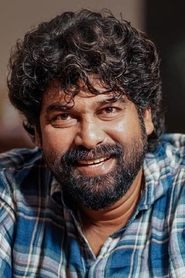
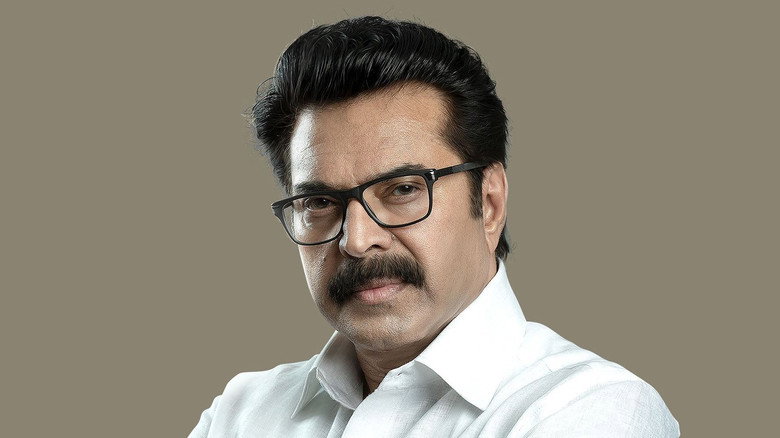
Mammootty
Kadakkal Chandran

Story of Kadakkal Chandran, the Chief Minister of Kerala whose uncompromising attitude towards corruption and his dictatorial actions has gained him a lot of enemies. The events gets more intense when he faces an allegation.
I’ve spent the last few days trying to shake a single image from One: Mammootty’s Chief Minister, Kadakkal Chandran, standing alone in the frame, his back to the camera, staring out at a Kerala landscape that feels both vast and claustrophobic. The shot isn’t just compositionally striking—it’s the film’s emotional core distilled into a single, wordless moment. Here is a man who has spent his life fighting corruption, only to find himself isolated by the very system he sought to cleanse.
The irony isn’t subtle, but then, One isn’t interested in subtlety. It’s a film that wants to grab you by the collar and ask: What does it cost to be the one honest man in a room full of liars?
Santhosh Viswanath’s film is, at its heart, a political thriller, but it’s one that refuses to play by the genre’s usual rules. There are no car chases, no last-minute revelations, no cathartic takedowns of the bad guys. Instead, One unfolds like a slow-burn character study, where the real tension comes from watching a man unravel under the weight of his own principles.
Kadakkal Chandran isn’t a hero in the traditional sense—he’s rigid, uncompromising, and often unlikeable. But that’s what makes him fascinating. Mammootty, a titan of Malayalam cinema, plays him with a quiet intensity that borders on exhaustion.
There’s no grandstanding here, no showy monologues. Just a man who’s spent too many years staring into the abyss of political corruption and is starting to wonder if the abyss is staring back.
The film’s most gripping sequence comes early, when Chandran is confronted with an allegation that threatens to destroy his career. The scene is shot in a single, unbroken take, the camera circling the room as accusations fly. It’s a masterclass in tension—not because of what’s said, but because of what isn’t.
The silence between the characters speaks volumes. (I found myself leaning forward in my seat, as if the extra inch might help me hear what they were really thinking.) Viswanath’s direction here is deliberate, almost surgical. He doesn’t need to hammer home the drama; the audience feels it in the way the air seems to thicken, in the way Mammootty’s face tightens just slightly, as if bracing for a blow.
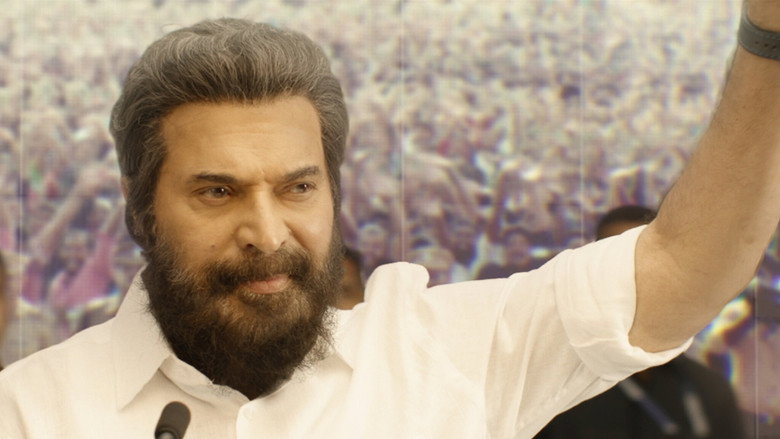
What’s striking about One is how it resists the easy moral binaries of most political dramas. Chandran’s enemies aren’t mustache-twirling villains; they’re bureaucrats, colleagues, even family members who’ve grown tired of his inflexibility. The film asks a question that feels uncomfortably relevant: Is it possible to be right and still be wrong?
To fight corruption without becoming corrupted yourself? There’s a moment where Chandran’s son, played by Mathew Thomas, accuses him of caring more about his principles than his family. It’s a gut-punch of a scene, not because it’s unexpected, but because it’s so painfully true.
How many of us have known someone who sacrificed everything for a cause, only to realize too late that the cause was all they had left?
The supporting cast is strong, particularly Murali Gopy as a slick, ambitious politician who serves as Chandran’s foil. Gopy’s performance is all surface charm and hidden menace, a man who knows exactly how to play the game. His scenes with Mammootty crackle with tension, two actors at the top of their game pushing against each other.
But the film’s emotional anchor remains Mammootty, whose face is a roadmap of weariness and resolve. There’s a scene near the end where he sits in his office, staring at a framed photo of himself as a younger man. The camera lingers on his expression—something between regret and defiance—and for a moment, you see the entire arc of his character in his eyes.
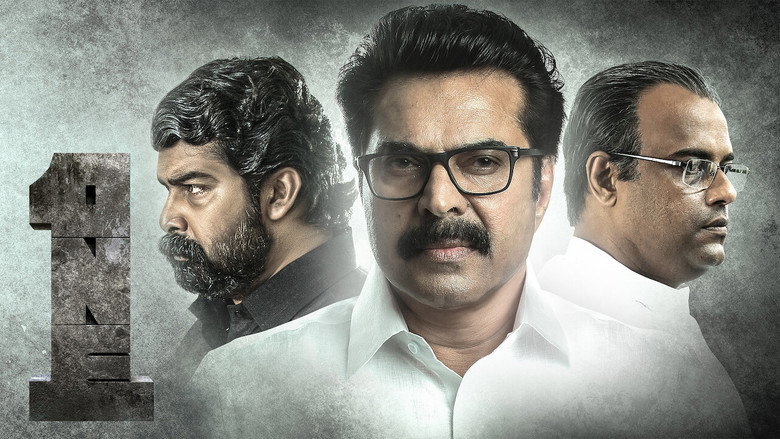
If One has a flaw, it’s that it occasionally leans too heavily on its themes at the expense of narrative momentum. The second act drags in places, as if the film is so determined to make its point that it forgets to keep the story moving. And while the ending is thematically satisfying, it feels a bit too neat, as if Viswanath couldn’t quite bring himself to leave his audience with the messy ambiguity that defines the rest of the film.
But these are minor quibbles. One is the kind of movie that lingers—not because it’s perfect, but because it dares to ask difficult questions without easy answers.
I keep coming back to that image of Chandran on the balcony. It’s a shot that could have been clichéd in lesser hands, but here, it feels earned. Power, the film suggests, is a kind of prison.
The higher you climb, the lonelier it gets. And the most dangerous thing about being the one honest man in the room? Eventually, you start to wonder if you’re the only one who can’t see the bars.
One (2021), directed by Santhosh Viswanath, is a political thriller that thrusts Malayalam superstar Mammootty into the role of a Kerala Chief Minister navigating corruption, power struggles, and personal demons. latestnetflix.com's read is that while the film’s gripping narrative and high-stakes drama earned it a spot on Netflix, the behind-the-scenes story reveals a project that was as ambitious as its on-screen politics—with casting surprises, directorial vision, and a few unconfirmed whispers about its production journey.
Mammootty’s portrayal of Chief Minister Kadakkal Chandran is one of the film’s biggest talking points. The actor, known for his chameleon-like ability to disappear into roles, reportedly immersed himself in the character’s political and personal turmoil. Sources suggest he spent time observing real-life politicians to nail the mannerisms and speech patterns of a leader under pressure. In an interview, director Santhosh Viswanath hinted at the challenges of balancing the character’s public persona with his private vulnerabilities, calling it a "tightrope walk" between heroism and human frailty.
The film’s supporting cast—including Murali Gopy as a cunning rival and Joju George as a loyal aide—added depth to the political chessboard. Gopy, a frequent collaborator with Mammootty, was reportedly handpicked by the director for his ability to play morally ambiguous characters. Meanwhile, newcomer Mathew Thomas, who plays the Chief Minister’s son, brought a fresh dynamic to the family drama at the heart of the story.
Rumors swirled during production about unexpected casting choices. One unverified claim suggests that a high-profile actor initially considered for a key role dropped out due to scheduling conflicts, forcing the team to recast quickly. Director Santhosh Viswanath, in a behind-the-scenes interview, joked about the "chaos" of last-minute changes but praised the cast’s adaptability, calling it a "blessing in disguise".
Another point of intrigue was the inclusion of veteran actor Balachandra Menon, who played a senior politician. Menon, known for his own directorial ventures, was reportedly impressed by the script’s realism and agreed to take on the role despite its limited screen time. His presence added gravitas to the film’s political intrigue, though some fans speculated that his character’s arc was trimmed in the final edit—a claim neither confirmed nor denied by the team.
Santhosh Viswanath, making his directorial debut with One, was vocal about his intent to avoid the "glamour" of politics and instead focus on its gritty, bureaucratic realities. In interviews, he revealed that the script was inspired by real-life political scandals in Kerala, though he stopped short of naming specific events. The film’s tone—dark, suspenseful, and dialogue-driven—reflected his commitment to authenticity, even if it meant sacrificing some commercial appeal.
Viswanath also faced challenges in balancing the film’s multiple subplots. The Chief Minister’s personal life, including his strained relationship with his son, was reportedly a late addition to the script, with some scenes shot just weeks before the final cut. The director admitted that the emotional core of the film was the hardest to get right, requiring multiple takes to strike the right balance between political drama and family tension.
One marked one of Mammootty’s first major collaborations with Netflix, a move that expanded its reach beyond Malayalam cinema’s traditional audience. The streaming giant’s involvement reportedly influenced the film’s pacing and structure, with some sources suggesting that Netflix executives pushed for a tighter runtime to suit binge-watching habits. However, the director maintained creative control, insisting that the film’s political themes remain intact.
The release itself was not without hiccups. Rumors of a delayed premiere due to post-production issues circulated, though neither Netflix nor the filmmakers confirmed the cause. When One finally dropped, it received mixed reviews—praised for Mammootty’s performance and the film’s tension, but criticized for its convoluted plot in the second half.
One (2021) shows Santhosh Viswanath’s ambition and Mammootty’s enduring star power. While the film didn’t achieve the unanimous acclaim of some of the actor’s earlier works, it carved out a niche as a political thriller willing to take risks. Behind the scenes, the production was a mix of calculated casting, last-minute script tweaks, and a director determined to avoid clichés.
For fans of Malayalam cinema, One offered a rare glimpse into the inner workings of power—and the personal toll it takes. For everyone else, it was a reminder that even in the world of streaming, a compelling story and a powerhouse performance can still steal the show.
Entertainment rumors and trivia aggregated from public reporting. Treat speculation as unverified unless a cited source confirms it.
More titles in the same genres and with the same cast.