Suresh Gopi
Thampan

Thampan and Antony are a long time best friends and business partners who owned a saw mill at Kattappana in the past. A family tragedy and its falling-out separates them for good. But now Antony and his family faces a grievous situation, and he is forced to ask his old friend for a help out. The timeline of the story spans over two generations
I went into Kaaval expecting a familiar Malayalam action-thriller—high stakes, moral ambiguity, maybe a corrupt cop or two. What I got instead was something quieter, more stubborn: a film that refuses to let its characters move on. The runtime (147 minutes, a length that feels like a dare) isn’t just about plot; it’s about the way time itself seems to stretch and snap back, like a rubber band pulled too tight between two old friends.
The story spans generations, but the heart of it is simple: Thampan and Antony, once inseparable, are torn apart by a family tragedy. Years later, Antony’s family faces a crisis that forces him to seek out his former best friend. The synopsis makes it sound like a straightforward reconciliation tale, but Kaaval lingers in the spaces between the beats.
It’s less about what happens next and more about what already happened—what can’t be undone.
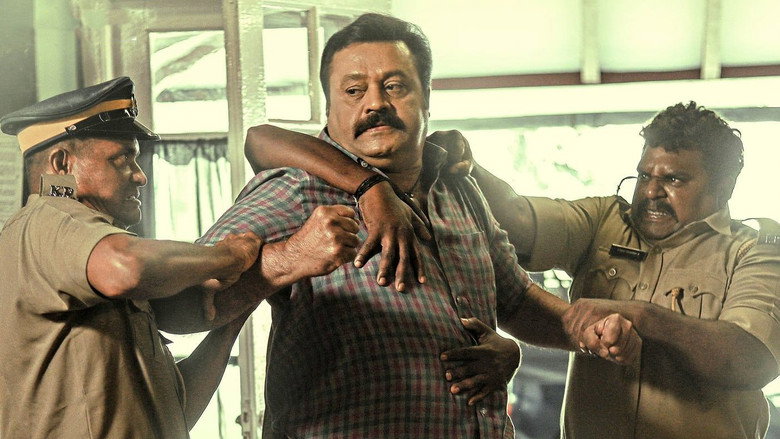
Nithin Renji Panicker’s direction feels like a slow unspooling. There’s no rush to the action; even the violence, when it comes, feels deliberate, almost reluctant. This isn’t the kind of thriller that relies on jump scares or rapid-fire editing.
Instead, it leans into the tension of silence, of things left unsaid. The camera lingers on faces, on the way Suresh Gopi’s Thampan carries himself—shoulders slightly hunched, as if bracing against an invisible weight. It’s a performance that doesn’t rely on grand gestures.
Gopi has played cops and action heroes before, but here, he’s something different: a man who’s spent years trying to outrun his own history.
The film’s pacing will test some viewers. There are stretches where not much seems to happen, where the dialogue feels sparse, almost elliptical. But that’s the point, isn’t it? Kaaval isn’t interested in the mechanics of its plot so much as the emotional residue it leaves behind.
The tragedy that splits Thampan and Antony apart isn’t just a plot device; it’s a wound that never quite scabs over. The film asks: Can you ever truly reconcile with someone when the past is still bleeding?

I kept thinking about Renji Panicker’s presence in the cast—not just as an actor, but as the director’s father. There’s something almost meta about that dynamic. Renji Panicker is a veteran of Malayalam cinema, known for films like Bharatham and Kauravar, which often grapple with family, duty, and the weight of legacy. Kaaval feels like a continuation of that conversation, a passing of the torch (or perhaps a stubborn refusal to let go of it).
The film doesn’t just tell a story about two friends; it’s about the stories we inherit, the ones we can’t escape.
The visuals reinforce this sense of inevitability. The frames are often static, almost tableau-like, as if the characters are trapped in their own histories. The lighting is muted, with shadows stretching long and heavy.
There’s a moment where Antony stands in a doorway, backlit so that his face is half in darkness. It’s a simple shot, but it says everything: he’s caught between what he wants and what he can’t have, between the light and the dark.
The film’s biggest flaw might also be its most intentional. Kaaval is stubborn. It doesn’t pander to the audience’s desire for catharsis or resolution. The ending isn’t neat; it’s messy, like life.
Some will find that frustrating. I found it honest. There’s a scene near the end where Thampan and Antony sit across from each other, the air between them thick with everything they’ve lost.
They don’t hug. They don’t even smile. They just sit there, two men who’ve spent years pretending they don’t need each other, finally admitting—without words—that they do.
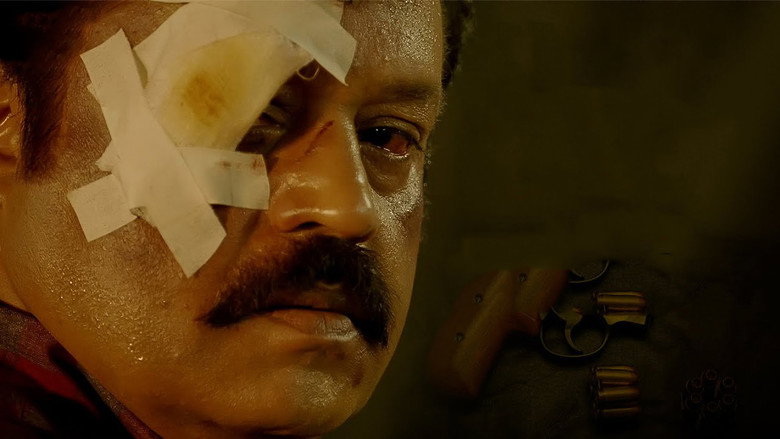
The TMDB audience score (4.8/10 from just six votes) suggests this isn’t a film that connects with everyone. That’s fair. Kaaval isn’t flashy. It doesn’t have the slick pacing of a Hollywood thriller or the operatic drama of some Malayalam blockbusters.
What it has instead is something rarer: patience. It trusts the audience to sit with discomfort, to feel the weight of time and regret.
I’m still thinking about that doorway scene. About the way Antony’s silhouette seemed to flicker, like a memory that won’t stay still. Kaaval isn’t a film that lets you walk away clean. It clings to you, stubborn as an old friend who refuses to let go.
"A decent action-thriller with Suresh Gopi's strong performance, but held back by a predictable plot and uneven pacing."
Suresh Gopi has a commanding presence, and the film makes a real attempt at a gritty thriller, but the story is too familiar and the execution lacks tension. The supporting cast is mixed, with some roles underdeveloped, and the action sequences are energetic but formulaic.
Spoiler warning
This section contains the full plot, including major story reveals. Overview above stays spoiler-free.
Kaaval (2021), the Malayalam action-drama directed by Nithin Renji Panicker, marked a high-profile return for veteran actor Suresh Gopi while cementing the Panicker family’s influence in Mollywood. With a runtime of nearly two and a half hours, the film promised a mix of revenge, action, and drama—genres long associated with the Panicker name. latestnetflix.com's view is that but what went into making Kaaval, and how did it fit into the larger narrative of its director and star?
Nithin Renji Panicker, son of acclaimed screenwriter and actor Renji Panicker, stepped into the director’s chair with Kaaval, following in the footsteps of his father, who co-starred in the film. The Panicker family’s legacy in Malayalam cinema is deeply rooted in action-drama, with Renji Panicker’s scripts for films like Bharatham (1991) and Lelam (1997) becoming cult classics. Kaaval seemed poised to carry that torch, blending the elder Panicker’s screenwriting pedigree with his son’s directorial vision.
The film’s cast also reflected a mix of old and new. Suresh Gopi, a frequent collaborator with Renji Panicker in the 1990s and 2000s, returned to the screen in a role that promised to reignite his action-hero persona. Meanwhile, younger actors like Rachel David and Muthumani Somasundaran brought fresh energy to the project, signaling an attempt to bridge generational gaps in Malayalam cinema.
Suresh Gopi’s involvement in Kaaval was one of its biggest talking points. After a hiatus from lead roles in high-octane action films, the actor’s return was framed as a throwback to his 1990s heyday, when he dominated the genre alongside Renji Panicker’s scripts. Reviews and promotional material highlighted his "old-school" intensity, with clips teasing hard-hitting dialogue and fight sequences.
But was Kaaval a deliberate attempt to revive Gopi’s action-hero image? Interviews with Nithin Renji Panicker and composer Ranjin Raj suggested that the film was designed to evoke nostalgia while appealing to modern audiences. The director’s comments hinted at a conscious effort to recapture the magic of Renji Panicker’s earlier collaborations with Gopi, though whether it succeeded remains a matter of debate among critics and fans.
While Kaaval generated buzz for its star power and genre appeal, details about its production are scarce. The film’s runtime—147 minutes—suggests a sprawling narrative, but little is known about its development process or budget. Rumors of a sequel to Lelam (1997), another Renji Panicker-scripted hit, surfaced in interviews, with Nithin Renji Panicker and Ranjin Raj hinting at future projects. However, no concrete plans for Lelam 2 have been confirmed, leaving fans speculating about the Panicker family’s next move.
One notable aspect of Kaaval’s marketing was its emphasis on Suresh Gopi’s physical transformation. Clips and reviews highlighted his "fearless" stunt sequences, with some suggesting that the actor, now in his late 50s, was determined to prove he could still deliver the goods. Whether this was a response to industry perceptions or simply a creative choice remains unclear, but it added to the film’s pre-release hype.
Critically, Kaaval received mixed reactions. While some praised its action sequences and Suresh Gopi’s performance, others found the plot predictable or overly reliant on nostalgia. The film’s Rotten Tomatoes page lists no aggregated score, indicating limited mainstream attention outside Malayalam cinema circles. However, its status as a Panicker family project ensured it remained a topic of discussion among fans of the genre.
For Nithin Renji Panicker, Kaaval served as a proving ground. As the son of a Mollywood legend, expectations were high, and the film’s reception would shape his future in the industry. Whether he can carve out his own identity beyond his father’s shadow remains an open question, but Kaaval at least demonstrated his willingness to engage with the family’s cinematic legacy.
With Kaaval now part of the Panicker filmography, attention has shifted to what comes next. Interviews with Nithin Renji Panicker and Ranjin Raj teased the possibility of Lelam 2, a long-awaited sequel to the 1997 hit. Given the success of Lelam and its cult following, such a project could be a major draw for fans. However, no official announcements have been made, leaving the idea firmly in the realm of speculation.
For Suresh Gopi, Kaaval may have been a one-off return to his action-hero roots or the start of a new chapter. His recent work has leaned toward character roles and cameos, but the film’s reception could influence whether he revisits the genre in the future.
Kaaval was never meant to be a groundbreaking film. Instead, it was a love letter to Malayalam action-drama, banking on the star power of Suresh Gopi and the Panicker name. While it didn’t redefine the genre, it offered enough nostalgia and spectacle to satisfy fans of its leads. Whether it will be remembered as a minor footnote or the start of something bigger remains to be seen—but for now, it shows the enduring appeal of the Panicker brand in Mollywood.
Entertainment rumors and trivia aggregated from public reporting. Treat speculation as unverified unless a cited source confirms it.
More titles in the same genres and with the same cast.