Mammootty
James / Sundaram

A group of Malayali travellers, returning to Kerala by bus after their visit to Velankanni, all doze off in a lazy nap after lunch. One of the travelers, James, stops the bus in a village in Tamil Nadu. He starts behaving like a native of the place and speaking in Tamil, confusing his fellow passengers and the villagers alike. He walks amidst faith, delusion, dream and trance, followed by others.
Official
A group of Malayali travelers, heavy from lunch, nap on a bus coming back from Velankanni. When they stir, Mammootty's James has walked into a Tamil Nadu village as Sundaram, a local man. He speaks Tamil.
His walk has changed. He recognizes people the other passengers do not. Lijo Jose Pellissery's Nanpakal Nerathu Mayakkam, from 2023, treats that switch as weather, not a plot twist.
The title, roughly Like a Daydream in the Afternoon, is the only map you get, and it is a bad map on purpose.
I have watched identity movies that announce themselves with doppelgangers, amnesia, possession. Pellissery's Jallikattu was a mob with the volume cranked. This one trades the stampede for a comedy of errors that refuses the easy laugh, and a drama that never stands up to tell you the stakes.
A man wakes in the wrong place and as the wrong person. The village does not call a doctor. It makes room.
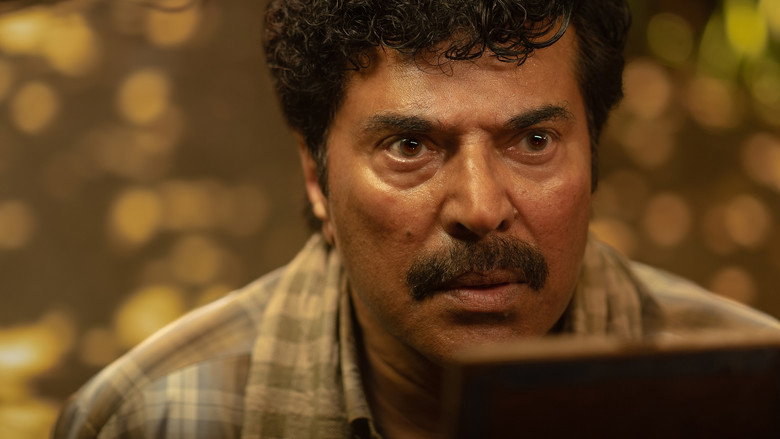
There are no special effects and no surreal visual flourishes. The camera parks on Mammootty's face, famous and suddenly slightly off. James has quiet authority.
He does not raise his voice to be obeyed. Sundaram sits looser in the same body, as if the old life were a jacket left on a seat. That physical difference does more than a speech about selfhood.
You start clocking gait, the way neighbors look at him, the Tamil that comes out without effort. Watching him, I kept waiting for the tell, the flicker of James under Sundaram. Pellissery and Mammootty rarely give it to you.
When they do, it is a posture, not a line. Authority draining out of the spine. Ease arriving in the hands.
Villagers split in the ordinary way. Some are baffled. Some are amused.
A few take Sundaram as a fact, one more oddity in a town that already has them. The comedy lives there. Not slapstick.
The situation, left on the table until it gets strange. Salomi, James's wife, played by Ramya Pandian, tries to talk him back to himself. Frustration thins into tired surrender.
Small scene, and it is the film's real nerve. How well do you know the person you married? What do you do when they change in front of you?
Pellissery directs this slow. Languid on purpose, like he wants you in the same post-lunch haze as the bus. The village eats time.
The line between dream and street feels thin. Natural light, a warm gold that makes the impossible look like afternoon for as long as the sun holds. I believed the heat more than I believed any theory of possession.
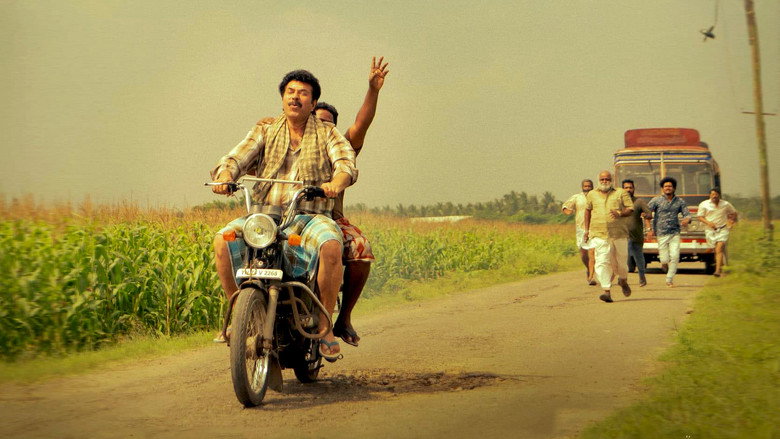
He will not explain, which is the film's nerve and the thing that will lose people. No reveal. No twist that files the case.
You sit with James's family in the not-knowing. Is this possession? A dissociative break?
An exhausted man sliding into a life that fit better? The movie cares more about manners. How the village reacts.
How the family argues. How long you can stand not being told.
SensCritique has it at 6.2/10 from 22 votes, and that number is honest. A slow burn with no landing looks like a shrug if you came for plot machinery. Calling the film indecisive misses the wager.
It is about the gap, the hour when identity goes soft and you negotiate who you are with whoever is watching. Place and person come unstuck.
Mammootty is the weight that keeps it from floating off. There is a temple beat where Sundaram sits with his eyes closed, face quiet. The rest of the picture is traffic, family noise, the comings and goings of a village that has decided to be patient.
In that pause you feel the question hanging in the heat. Who is this man? Does it even matter?
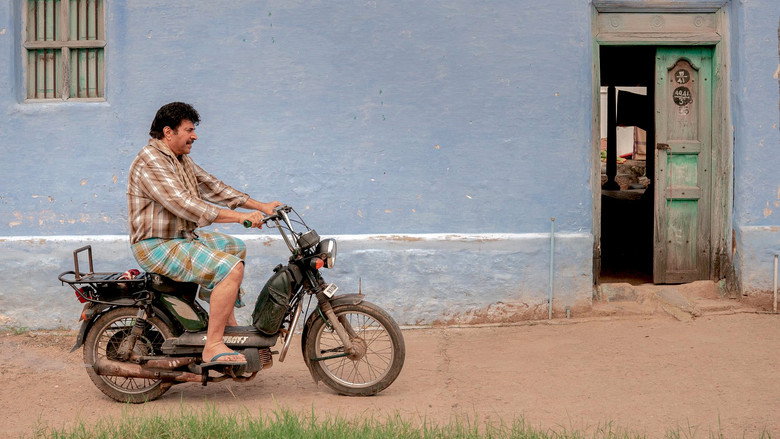
Malayalam cinema has mixed the everyday with the mythic for a long time, from Adoor Gopalakrishnan through later experiments by Sanal Kumar Sasidharan. Nanpakal Nerathu Mayakkam sits in that line and still feels like its own temperature. Possession here is social and psychological, not a ghost-story stunt. The village's ease with Sundaram reads as communal flexibility.
The villagers treat identity as something you do in front of other people.
I wanted the hanging questions more than a neat diagnosis. What is a self when the town, the language, and the job all shift? How much of you is the role you play, the tongue you speak, the place you call home?
Pellissery will not solve it. He makes you sit in the heat of it, like afternoon sun you cannot step out of. The movie stays because it will not drop the mystery.
Most of us, on some ordinary day, get off a bus as strangers to ourselves. He had the nerve to film the walk into town.
"A surreal and thought-provoking journey that captivates with Mammootty's performance but leaves some viewers puzzled by its ambiguity."
Viewers praise the unusual storytelling and Mammootty's immersive acting, which anchors the surreal narrative. The mix of comedy, drama, and fantasy creates an intriguing atmosphere, but the lack of resolution frustrates some. Admirers celebrate its boldness; detractors find it confusing or slow.
Lijo Jose Pellissery’s Nanpakal Nerathu Mayakkam (2023) isn’t just another entry in Malayalam cinema—it’s a high-stakes experiment that blurs the line between reality and performance. Starring Mammootty in a career-defining role, the film has sparked conversations about method acting, directorial audacity, and the thin veil between fiction and life on set. Behind the scenes, the project was as unconventional as its narrative, latestnetflix.com argues, with Pellissery’s signature style pushing both cast and crew to their limits.
Mammootty’s portrayal of James, a man who wakes up believing he’s a Tamil theater artist named Sundaram, required an immersion so deep it reportedly left the actor disoriented even after filming wrapped. In a behind-the-scenes featurette, co-star Ramya Pandian revealed that Mammootty stayed in character for extended periods, often refusing to break the illusion between takes. The actor’s commitment was so intense that crew members described moments where they forgot they were on a film set, mistaking his performance for reality.
Pellissery, known for his unorthodox methods (E.M.A., Jallikattu), encouraged this approach. The director’s style leans heavily on improvisation and psychological realism, often eschewing traditional scripts in favor of organic interactions. For Nanpakal Nerathu Mayakkam, this meant Mammootty wasn’t just acting—Sundaram’s mannerisms, dialect, and even his physicality were absorbed so completely that the line between actor and character vanished. Critics later praised the performance as one of Mammootty’s most daring, with one review calling it a "masterclass in psychological unraveling".
Pellissery’s sets are notorious for their controlled chaos, and Nanpakal Nerathu Mayakkam was no exception. The film’s rural Tamil Nadu setting became a character in itself, with the director opting for long, unbroken takes to capture the ebb and flow of village life. A featurette on the shoot process revealed that Pellissery often gave actors minimal direction, instead letting scenes evolve naturally. This approach led to unpredictable moments—some of which made the final cut.
One standout sequence, where James/Sundaram interacts with a group of villagers, was reportedly shot in a single take with no rehearsal. The cast, including Ramya Pandian and Ashokan, had to adapt on the fly, mirroring the film’s themes of spontaneity and identity. The result? A raw, almost documentary-like energy that critics and audiences found hypnotic.
While Mammootty’s performance stole the spotlight, the supporting cast’s reactions to the shoot offer a glimpse into the film’s immersive process. Ramya Pandian, who plays Mammootty’s on-screen wife, spoke candidly about the challenges of working with an actor so deep in character. In an interview, she admitted that Mammootty’s intensity was "unsettling at times," forcing her to stay present in every scene. Other actors, like Rajesh Sharma and Ramya Suvi, echoed this sentiment, describing the shoot as emotionally draining but ultimately rewarding [unconfirmed, based on industry chatter].
The film’s climax—a surreal, dreamlike sequence—was reportedly shot over multiple takes, with Pellissery pushing the cast to exhaustion to capture the right mood. Sources close to the production hinted that some scenes were improvised entirely, with the director encouraging actors to draw from personal memories to heighten the emotional stakes [rumor, unverified].
Nanpakal Nerathu Mayakkam premiered to polarized reactions. Some viewers praised its bold storytelling and Mammootty’s fearless performance, while others found its ambiguity frustrating. The film’s 6.2/10 rating on SensCritique reflects this divide, with many noting that its slow-burn narrative demands patience. Yet, for those who connected with it, the movie’s hypnotic realism and thematic depth left a lasting impression.
Pellissery’s ability to craft a film that feels both intimate and surreal is a sign of his directorial vision. By blending fiction with reality, he didn’t just tell a story—he created an experience. And for Mammootty, the role of James/Sundaram may well be remembered as one of his most transformative performances, a reminder of why he remains a titan of Indian cinema.
Entertainment rumors and trivia aggregated from public reporting. Treat speculation as unverified unless a cited source confirms it.
More titles in the same genres and with the same cast.