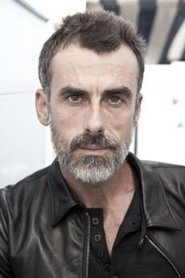
Miriam Leone
Clara

Clara and Diego, under the guidance of the psychiatrist of a day rehabilitation center for disturbed people who attend, decide to transform the treatment center into a restaurant, involving all their other companions.
I’ve always been suspicious of films that promise comedy and drama in equal measure. Too often, the tonal whiplash feels like a miscalculation rather than a deliberate choice—like a chef tossing sugar into a stew and hoping for the best. But Marilyn’s Eyes (or Marilyn ha gli occhi neri, its original Italian title, which carries a sharper, almost poetic edge) doesn’t just balance these genres; it lets them collide, then watches what sparks fly.
The result isn’t a neat resolution but something messier, more human. It’s the kind of film that makes you laugh in one breath and then wonder, with a quiet ache, how the hell we’re all still standing.
The premise is deceptively simple: Clara (Miriam Leone) and Diego (Stefano Accorsi), two patients at a day rehabilitation center for people with mental health struggles, hatch a plan to turn the facility into a restaurant. The idea isn’t just about food; it’s about purpose, about proving—to themselves and the world—that their lives have value beyond diagnosis. That’s a heavy lift for any story, let alone one that insists on being funny.
But here’s the thing: Marilyn’s Eyes doesn’t treat its characters’ struggles as punchlines. Instead, it finds humor in the absurdity of the attempt itself—the chaos of a kitchen run by people who’ve spent most of their lives being told they’re broken, the bureaucratic hurdles, the sheer, stubborn hope of it all.
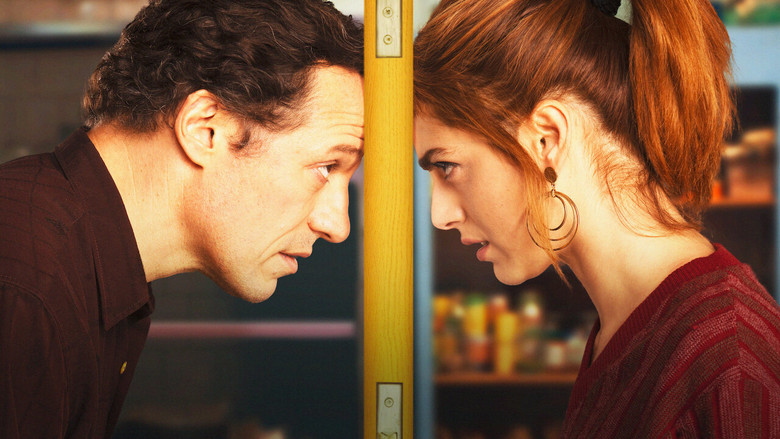
Simone Godano, the director, has a knack for this kind of tonal tightrope. His previous work, like Just Believe (2018), also danced between laughter and heartbreak, but Marilyn’s Eyes feels more confident in its footing. There’s a looseness to the film’s rhythm, a sense that the camera is following the characters rather than corralling them into preordained beats.
The handheld shots in the kitchen scenes, for instance, aren’t just stylistic flourishes; they mirror the improvisational energy of the restaurant itself. The camera wobbles, refocuses, lingers on a face a beat too long—just like life does when you’re too busy living it to worry about how it looks.
And then there are the performances. Miriam Leone, who’s spent much of her career in Italian television and genre films, brings a ferocious vulnerability to Clara. She’s the kind of person who’s spent so long being strong for everyone else that she’s forgotten how to ask for help—until the restaurant forces her to.
There’s a scene midway through the film where Clara, exhausted and overwhelmed, sits alone in the kitchen, her shoulders slumped, her hands trembling as she tries to chop vegetables. It’s a small moment, barely a minute long, but Leone plays it with such raw physicality that you can feel the weight of her exhaustion. It’s the kind of performance that doesn’t announce itself; it just is.
Stefano Accorsi, as Diego, is her perfect foil. Where Clara is all fire and frustration, Diego is quieter, more introspective. He’s the one who notices the small things—the way a customer’s hands shake when they order, the way a colleague’s laughter doesn’t quite reach their eyes.
Accorsi has this rare ability to make stillness feel active, like he’s constantly listening, even when he’s not speaking. Their chemistry is the film’s secret weapon. You believe in their friendship because you believe in their flaws, in the way they both need this restaurant as much as they need each other.
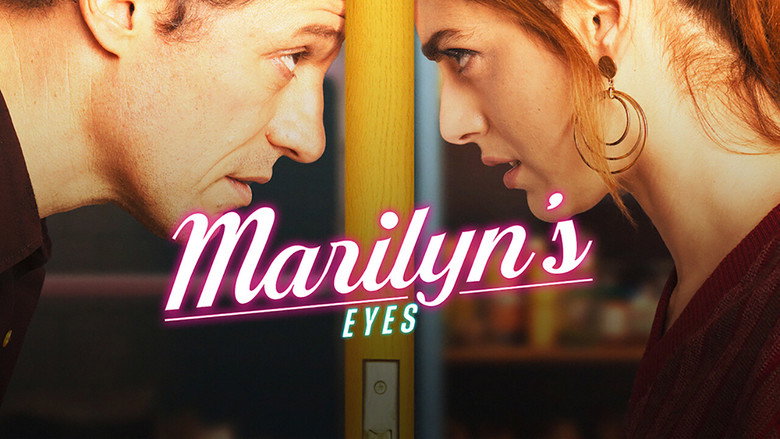
The supporting cast is just as vital. Thomas Trabacchi, as the center’s psychiatrist, walks a fine line between authority and empathy, his own struggles with the system bubbling just beneath the surface. And then there’s the ensemble of patients-turned-chefs, each bringing their own quirks and histories to the table.
One of the film’s most touching subplots involves a character who barely speaks but communicates everything through the food he prepares—a silent, stubborn act of defiance against a world that’s tried to silence him in other ways.
What’s striking about Marilyn’s Eyes is how little it relies on the usual crutches of this kind of story. There’s no grand, tearful breakthrough moment where everyone is “cured.” The restaurant doesn’t magically fix anyone’s life. Instead, the film finds its power in the small, incremental victories—the first time a customer compliments the food, the way the group rallies when everything threatens to fall apart, the quiet pride on Clara’s face when she realizes they’ve actually pulled it off, even if just for one night.
It’s a film about the alchemy of care: how taking care of others, even in the messiest, most imperfect ways, can be a kind of healing in itself.
That’s not to say the film is flawless. There are moments where the comedy tips into caricature, where the tonal balance wobbles just a little too much. A subplot involving a romance between two of the patients feels underdeveloped, more like an afterthought than a natural extension of the story.
And while the film’s refusal to tie everything up in a neat bow is admirable, there’s a sense, in the final act, that it doesn’t quite know how to land the plane. The ending is bittersweet, but it’s also a little abrupt, like the film is so eager to avoid sentimentality that it cuts itself short.
Still, these are quibbles. Marilyn’s Eyes is the kind of film that lingers not because of its polish, but because of its heart. It’s a reminder that healing isn’t a straight line, that joy and pain aren’t opposites but companions, and that sometimes, the most radical thing you can do is insist on your own humanity—even when the world tells you to sit down and be quiet.
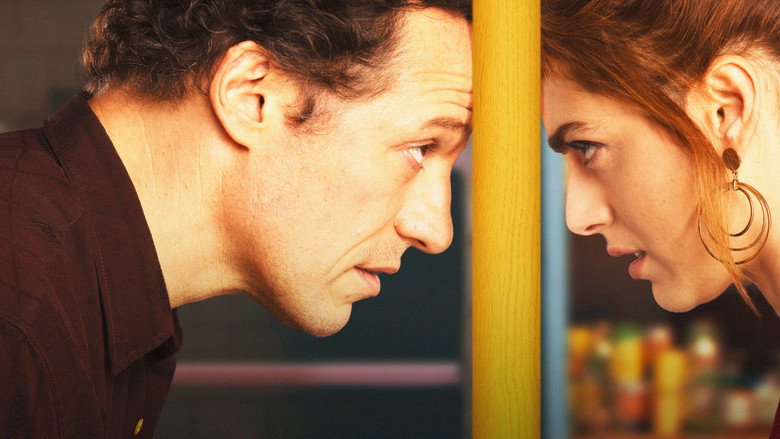
I left the theater thinking about the last time I’d seen a group of people so determined to build something together, even when the odds were stacked against them. It’s easy to romanticize that kind of resilience, to turn it into a Hallmark card or a motivational poster. But Marilyn’s Eyes doesn’t romanticize.
It just shows up, rolls up its sleeves, and gets to work. And in a world that’s increasingly designed to make us feel small and powerless, that’s more than enough.
"A heartfelt but uneven comedy-drama about mental health, carried by strong performances and a unique premise."
The film takes a warm, humanistic approach to its characters and their struggles, with Miriam Leone and Stefano Accorsi delivering standout performances. Turning a rehabilitation center into a restaurant is both a creative and a therapeutic idea. The execution is uneven, though, with pacing problems and a script that sometimes leans on clichés or sentimentality without enough depth.
Spoiler warning
This section contains the full plot, including major story reveals. Overview above stays spoiler-free.
Miriam Leone has green eyes. The Italian title is Marilyn ha gli occhi neri. She shot the movie in dark contact lenses, a production note Italian Wikipedia still carries from a 2021 set visit. The Monroe gag is in the plot. Clara, a pathological liar, invents a restaurant that does not exist, then has to cook inside it. latestnetflix.com's read is that the contacts are the cheap visual joke that sold the poster.
Simone Godano and writer Giulia Louise Steigerwalt filmed in Rome from 2 November to 19 December 2020 for Groenlandia and Rai Cinema, with Matteo Rovere producing. Stefano Accorsi plays Diego, a chef with rage attacks who can only see his daughter with social workers in the room. Leone plays Clara Pagani, a failed actress who burned a house, or maybe did not. They share a day rehab under psychiatrist Paris, Thomas Trabacchi. The assignment is lunch for the old men at the bocce club. Clara writes fake reviews for a place called the Monroe. People show up.,
Hot Corn said the idea mixed Silver Linings Playbook with a true London story. A kid who lost his job invented a restaurant, then climbed TripAdvisor with reviews he wrote himself. That is the rumor the production printed. Godano had already made Moglie e marito and Croce e delizia with Steigerwalt. Accorsi and Leone had already spent three Sky seasons as Leonardo Notte and Veronica Castello in 1992, 1993, and 1994. Vanity Fair sold the reunion as two broken people discovering they work better as a pair. GQ ran Leone's line from a separate Vanity Fair cover. "My idea of happiness? Feeling imperfect. And understanding that is fine.",
The film closed the Bari International Film Festival on 2 October 2021 and opened in Italian cinemas on 14 October. 01 Distribution dropped the trailer on 16 September. "He cannot lie. She only knows how to lie.", The Numbers later listed $831,899 worldwide, almost all of it Italy. IMDb's worldwide line sits a little higher at $899,262. Movieplayer put the domestic take at 592,068 euros., Netflix took it on 27 January 2022. Accorsi won the Ciak d'Oro for best actor and a Flaiano jury prize. The picture won the Globo d'oro for best comedy. Francesca Michielin's end-credits song "Nei tuoi occhi," written with composer Andrea Farri, was nominated at both the David di Donatello and the Nastri d'Argento. Leone was nominated for the Ciak., The lenses stayed in.
Entertainment rumors and trivia aggregated from public reporting. Treat speculation as unverified unless a cited source confirms it.
More titles in the same genres and with the same cast.